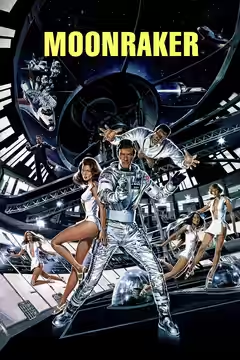
Lewis Gilbert sends Bond after Star Wars and comes back with the handsomest and silliest of the Roger Moore films. Ken Adam’s sets and Michael Lonsdale’s bored, courteous villain are worth an evening; the slapstick, mostly, is not.
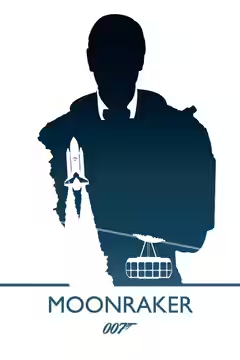
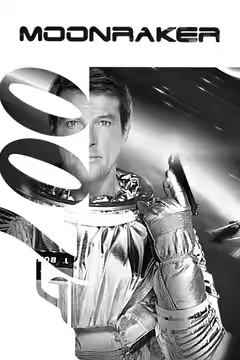
Two years after The Spy Who Loved Me, Lewis Gilbert is back as director, Christopher Wood on the script, Richard Kiel as Jaws, and so is the plot: a rich man with a private army steals something from the great powers, and Bond follows him through pretty cities to a lair. Star Wars has come out since, so this time the lair is in orbit. Moonraker takes its title and villain’s name from Ian Fleming’s novel and little else, and it is where the Roger Moore films gave up on being thrillers. We enjoyed a good deal of it and believed none of it.
The pre-title sequence is the best thing in the film. Bond is pushed out of a plane without a parachute, dives after the man who has one and takes it from him in mid-air, and the camera falls alongside them. Stunt performers did it in free fall, and there is no cheating. We held our breath, then laughed out loud when Jaws, following them down, pulled his ripcord and got a handful of string.
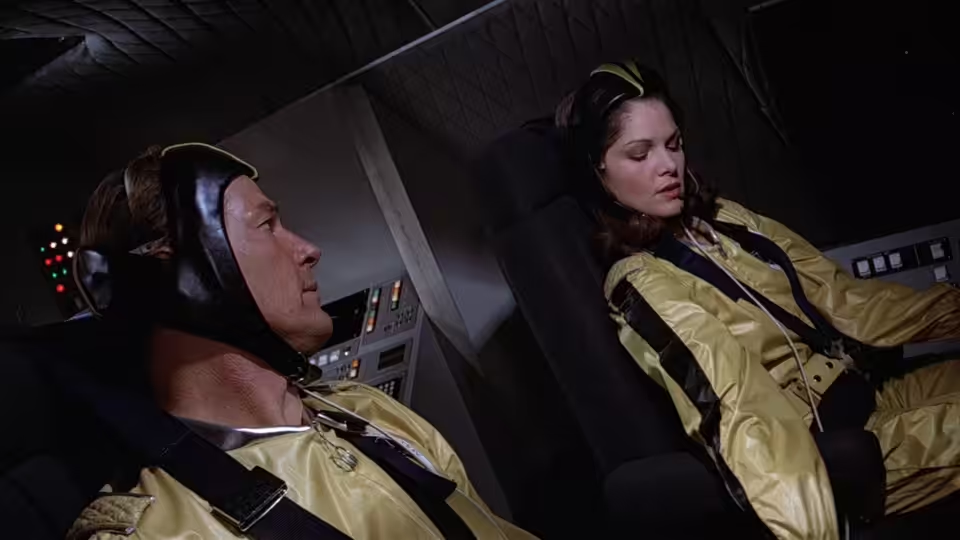
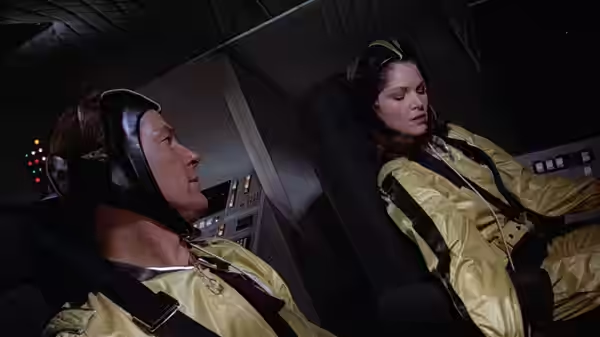
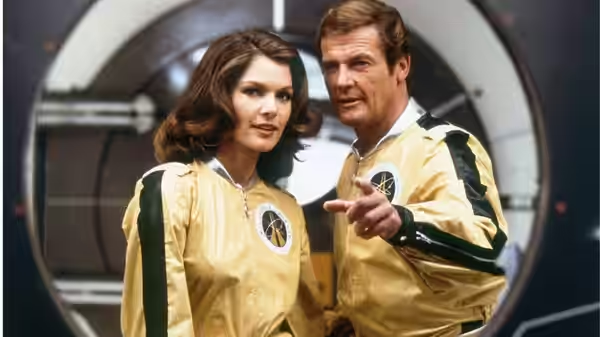
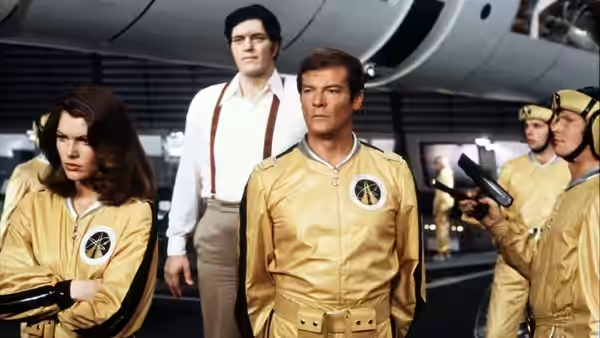
Ken Adam’s design is the real star. Drax’s estate is all chandeliers and gilt, so the launch control room next door looks like an insult. The glass laboratory in Venice is white, hard-edged and lit from inside. The space station is the last of Adam’s great villain rooms: spokes and a hub, a chamber with a turning floor. Jean Tournier lights the earthbound half with the flat brightness of a holiday brochure, which suits Venice and does nothing for the actors, and the station in cold blue-white. Jacques Fonteray puts Drax’s technicians in matching jumpsuits, so the estate looks staffed by a cult.
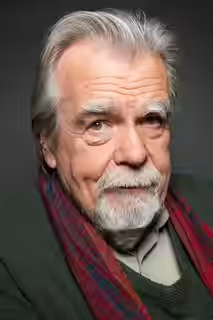
Michael Lonsdale is the other reason to stay. He plays Hugo Drax as a man so rich that villainy bores him, and delivers each threat as if dictating a letter he expects someone else to sign. “Look after Mr Bond,” he tells a henchman. “See that some harm comes to him.” Wood gives him the film’s only good lines and Lonsdale lets them drop rather than land. Whenever he and Moore share a room the film picks up.
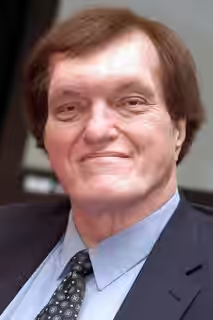
Then there is the rest. Wood and Gilbert have decided that Jaws, a proper menace two years earlier, is now a clown, so he is dropped from a height, driven through a wall and dunked in a canal, and gets up each time to a comedy cue from John Barry. In Venice Bond’s gondola grows wheels and drives across St Mark’s Square, and the film cuts to a pigeon doing a double-take. We laughed, then felt a little ashamed of ourselves, then realised the film had no such qualms. The chases that follow are staged with skill and no fear, because nothing can hurt this Bond and everyone on screen knows it.
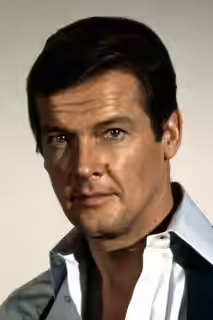
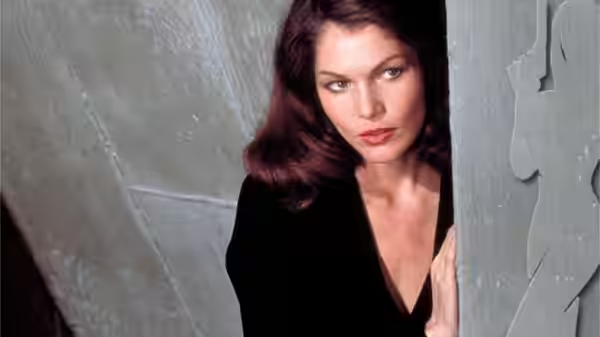
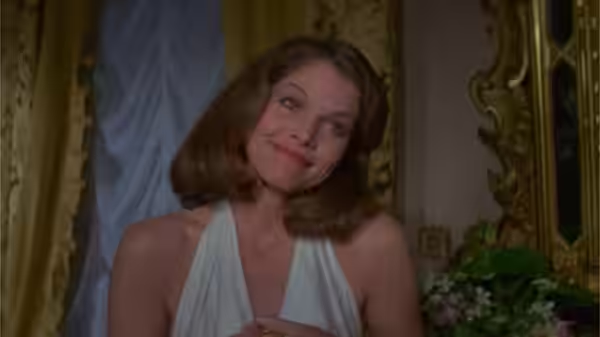
Moore is charming, entirely at ease and never once looks as though he could be killed. Chiles is handed a doctorate and a name that is a schoolboy joke, and plays Goodhead with a cool competence the script keeps interrupting so Bond can rescue her. Corinne Cléry, as Drax’s pilot, is the only person who ever looks frightened, and her few minutes are worth more than most set pieces. Barry’s score is his most romantic in years, slow strings and long brass lines, and the march he writes for the shuttles is better than most of what it accompanies. John Glen cuts the action tight and the comedy as though under instruction, so the double-takes stick out.
The Spy Who Loved Me kept one foot on the ground; this one floats off. It runs 126 minutes and carries a PG.
See it for the first five minutes, for Adam’s rooms and for Lonsdale. If you want a Bond film that frightens you, this is not it, and it never wanted to be.