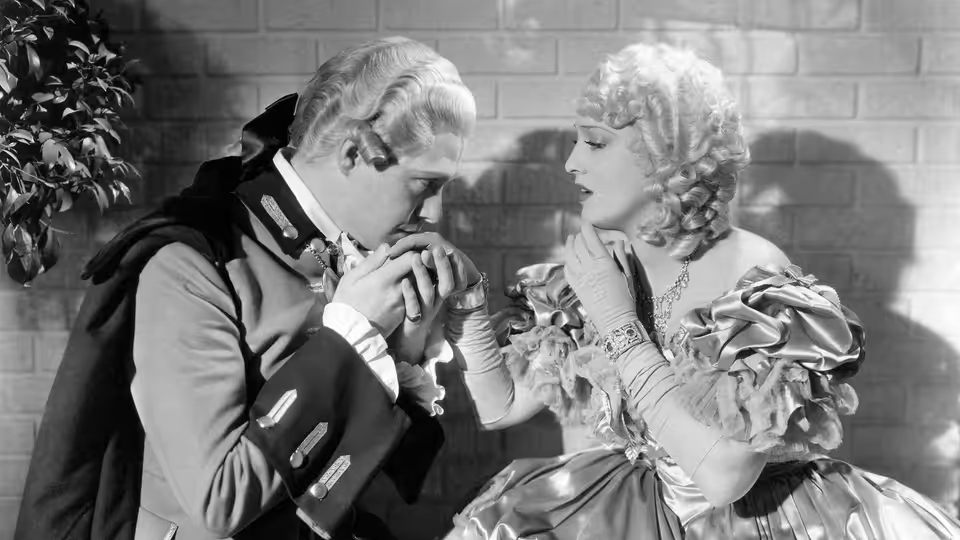
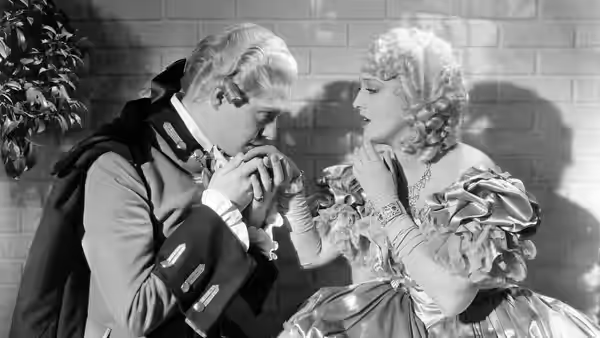
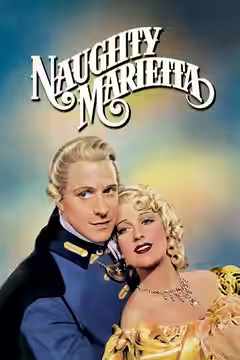
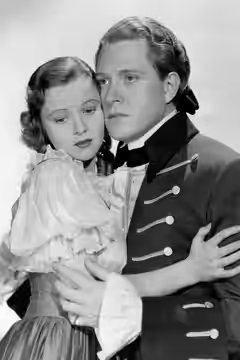
MGM’s first pairing of Jeanette MacDonald and Nelson Eddy is a creaky costume romance carried by two magnificent voices and a supporting cast that does most of the acting. When the leads sing, it is lovely. When they talk, it is 1935 in the least flattering sense.
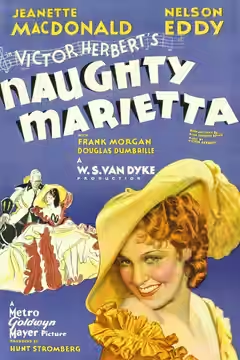
MGM’s tagline promised Jeanette MacDonald and Nelson Eddy together for the first time, and that is the whole of the film’s ambition: put two big voices in powdered wigs, hand them Victor Herbert’s operetta and let them sing at each other until the reels run out. W. S. Van Dyke directs, Hunt Stromberg produces, and nobody involved is under any illusion about what the audience came for. On those terms Naughty Marietta delivers. On any other terms it is a stiff, dated thing, and it is fair to say so before saying how much of it we enjoyed anyway.
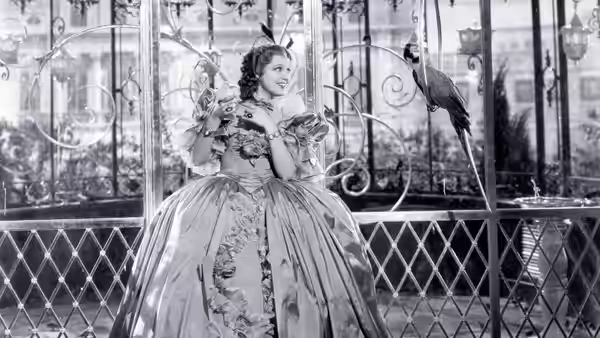
MacDonald is the reason to stay. She had been doing this for years by 1935 and it shows: she plays the runaway princess with a sly, quick comic timing that the script does not always deserve, and when she opens her throat in the New Orleans marketplace for the Italian Street Song, the picture briefly stops being a museum piece. Her coloratura is fast, clean and a little showy, and she knows it is showy, which is the joke. She is also the only person on screen who seems to be having fun.
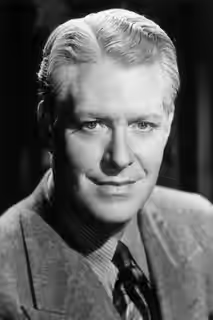
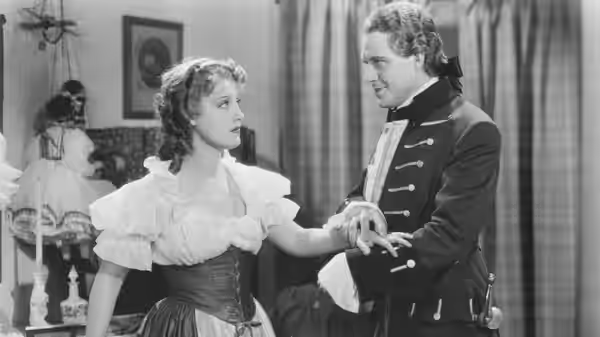
Eddy is the problem, and it is a problem the film cannot sing its way around. The baritone is enormous, warm and effortless; you could hear him from the back of the largest cinema in the country with the doors shut. The acting is another matter. He wooes MacDonald with the expression of a man reading the words off the inside of his hat, and in the love scenes his arms hang as though someone has forgotten to tell them what to do. We winced, more than once, at the sight of MacDonald working a scene while her leading man stood beside her like a lamppost in a tricorn.
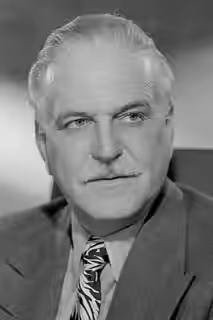
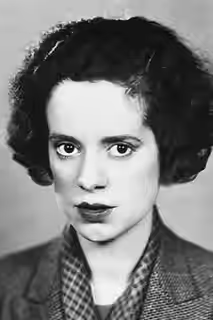
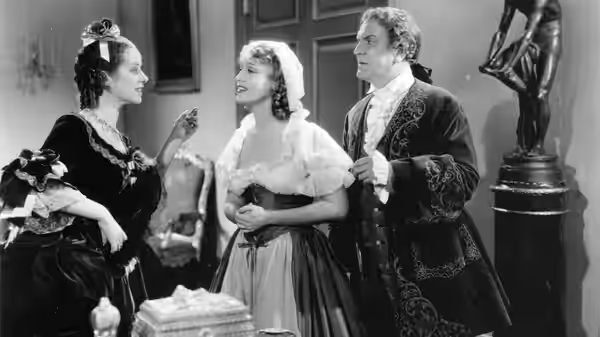
The relief comes from the character players, who understood that a Ruritanian romance needs people in it. Frank Morgan flutters and dithers as the governor, all wounded dignity and no spine, and Elsa Lanchester as his wife is a small, sharp, bird-like terror who steals every dinner she attends. Douglass Dumbrille makes the uncle properly cold. Joseph Cawthorn, as the puppet-show man Schumie, gets the warmest scenes in the film and plays them without asking for credit. Between them they supply the wit that the leads cannot.
The script is by Frances Goodrich and Albert Hackett, who had written The Thin Man for Van Dyke the year before, with John Lee Mahin, and the odd thing is how little of that snap survives. The plot is pure operetta furniture: a swapped identity, a ship of brides, pirates who arrive and leave in about four minutes, a governor who must not find out. The dialogue between the numbers exists to get us to the next number. William H. Daniels photographs it all on soundstages and does not pretend otherwise, but he lights MacDonald with great care, so her close-ups have a soft silver glow that the rest of the picture lacks. Blanche Sewell cuts the songs sensibly, holding on the singers rather than fidgeting, and keeps the whole thing to 103 minutes, which is about right.
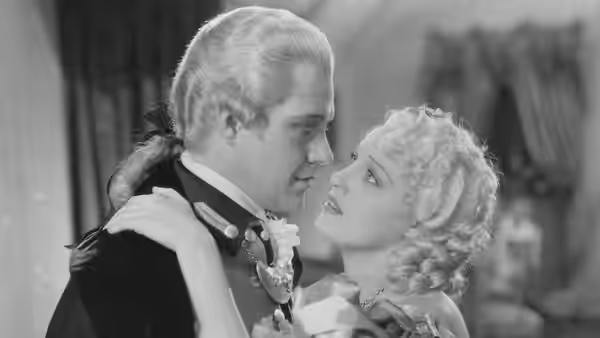
And then the two voices join, and we were got at. There is a duet late on that we will not describe, a melody the film has been teasing in fragments from the start, and when it finally arrives complete, MacDonald’s soprano over Eddy’s baritone, we found we had stopped minding about the lamppost. It is the one moment where the film’s calculation and its feeling are in the same place. Herbert wrote a tune that does the work, and the two of them simply let it.
See it for the singing, for Lanchester, and for MacDonald being funnier than her material. Do not see it for the romance, which is conducted between one actress and one voice. Watch it at home, where you can lean into the numbers and lean out of the wooing, and where Eddy’s stillness looks less like a fault of the film and more like a fault of the furniture.