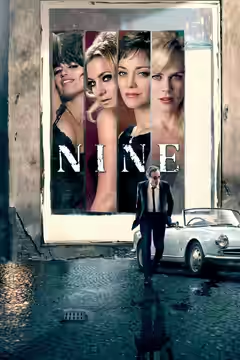
Rob Marshall’s musical keeps interrupting its troubled characters with songs that scarcely deepen them. Marion Cotillard supplies the hurt and anger, but a gifted cast and polished staging cannot make Guido Contini’s troubles absorbing.
Rob Marshall’s Nine has a capable cast and a persistent difficulty getting from a dramatic scene to a song without losing our interest. It is a disappointing musical, occasionally touching when it attends to someone other than Guido Contini. Anthony Minghella and Michael Tolkin’s screenplay asks us to spend a great deal of time considering this man’s troubles, but gives us too little reason to care about them. The performances offer more than the story allows them to do.
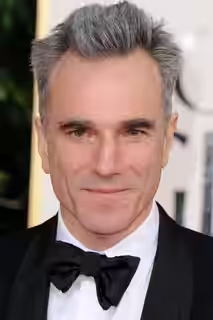
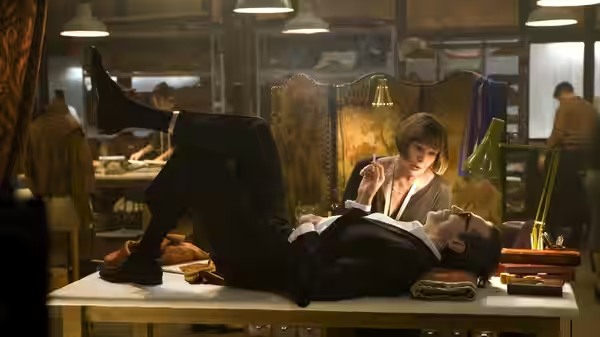
Daniel Day-Lewis gives Guido enough humour to suggest why he might hold other people’s attention. There is pleasure in watching an actor find comic possibilities in a character so occupied with his own difficulties, and the performance is less ponderous than the surrounding drama. But charm can only do so much when the same anxieties keep being presented for inspection. After a while we wanted the film to stop asking how Guido felt and give the women more time to answer for themselves.
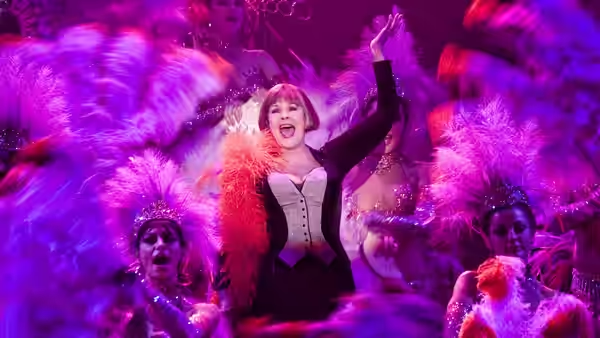
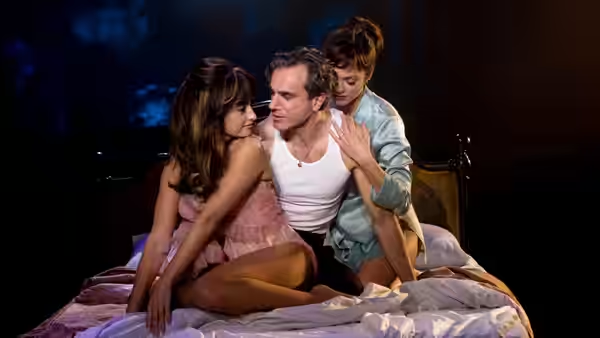
Marion Cotillard makes Luisa Contini worth that attention. We were moved by her flashes of anger, because they suggest hurt that has lasted longer than the scene we are watching. She makes the feelings clear without making them simple, and gives us someone to care about when the songs have failed to do so. Penélope Cruz also finds poignancy in Carla; these performances persuade us that the women have concerns beyond their usefulness to the man occupying the centre of the film.
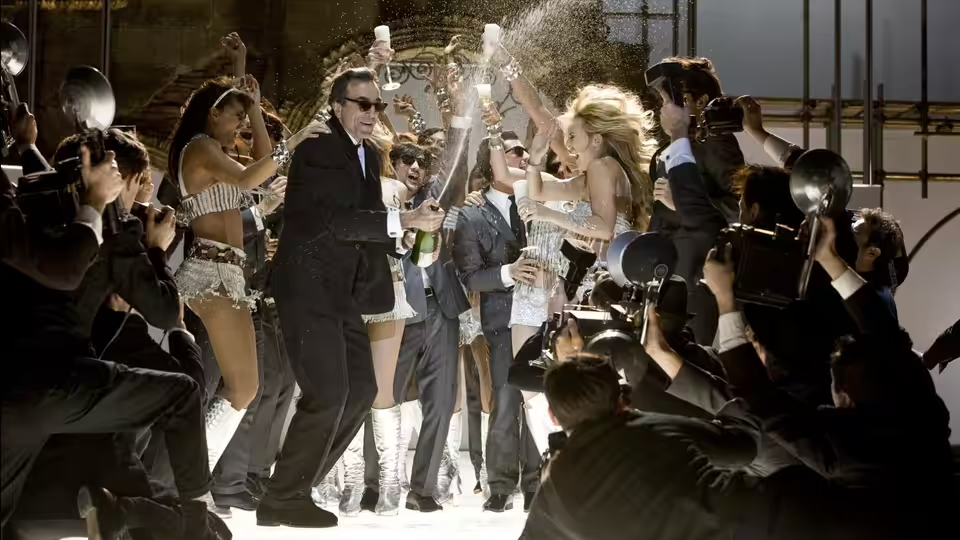
Dion Beebe’s cinematography and John Myhre’s production design give the musical numbers a polish that initially makes the stage-bound presentation seem promising. We can see the appeal of letting a performance occupy its own space, apart from the dialogue. Yet the separation soon becomes a problem, because the numbers tell us so little about the people singing them. There is little sense that the characters carry their feelings from the dialogue into the singing.
Wyatt Smith and Claire Simpson’s editing cannot establish a satisfying rhythm between those two parts of the film. Each return to song feels like another interruption, and we begin to anticipate the delay rather than the pleasure. Andrea Guerra’s music does not provide the continuity these transitions need, although the performers can sing and are plainly committed to the material. The deeper difficulty is that so few of the tunes stay with us, leaving the dramatic momentum repeatedly broken for numbers we scarcely remember afterwards.
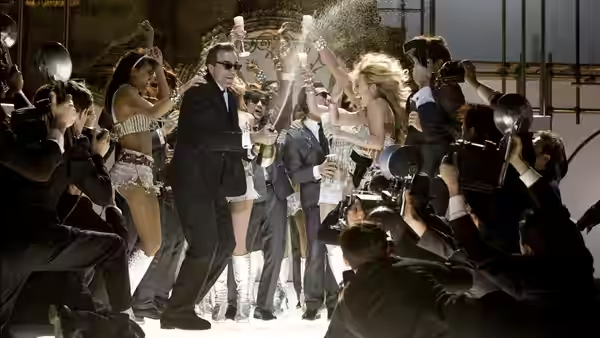
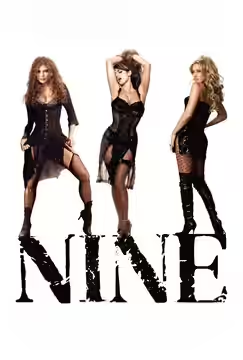
Fergie’s sequence supplies a welcome burst of energy, and it is worth acknowledging how much more alive the film can feel when a performer takes charge. That pleasure is frustratingly brief. A musical can make room for uncertainty, vanity and unhappiness, but its songs need to change our understanding of those feelings or simply give us musical pleasure. Too often the director stages a number as though the arrival of another capable singer were enough, then sends us back to Guido without much having changed.
There is no shortage of effort here, and the cast deserve credit for making individual passages matter. At 118 minutes, though, Nine asks for more patience than those passages repay. Admirers of Marion Cotillard have a reason to persevere, provided they are willing to wait through a good deal of someone else’s unhappiness. For the songs, we would look elsewhere.