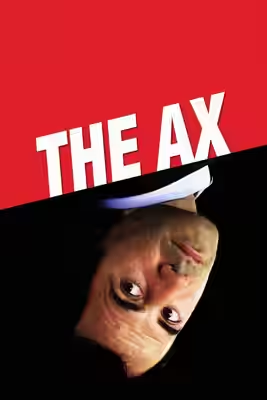
Park Chan-wook turns Westlake’s novel about a laid-off man killing his rivals for a job into a broad, exact black comedy, and Lee Byung-hun is superb in it. It runs long, it repeats itself, and the pictures carry it whenever the script does not.
Park Chan-wook has made a comedy about redundancy, and it is a comedy in which people die. Man-su (Lee Byung-hun) has a job at Solar Paper, a house with a garden he tends himself, a wife and two children. Then the company lets him go, and the film follows what a man does once he has been told he is surplus. What he does is notice that the one job he can get has a small number of other candidates, and that the number could be made smaller. It is very funny, it is handsomely made, and at 139 minutes it tells its best joke more than once. We recommend it, with that caveat.
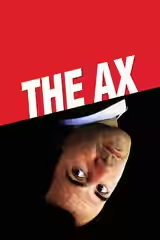
The book is Donald E. Westlake’s The Ax, about an American paper man, and the four screenwriters (Park, Lee Kyoung-mi, Don McKellar and Lee Ja-hye) move it to Korea without anything feeling forced. Costa-Gavras filmed the same novel in 2005 as Le Couperet; Park’s version is broader and more physical, and it adds a firm that is replacing its people with software, which gives the killings a grim modern logic. Man-su is not competing with the men he targets. He is competing with a machine, and they are simply in the way.
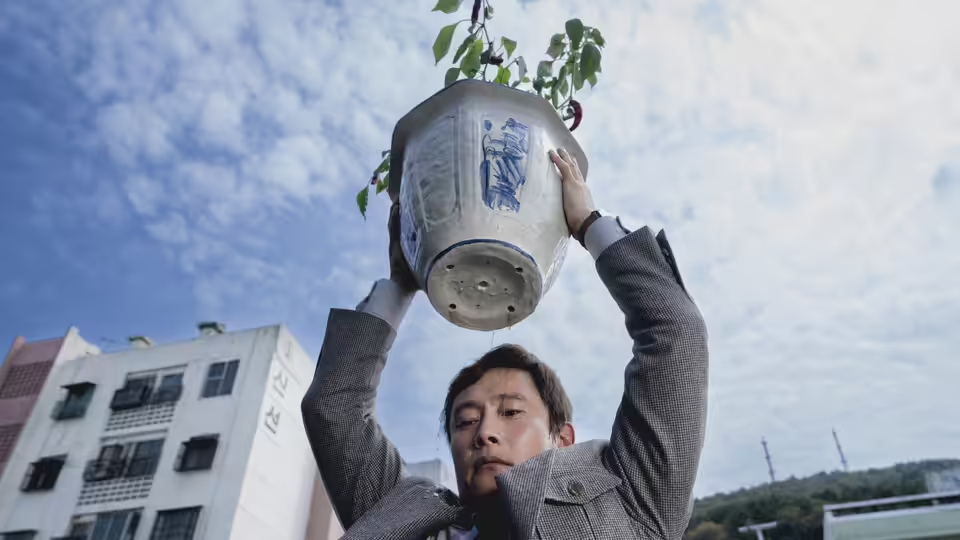
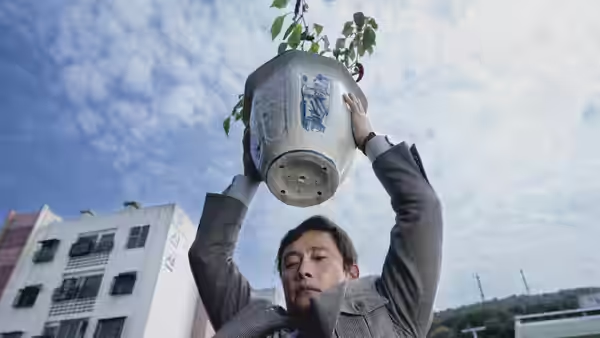
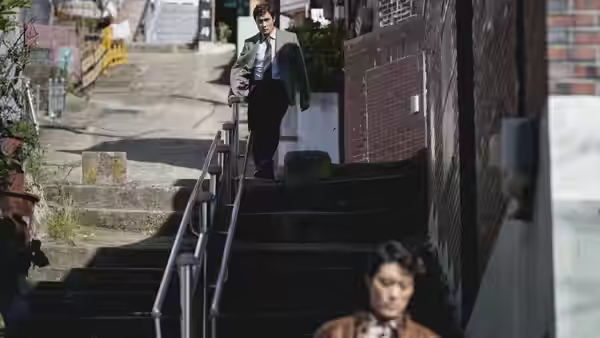
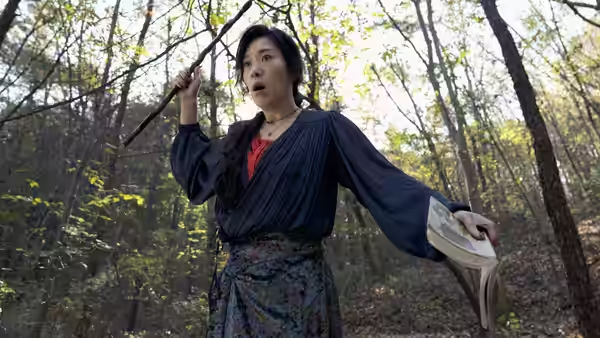
Kim Woo-hyung shoots it clean and wide, with the camera at odd heights and rooms that tilt when Man-su’s reasoning does. Ryu Seong-hie’s production design gives the family a house that is the real object of the film: wooden, warm, full of plants, every room shown long enough for you to understand what losing it would mean. Editors Kim Sang-bum and Kim Ho-bin let scenes run into each other so that you sometimes see what Man-su intends before he has done it, which is where much of the comedy lives. Jo Yeong-wook’s score stays light, strings that sound amused rather than alarmed, and it never tells you the killings are wrong. It does not need to.
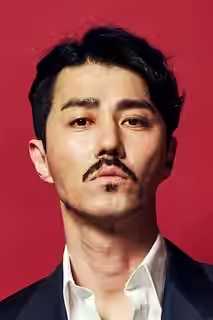
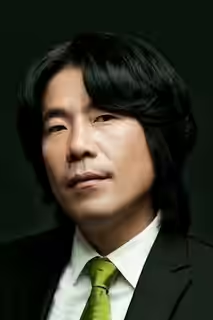
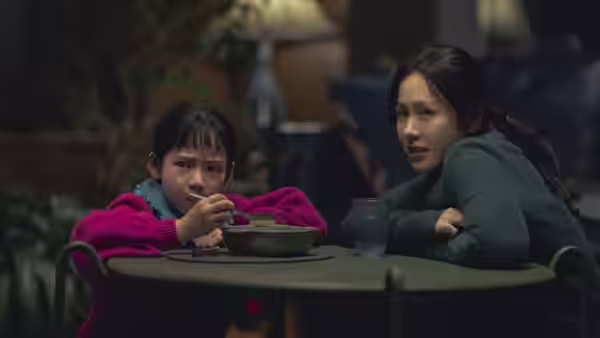
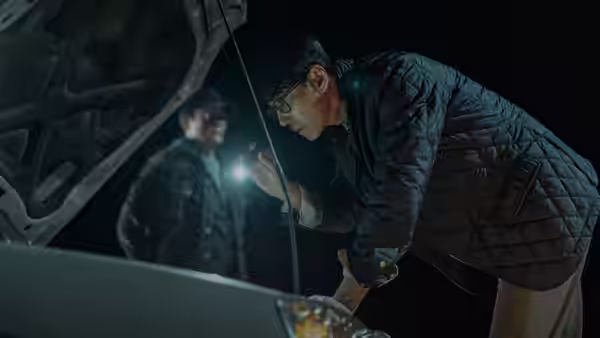
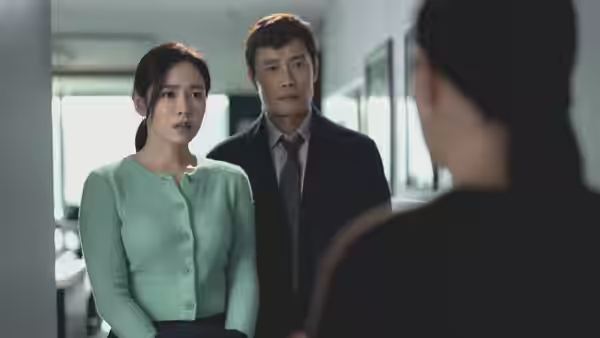
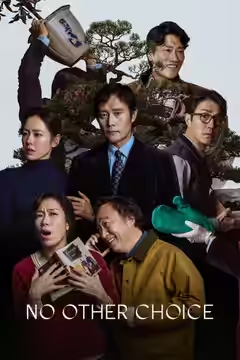
Lee Byung-hun plays Man-su as a man who has only ever had to be competent and does not know how to be anything else. He plans the murders the way he would plan a product launch, and he is bad at them. We laughed at the first attempt, which goes wrong in about four different ways, and then the film cut to Yeom Hye-ran, as the wife of the man he is trying to kill, and we stopped. Park does this repeatedly: he gives you the slapstick and then bills you for it. Lee Sung-min, as Gu Bum-mo, a rival as unemployed as Man-su, gives the target a face and a kitchen and a marriage. Son Ye-jin’s Mi-ri is not the wife who nags; she has her own arithmetic to do, and the film gets better whenever it lets her do it.
The trouble is the middle. One rival, then another, then another, and by the third the mechanics are familiar and the film knows it and carries on anyway. Park Hee-soon’s Choi Seon-chul, who holds the job Man-su wants, and Cha Seung-won’s Ko Si-jo are each given business the script does not have time to finish. The farce and the grief sit side by side, and there are scenes where one of them should have given way. Twenty minutes could go and the jokes would land harder.
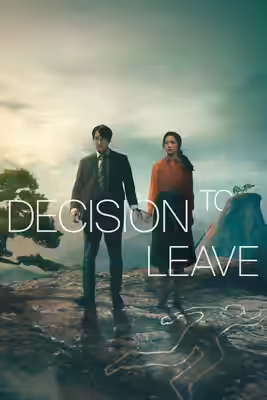
Against Park’s own films it is less cruel than Oldboy, less ornate than The Handmaiden and less romantic than Decision to Leave. It is plainer and broader than any of them. Some critics have called it his best; we think it is his most likeable, and we would not put it above Decision to Leave.
See it in a full cinema. The laughs need company, and the middle hour needs the laughs. At home you will have time to notice that the third murder looks a good deal like the second.