Jordan Peele’s third film is a flying saucer picture built the way Spielberg built Jaws, and for an hour and a half it is the most frightening thing he has made. The last stretch is a plan and a chase, and it is less frightening than what came before.
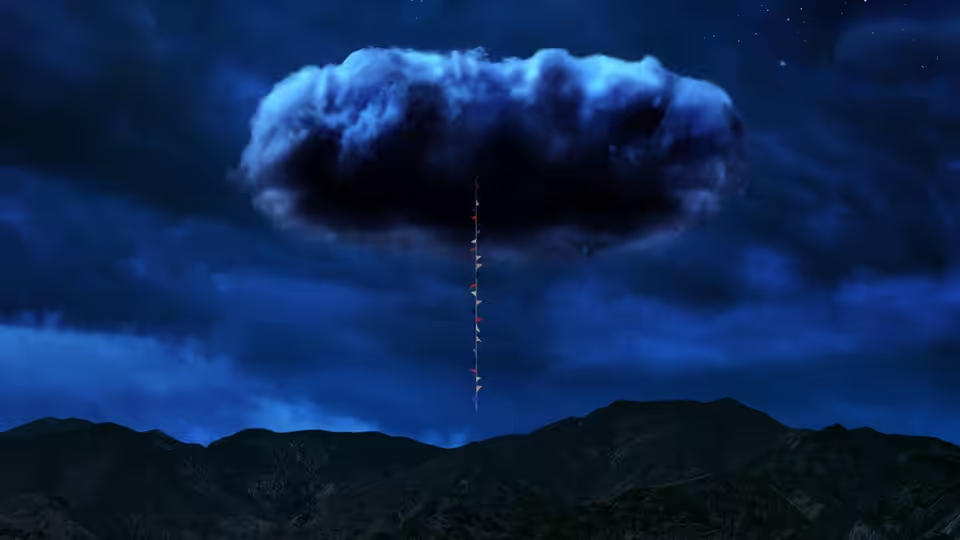
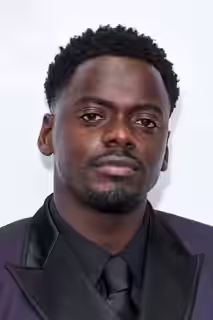
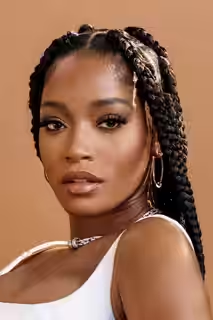
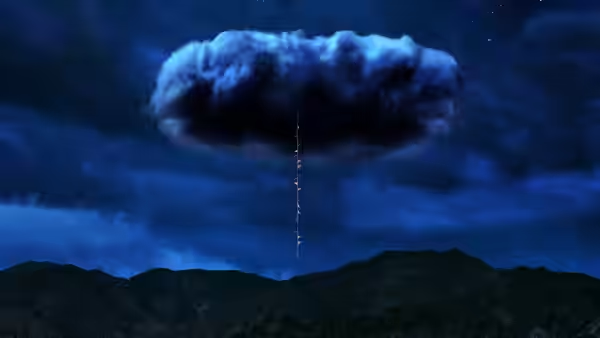
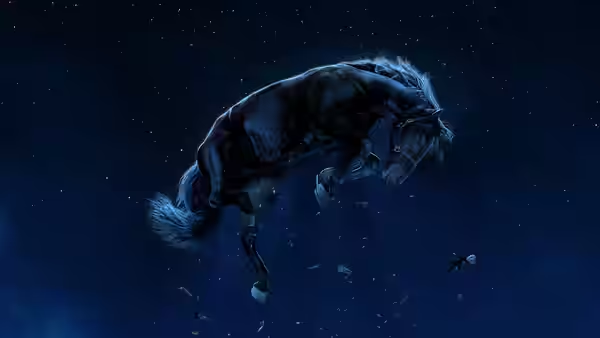
Jordan Peele has made a flying saucer film, the kind with a lone ranch, a wide sky and a thing in the clouds, and asked what anyone would do if one turned up. They would reach for a camera. OJ Haywood (Daniel Kaluuya) and his sister Emerald (Keke Palmer) run Haywood’s Hollywood Horses in Agua Dulce, north of Los Angeles, training animals for film sets, and they are losing money. In the opening minutes their father (Keith David) is killed by a nickel that falls out of a clear sky. Soon the horses are bolting, the power is cutting out and one cloud above the gulch has stopped moving. Emerald wants footage she can sell. OJ wants his horses safe.
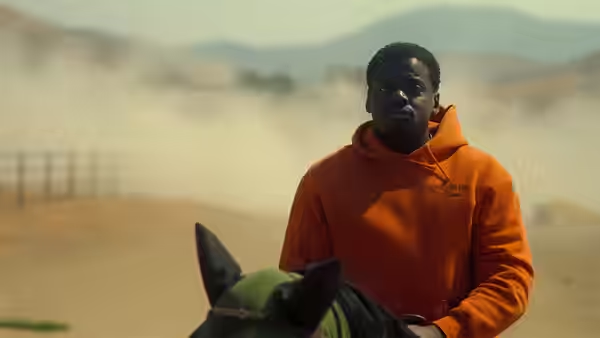
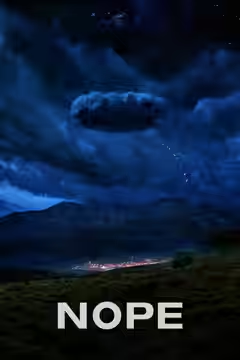
Hoyte van Hoytema shoots it for the biggest screen there is. The frame is mostly sky, the ranch a strip along the bottom of it, the Haywoods two small figures looking up. The night scenes are lit so the whole valley stays visible, silver and cold, which is what you want when you are trying to spot one dark shape among others. Ruth De Jong builds the Haywood house on a rise with one road in, and next door Jupiter’s Claim, a plywood frontier town with a stage and a wishing well, run by Ricky ‘Jupe’ Park (Steven Yeun), a former child actor who buys OJ’s horses one at a time. Alex Bovaird keeps OJ in one faded orange hoodie for most of the film and puts Jupe in rhinestones, a cowboy hat and a smile that has been photographed too often.
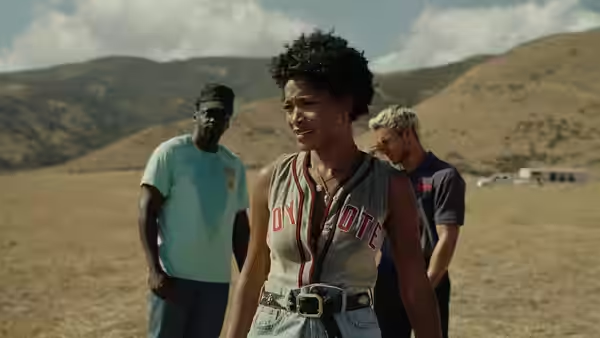
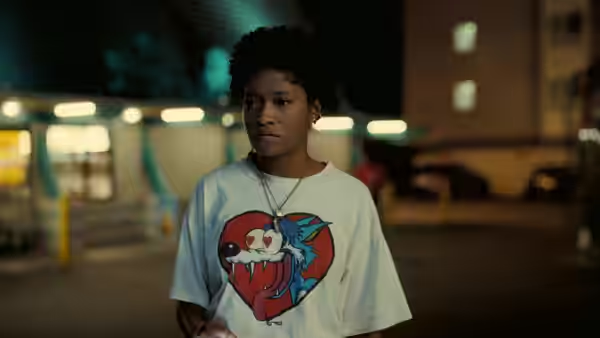
Kaluuya plays OJ almost without speaking. Chin down, eyes up, hands loose, a man who is good with horses and would rather deal only with them. Palmer talks for both of them; her safety speech to a film crew about their horse Lucky is a small comic aria delivered while he stands there in silence, and it tells you everything about the pair. Brandon Perea’s Angel Torres, the shop technician who installs their cameras and then will not leave, is the comic relief and turns out to be more than that. Michael Wincott’s Antlers Holst is a cinematographer who speaks in gravel and shoots on a hand-cranked camera, and every line he has sounds like something Peele saved up for years.
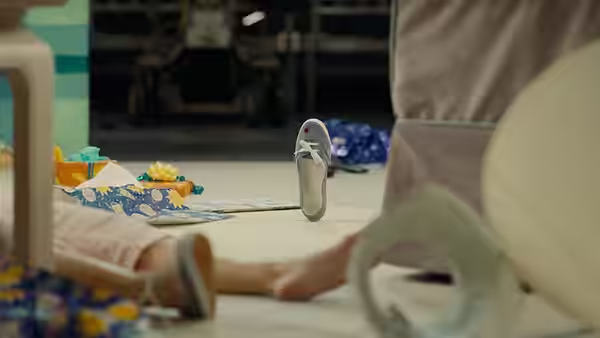
Here is what we felt. A night in the stables, where something walks slowly up the aisle towards OJ, had us watching through our fingers; we will not say what it turns out to be. Then there is the flashback to a sitcom set: a chimpanzee in a party hat, a shoe standing upright on its heel, a boy under a table. Peele keeps the camera low, mostly on the boy, and lets us hear the rest. We were more horrified than we have been in a cinema for years, and he showed us almost none of the violence. It is the one scene where the film’s idea, that staring at a wild thing does not tame it, is on the screen rather than in the dialogue.
The trouble comes late. Once the thing in the sky has been seen properly, the film turns into a heist: a plan, a bicycle, a row of inflatable tube men and a great deal of sky. Nicholas Monsour cuts it cleanly and we always know who is where. Michael Abels’ score swells from nervy strings into a western theme with brass. But the dread has gone, and we noticed. The Gordy story and the saucer story are laid side by side and asked to explain each other, and the film says the connection out loud twice in case we missed it. We had not.
Get Out (2017) had one idea and a locked house. Us (2019) had one idea and doubled it. Nope has three or four and the widest sky Peele has had to work with, and it is the loosest of the three. It is also the one we would most like to see again, on the biggest screen we can find, because at home the sky shrinks and the cloud looks like a cloud. It runs 130 minutes and carries a 15.