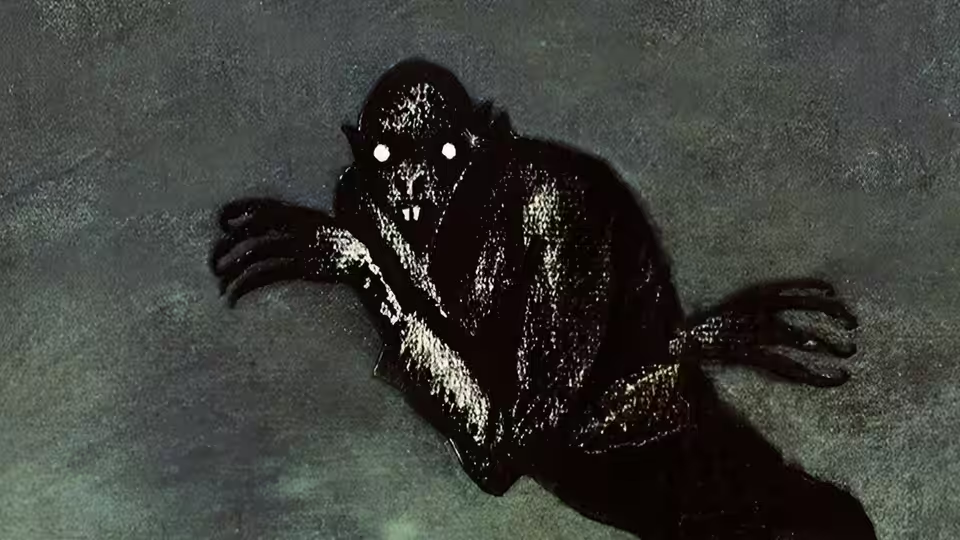
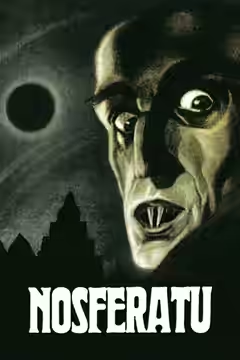
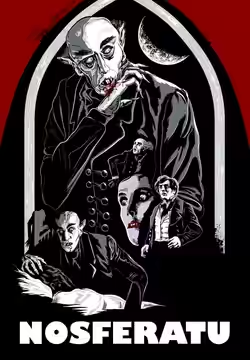
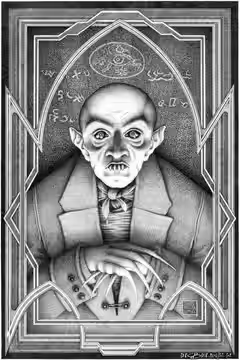
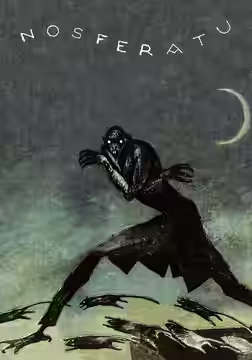
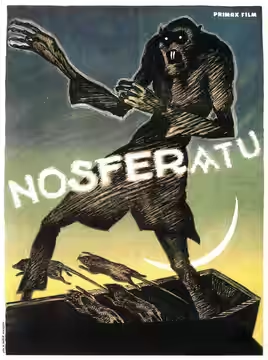
F. W. Murnau’s Nosferatu remains frightening because it gives us time to look at Max Schreck’s Count Orlok. The broader performances can distract, but the carefully framed spaces keep their menace.
Nosferatu is still frightening, and F. W. Murnau earns that response without needing us to make allowances for 1922. This loose adaptation of Bram Stoker’s Dracula, scripted by Henrik Galeen, understands how long we will keep looking at a person who seems almost, but not quite, human. Its stretches of broad acting and slow exposition are worth putting up with. The director gives Count Orlok enough time and space to become a physical presence we would rather not have in front of us.
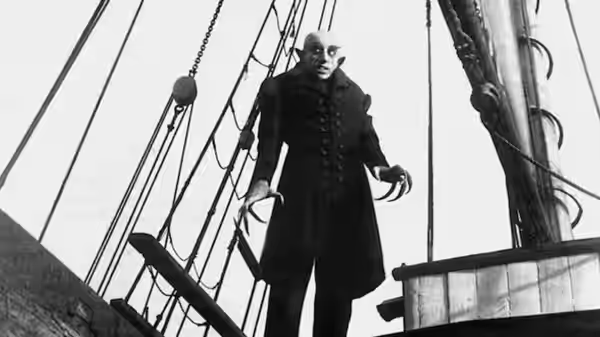
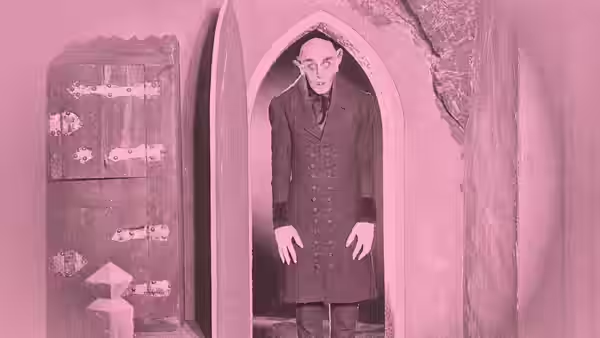
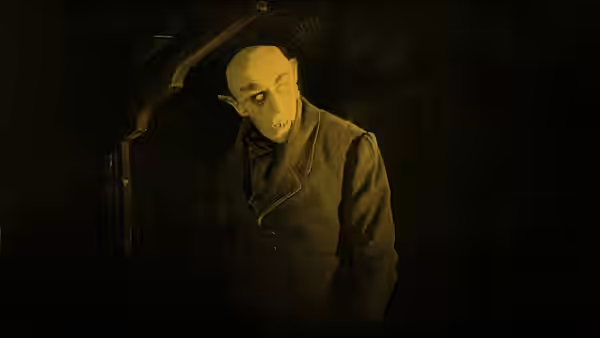
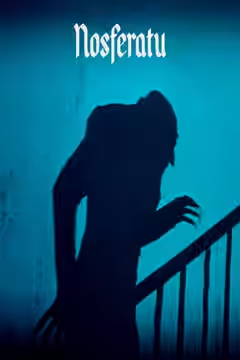
Max Schreck does much of the work by holding himself rigidly while the other performers expend considerably more energy. We were frightened by Orlok standing in a doorway, his body fitting the opening with an unpleasant exactness. There is time to inspect him, and inspection does not help: the ears, the long fingers and the fixed attention only become more troubling. The performance offers little encouragement to imagine spending an agreeable evening with this count.
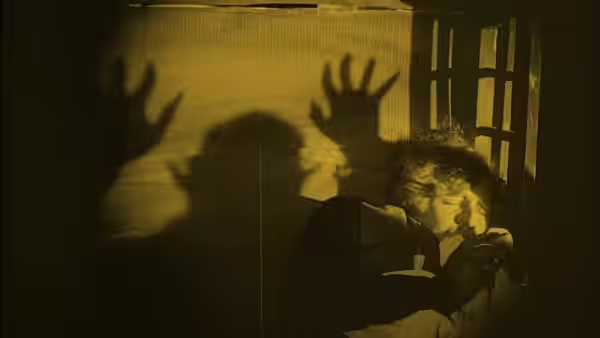
Günther Krampf and Fritz Arno Wagner, the cinematographers, make that effect depend on the space around him as well as on the face. We can read the shapes in the frame clearly, which makes it harder to dismiss what occupies them as a momentary glimpse. Doorways give the figure a hard outline; empty areas leave us waiting for something to enter.
Albin Grau’s costumes help keep Orlok forbidding, particularly the severe coat that encloses his thin body. The clothes allow little suggestion of comfort or ease, and the make-up makes his face difficult to read as friendly. Hans Erdmann’s music gives the held images a sense of forward movement, though the count’s pauses are what most effectively sustain our unease. The costume and the actor’s bearing make even a motionless figure worth watching closely.
Not every performance benefits from such close attention, and Gustav von Wangenheim’s Hutter can be exhaustingly demonstrative. His cheerfulness is established well before the acting stops insisting on it, so the opening takes longer to settle than it needs to. Greta Schröder gives Ellen a more useful watchfulness, allowing anxiety to remain in a look rather than always announcing it with a gesture. The slower passages ask for patience even after the threat has become clear.
We do not need a vampire to be charming. Max Schreck leaves little chance of mistaking this one for an unsuitable romantic prospect. In a genre that can become preoccupied with the count’s manners, this insistence on making him repellent remains welcome.
At 94 minutes, it asks for patience in places, but there is no need to approach it as homework. The images are clear, the fear is direct, and the count needs no explanation of his historical importance before he can disturb us. Choose an evening when nobody needs the story to hurry.