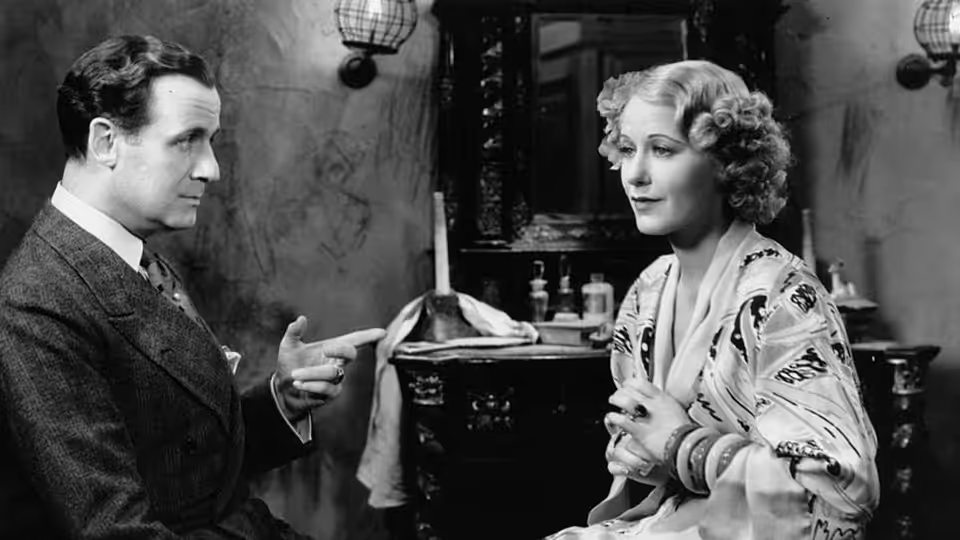
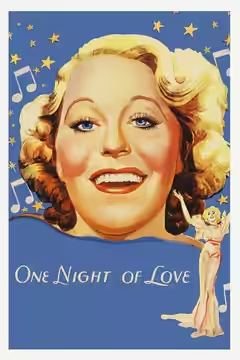
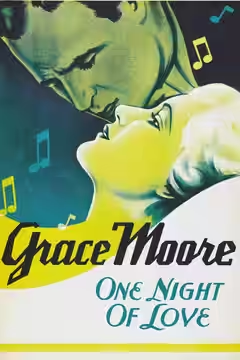
Grace Moore’s first big film is a slight backstage romance built to carry her voice, and the voice carries it. Tullio Carminati makes the tyrant teacher a pleasure; the plot around them could have been assembled from a kit.
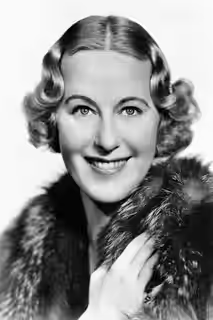
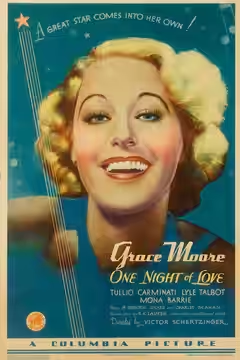
Grace Moore was a soprano at the Metropolitan Opera before she was a film star, and One Night of Love is Columbia’s attempt, with Harry Cohn producing, to put grand opera in front of people who would never buy a ticket for it. The plan is simple. Wrap the arias in a story about a girl from New York who goes to Milan, finds a maestro, and falls for him against orders. Victor Schertzinger directs and, with Gus Kahn, wrote the songs that are not opera. The film runs 84 minutes, is pleasant for most of them, and is at its best whenever Moore stops talking and sings.
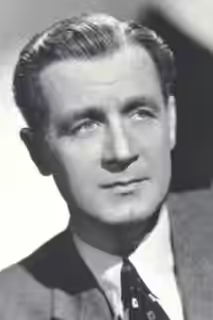
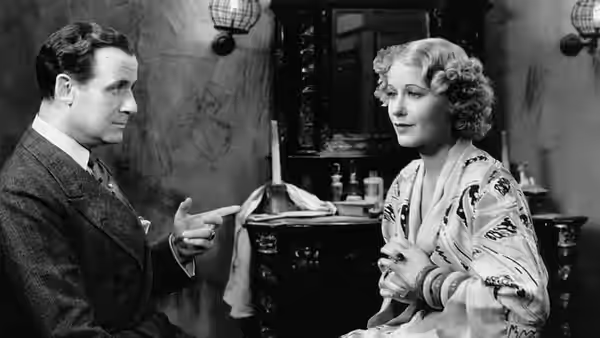
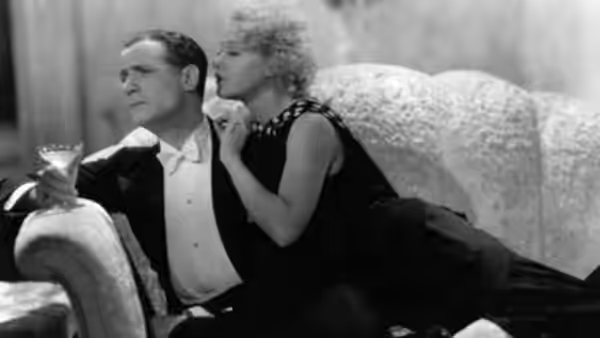
Tullio Carminati is the reason the talking is bearable. His Giulio Monteverdi is a tyrant with a pocket watch who makes Mary run scales while he butters his toast and forbids her to fall in love because feeling, he says, ruins a voice. Carminati plays it half as a joke on himself, so that every order comes with a small flicker of doubt about whether he means it. Moore, as an actress, is brisk and unfussy and does not have much range, but she does not need it; the part asks her to be stubborn and hopeful and she is both.
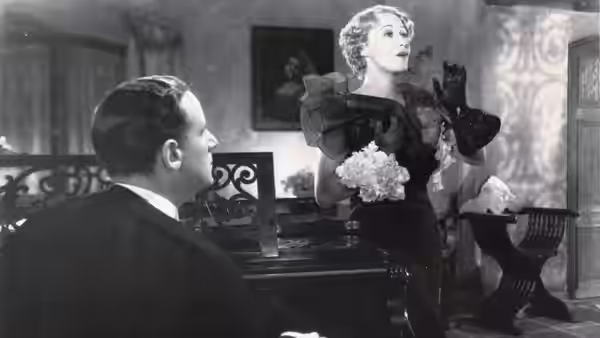
Schertzinger’s best decision is to let her sing whole numbers. The café scene, in which she starts a song for a room full of diners and the diners gradually join in, is the one that got us. We found ourselves grinning at a table of strangers singing along with a soprano, the kind of gathered-round-the-piano warmth that almost never survives being filmed, and it does here because Gene Milford does not cut away from it. Later she sings the Habanera from Carmen in full costume and a stretch of Madama Butterfly, and the excerpts are chosen for people who know the tunes without knowing the operas.
The recording is the problem, and it is not the film’s fault so much as the year’s. At her loudest, Moore’s top notes pinch into something like a whistle through tin, and the orchestra flattens behind her. It costs the picture at exactly the moments it most wants to impress. In the café, at conversational volume, she sounds like a person; on the opera stage she sounds like a gramophone.
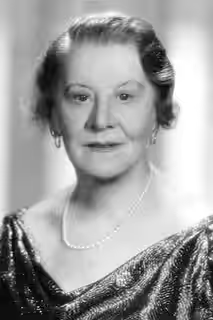
Joseph Walker lights her in soft high key so that her face glows against darker rooms, and Robert Kalloch dresses her in gowns that get grander as her career does, which is a serviceable way of telling the story without dialogue. Jessie Ralph’s Angelina and Luis Alberni’s fussing Giovanni supply the comedy from stock, and both know how to make stock look fresh for the length of a scene.
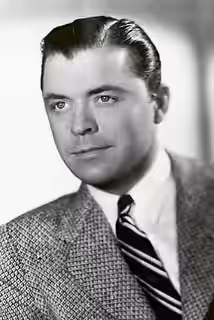
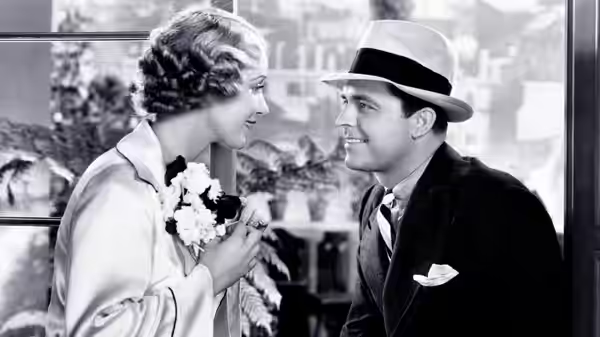
The story is a template. There is the boy from home, Lyle Talbot’s Bill Houston, who is given nothing to play but patience and a dinner jacket. There is the rival, Mona Barrie’s Lally, who exists to be cool and unkind at the right moments. Three writers, James Gow, Edmund H. North and S.K. Lauren, share the screenplay credit, and the joins show. The second half turns on a misunderstanding we will not describe, except to say that two grown adults could have settled it in a sentence and the film needs them not to.
Other opera singers were put in front of cameras after this one, and most of those films are stiffer than this. Schertzinger has a light hand and a musician’s sense of when a scene has gone on long enough. He does not have a dancer or a wit on the payroll, and beside the musicals being made at the same time this one looks a little plain.
Watch it for the songs, and for Carminati, and forgive the plot as you would forgive a programme note. It is a U certificate and it does not overstay; if the café scene does not get you, nothing after it will.