Jean Cocteau’s Orpheus is an inventive, unsettling fantasy that makes an ordinary mirror feel unsafe. Its romance can seem remote and the pace occasionally slackens, but we recommend giving its strange images time to work.
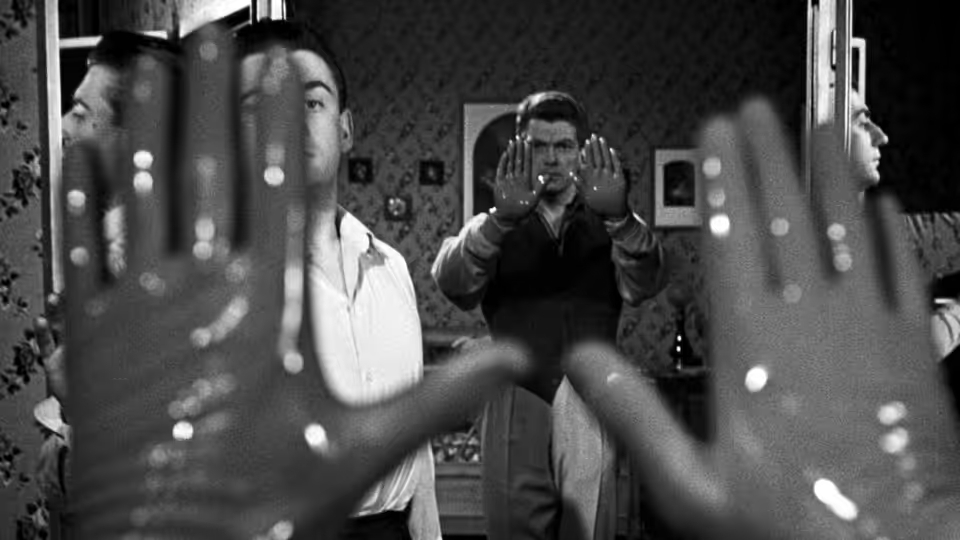
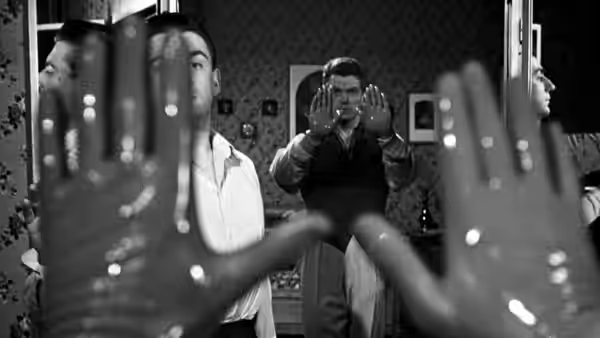
Jean Cocteau’s Orpheus is worth seeing for the ease with which it makes ordinary things unsettling. The romance is sometimes distant, and the pace occasionally drifts, but the fantasy has a confidence that carries us through those weaker passages. Cocteau brings the Orpheus and Eurydice legend into a postwar setting and makes a mirror a possible entrance to the world of the dead. He gives us time to look at the glass and consider what passing through it might mean.
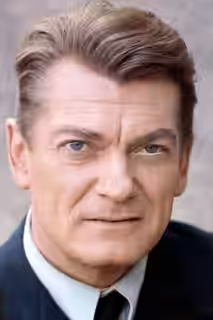
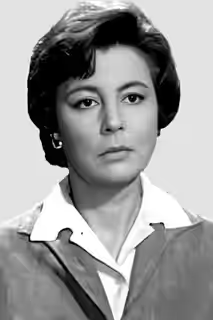
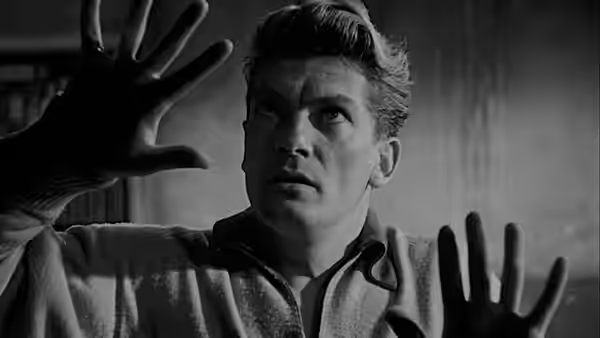
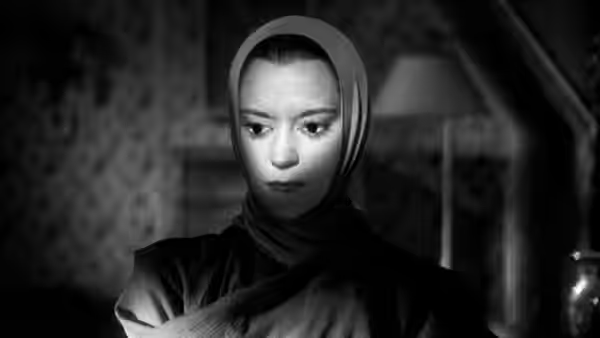
Jean Marais gives Orphée the gravity the story needs, although his solemnity can also keep us at a distance. María Casares is more compelling as Death: her presence makes the supernatural feel uncomfortably close, without needing an effect to announce it. François Périer’s Heurtebise brings a welcome lightness to a film that sometimes seems reluctant to relax. These performances give us different ways of approaching the strangeness, and Périer is particularly useful when the others threaten to become too imposing to care about.
Nicolas Hayer’s cinematography makes the mirror effects persuasive because the surface remains so ordinary. The glass needs to retain the look of something we might pass without a thought, and the images allow it to do that. Jean d’Eaubonne’s production design gives the fantasy a similarly useful grounding in recognisable surroundings, where a supernatural threshold need not advertise itself. We felt a small, unreasonable chill at those mirrors, because a familiar surface had stopped offering the reassurance of a barrier.
Jacqueline Sadoul’s editing helps the visual tricks feel matter-of-fact, allowing us to register them without making each one an occasion for applause. There is enough time to enjoy the impossibility, and the film does not seem embarrassed by the simplicity of its means. Georges Auric’s music supports the solemn mood, although we found less to remember in the score than in the images. At times, a little less musical insistence on the seriousness of the occasion would have been welcome.
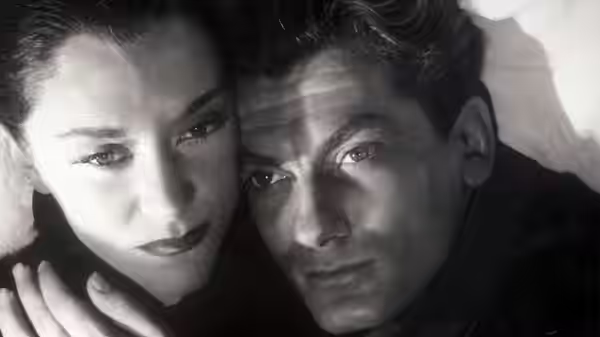
The weakness is that Cocteau can be so absorbed in strange possibilities that the romance feels underattended. Marie Déa gives Eurydice a human scale, but the character has less chance to command our attention than Death. When the pace slackens, that imbalance becomes harder to ignore, and we begin waiting for another impossible image rather than feeling much concern for the lovers. At 95 minutes this is hardly an endurance test, but a few passages ask for patience that the performances do not entirely repay.
Fantasy often tries to persuade us by furnishing an imaginary place down to the last detail. Cocteau changes the behaviour of familiar things and expects us to supply some imagination of our own, which gives Orpheus a welcome directness despite its solemn patches. The visible simplicity of the tricks never stopped them working on us; there is considerable pleasure in being unsettled by something we know cannot happen. Give it a patient evening, and resist the urge to treat every strange image as a riddle with a correct answer.