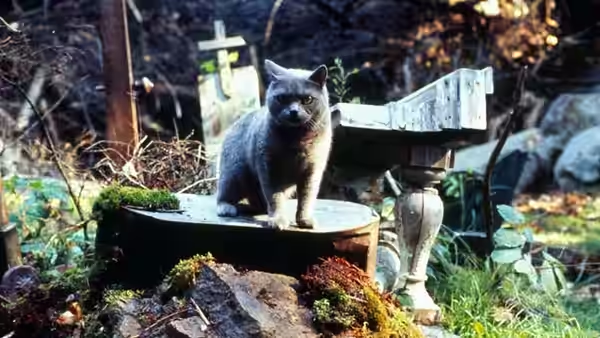
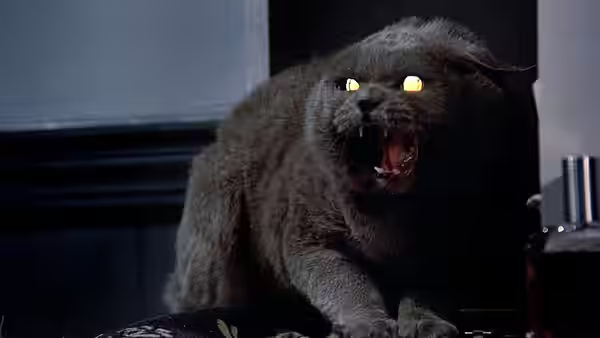
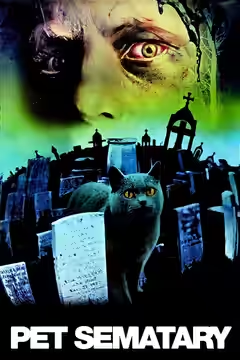
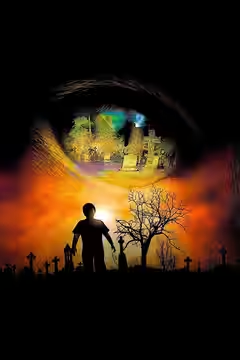
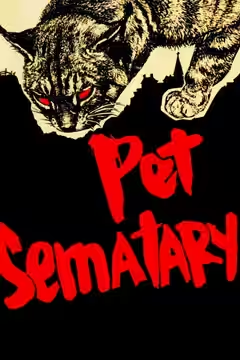
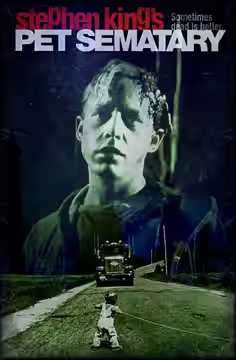
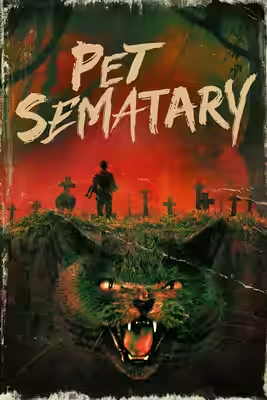
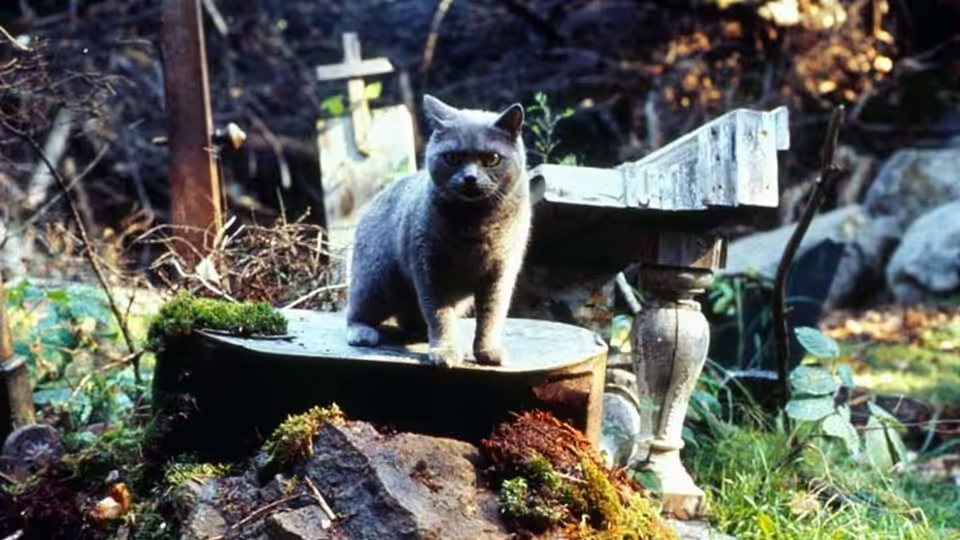
A gray cat stands on a stone grave marker among crosses and overgrown pet graves
Film review

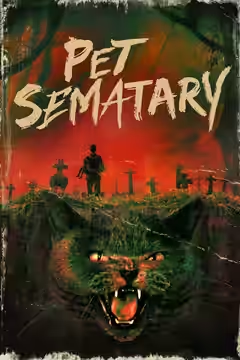
Pet Sematary

1989 · Directed by Mary Lambert · 1h 43m

In a sentenceSometimes dead is better, says the neighbour, before walking the hero straight to the one place where it isn’t

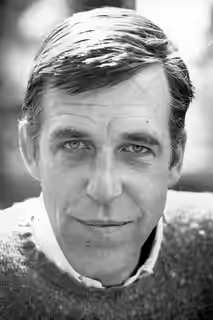
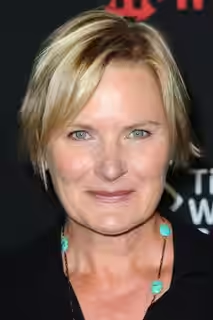
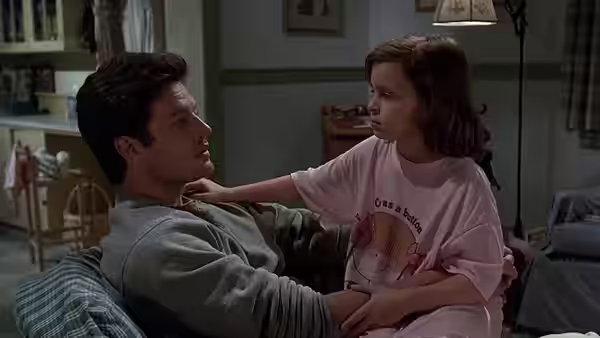
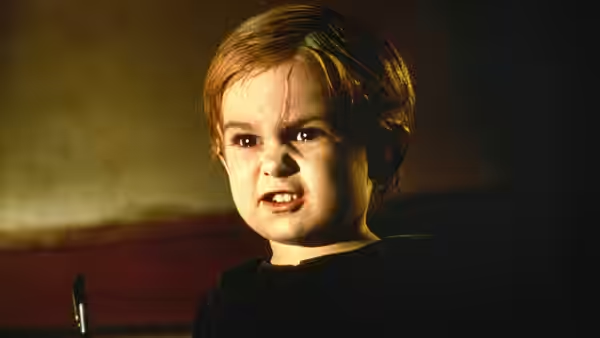
Doctor Louis Creed (Dale Midkiff) moves his wife Rachel (Denise Crosby), daughter Ellie (Blaze Berdahl), toddler son Gage (Miko Hughes) and the family cat, Church, to a large house in Ludlow, Maine, where he has taken a job at the university infirmary. The house sits on a road where lorries thunder past. Their neighbour, Jud Crandall (Fred Gwynne), leads the family up a woodland path to the pet cemetery, where local children have buried road-killed animals for generations. At work, a student, Victor Pascow (Brad Greenquist), is brought in dying from a car accident and whispers a warning to Louis about the ground beyond the cemetery. When Church is killed on the road while Rachel and the children are away, Jud takes Louis over the deadfall to older ground.

Plays from YouTube when you press play; nothing loads from them until then.

Fi1m review

Stephen King adapts his own novel and Mary Lambert films it as though the story would do the frightening by itself. Fred Gwynne and one bedroom flashback earn the 18 certificate; the rest is flat, hurried and led by a man who never looks worried.

Stephen King wrote the screenplay for this one himself, from his own novel, and Mary Lambert directs. Louis Creed (Dale Midkiff), a doctor, moves his wife Rachel (Denise Crosby), daughter Ellie (Blaze Berdahl), toddler Gage (Miko Hughes) and the family cat to a white house in Ludlow, Maine, on a road where the lorries do not slow down. The neighbour, Jud Crandall (Fred Gwynne), walks them up to the pet cemetery, where local children bury what the road kills. Beyond it, past a wall of fallen trees, is older ground, and Jud knows what it does. That is the whole engine, the monkey’s paw told again with a cat, and it is a good one. The film has two or three scenes as horrible as anything a mainstream horror film of its decade put on screen, and between them it is flat, hurried and oddly calm.

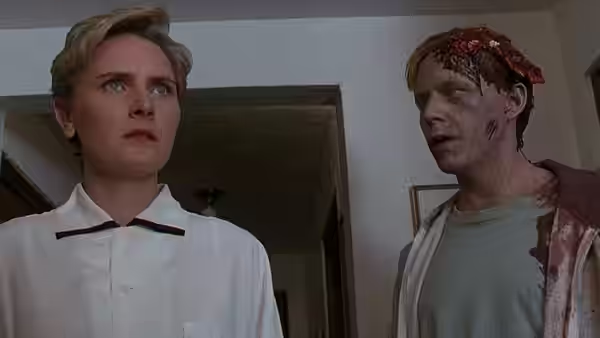
Gwynne is the reason to watch. A long way from The Munsters, he plays Jud as a lean old Mainer in a cap, with a voice like a gate that wants oiling, and he delivers every warning with the sorrow of a man who knows he will be ignored. “Sometimes dead is better,” he says, and the film uses it as its tagline. The other thing that works is the flashback to Zelda, Rachel’s sister, dying of a wasting disease in a back bedroom. Andrew Hubatsek plays her, twisted in the bed with her spine bent like a hook, and when she laughed at the child Rachel we were horrified, in a way the rest of the film keeps reaching for and missing. Brad Greenquist’s Victor Pascow, a student who arrives at Louis’s infirmary with his head open and keeps turning up afterwards to give advice, is nearly as good and is played, sensibly, half for laughs.

Then there is Midkiff. Louis is told, in plain words, what the ground does, and goes up there anyway, and the performance never shows us why. He is handsome and even-tempered and seems to be waiting for someone to tell him how worried to look. King’s script does not help him. The novel takes its time over grief and over Louis’s reasons; the film cuts the reasons and keeps the events, so that people do terrible things because the book says it is time. The second half takes the turn the title has already promised, and we will not describe it, except to say that the film gets there in a rush and seems relieved to arrive.

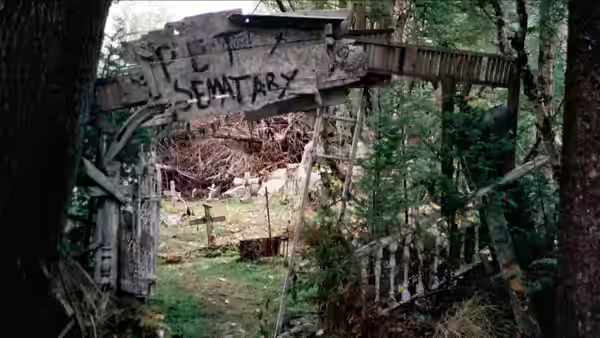
Peter Stein’s camera is at its best in the woods. The night walk to the burial ground, over the deadfall and up on to a shelf of stones, is shot in blue mist with the sky turned orange behind it. Michael Z. Hanan has built the pet cemetery as rings of crooked little crosses behind a misspelt sign, and it is the one place in the film that looks old. The house, by contrast, is lit like a show home, and the lorry road that is meant to hang over everything is just a road. Elliot Goldenthal’s score, a choir over low strings, does a good deal of the work the direction does not, and Daniel P. Hanley and Mike Hill cut every scare the same way: a short silence, then the noise. The cat, when it comes back, is mostly a hiss on the soundtrack and a close-up of an annoyed animal.

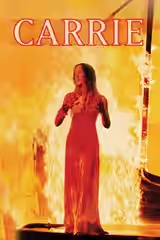
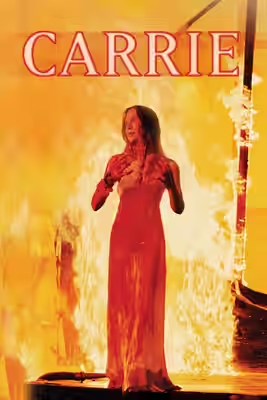
Set beside the King adaptations that came before it, Carrie (1976) and The Shining (1980), this is a small, plain thing, directed as though the material would do the frightening by itself. Most critics at the time thought it slow and mean-spirited, and they were not wrong about the slowness. We are a little kinder, because of Gwynne and Zelda, and because the idea underneath, that a grieving man will do the stupid thing even after he has been told, is one the film at least understands, even if it cannot act it.

The 18 certificate is earned, though not for blood. It is earned for what the film is willing to do to a family, and for the stretch where we sat with our hands over our mouths, less frightened than appalled. If you can forgive a lead who never seems to be in the film he is in, there are two scenes here you will not forget. How badly you want to be reminded of them is a question for you and the sofa.

Critical consensus AI synthesised

32
Positive
0
Mixed
1
Negative
4

With only five reviews in so far, the verdict on Pet Sematary leans firmly negative. Most critics find Mary Lambert’s adaptation flat and hurried, with Empire blaming a screenplay that strips out the novel’s character detail and Variety faulting a slasher approach that wastes the book’s chill. Time Out objects to a morbid, nasty tone, and The New York Times takes against the cat and the toddler in particular. The one dissent is the Los Angeles Times, which finds the film compelling, if disturbing, and credits Lambert’s direction, the performances and the visual craft. The spread is narrow at the bottom and wide only because of that single, qualified defence.

Los Angeles Times
24 April 1989 · KEVIN THOMAS
65*

Thomas finds the film compelling but deeply disturbing, and wonders whether its gruesomeness will provoke a backlash. He praises Mary Lambert’s direction for making the story’s contradictions work, as well as the film’s performances and visual craft.

Read the full review →
The New York Times
22 April 1989 · Janet Maslin
30*

The headline signals a negative verdict on the film’s treatment of reincarnation. It singles out the cat and toddler as the elements that give the premise a bad name.

Read the full review →
Empire
9 November 1989 · Kim Newman
25*

Newman finds the adaptation flat and frustrating, despite the novel’s weighty themes. He singles out the screenplay’s removal of character detail and motivation as the reason its plot feels implausible.

Read the full review →
Time Out
· NF
20*

The review is strongly negative, describing the adaptation as leaden and unsuccessful. It singles out its morbid, nasty tone as a failing.

Read the full review →
Variety
31 December 1988 · Variety Staff
20*

The review finds the film’s adaptation of Stephen King’s novel disappointingly dull and hastily assembled. It faults the slasher-film approach for squandering the source material’s chilling potential.

Read the full review →

Straight answers AI written, from our review

Is Pet Sematary worth watching?
Pet Sematary is a mixed prospect we score 45/100, worth considering for Fred Gwynne and a few disturbing scenes rather than sustained fear. We find the storytelling hurried and the lead performance oddly calm; patient Stephen King enthusiasts may forgive those weaknesses, but we cannot recommend it more broadly.
How long is Pet Sematary, and what is it rated?
Pet Sematary runs 1h 43m. It is a horror film.
Where can I watch Pet Sematary in Singapore?
Pet Sematary is streaming on HBO Max in Singapore. Availability is checked daily; the links above go straight to each service.
How violent or frightening is Pet Sematary, and is it suitable for children?
Pet Sematary carries a UK 18 certificate and is not suitable for children, with its most disturbing material involving family suffering rather than blood alone. There is a graphic head injury, and a bedroom flashback involving a dying sister horrifies us through her physical distress and cruel laughter; squeamish viewers have good reason to steer clear.
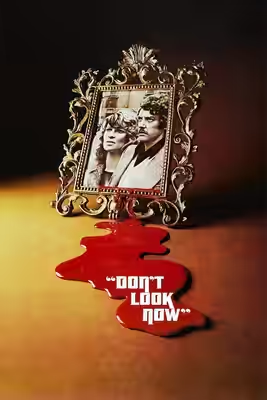
How does Pet Sematary compare to Don't Look Now?
Pet Sematary is the weaker choice beside Don’t Look Now, which treats bereavement with more patience, more convincing relationships and far greater dread. We recommend the latter for fear rooted in people worth caring about, despite its occasionally laboured warnings; Pet Sematary offers a few horrible moments but rushes the grief that should make them matter.
Is Pet Sematary based on a true story or a book?
Pet Sematary is based on Stephen King’s novel, with King adapting his own book for the screenplay, rather than on a true story. No prior reading is needed to follow the film, but we find that it keeps the novel’s events while cutting much of the grief and reasoning that explain Louis’s choices.
What should I watch after Pet Sematary?
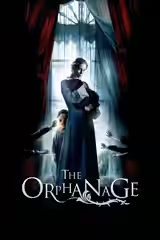
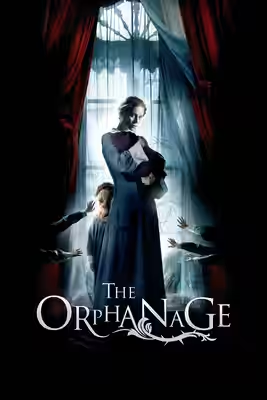
After Pet Sematary, try Don't Look Now (1973, Fi1m 90): Grief after a drowned child, told by Roeg with far more patience and far more dread. Then Carrie (1976, Fi1m 86): The first King film and still the one that understands his people best; and The Orphanage (2007, Fi1m 81): A Spanish house, a missing boy, and a mother who will not stop looking.

Cast

Awards

Golden Raspberry Award for Worst Original Song, 1990

Nominated
Golden Raspberry Award for Worst Original Song

If you liked this, try…

  1. Don't Look Now (1973, Fi1m 90)Grief after a drowned child, told by Roeg with far more patience and far more dread.

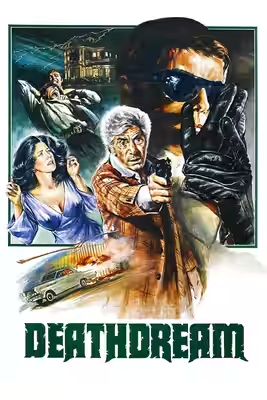
  2. Deathdream (1974) · not reviewed yetA dead son comes home from Vietnam, and his mother will not hear a word against him.

  3. Carrie (1976, Fi1m 86)The first King film and still the one that understands his people best.

  4. The Orphanage (2007, Fi1m 81)A Spanish house, a missing boy, and a mother who will not stop looking.

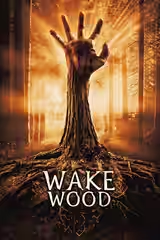
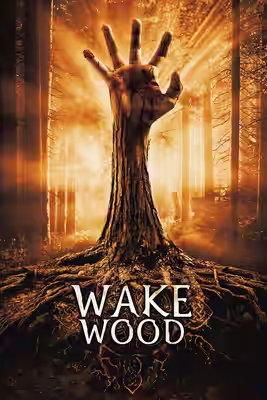
  5. Wake Wood (2009) · not reviewed yetIrish villagers offer grieving parents three days with their daughter, with conditions.

Free account

Know what to watch tonight

Two lists that know where things are streaming, collections you can share, your own score beside ours, and Discover that remembers what you have seen.

  • Want to see, sorted by what is streaming now
  • Seen, with your score out of ten
  • No adverts, ever