Film review

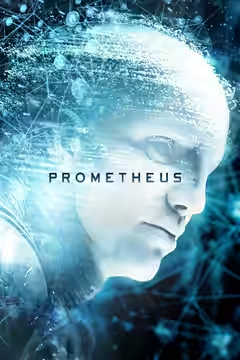
Prometheus

2012 · Directed by Ridley Scott · 2h 04m · MPA R

In a sentenceThe android is the only one aboard who seems to have read the brief, and he is the one to worry about

Science FictionMysteryHorror

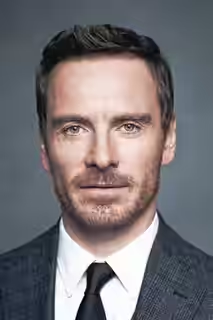
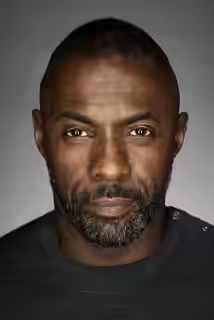
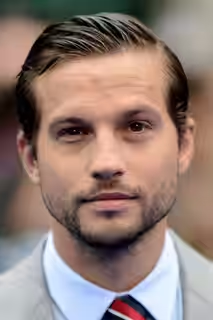
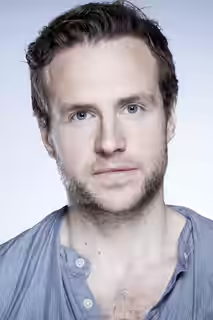
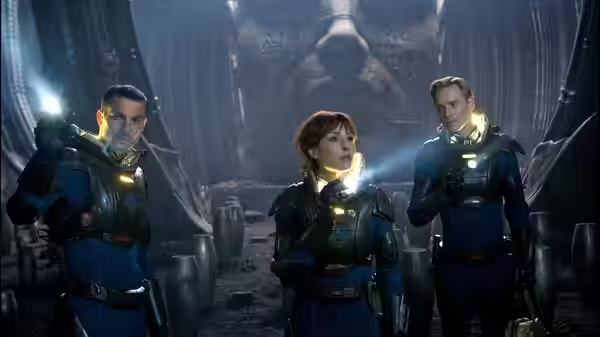
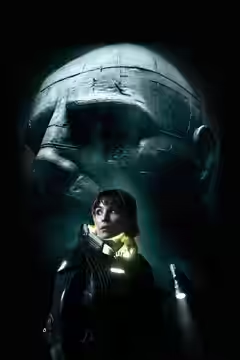
In 2089, on the Isle of Skye, archaeologists Elizabeth Shaw (Noomi Rapace) and Charlie Holloway (Logan Marshall-Green) find a cave painting of a giant pointing at a cluster of stars, the same pattern they have seen in cultures that never met. Four years later they wake aboard the Prometheus, a survey ship paid for by the ageing Peter Weyland (Guy Pearce), run on his behalf by Meredith Vickers (Charlize Theron) and flown by Janek (Idris Elba). The android David (Michael Fassbender) has kept the ship alone for the two-year voyage. Shaw wants to meet the beings she believes made humanity; Vickers wants nothing touched and nobody in contact. The crew, among them the geologist Fifield (Sean Harris) and the biologist Millburn (Rafe Spall), land on a grey moon beside a vast domed structure and go inside.

Plays from YouTube when you press play; nothing loads from them until then.

Fi1m review

Ridley Scott returns to the universe of Alien asking where we came from. For an hour the pictures are good enough to carry the question; then the script has to answer it, and cannot. Fassbender’s android is the reason to stay.

Ridley Scott has not made a science fiction film since Blade Runner in 1982, and he comes back with the largest question available: who made us. Prometheus sends a ship of scientists to a moon at the far end of a star map, and for an hour it is the film his admirers wanted. Then the crew reach the place they came to find, and the script by Jon Spaihts and Damon Lindelof has to say what is there. It is superbly made, and the writing lets it down.

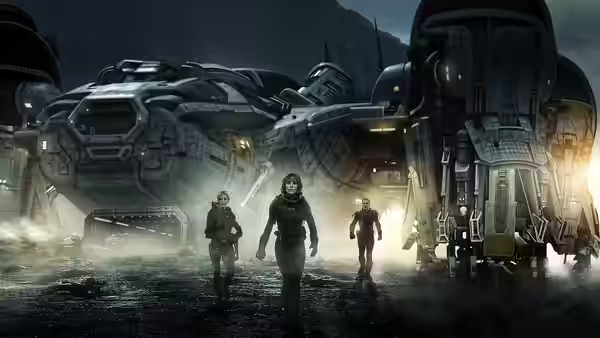
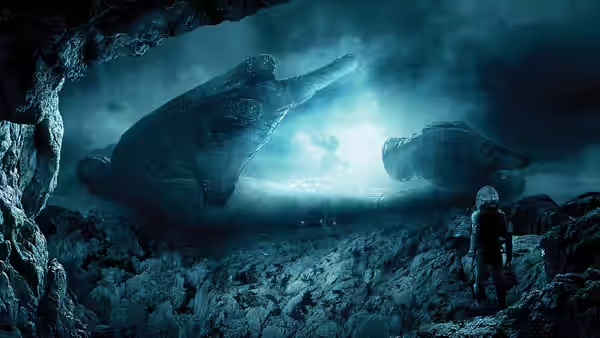
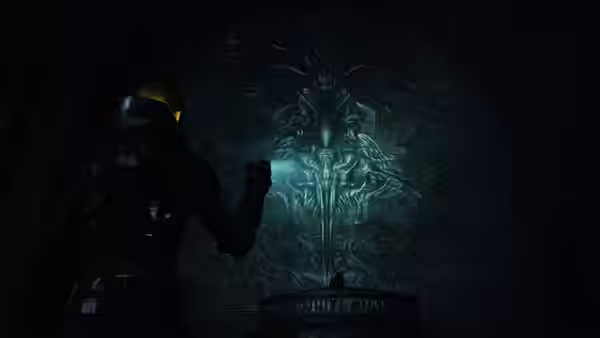
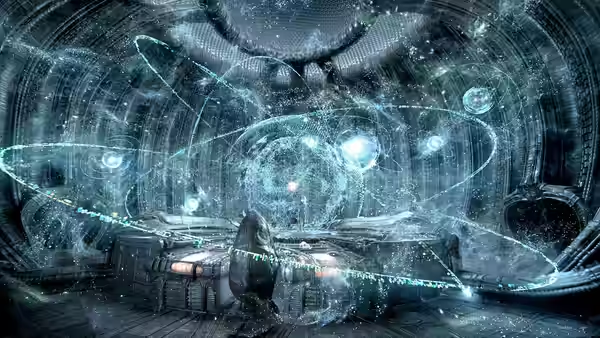
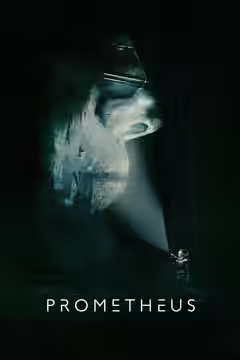
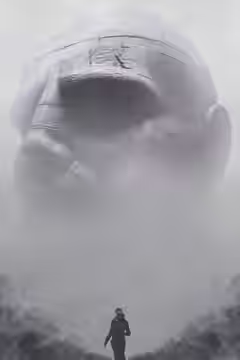
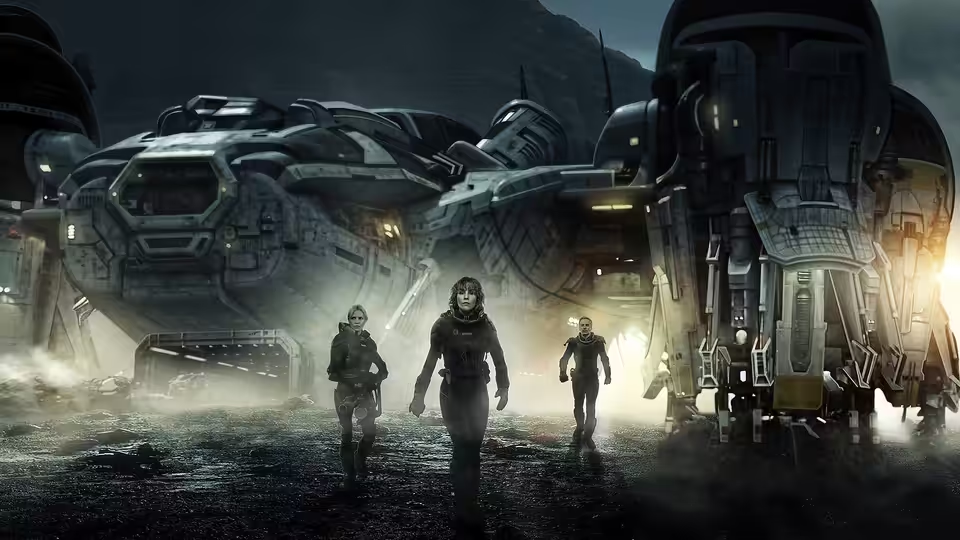
Arthur Max gives the Prometheus a bridge of glass and pale panels and a white medical bay, and gives the moon a dome with ribbed tunnels underneath. Dariusz Wolski shoots the landing from far above, the ship a small thing dropping into grey rock under a grey sky. Inside he keeps the light with the actors, so the walls appear only as they pass. A holographic star map in one chamber, blue pinpoints turning slowly around the crew, is the best single image Scott has put on screen in years.

Fassbender is the film. David has spent the two-year voyage awake and alone, riding a bicycle around the hold, learning dead languages, and Fassbender plays him with a stillness that reads as good manners until you notice he is never surprised. We were moved by these early minutes, an android filling the years with hobbies because nobody has told him what else to do, and the film never again gets that close to anyone. Janty Yates puts him in a fitted grey uniform a size neater than everyone else’s, which is right.

The rest of the crew are the problem. Noomi Rapace’s Shaw is a believer who wears a cross and wants to meet the beings who made her, and Rapace plays the want with force; the script gives her a dead father in a dream and calls that a character. Logan Marshall-Green’s Holloway is a sulk in a hoodie. Sean Harris and Rafe Spall, as the geologist and the biologist, are written to be frightened and then to do what frightened people do not do. Charlize Theron’s Vickers is held in reserve too long. Idris Elba’s Janek has the only relaxed body on the ship and wins every scene by lounging in it.

Spaihts and Lindelof want the film to be about makers and the things they make: a company that built an android, a father who disappointed a daughter, gods who might feel about us the way Weyland feels about David. It is a decent idea and it is delivered entirely in speeches. Shaw tells Holloway what faith is for. David asks Holloway why humans made him and gets the film’s thesis back in one line. Nobody does anything that shows us these things, and the last half hour swaps thinking for running.

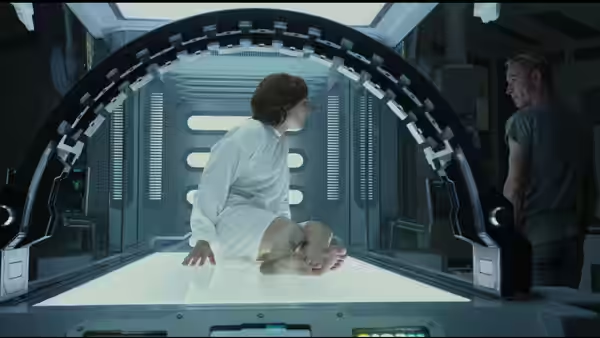
There is a sequence around the midpoint, in that white medical bay, that had us rigid, and it is the one stretch where the horror and the idea are the same thing: a body, something made inside it, a machine not built for the job. It lasts a few minutes. By the last reel we were bored, and then cross about being bored by something this well built, while Pietro Scalia’s cutting turned brisk and careless. Marc Streitenfeld’s score swells on every landscape when Wolski had already done the work.

Alien worked because it explained almost nothing: seven people, one ship, one creature, and a script that trusted the audience. Prometheus has more money, more crew, more ideas and less nerve, and treats every unanswered question as a promise to a sequel rather than a choice. Scott can still frame a landscape better than almost anyone. He has forgotten, or been talked out of, how little he needs to say.

See it for the first hour and for Fassbender, and see it large, because the moon does not survive shrinking. It runs 124 minutes and carries a 15. Bring low expectations for the ending and a high tolerance for people in helmets asking each other what things mean.

Critical consensus AI synthesised

64
Positive
14
Mixed
7
Negative
4

Most critics come down on the side of Prometheus, though rarely by much. The praise gathers almost entirely around how it looks: the production design, the scale of the environments, the creature effects and the crisp photography are singled out by nearly every review, including the hostile ones. Michael Fassbender’s android David is the performance most often named, with Noomi Rapace a close second, and several critics pick out the same surgery-machine sequence as the film’s most frightening stretch.

The reservations are just as consistent. The script is called thin, the characters foolish, the big questions about creation raised and then dropped, and the comparison with Alien goes against it almost every time. The spread is wide. RogerEbert.com treats it as a major work of ideas; The New Yorker finds nothing in it but bombast; Empire, reviewing earlier than most, judges it hollow. In between, a large middle finds it entertaining and not much more.

RogerEbert.com
6 June 2012 · Roger Ebert
90*

The critic calls it a magnificent science-fiction film that raises profound questions about the origin of human life without providing answers, in the tradition of golden-age sci-fi. He singles out the staggering visuals, expert horror sequences, mind-challenging ideas, and the performances, especially Noomi Rapace's resourceful lead.

Read the full review →
The AV Club
7 June 2012 · B+ · Tasha Robinson
83

Technically and visually impressive with gorgeous design and a thoughtful exploration phase, but undermined by foolish character decisions, dropped ideas and a shift into silly blockbuster action that leaves it more intellectual than visceral and not fully satisfying on either level.

Read the full review →
IndieWire
1 June 2012 · Matt Mueller
80*

The critic highlights the film's eye-popping visuals and its role as an 'Alien' origin myth. He praises Ridley Scott's direction for delivering a visually spectacular experience that expands the franchise's lore.

Read the full review →
Radio Times
★★★★ · Terry Staunton
80

The critic praises the film as a rattling space opera that explores themes of creation and mortality while delivering a thrilling, well-paced story with solid performances and arresting visuals. They highlight how it shares DNA with Alien but stands as a precursor with profound questions.

Read the full review →
Screen Daily
30 May 2012 · festival review
80*

The critic highlights Ridley Scott's striking sense of vision and ability to deliver intelligent and visceral filmmaking in this anticipated sci-fi epic. They single out the masterful visualisation of environments, perfectly shot sequences, and the film's capacity to thrill and provoke audiences.

Read the full review →
The Telegraph
30 May 2012 · Tim Robey
75*

Ridley Scott's elaborate sci-fi freakout is majestic to look at and full of tentacular mayhem, pushing the genre into queasy new places with fresh terror in key sequences. It struggles with tone and expectations as a partial prequel but delivers vigorous spectacle worth revisiting.

Read the full review →

Cast

Awards

Academy Awards, 2013

Nominated
Best Visual Effects

Satellite Award for Best Sound, 2012

Nominated
Satellite Award for Best Sound

Satellite Award for Best Visual Effects, 2012

Nominated
Satellite Award for Best Visual Effects

If you liked this, try…

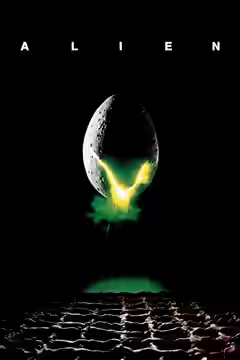
Alien poster92

Alien

1979 · The film this is circling back to, and proof that Scott once knew when to stop talking

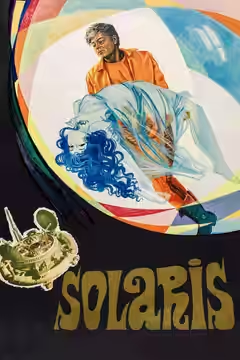
Solaris poster

Solaris

1972 · Tarkovsky asks the same questions about contact and lets the silence do the answering

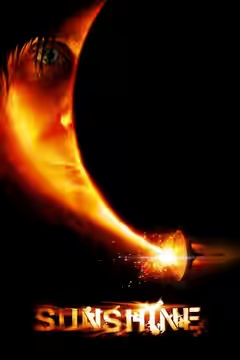
Sunshine poster

Sunshine

2007 · Danny Boyle’s crew of scientists, a mission to the sun, and a last act that also loses its way

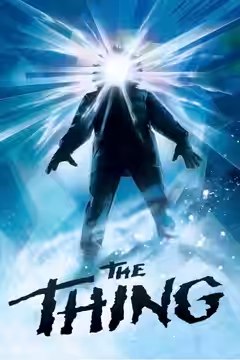
The Thing poster88

The Thing

1982 · Carpenter’s isolated base, one creature and a cast who behave like adults for most of it

Under the Skin poster

Under the Skin

2013 · Glazer’s alien in Glasgow; body horror and a stranger’s curiosity done with almost no dialogue