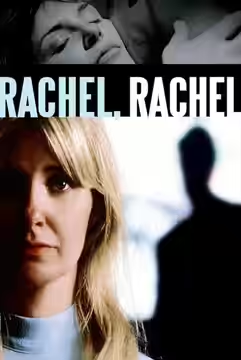
Paul Newman’s first film as director is a small, patient portrait of a schoolteacher who has spent thirty-five years being nobody, and Joanne Woodward makes every held-back sentence count. The direction sometimes underlines what she has already said, but it is a fine evening.
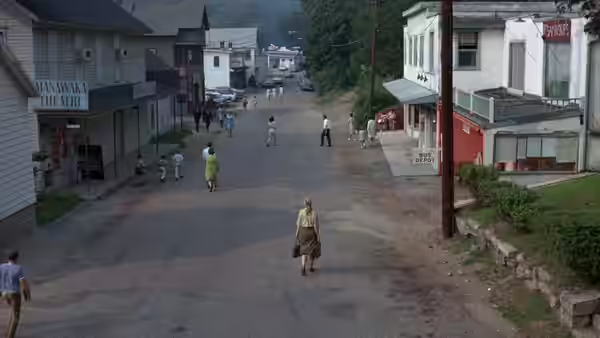
Paul Newman’s first film as director is small in every way that counts in its favour. It runs 101 minutes, it has one main character, and it takes place in a Connecticut town where nothing has happened for a long time and nothing is expected to. Stewart Stern’s screenplay comes from Margaret Laurence’s novel A Jest of God, and the studio sold it with the line “Who cares about a 35 year old virgin?” The film’s answer is that Rachel Cameron does, badly, and that most of the people around her have stopped noticing she is there.
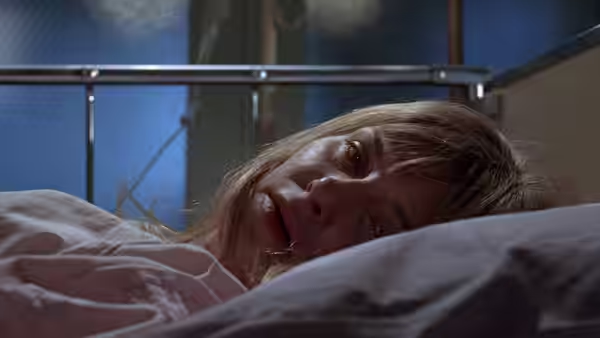
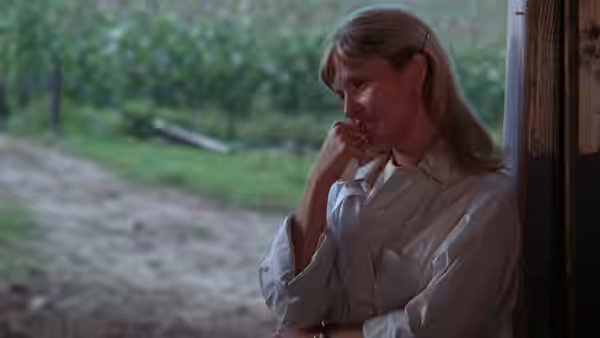
Joanne Woodward plays her as a woman who has been apologising since childhood. She walks with her elbows in, laughs a beat after everyone else, and talks to her class with a warmth she can find for nobody over the age of ten. Her real life is the one in her head. Rachel imagines a pupil collapsing at his desk and herself saving him; she imagines telling her mother the truth; she imagines lying in one of the coffins downstairs. Woodward never signals which is which. She simply behaves, and the film catches up.
That trick belongs as much to Dede Allen, who had cut Bonnie and Clyde (1967) the year before. The daydreams arrive without a dissolve or a change of light, run for a few seconds and are gone, so that more than once we believed something had happened and had to revise. Gayne Rescher shoots the town in a plain, hazy summer light and the flat above the funeral parlour in browns and cream, and he keeps the flashbacks to Rachel as a child (Nell Newman) at the same eye level as the adult scenes, which quietly says the child has never gone away. Domingo A. Rodriguez puts Woodward in cardigans and skirts a size too loose, clothes chosen to be unnoticed.
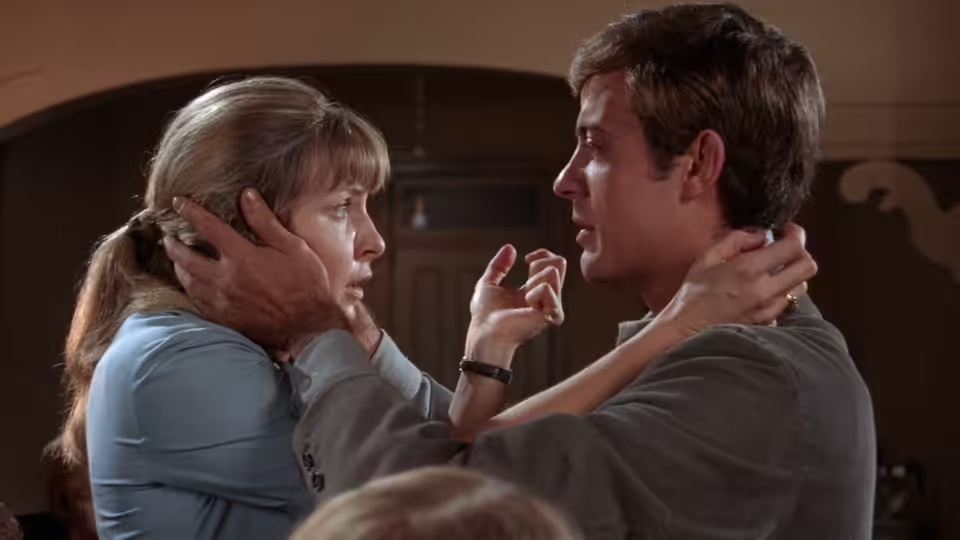
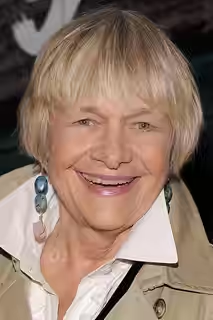
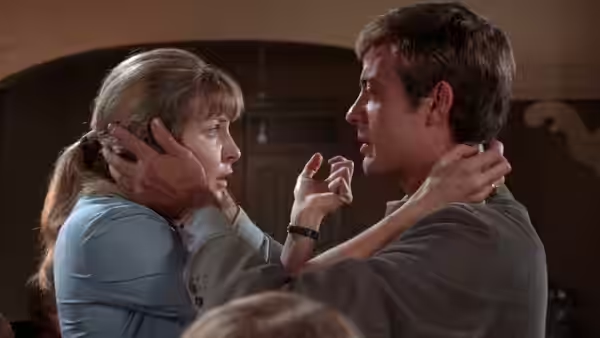
The tabernacle sequence is the one we will remember. Calla Mackie (Estelle Parsons), the one friend Rachel has, brings her to a revival meeting, and a young preacher (Terry Kiser) works the congregation until people are weeping and touching strangers. Newman keeps the camera on Woodward rather than on the noise. We sat rigid with embarrassment for her, and then felt ashamed of ourselves, because the film had not asked us to laugh at anyone. Parsons is superb here and after, playing a woman whose feeling for Rachel is more than friendship, and the film treats her with a decency that was not common in 1968.
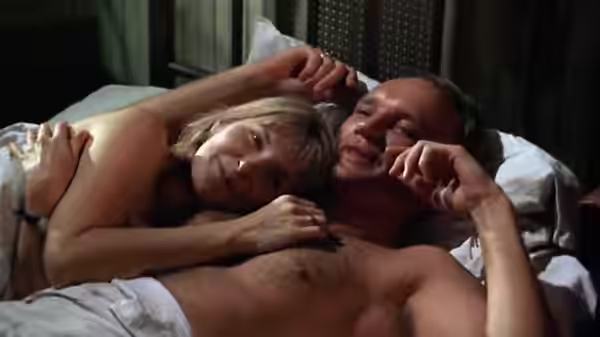
The scenes at home are the best written. Kate Harrington’s Mrs Cameron has a heart condition and uses it the way other people use a raised voice, and her bridge evenings, with Rachel fetching the pills and the sandwiches, made us angry in a way that felt personal. James Olson’s Nick Kazlik, the boy from school back for the summer, is easy, amused and slightly hollow, which is partly the intention and partly a limit of the writing; we never learn quite enough about what he wants from her, and the film needs us to.
Not all of it holds. Jerome Moross’s score is too sweet by half, coming in with strings whenever Rachel is alone to tell us she is sad, when Woodward has just spent a minute telling us in silence. Newman, directing for the first time, occasionally underlines: a fantasy insert too many, a reaction held a beat past its point. The middle stretch slackens, and the reviews that called it slow were not entirely unfair. The final turn, which we will not describe, is tidier than what comes before it and a little too pleased with its own irony.
Set against the American films of its year, this one is unusual for spending its whole length inside one unremarkable woman’s head and finding it worth the visit. Newman does not show off. He gives his wife the frame and gets out of the way.
Watch it at home, on a quiet evening, with nothing planned afterwards. It does not need a large screen and it does need patience. Bring some for Rachel; she has run out of her own.