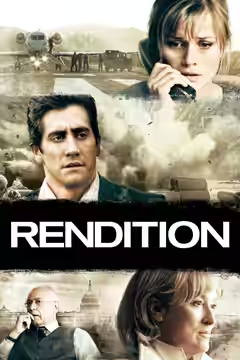
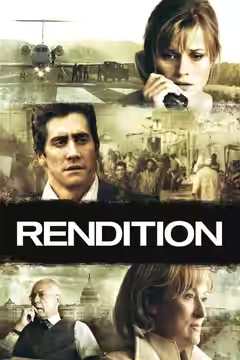
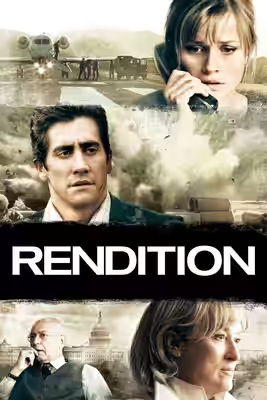
Gavin Hood’s thriller about extraordinary rendition is well cast, carefully made and so anxious to be fair to everyone that it ends up gripping no one. Omar Metwally, strapped to a chair, is the only person whose predicament we felt in the body.
Gavin Hood follows Tsotsi (2005), a small film about one boy in one township, with a large one that runs across three countries and four storylines, and the move does not suit him. Rendition takes a real and ugly practice, the seizing of a suspect and his delivery to a country where the questioning is done with electricity and water, and builds a thriller around it from Kelley Sane’s script. It is serious, decently acted and handsomely shot. It is also slow, and spread so thin that the one thing it is about keeps slipping out of view.
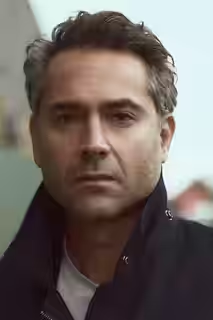
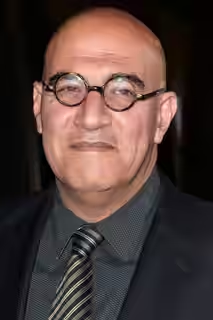
The strand that works is the one in the concrete cell. Omar Metwally plays Anwar El-Ibrahimi as a reasonable man who keeps expecting reason to be the way out, and the moment he understands it is not, his face does something we have not forgotten. The first time Fawal’s men tip his chair back and pour, we were sickened, properly, in the stomach, and we were grateful that Hood holds the shot long enough for the sickness to arrive. Then the film cuts to Washington and a corridor and a phone call, and the sickness goes, and it does not come back. That pattern repeats. Every time the chair and the water get at us the film leaves them.
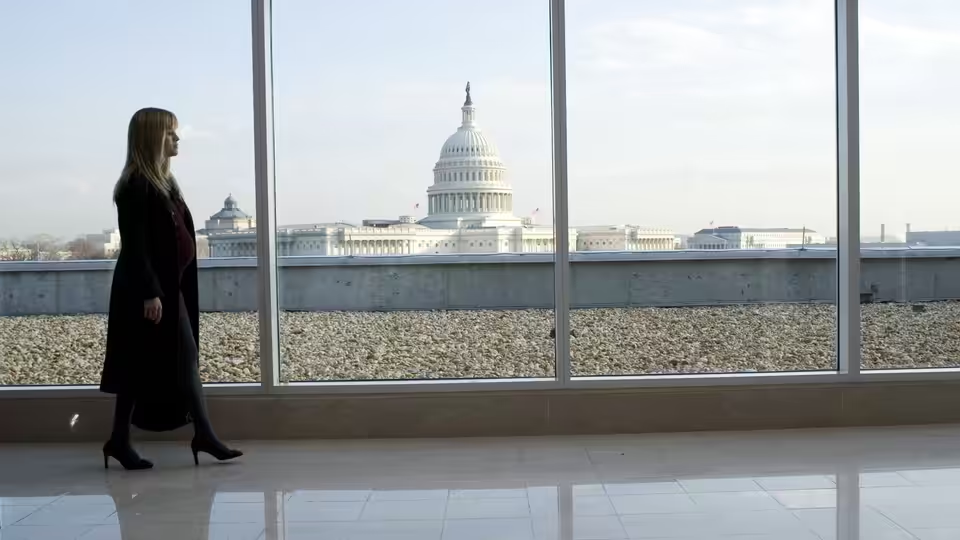
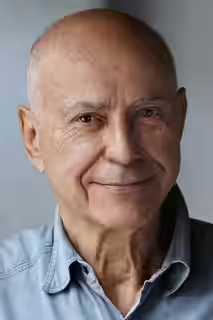
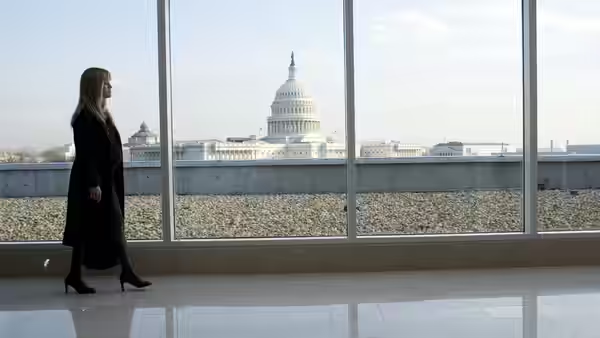
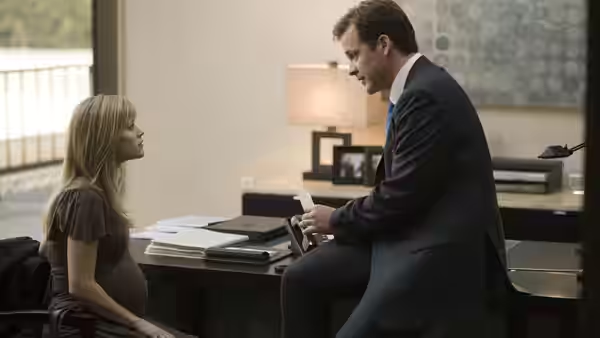
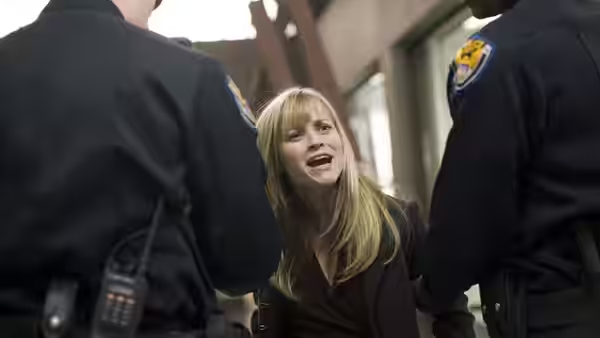
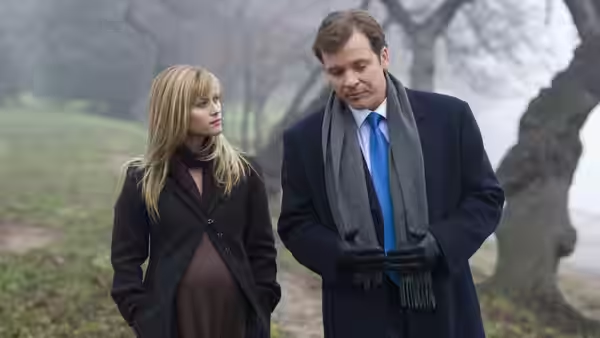
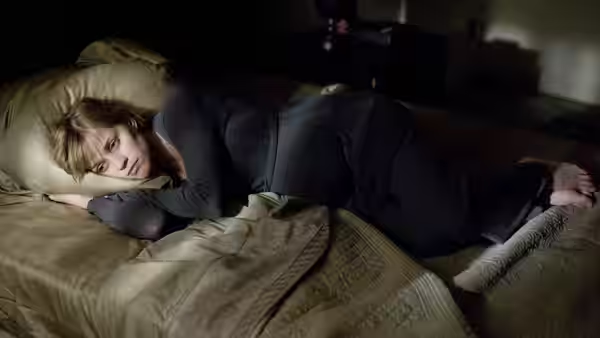
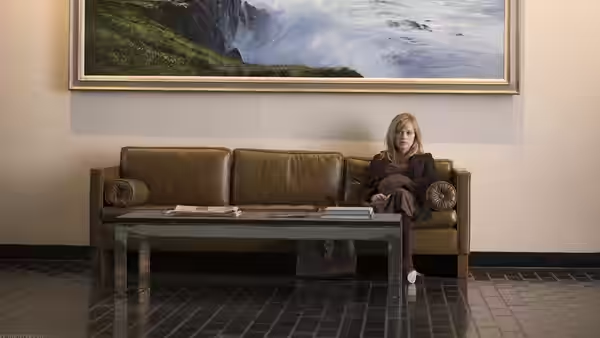
Washington is where the talking is. Meryl Streep gives Corrine Whitman a soft voice and an unbreakable calm, and her best scene is a short one in which she explains to a junior man why none of this will ever reach a courtroom. Alan Arkin’s Senator Hawkins has two scenes and uses them to be tired. Peter Sarsgaard’s Alan Smith is the only person in the capital with a decision to make, whether to help a woman he once loved at the cost of a career he has only just built, and Sarsgaard plays the cowardice and the decency as the same thing. Reese Witherspoon is given a corridor to wait in and a lot of doors to be shown out of, and she does what can be done with that.
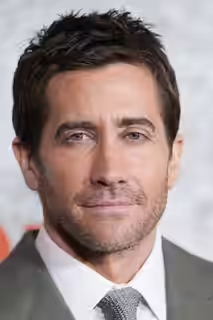
Jake Gyllenhaal has the harder problem. Douglas Freeman is an analyst who has never seen a man hurt for information and is sent to watch it done, and the script’s idea of a conscience forming is to have him drink, stare and lecture a man who does this for a living. Gyllenhaal plays it very quiet, which is a fair choice, but the writing never gives the quiet anything to turn into. When he finally acts, we believed the act and not the man.
The surprise is the fourth strand, the one the film seems least interested in. Zineb Oukach’s Fatima and Moa Khouas’s Khalid are two teenagers in a city full of police, and their scenes have a nervousness and a heat the American ones never find. Yigal Naor’s Fawal, cruel in the cell and fond at his dinner table, is the film’s best idea about how this work is done by ordinary men. The ending turns on a trick of structure that we will not describe, and which most critics have either admired or resented; we thought it clever and felt it took the place of a conclusion the film had not earned.
Dion Beebe shoots Washington in grey-blue and the North African city in dusty amber, and the contrast is doing the arguing the script should be doing. Barry Robison’s cell is bare concrete and a single chair, and it is the only set in the film we could draw from memory. Megan Gill cuts between the four stories at an even pace, so that nothing is allowed to build before it is interrupted. Paul Hepker and Mark Kilian keep a low drone under the chair and the water and let the strings rise in the capital, and we would have had it the other way round. Michael Wilkinson puts Streep in pearls and Metwally in a hood, which is the film in one costume change.
It runs 120 minutes and carries a 15. Watch it with the sound a notch up for the scenes in the cell and be patient with the rest. The subject deserves this much attention and rather more anger than it gets.