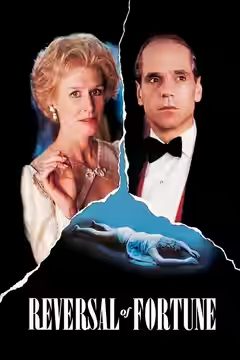
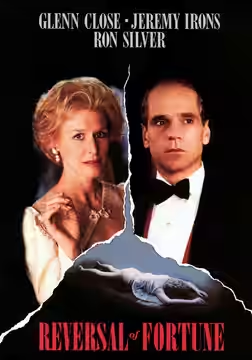
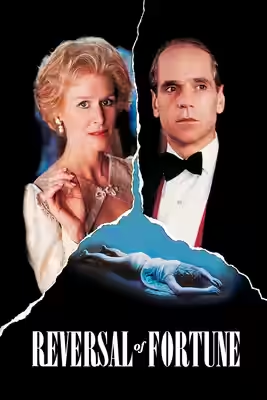
Barbet Schroeder makes an absorbing, dryly funny legal drama from the von Bülow case, with Jeremy Irons supplying much of its unease. Its fascination with the people debating the evidence sometimes leaves Sunny feeling like an afterthought.
Barbet Schroeder’s Reversal of Fortune is an absorbing legal drama, held back by its distance from Sunny von Bülow. It asks us to consider the case without assuming that an unpleasant person must be a guilty one. That is a useful starting point for a film about people whose money gives us another reason to distrust them. We recommend it for the performances and the talk. Its treatment of the woman at the centre of the case is harder to defend.
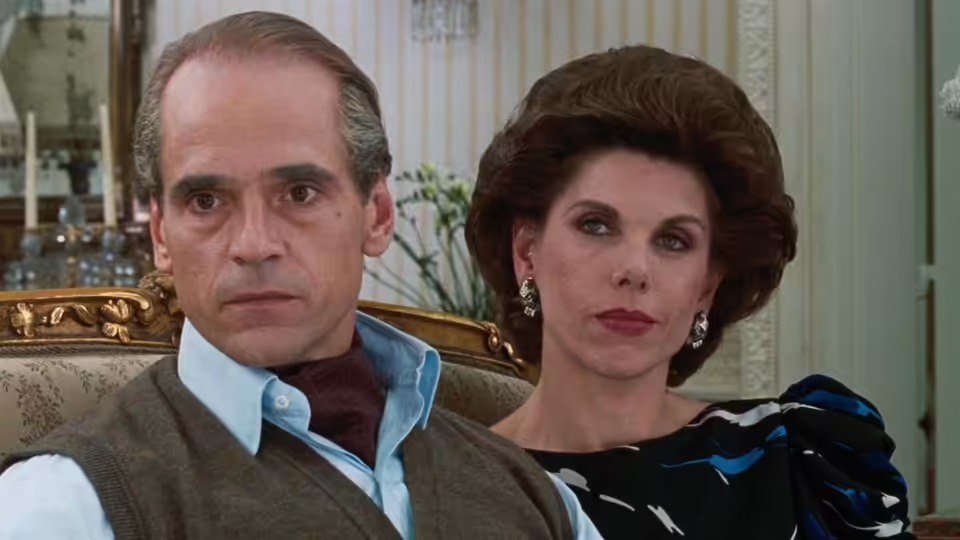
Jeremy Irons plays Claus von Bülow with such elaborate composure that courtesy begins to seem a little threatening. The performance makes it difficult to separate our dislike of the man from any judgement about the case. Irons is funny without making Claus safely ridiculous, and Schroeder allows that uncertainty to remain uncomfortable. A broader performance would let us dismiss him as a rich eccentric. Here we keep paying attention, partly because we cannot tell how much of his manner is meant to be funny.
Ron Silver’s Alan Dershowitz gives the film a welcome change of energy. His alertness makes the legal discussion feel active, and Nicholas Kazan’s screenplay gives him material worth listening to. There is pleasure in watching somebody think through a problem without the film pausing to congratulate him on being clever. The writing also understands how quickly a question about evidence can become a question about the person presenting it. Occasionally, though, the sheer satisfaction of the talk makes the human cost seem less urgent.
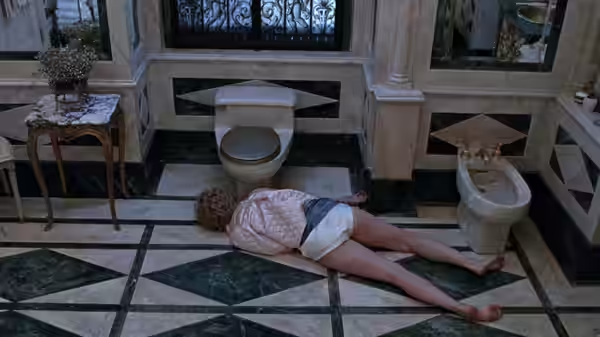
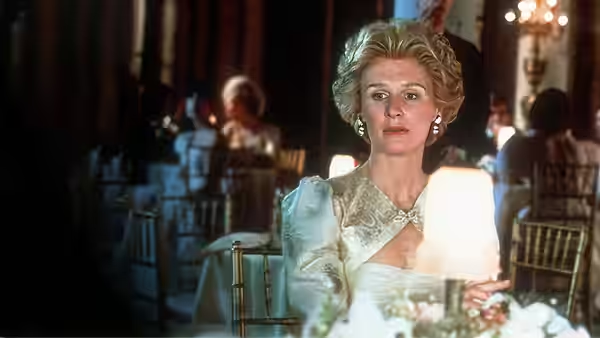
Glenn Close has the more awkward assignment: Sunny von Bülow narrates from a coma. We laughed at the wit of that narration, then felt uneasy about laughing. The situation makes the joke uncomfortable, and Close is good at keeping the bitterness audible. Yet giving Sunny a voice does not quite give her the same dramatic weight as the men discussing the case. Schroeder’s detachment becomes a weakness here, because Sunny can seem peripheral even when we are listening to her.
Luciano Tovoli’s cinematography gives the von Bülows’ wealth a polish that suits the film’s attraction to their way of life. Mel Bourne’s production design makes their money feel substantial, an important part of how we judge these people. Judianna Makovsky’s costumes add to that immediate sense of social position. The result is persuasive, though we occasionally wanted the film to look less pleased with its wealthy subjects. They already have enough advantages without the photography taking their side.
Lee Percy’s editing keeps the legal material moving while allowing the performances time to register. That helps preserve the curiosity on which the film depends: we have room to consider people without simply waiting for another piece of information. Mark Isham’s music sustains the unease, usefully supporting a film that makes suspicion so easy. Both contributions suit Schroeder’s restraint. The trouble comes when that restraint makes another person’s suffering feel like something we have been invited to consider at a comfortable distance.
Legal dramas often encourage us to treat a persuasive personality as a reliable guide to the truth. This one gives us good reason to resist, and its cooler passages are worth tolerating for the intelligence of that approach. Choose it for an evening of difficult people, good acting and a case worth arguing about afterwards. Anyone hoping to feel close to Sunny should expect a less satisfying time.