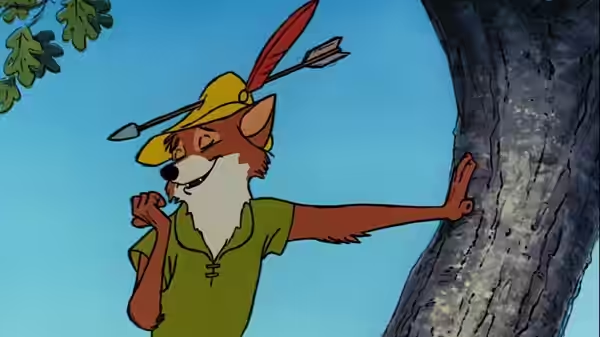
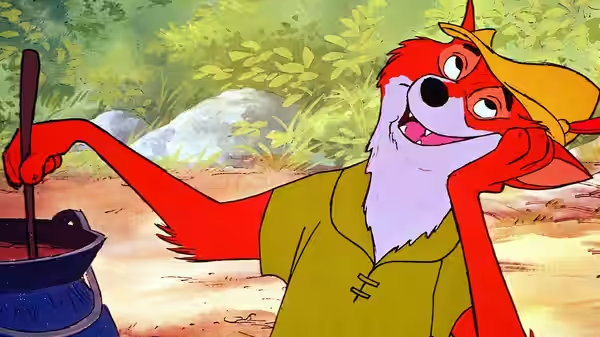
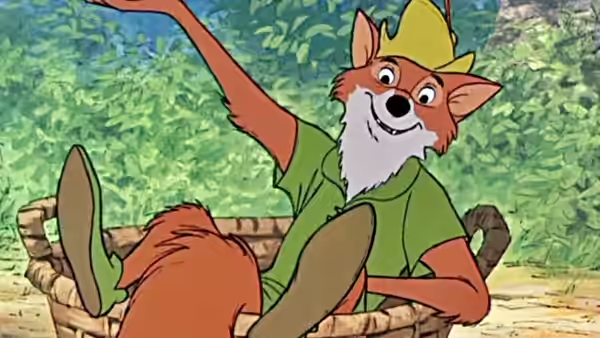
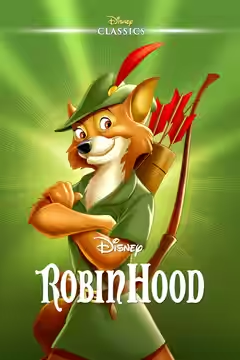
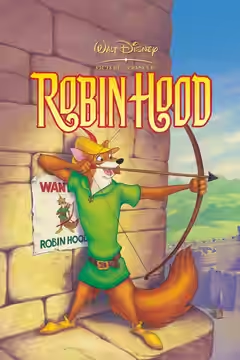
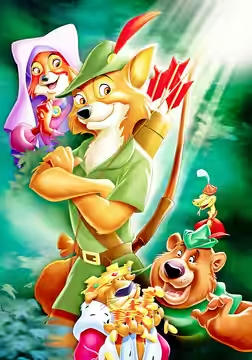
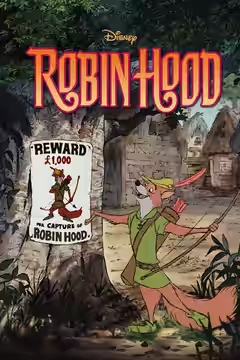
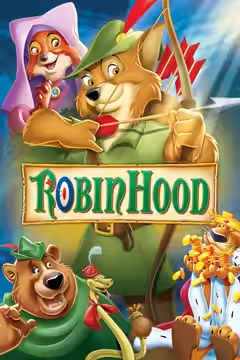
Disney’s animal Robin Hood is cheerfully made on a shoestring, and the shoestring shows. But Peter Ustinov’s thumb-sucking Prince John and Terry-Thomas’s oily Sir Hiss are among the funniest villains the studio ever drew, and Roger Miller’s songs are better than the film around them.
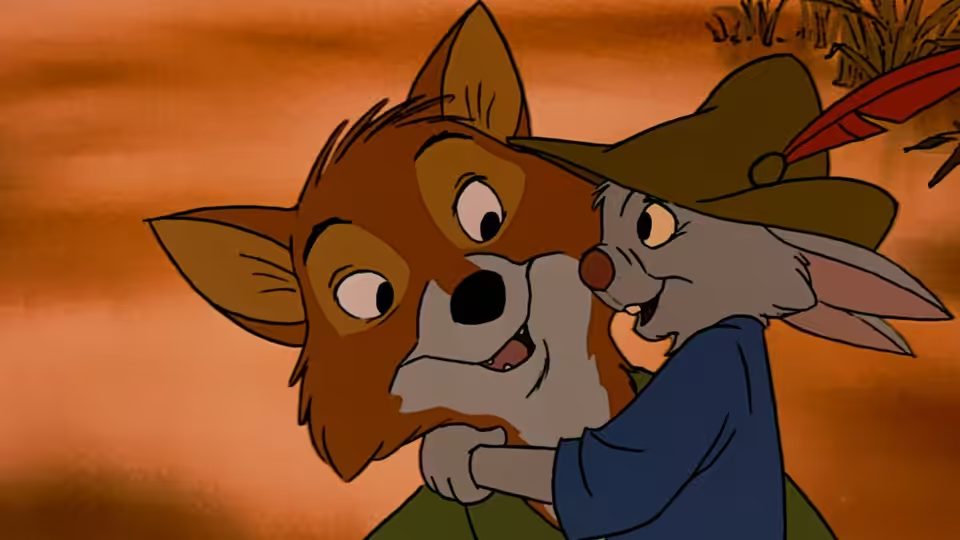
Wolfgang Reitherman, who directed The Jungle Book (1967) and The Aristocats (1970), takes the oldest outlaw story in England and gives it to a fox. Ken Anderson’s script and Larry Clemmons’s story turn Nottingham into a menagerie: the sheriff is a wolf, the prince a lion, the friar a badger, and the narrator a rooster with a guitar. It is a slight, friendly, patchily animated 83 minutes, and it gets by on its voices. If you want the legend, look elsewhere. If you want to laugh at a lion, this is the one.
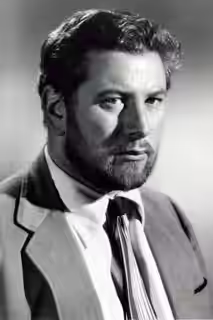
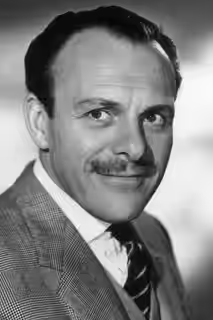
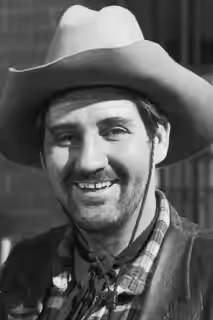
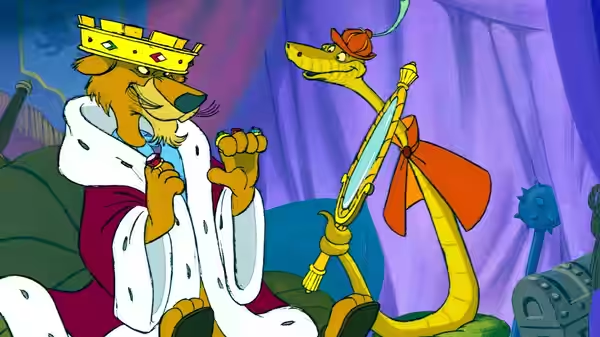
The lion is the reason to stay. Peter Ustinov plays Prince John as a coward with a crown too big for him, and the film’s best running joke is that whenever he is thwarted he puts his thumb in his mouth and wails for his mother. Terry-Thomas’s Sir Hiss slides round him with a gap-toothed lisp and a pair of hypnotic eyes, flattering and correcting in the same breath, and every scene the two share is a small comic play about a bad king and the worse man who advises him. Pat Buttram gives the Sheriff a slow, sunny drawl that makes his cruelty to the poor sound like neighbourliness. We laughed out loud at the prince, which we had not expected to do at a cartoon we first saw as children, and it was the timing that did it: Ustinov lets the thumb go in a beat after the dignity has already gone.
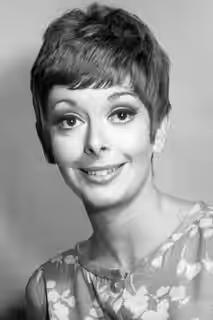
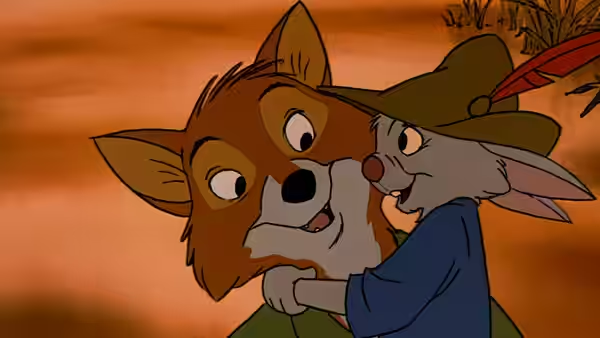
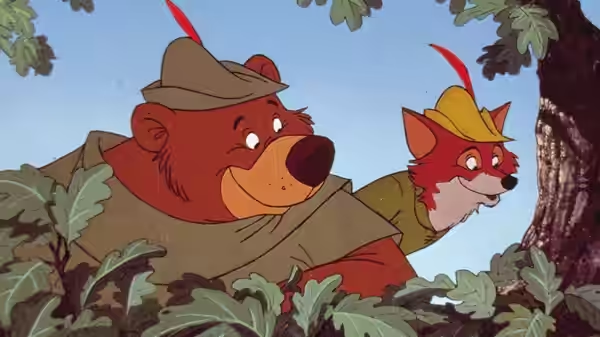
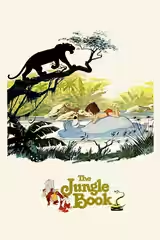
The heroes are less interesting, as heroes in this story usually are. Brian Bedford’s Robin is light, likeable and rather empty; he is written as a charmer and given nothing to charm with except disguises. Monica Evans’s Marian is sweet and barely present. Phil Harris plays Little John exactly as he played Baloo in The Jungle Book, warm and slow and fond of a song, and since the animators have drawn him the same way too, it takes a while to remember which film we are in.
That is the film’s real weakness. The animation is xerographed, the rough pencil line left visible, which gives it a loose, sketched energy in the chase scenes. But whole passages have been lifted from earlier Disney pictures and redrawn with new heads on: the dance in the forest borrows its steps from Snow White and The Jungle Book, and James Melton and Tom Acosta cut around the joins without quite hiding them. Anyone who knows the earlier films will see the ghosts, and once seen they are hard to unsee.
And yet the songs. Roger Miller wrote and sings three of them, and Oo-De-Lally over the opening, with Robin and Little John idling by the river, sets a tone the rest of the film never quite betrays. Not in Nottingham is the one that got us: the town in the rain, the rabbits and the badger in the stocks, the whole population of a cartoon fairy tale sitting still and miserable while a country singer tells them nothing will change. It is the one moment the film stops joking and it moved us more than a talking rooster has any business doing. George Bruns’s score around the songs is jaunty and unmemorable.
The story is a string of sketches rather than a plot: a robbery, a tax round, a birthday, an archery tournament that turns into a brawl with Lady Kluck charging the guards like a rugby forward. Clemmons and Anderson never make Robin want anything in particular beyond the next trick, so nothing builds. The setting is a curiosity too. Bedford, Ustinov, Terry-Thomas and Evans are British; nearly everyone else in Nottingham sounds like the American South, so the town ends up somewhere between Sherwood and Tennessee. Children will not care, and after a while neither did we.
Against the studio’s own record this is a modest entry, well below The Jungle Book for songs and animation and a good deal thinner than the fairy tales. Against most Robin Hoods it has one thing they lack, which is a villain worth watching when the hero is off screen. Put it on for the children on a wet afternoon and stay for Ustinov. At 83 minutes and a U certificate it asks for very little, and it gives back a lion crying for his mother, which is more than some films twice its length manage.