Chris Wedge’s Robots earns a look for its busy mechanical world and some well-timed slapstick. The familiar story and thin characters make it harder to care once the visual surprises begin to wear off.
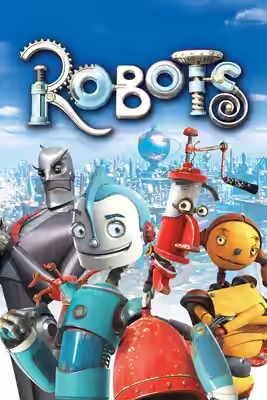
Chris Wedge’s Robots offers enough visual pleasure to interest animation enthusiasts, but the storytelling is thin. A population of machines gives a family comedy plenty to work with before anyone has said a word, and the film plainly enjoys the possibilities. It is less assured when it needs us to care about one particular robot. At 90 minutes, it ought to feel brisk. Too often it feels hurried, as though leaving a pause might allow us to notice how little is happening beneath the activity.
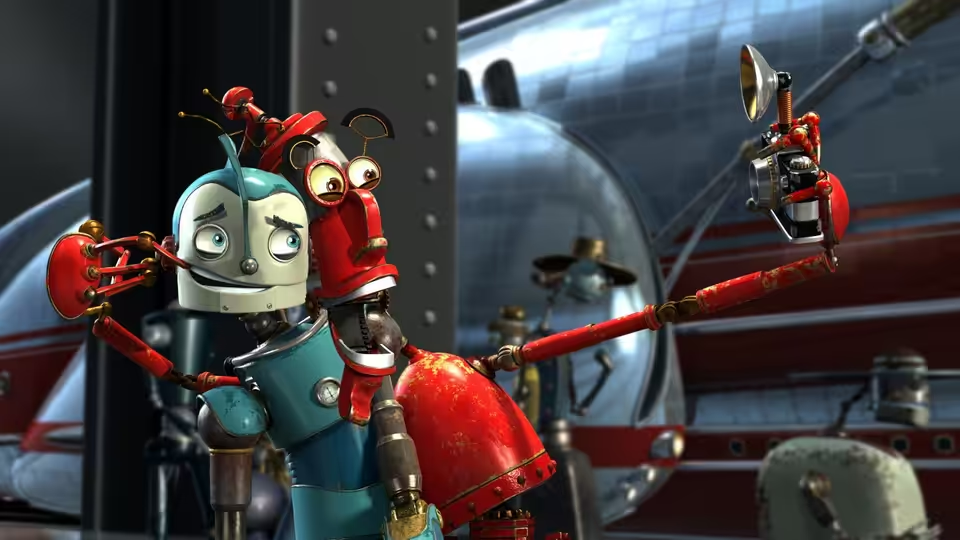
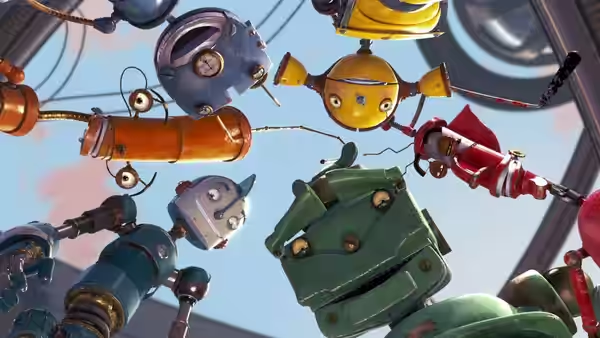
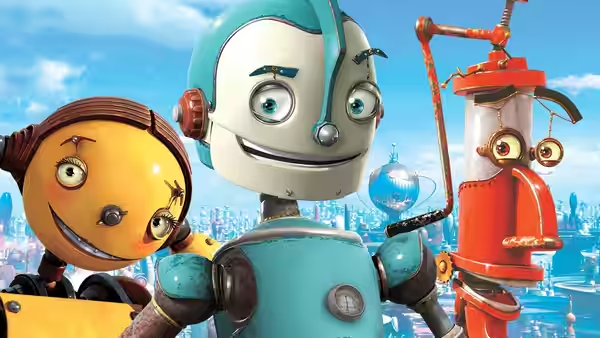
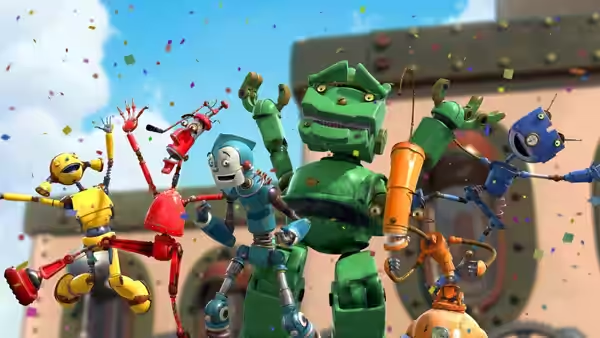
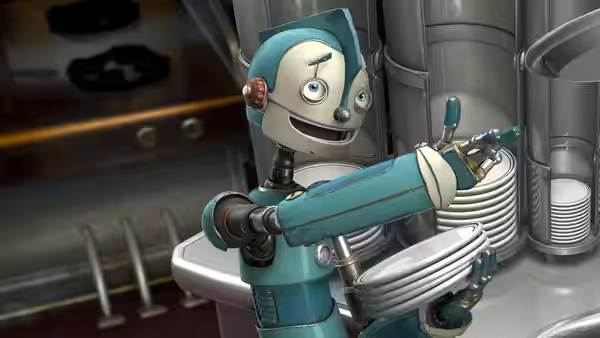
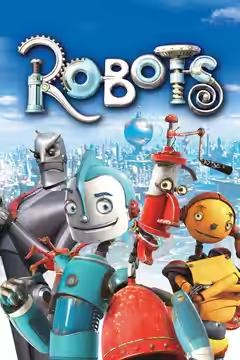
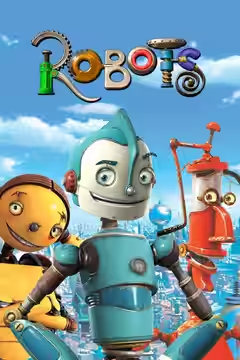
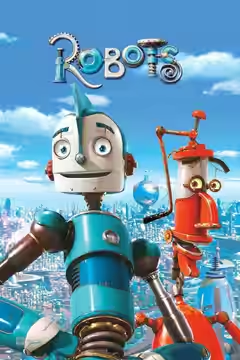
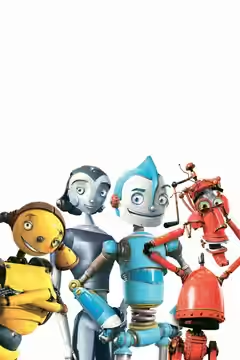
Production designers William Joyce and Marcin Jakubowski supply the strongest reason to watch. The crowded backdrops reward attention, and the colour helps all that mechanical detail feel playful rather than merely complicated. We can enjoy looking around this world even when the dialogue has ceased to hold our attention. The characters themselves do not always seem to belong to as interesting a film as the one being suggested by their surroundings.
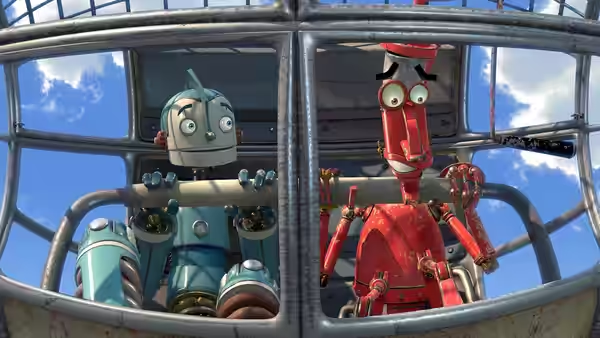
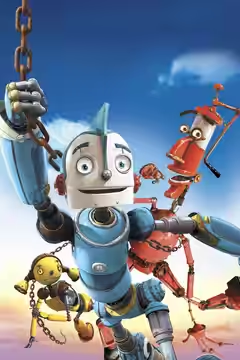
Rodney’s subway ride is where the film gets the balance right. We laughed because a simple journey becomes a sustained piece of slapstick, with the movement doing the work that dialogue elsewhere struggles to manage. John Carnochan’s editing suits this sort of physical comedy, keeping the action lively. Across the film, though, the pace allows too little space between jokes. After a while, being asked to laugh again so quickly becomes tiring.
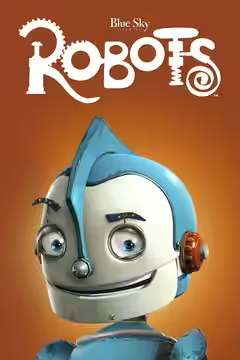
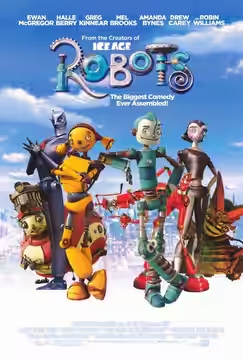
David Lindsay-Abaire, Lowell Ganz and Babaloo Mandel’s screenplay has much less invention to spare than the images. Rodney Copperbottom, voiced by Ewan McGregor, is amiable enough, but never becomes particularly interesting. The familiar plotting gives us little reason to be curious about him, and the writing asks his likeability to do too much. We can follow his story without feeling much attachment to him. More time spent establishing his character would have helped before another round of action begins.
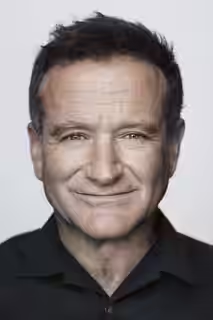
Robin Williams, voicing Fender, supplies a livelier comic presence, although his energy is not always helpful. The verbal comedy sometimes seems to be competing with the pictures, and the cultural references too often feel like interruptions. We would gladly lose some of those asides for another clearly developed visual gag. There are laughs here, particularly when the slapstick takes over, but also stretches when the film seems unwilling to stop nudging us. Robin Williams gives it momentum without solving its lack of focus.
John Powell’s music helps sustain that momentum, although it does little to make us feel closer to the characters. Chris Wedge keeps the film occupied, and the action has a willingness to be silly that is welcome in itself. Yet the stronger examples of animated family comedy let a character’s behaviour make us laugh and tell us something about them at the same time. Here the jokes too often seem detachable from the robots delivering them.
There is enough care in the making to keep us from dismissing it, and the visual imagination deserves a better script. Children happy with near-continuous movement may be less troubled by that mismatch than we were. Choose it for the robot world and the physical comedy, with modest expectations of the company.