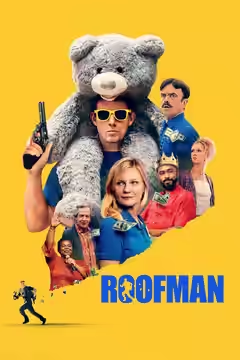
Derek Cianfrance’s true story of the robber who lived inside a Toys R Us for six months is warm, funny and well acted, and Channing Tatum and Kirsten Dunst are good company. It is also far too keen that we like him.
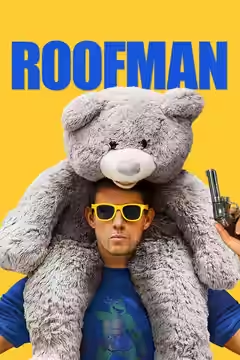
Derek Cianfrance has spent most of his career on men who let their families down, and on films that sit close enough to watch it happen. Roofman is his lighter one, a true story with the shape of a caper. Jeffrey Manchester (Channing Tatum), a former soldier, robs restaurants by dropping through the roof, goes to prison, gets out the hard way and moves into a Toys R Us, where he lives unseen for six months. It is funny, it is warmly played, and it is rather too fond of him. We enjoyed it and we did not quite believe it, and the film never seems to notice the gap.
Tatum is the reason to go. He plays Jeffrey as a big, courteous man who apologises to the people he robs and means it, and who has decided that good manners settle the account. He is good at the physical business: the drop through the ceiling tiles, the nights spent riding a child’s bike down the aisles, the sprint back to the hollow behind the bike boxes when the alarm code goes in at seven. We laughed a good deal in the store, more than we had expected, most of it at Tatum eating his way along the sweet shelf with the seriousness of a man doing stock.
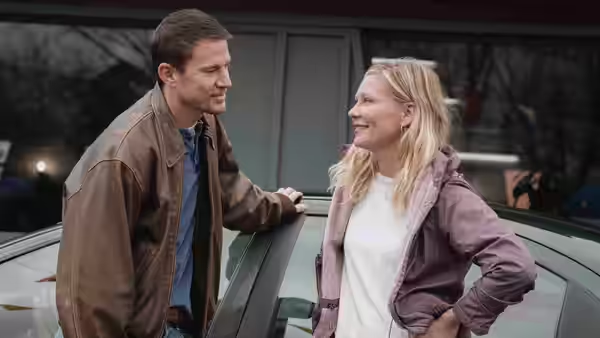
Kirsten Dunst gives the film its weight. Leigh Wainscott works the tills, drives her daughter to church and has learned to expect nothing from men, and Dunst plays her with her guard half up and a hope she is embarrassed by. Their scenes together are the best in the film, in her car and across a church supper table, and Cianfrance and his co-writer Kirt Gunn have the sense to let them talk without a plot point arriving. There is one moment, late on, when something Jeffrey says does not add up and Dunst’s face simply goes still, and it moved us more than the rest of the film put together. The film moves on.
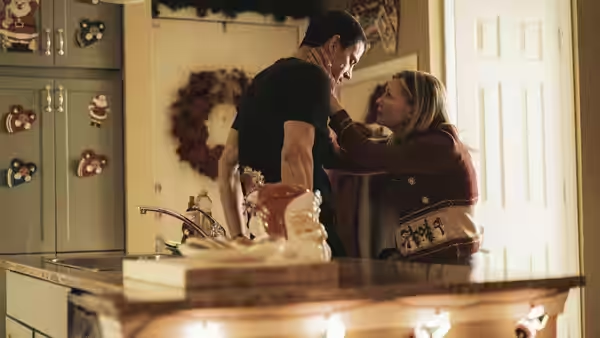
Andrij Parekh shoots the shop at night by exit signs and the glow of the security monitors, so the pink boxes and the rows of bikes look like a town after curfew, and shoots the strip mall outside in flat daylight. That is the right choice, because this is a film about the people who work in places like this, and Inbal Weinberg’s production design gives the store, the car park and Leigh’s kitchen the same tired plainness. Erin Benach dresses Jeffrey in whatever he can take off the rails and Leigh in her work polo and a fleece, and the difference tells you who is pretending. Peter Dinklage, as the manager Mitch, turns down the thermostat and the staff’s hours with it, and is exactly the sort of boss you would happily see robbed.
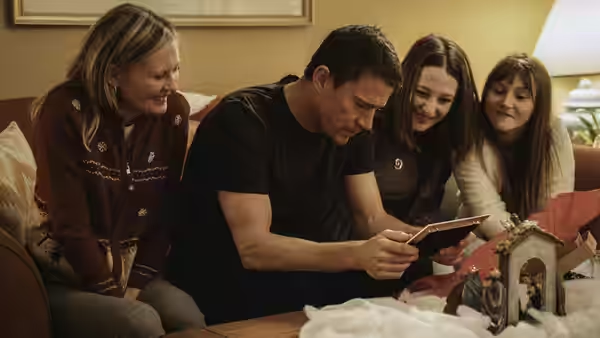
The trouble is what the film wants us to feel about Jeffrey. Cianfrance and Gunn give him a daughter he has failed and a former partner, Talena (Melonie Díaz), who has heard all of this before, and then they put both of them in a drawer for most of the running time so nothing gets in the way of the romance. Every robbery is bloodless, every victim is unhurt, every lie is told with a rueful smile. Most critics have been charmed, and we see why. But a film about a man who robs people and deceives a woman he loves ought to be able to sit with that for longer than a scene at a time, and this one keeps reaching for the next joke.
LaKeith Stanfield, as Steve, an old friend who would rather not be involved, gets the film’s most nervous scenes, and Juno Temple as Michelle is nervier still. Jim Helton and Ron Patane cut it to 126 minutes.
Blue Valentine (2010) and The Place Beyond the Pines (2012) were about men like this and refused to let them off. Roofman lets Jeffrey off, and then in its last stretch, which we will not describe, it remembers that the real story did not, and the two halves do not quite meet. It is still worth an evening, with someone who will enjoy Tatum on a bicycle and forgive the rest. It carries a 15.