Joachim Trier’s family drama is patient, well acted and funny in the way real families are, and Skarsgård and Reinsve are as good as everyone says. We recommend it. We also found it neater than it needed to be.
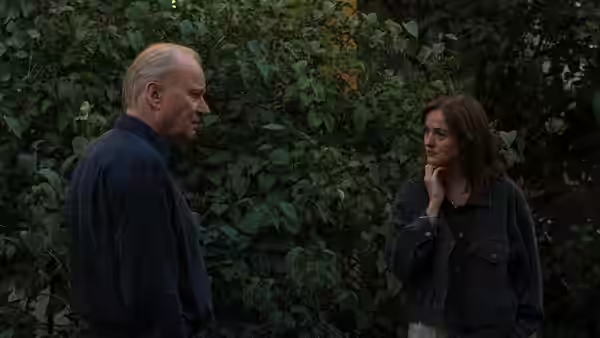
Gustav Borg (Stellan Skarsgård) is a film director who has not been much of a father, and he knows it. When his daughters’ mother dies, he comes back to the wooden house in Oslo where the girls grew up and where he has not been welcome for years. He has brought a script. It is about the house and about his own family, and he wants Nora (Renate Reinsve), a stage actress, to play the lead. She will not read it. Her sister Agnes (Inga Ibsdotter Lilleaas) does, and finds more of herself in it than she was expecting.
Joachim Trier wrote it with Eskil Vogt, and it is a good film: patient, well acted, funny in the way families are funny when nobody is trying to be. We recommend it. We also came out slightly less moved than the film wanted us to be, and we think we can say why.
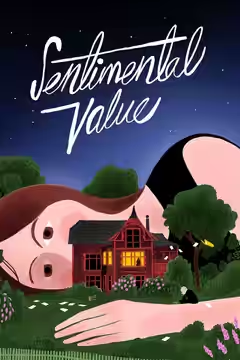
Start with the house, because the film does. Before anyone speaks for themselves, a narrator tells us its history and the people who have lived in it. Jørgen Stangebye Larsen’s production design makes it a place that has been lived in rather than dressed: panelled walls, a kitchen too small for the number of people who keep gathering in it, a garden that has got away from everyone. Kasper Tuxen shoots it in warm lamplight and lets the winter come through the windows grey. He has one habit we admired, which is to frame the sisters in doorways so there is always a room behind them that they are not in.
Skarsgård plays Gustav as a man who is charming to strangers and useless to his children, and he never asks us to forgive him. Reinsve gives Nora a temper she keeps just under the surface, and the film’s best scenes are the ones where it nearly comes up: a dinner, a phone call, a rehearsal she should not have agreed to. What moved us more than we expected was Skarsgård early on, standing in the house he used to own and waiting to be told where he is allowed to sit. He does almost nothing with his face. It is all in the pause before he speaks, and in the sense that he has rehearsed this arrival many times and still does not know his lines.
Fanning, as Rachel Kemp, an American star who drifts into Gustav’s orbit, is the film’s cleverest piece of casting. Rachel is sincere, hard-working and entirely out of place, asking the questions this family has spent decades not asking, and Fanning plays her without a trace of the joke the film could have made of her. Olivier Bugge Coutté cuts between the family and the film being made about the family, so that we watch Rachel rehearse a scene from the sisters’ childhood in the room where it happened. That is where the film’s idea lives, and when it works it is unnerving.
What we resist is the tidiness. Everyone here needs something and nearly everyone gets it, and the getting is done through art: a scene written, a scene played, a scene watched. Trier assumes that making the film will mend the family, and shows us the assumption more than the mending. Hania Rani’s piano score, sparse and lovely for most of the running time, arrives in the last half hour to tell us how to feel at the moments we were already feeling it. A strand about how Gustav’s film gets financed, and which sort of screen it is destined for, is the one place where Trier’s own grievances get louder than his characters. A few critics have found the film cold. We did not; it is warm. It is just very neat.
Against his own work, it is the most generous thing he has made and the least dangerous. The Worst Person in the World was messier, and the mess was the point. Reinsve and Anders Danielsen Lie, the couple from that film, are both here again, though Lie’s Jakob gets only a handful of scenes.
It is 133 minutes and earns them by talking rather than shouting. See it with a sibling, if you have one you have not rung lately.