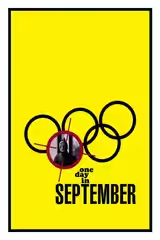
Tim Fehlbaum locks us in the ABC Sports control room for the Munich hostage crisis and never lets us out. It is tense and well acted, and it asks whether any of this should be on television, then gets on with putting it there.
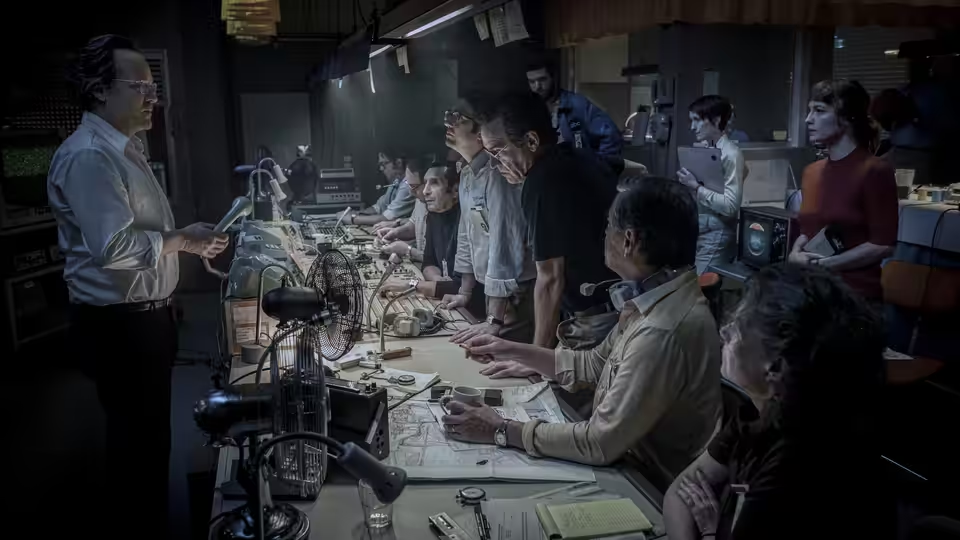
Tim Fehlbaum’s film is about the day the Munich Olympics stopped, and it tells it from one chair. For 94 minutes we stay in the ABC Sports control room with a crew whose job that morning was gymnastics and volleyball. The film never goes into the building. The hostage-takers are figures on a balcony seen through a long lens; the hostages are names on a sheet of paper. Fehlbaum and his co-writer Moritz Binder made that choice and keep to it, and it gives them a tight, fast thriller. It also leaves most of what mattered that day on the other side of the door.
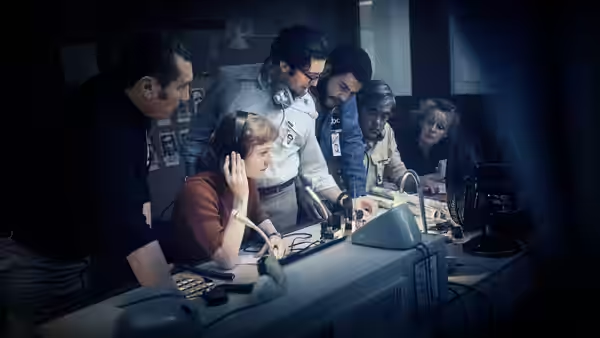
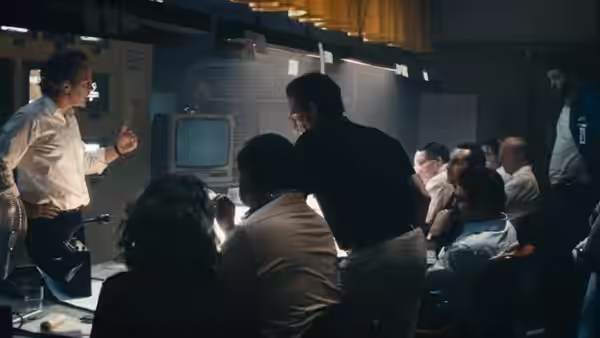
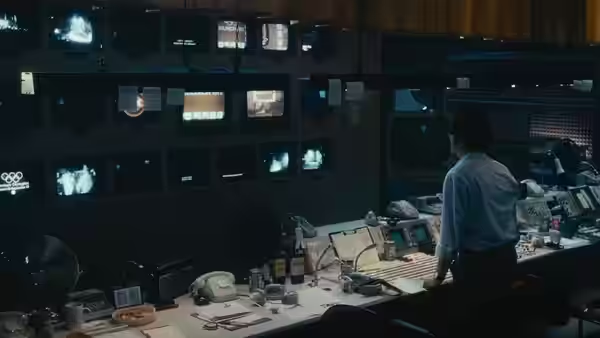
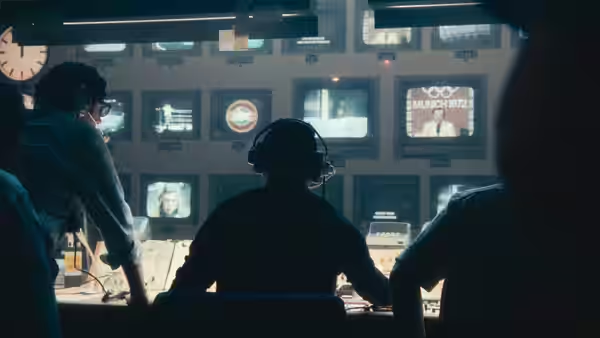
Julian Wagner’s control room is a low-ceilinged box of monitors, ashtrays, telephones and tape decks. Markus Förderer shoots it close, in warm, smoky light, faces lit by screens, and when the camera goes outside it stays with the crew’s own lenses, so we see only what they can see. Hansjörg Weißbrich cuts quickly between the desks and the monitor wall, and a good deal of the tension lives in the gap: someone says a thing, and we wait for the picture to confirm it. Lorenz Dangel’s score is mostly a low hum under the machinery and has the sense to stop when the archive plays. The archive is the real broadcast, with Jim McKay at the desk, and the film cuts to it as if it were being made in the next room, which in the story it is.
John Magaro plays Geoffrey Mason as a young man handed the biggest chair in the building without time to be frightened of it. He is good at showing thought; his eyes go to the monitors before his mouth has decided anything. Peter Sarsgaard’s Roone Arledge is quieter and more dangerous, a boss who knows this is the story of his career and would prefer not to say so. Ben Chaplin’s Marvin Bader is the one who keeps asking whether they should, and Chaplin plays him as a tired man who knows the answer will be yes. Leonie Benesch, as the interpreter Marianne Gebhardt, is the only German on the crew and the only person who seems to feel what the day means for the country outside, and she does a great deal with a headset and a notepad. Benjamin Walker’s Peter Jennings is mostly a calm voice down a phone line.
Early on, a long lens finds the balcony and a man in a balaclava steps into the frame. Everyone stops talking, and so did we. We have known that image for fifty years and it still went through us, and part of what went through us was wanting: we wanted them to hold the shot. A minute later we felt slightly ashamed of that, and the film had arranged it. It is the best thing in the picture.
The trouble is what the film does next. Bader’s question, whether they can broadcast a hostage situation and what happens if a man is shot on air, is asked plainly, argued for a scene, and then the story moves on, because the film is built to follow it. The politics of the day, Palestinians and Israelis and a Germany hosting the Games 27 years after the war, come in through Marianne and are otherwise left alone. Several critics have called this a dodge. We think it is a limit the film set for itself and then bumped into: a film about people deciding what to show cannot avoid the question of what it has chosen to show, and this one mostly does. It also ends when the broadcast ends, and it ends fast. We would have taken another ten minutes.
Newsroom films usually finish either proud of journalists or disgusted with them. This one is neither, and that takes some nerve. See it in a cinema if you can, where the monitors are the only light and the telephones sound like alarms. It runs 94 minutes and carries a 15. It will not tell you what the day meant; it tells you what the day was like from one chair, and that turns out to be a good deal.