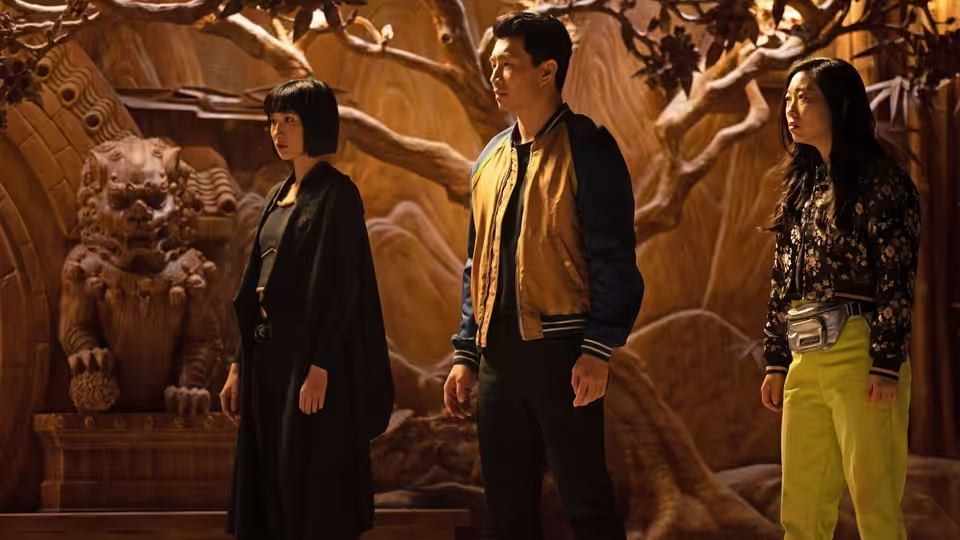
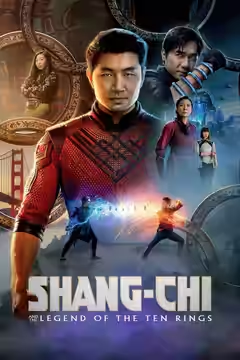
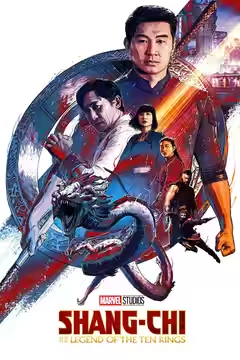
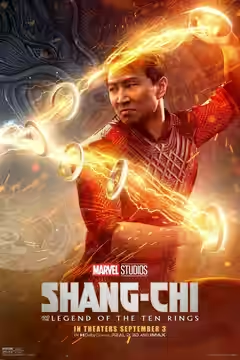
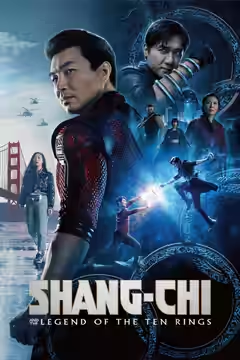
Destin Daniel Cretton gives Marvel its best hand-to-hand fighting and, in Tony Leung, a villain worth grieving for. Then the second half swaps fists for glowing creatures and the film forgets what it was good at.
Marvel has hired a director of small, careful dramas, Destin Daniel Cretton of Short Term 12 (2013) and Just Mercy (2019), and asked him to introduce a hero who was a racist caricature in the comics. For an hour Shang-Chi and the Legend of the Ten Rings works better than anyone had a right to expect. It is funny, it is quick, and when the fighting starts it is done with bodies rather than software. Then, a little past the halfway mark, the software arrives, and the film we had been enjoying is replaced by one we have seen a dozen times.
The bus is the best of it. Shaun (Simu Liu) and his friend Katy (Awkwafina) are on their way to work when a man with a blade for a hand, Florian Munteanu’s Razor Fist, and a few others come for the pendant round Shaun’s neck. The fight runs the length of a moving bus, front to back, with the brakes gone and the camera following the bodies rather than chopping them up. Bill Pope, who shot The Matrix (1999), keeps the frame wide enough that we can see who hits whom and where the poles are, and the editors, Nat Sanders, Elísabet Ronaldsdóttir and Harry Yoon, hold each shot long enough for the choreography to register. We sat up. We were surprised how much pleasure there was in simply seeing a punch land and knowing where it came from.
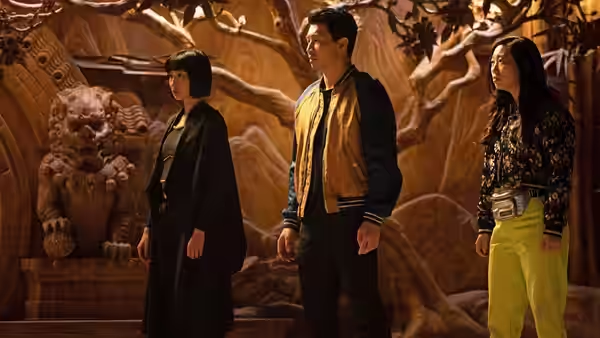
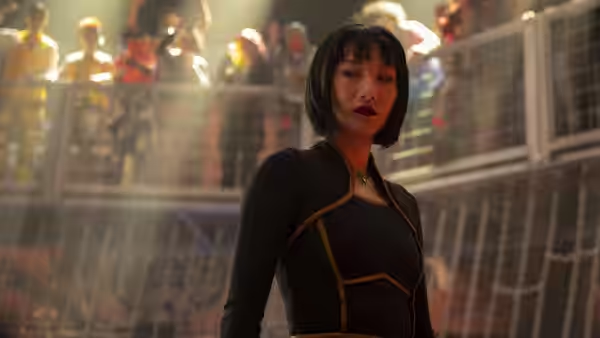
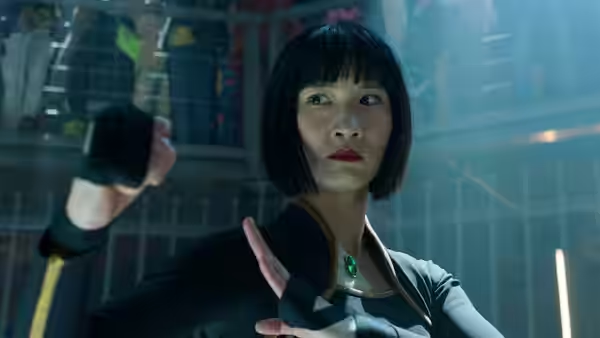
Macau is nearly as good. Sue Chan builds an underground fight club out of scaffolding on the side of a tower, cages and neon stacked twenty storeys up, and the film sends Shang-Chi and his sister Xialing (Zhang Meng’er) out along the poles. Kym Barrett puts Xialing in a red dress and lets her fight in it, and Zhang plays her with a resentment the script has earned: the girl nobody bothered to train, who trained herself. Awkwafina keeps the jokes coming and most of them land, though the film cannot leave a serious moment alone for thirty seconds before somebody undercuts it.
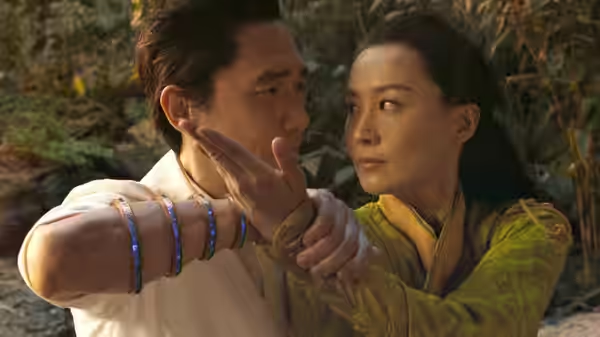
Tony Leung is the reason to see it. He plays Xu Wenwu, the hero’s father, keeper of ten rings that have given him a thousand years and a private army, and he plays him as a widower before he plays him as a warlord. Marvel villains usually announce their plans; Wenwu explains his, quietly, over dinner, and Leung lets us see a man who has decided the world owes him his wife back. Cretton shoots his scenes with Fala Chen as Li with almost no cutting, two faces looking at each other, and they moved us more than a film with this much merchandise had any business doing. The rings, for the record, are worn on the forearms and look like bangles. Nobody comments.
The trouble is the hero. Simu Liu is likeable, fit and game, and the script by Cretton, Andrew Lanham and David Callaham gives him nothing to want beyond not being his father. So the film keeps cutting to Jayden Tianyi Zhang as the boy being trained, because the child has more to do than the man. Beside Leung, Liu looks like a pleasant actor in a film that has not decided who its lead is.
Then the second half. The film moves to a hidden green place, Michelle Yeoh arrives as Ying Nan to deliver the history, and the fists give way to glowing creatures made in a computer. Ben Kingsley turns up, playing Trevor Slattery again from Iron Man 3 (2013), and is the funniest thing in the last hour, which tells you something about the last hour. The finale is the Marvel finale: a sky full of things, one big thing, hundreds of extras in Barrett’s scale armour running one way while the camera swoops the other. Joel P. West’s score, tender under the prologue, swells to fill every gap. By the last twenty minutes we were watching pixels hit pixels and had stopped minding who won.
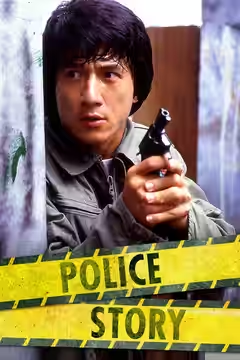
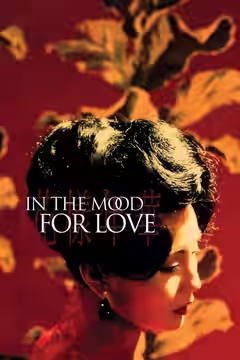
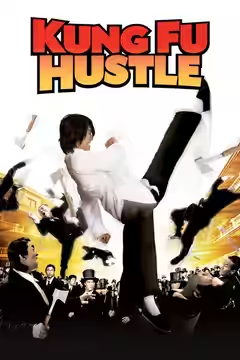
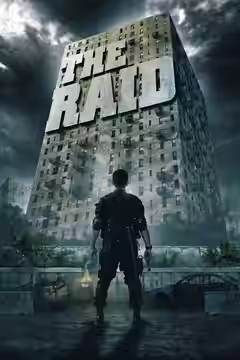
Set beside the Hong Kong films it borrows from, this is a polite imitation; Yuen Wah, who plays Master Guang Bo here, has spent fifty years in better fights than anything in the final hour. Set beside Marvel’s own origin films it sits near the top, with a villain who has a face and an hour of action that respects the body. Watch it for the bus, the scaffolding and Leung, and take the finale as the price of admission. It runs 132 minutes and carries a 12A.