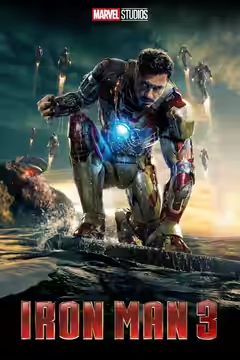
Shane Black takes Tony Stark out of the armour, gives him a panic disorder and a small boy in Tennessee, and gets the funniest and warmest of the three. The last half hour is louder and harder to follow than anything before it.
Shane Black wrote Lethal Weapon (1987) and directed Robert Downey Jr. in Kiss Kiss Bang Bang (2005), and he brings both habits to the third Iron Man film. It is set at Christmas. The hero narrates. Every second line is a joke at the expense of the line before it. And for as long as the studio lets him, Black keeps Tony Stark out of the armour, which turns out to be the best idea anyone has had for the character since the first film. This is the funniest and most likeable of the three. Its last half hour is also the loudest and hardest to follow, and the gap between those two facts is the review.
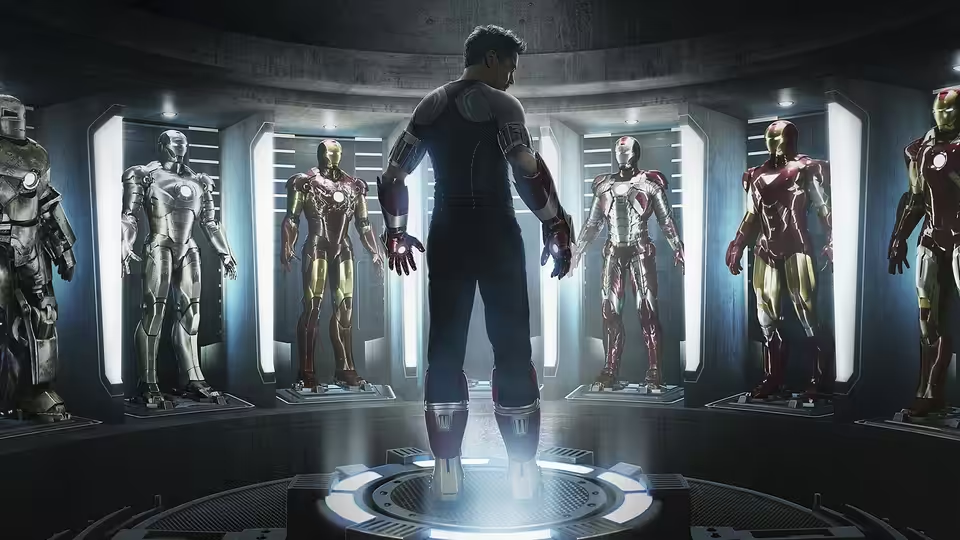
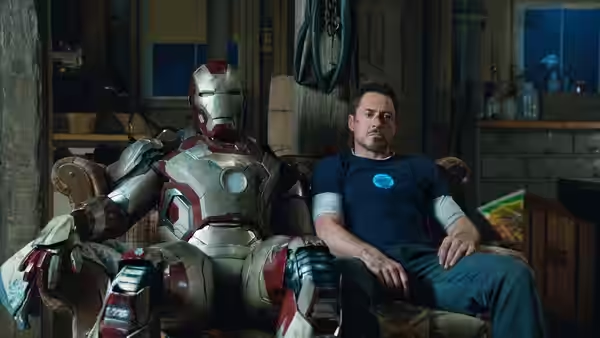
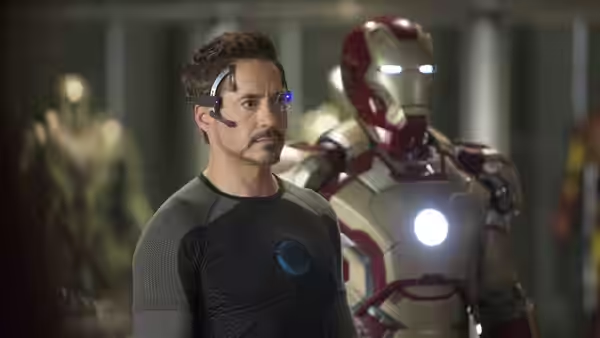
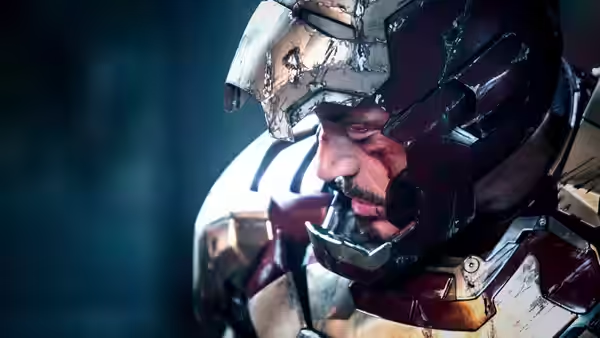
The screenplay, by Drew Pearce and Black, starts with a man who cannot sleep. Stark has been to New York, seen what came through the sky, and come home to build suits at three in the morning while Pepper Potts (Gwyneth Paltrow) sleeps upstairs. He has panic attacks in restaurants. A child asks him about aliens and he has to go outside. Downey plays the shakes without winking, and because he is also the quickest talker in the series, the moments when the talk stops land hard. The new suit, a Mark 42 that flies to him one piece at a time and rarely arrives in the right order, is the film’s best running gag and its plainest statement of what is wrong with him.
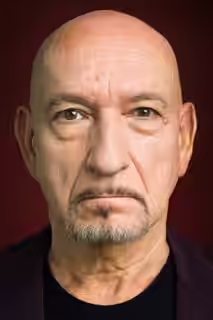
The villains are a pleasure while they last. Ben Kingsley, as Trevor Slattery, breaks into the television to lecture President Ellis (William Sadler) in a slow preacher’s drawl, and Louise Frogley dresses him in robes and rings like a warlord who has read about warlords. Guy Pearce plays Aldrich Killian with a long grudge and a smile that has been to the dentist. Rebecca Hall’s Maya Hansen is a scientist with something to confess, and the film gives her about half of what Hall could have done with it. James Badge Dale’s Savin glows orange from the inside and enjoys it. Then, around the middle, the film makes a turn involving Kingsley that we will not describe. We laughed, loudly. We also noticed, a scene later, that the film had spent its most interesting villain to get the laugh.
John Toll shoots the Malibu house as white walls and clear glass over a grey sea, so that when the helicopters come for it there is nowhere to hide and nothing in the way of the view. That attack is the film’s best set piece: one house, one suit, the floor going, and we sat forward for all of it. Bill Brzeski’s Tennessee is the opposite, a garage full of junk under snow and coloured lights, and the film slows down there to let Stark trade insults with a small boy who is not remotely impressed by him. Black has always been rude to children as a form of affection, and it works; the Tennessee stretch is the warmest thing in the series. Brian Tyler gives Stark a proper brass theme, which is more than the earlier films managed.
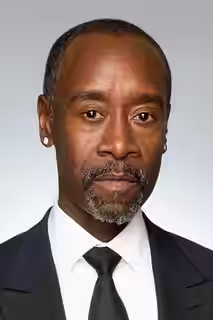
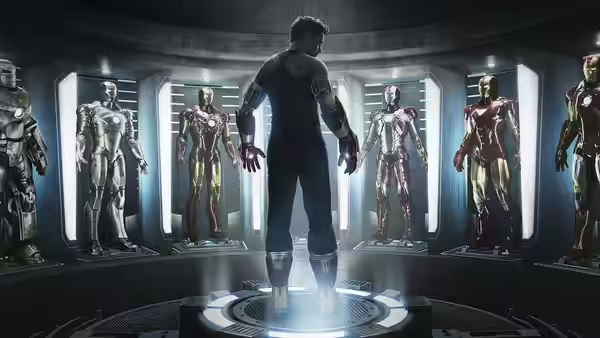
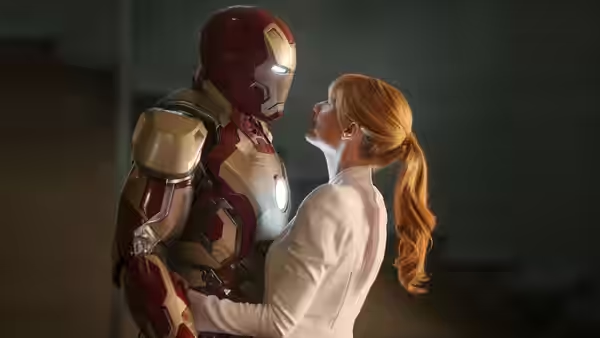
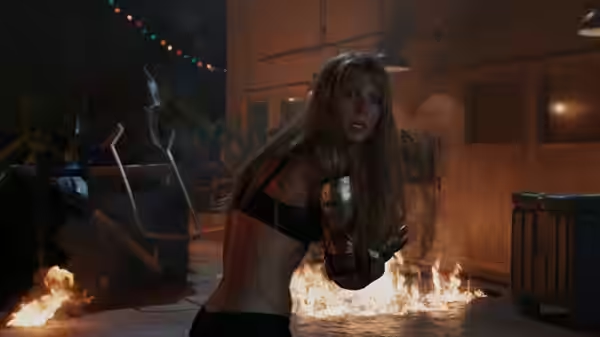
Then the ending arrives, and it arrives in dozens. The editors, Jeffrey Ford and Peter S. Elliot, are asked to cut a finale in which a great many suits fight a great many men who glow, on a dockyard at night, and they cannot keep it legible. We lost track of who was in which suit, and then of whether it mattered. Paltrow gets more to do than in either previous film and does it well; Don Cheadle’s Rhodes gets a suit painted like a flag and a running joke about its name, and not much else. The one exception is a mid-air sequence involving a plane and a dozen falling passengers, which is clean, frightening and over too soon.
Against the series’ own record this sits at the top. The first Iron Man (2008) had one good idea, a man building the thing in a cave, and a villain who was a beard in a suit; the second had less of both. This one has a lead and a director who like each other and a script that knows the character is funnier scared than smug. Its ending could have been bolted onto either of them.
See it for Downey, for Kingsley, for the house going into the sea and for Tennessee. When the suits start arriving in numbers, you may find your attention drifting to the Christmas lights, and we would not blame you. It runs 130 minutes and carries a 12A.