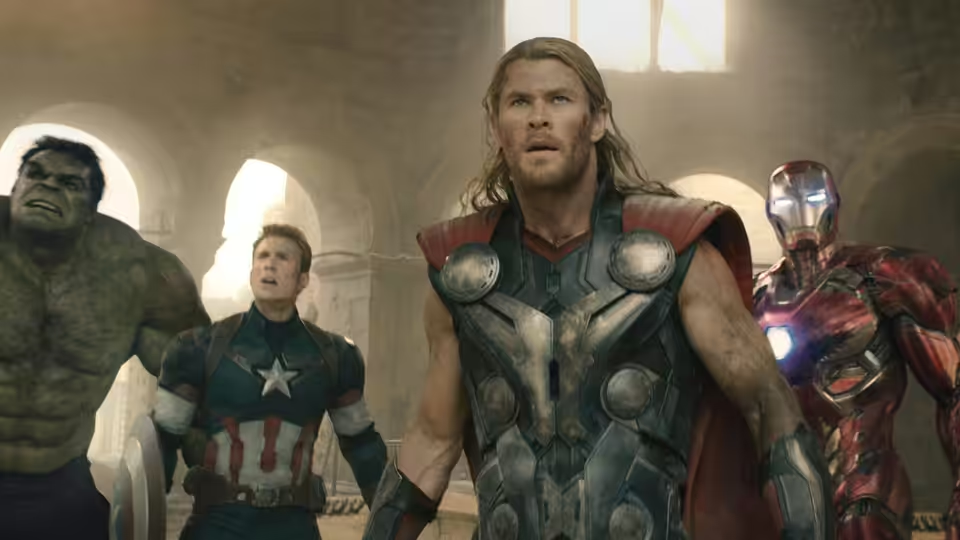
Joss Whedon’s second team film is funnier than most blockbusters and more tiring than any of them. James Spader’s Ultron is a proper villain and the quiet stretches are lovely; the fighting goes on until we stopped counting.
Three years after the first film, Joss Whedon has the team back together and has to find them something to do. His answer is to let Tony Stark do the wrong thing for the right reason: build a machine to protect the world, then watch it decide the world needs protecting from us. That is a good idea for a film, and for stretches of its 141 minutes Avengers: Age of Ultron is a good film. It is also a crowded, loud, tiring one that keeps stepping out of its own story to point at the next.
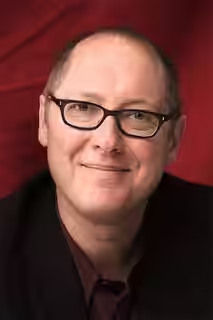
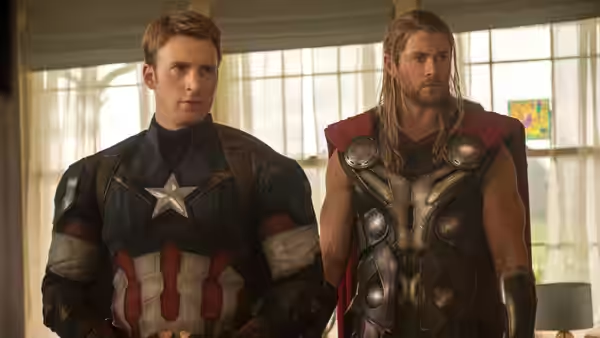
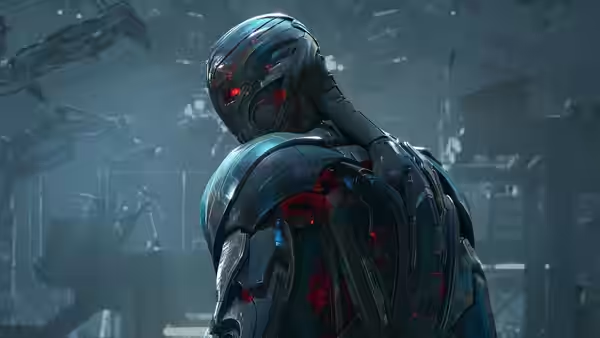
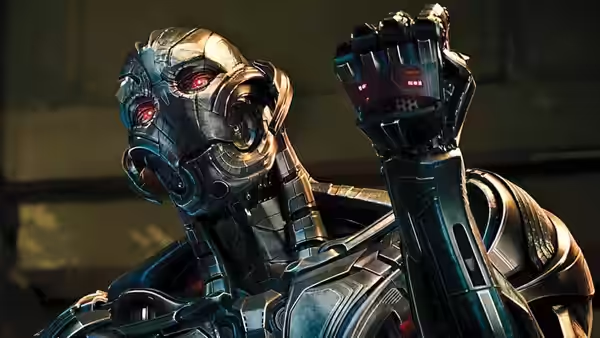
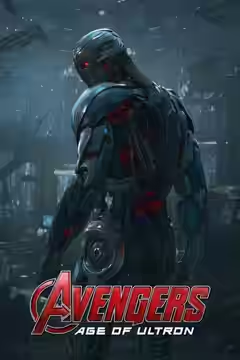
The best thing in it is a voice. James Spader plays Ultron as a bored aristocrat with a grievance, unhurried and amused, and the animators have given the metal face a tilt that matches him. He arrives at the end of a party, dragging a body that does not work properly, and talks about strings while the Avengers stand there holding drinks. We felt a proper chill, the first this series had given us. The party itself, before he ruins it, is the film’s best-written scene: Hemsworth’s Thor invites everyone to lift his hammer, nobody can, and Evans’s Rogers makes it wobble.
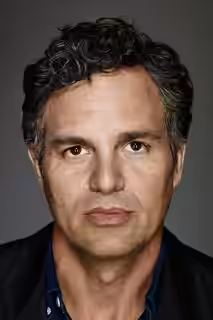
Whedon writes talk better than anyone working at this scale, and the film is happiest when nobody is punching anything. A stretch in the middle sends the beaten team to a farmhouse, and for twenty minutes there is wood to chop, a sink to fix and grown people admitting they are frightened. Renner, who spent most of the first film under someone else’s control, finally gets to be a person, and he turns out to be the dry, tired heart of the thing. Johansson and Ruffalo carry a romance neither character quite believes in, and Ruffalo’s flinch when she reaches for his hand is the most human acting in the film. It moved us more than a film with a robot army has any business doing.
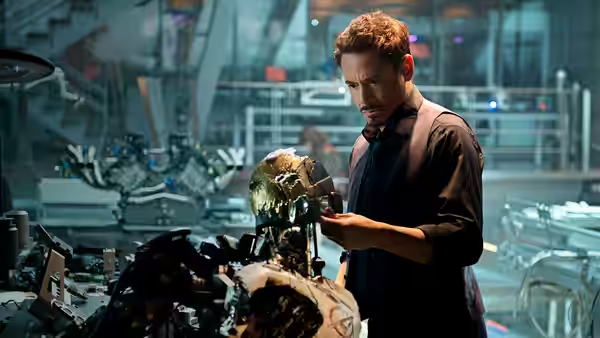
Ben Davis shoots the opening raid as one roving shot that swings from Iron Man to Thor to Hawkeye and back, and it is the one action sequence in which we always knew where everyone was. Charles Wood builds the Hydra base as a snowbound fortress and Stark’s lab as a glass box full of floating blue diagrams, and both look like places rather than backdrops. The Sokovian city, with its domed church at the centre, is the film’s most solid location and gets its most solid fighting. Lisa Lassek and Jeffrey Ford cut the dialogue scenes with patience and the fights into pieces, so that by the end we could not have told you which hero was on which side of which street.
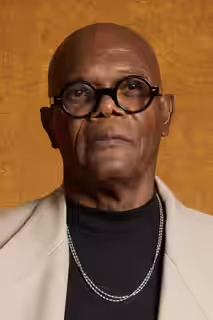
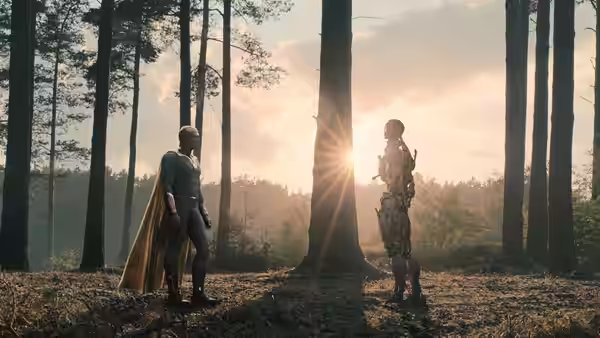
There is too much of it. Aaron Taylor-Johnson and Elizabeth Olsen arrive as the Maximoff twins with Eastern European accents and one motive between them, and the film never finds the time to make them people. Paul Bettany, released from playing a disembodied butler, is elegant and strange as the Vision, but he arrives late and mostly stands still. Samuel L. Jackson turns up to give a speech, Don Cheadle to tell a joke nobody laughs at, and Thor leaves for a scene in a cave that exists to serve films we have not seen yet. Brian Tyler and Danny Elfman are both credited with the music, and it sounds like it: brass on every entrance, strings under every fall, nothing left alone for a second.
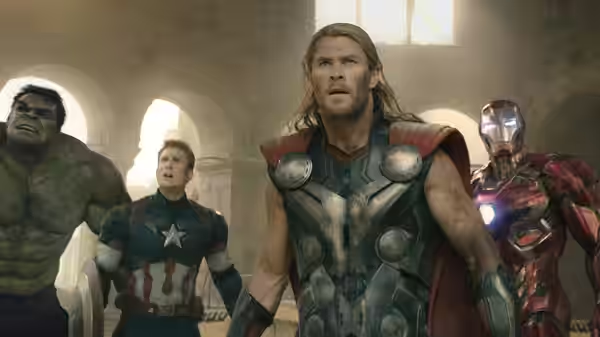
The last forty minutes are a battle with a robot army, and we will say nothing of the setting except that it is large. Somewhere in it we stopped following. Each Avenger gets a moment, each moment is a punch, and Whedon, who staged the party so well, cannot make a hundred identical robots mean anything. We were bored, and cross about it, because the same man had made us laugh an hour earlier.
The first film had one job, to get seven people into one frame, and did it. This one has a dozen jobs and does about half of them well, which at this size counts as an achievement and still sends you out with a headache. See it for Spader, for the party and for the farmhouse. Watch it at home, where you can pause during the fights and come back for the talking, which is what the film would rather be doing too.