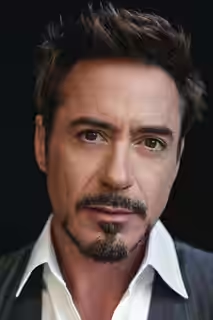
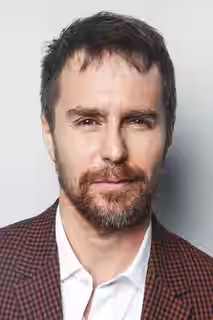
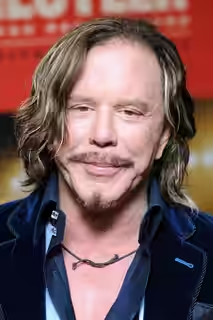
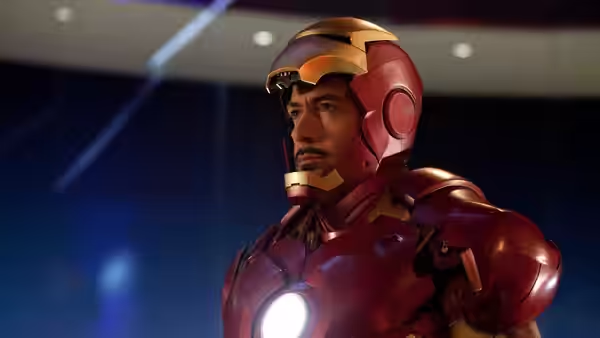
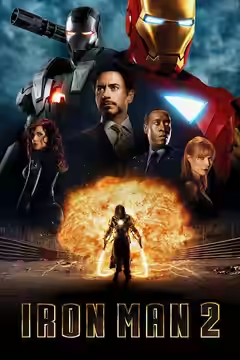
Robert Downey Jr. is still the best reason to watch, and Sam Rockwell and Mickey Rourke give him company for a bright first hour. Then Jon Favreau’s sequel stops to introduce people it will need later, and never quite gets going again.
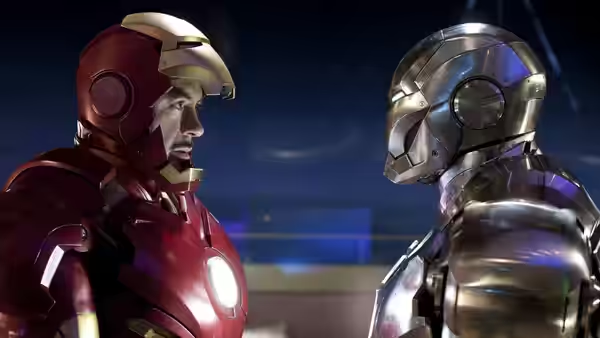
Jon Favreau’s sequel runs 124 minutes and has, at its centre, a good idea for one. Tony Stark (Robert Downey Jr.) has told the world he is Iron Man, and the reactor keeping the shrapnel out of his heart is now poisoning him with palladium. Nobody else knows, and Justin Theroux’s script lets him behave accordingly: worse than usual, faster than usual, funnier than usual. A film about a showman dying in public would have been enough, and this one keeps wandering off to fetch other people.
For the first hour it hardly matters. The Senate hearing is the best scene in the film: Stark commandeers the committee’s own screens, Senator Stern (Garry Shandling) slowly reddens, and Dan Lebental and Richard Pearson cut the exchange so that Downey’s lines land on Shandling’s face rather than his own. We laughed out loud, more than once, because Theroux writes chatter that overlaps and Downey plays a man being clever to avoid a conversation he cannot have.
Sam Rockwell arrives at the same hearing as Justin Hammer, a rival contractor who has bought all the same things as Stark and cannot make any of them work. Mary Zophres dresses him a fraction too shiny, Rockwell plays him a fraction too eager, and for whole scenes he is funnier than the hero. Mickey Rourke is another matter. The film opens in a Moscow flat, where Ivan Vanko watches Stark’s announcement on television while his father dies in the next room, then spends months building a reactor of his own with a cockatoo for company. Matthew Libatique lights it in sodium orange, Rourke hardly speaks, and we found him the one frightening thing in the picture. The film then forgets about him for long stretches.
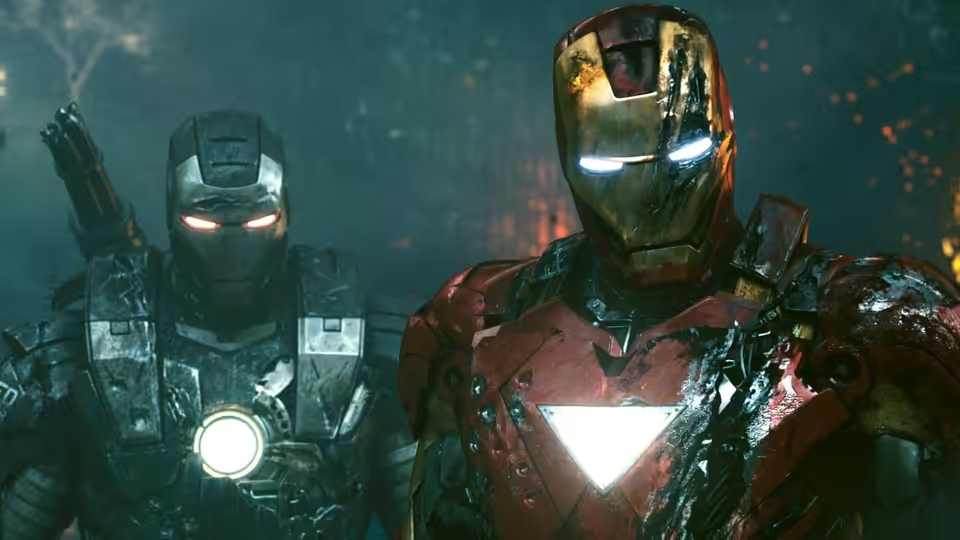
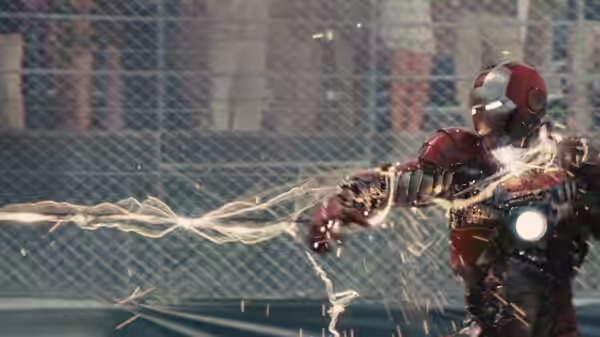
Monaco is the other reason to be here. Stark decides to drive in the Grand Prix himself, and Vanko walks onto the circuit with two electrified whips and cuts a car in half. Favreau stages it in hard afternoon sunlight, Libatique keeps the camera low to the track, and for once in this kind of film we can see who is where and what will happen if he is not moved. We sat up, and it was the last time the film asked us to.
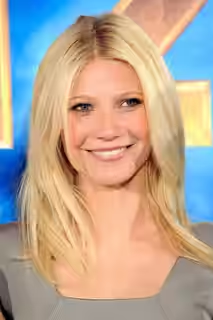
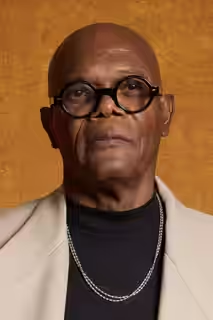
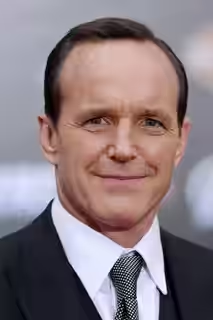
After Monaco the film sits down. Pepper Potts (Gwyneth Paltrow) is made chief executive and given a company to run in the background. Nick Fury (Samuel L. Jackson) and Agent Coulson (Clark Gregg) arrive with a box and a lecture. Each scene exists to hand Tony something he will need later, or to hand a film that has not been made yet something it will need. We were bored, and then cross about being bored, because there is a dying man in the middle of this picture and it keeps asking him to wait while somebody reads him a brochure. John Debney’s score fills the gaps with brass that also sounds as if it is waiting.
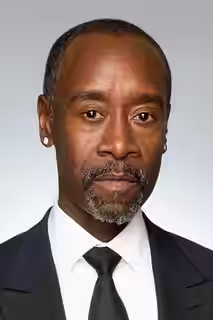
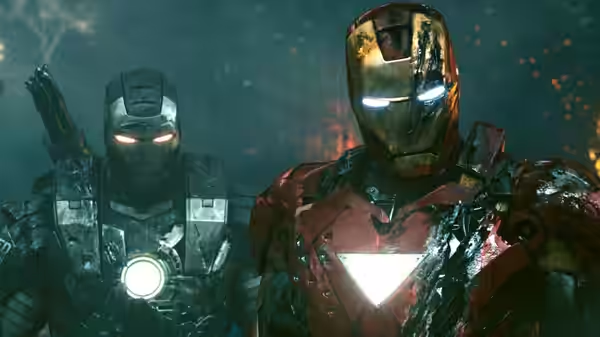
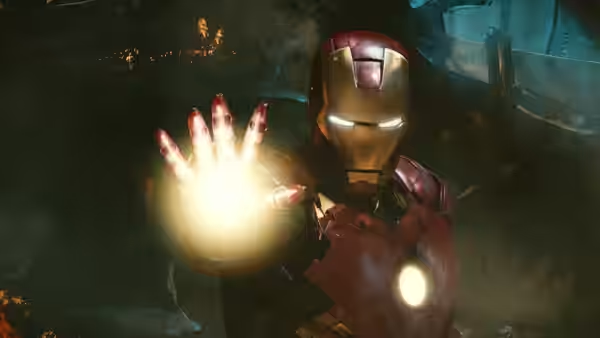
The rest of the cast do what they can. Don Cheadle plays Rhodey as the only sober person in Stark’s life, and his exasperation is sometimes ours. Scarlett Johansson is given one corridor and makes it count. J. Michael Riva’s production design gives Hammer a factory full of things that nearly work, which is the right joke, and gives Stark a house that looks like an airport lounge. The finale, which we will not describe, is loud, set at night and clear enough about where everyone is, and none of it matters as much as the thing in Stark’s chest, which the film deals with in a hurry.
Favreau’s first Iron Man, from 2008, worked because it was about one man, first in a cave and then in a garage, building a thing. This one has more of everything and less of him. Most critics landed about where we have, caught between the cast and the plotting, and we do not think they are wrong.
It is a 12A, and younger viewers who liked the first film will be happy enough. Older company should know that the middle hour is mostly people in rooms telling Tony Stark about other people, and that the first hour is the one to give your full attention.