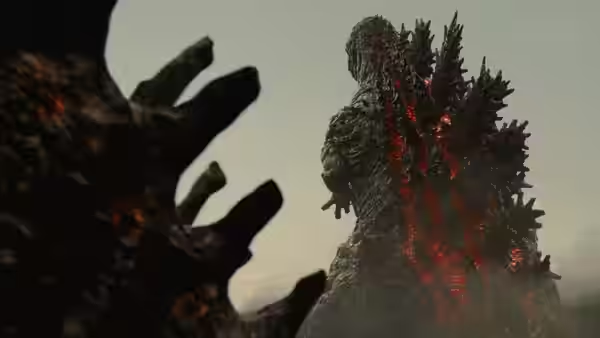
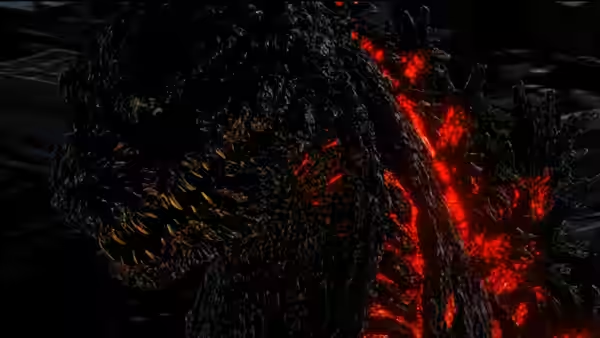
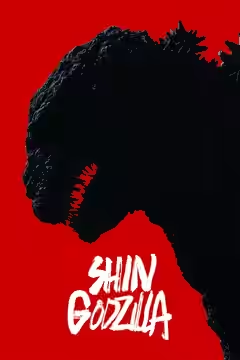
Hideaki Anno and Shinji Higuchi remake Godzilla as a disaster-response procedural, and the procedure is the point. It is talky, odd and sometimes clumsy, and its creature, when it appears, is the strangest and most frightening the series has produced.
Hideaki Anno and Shinji Higuchi have made a Godzilla film in which the monster is on screen for perhaps a third of its 120 minutes and the rest is meetings. That is not a complaint. Shin Godzilla is about what a modern state does when something impossible comes out of the sea, and its answer, delivered with a straight face and at speed, is that it convenes. We found it funnier and more frightening than we expected, and also tiring, which seems to be intended.
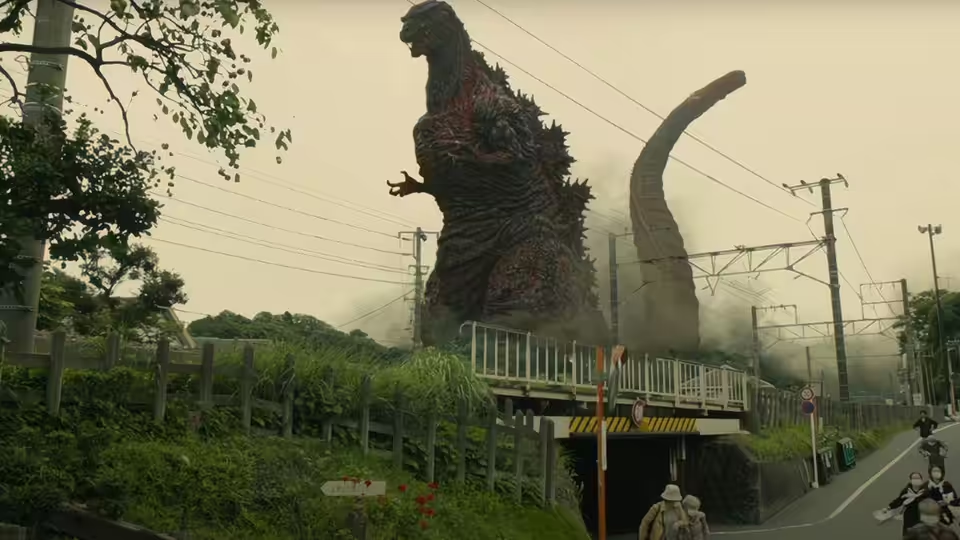
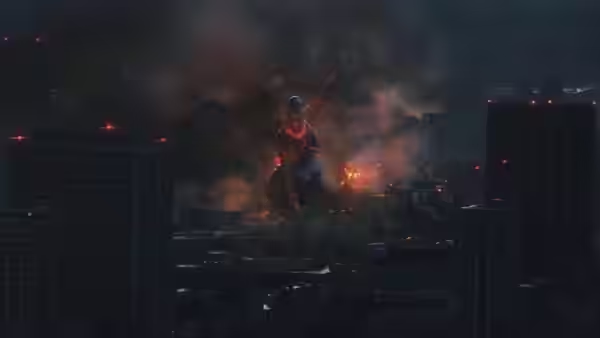
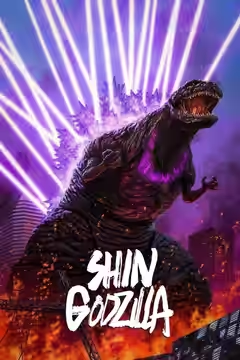
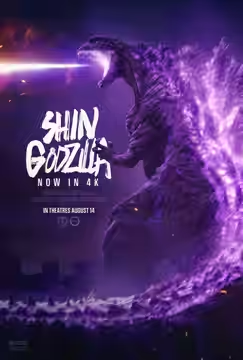
The first act moves fast. Steam rises from the bay, a tunnel floods, and the cabinet debates whether it is looking at a volcanic vent. Rando Yaguchi (Hiroki Hasegawa), a junior man who says the word creature out loud, is told to be quiet. Then the thing comes up a river into the streets on its belly, head lolling, gills leaking, eyes like painted plates, and shoves boats and cars through the streets ahead of it like a wave. We laughed when we first saw it. Ten seconds later we were horrified, and the two feelings never quite separated for the rest of the film.
Anno, who also wrote the script, edits with Atsuki Sato and cuts the meetings as if they were the action. Every official who speaks gets a caption with rank and department; every helicopter gets its designation. Kosuke Yamada shoots the rooms flat and wide under fluorescent light, faces low in the frame, sometimes from a camera set on the table among the water glasses. Eri Sakushima and Yuji Hayashida design a government of folding tables, whiteboards and name placards, and the joke, repeated until it stops being funny and then becomes funny again, is that the placards keep being carried into another room. Prime Minister Ookouchi (Ren Osugi) asks whether he is allowed to authorise a shot and is told a form is missing.
Shirō Sagisu, Anno’s composer since Neon Genesis Evangelion, supplies the choral and percussive cues that make a spreadsheet scene feel like a countdown. Alongside him the film uses Akira Ifukube’s marches from the earlier Godzilla films, and when the tanks roll out to that music we were moved more than we can quite account for. It is old music for old machines, and the film knows both are about to be found wanting.
Nobody here has a home life. Hasegawa’s Yaguchi is a decent man who is good in meetings; Takenouchi’s Akasaka is the adviser who always knows which way the wind is blowing; Ichikawa’s Ogashira says one flat sentence per scene and is right every time; Tsukamoto, the director of Tetsuo, plays the biologist Hazama with an unseemly delight. They are job titles with faces, and the film is content with that, so the two or three moments when a voice cracks land harder than they would in a warmer film. The exception is Ishihara’s Kayoko Ann Patterson, an American envoy who announces her intention to be president, speaks English that wobbles, and is written as a sketch in a film that has decided not to draw people. Most critics have picked on her, and they are right.
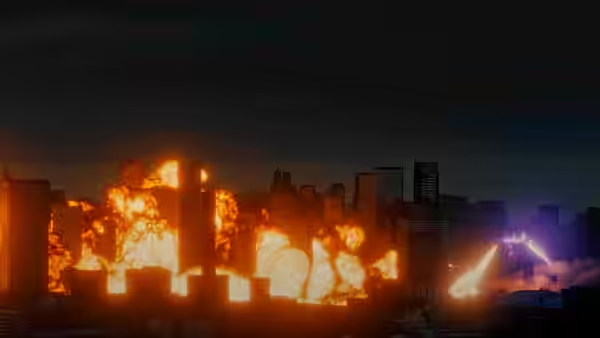
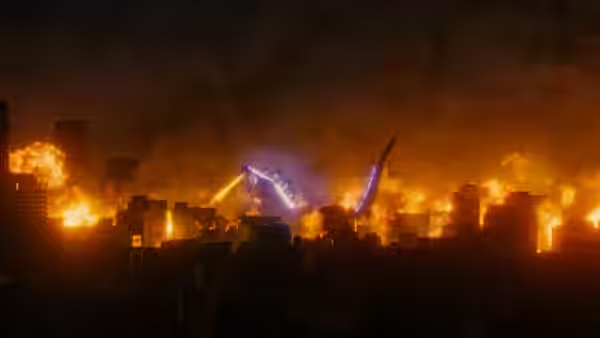
There is a sequence at about the hour mark, at night, over the city, that we will not describe. We watched it with a hand over our mouth. Higuchi and Anno stage it slowly, almost quietly, and it is the point at which the film stops being a comedy about paperwork and becomes something that is plainly about a real disaster, still recent when the film was made: press conferences, evacuation maps and men in blue jumpsuits. The film is angry at that memory and also proud of the people who worked through it, and it does not always manage to hold both moods in the same scene.
After that the creature goes quiet for a long stretch and the film becomes a plan: chemists, pumps, cranes, phone calls to foreign capitals. Several critics have complained that the monster vanishes for much of the second half, and the complaint is fair. The ending is a procedure carried out, and it goes more or less as planned, which is not what a monster film usually gives you. We were gripped anyway, mostly by the faces of people doing sums under a deadline.
Watch it with subtitles and be prepared to read; the captions arrive faster than anyone can say them. It runs 120 minutes and carries a 12, which is fair for the violence and slightly generous for the dread.