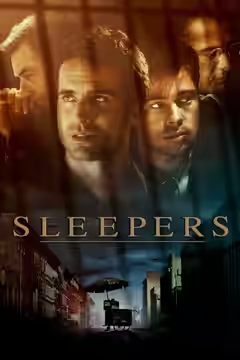
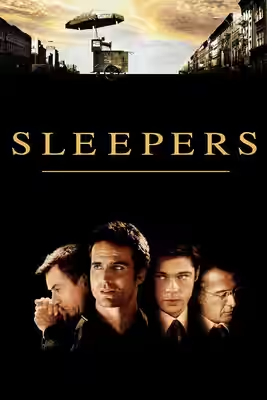
Barry Levinson’s film of Lorenzo Carcaterra’s book is harrowing for an hour, with Kevin Bacon quietly terrifying as a reformatory guard, and then turns into a glossy courtroom drama that cannot make its revenge believable. The boys are worth seeing; the men are not.
Barry Levinson has adapted Lorenzo Carcaterra’s book, which was sold as a true story and argued over as one. Four boys from Hell’s Kitchen are sent to a reformatory, something is done to them there, and as grown men they get even. At 147 minutes it is two films joined in the middle: a serious, frightening hour about children in a locked building, then a courtroom drama with four stars in it, and that is where the trouble starts.
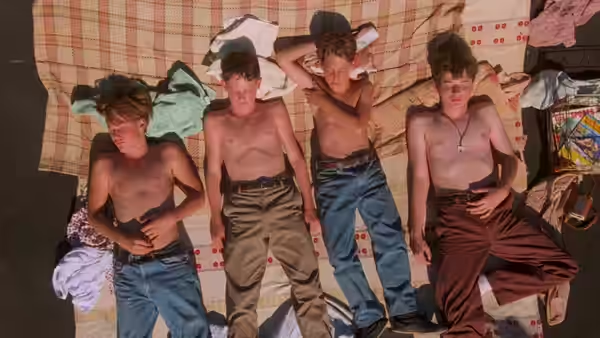
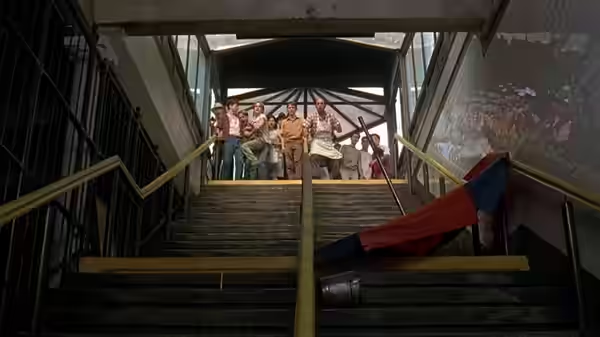
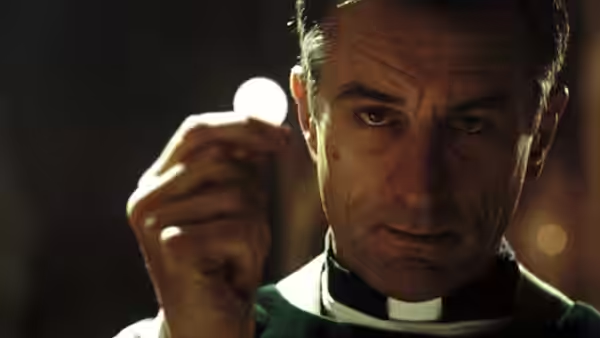
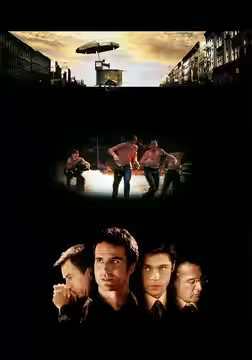
Levinson is good with boys, as anyone who saw Diner (1982) will remember, and the opening is his. The four young actors, with Brad Renfro’s watchful Michael at the centre, talk over each other, dare each other, and serve mass for Father Bobby (Robert De Niro) while running errands for King Benny (Vittorio Gassman). Kristi Zea’s Hell’s Kitchen is stoops, fire escapes and a church. Then the hot dog cart gets away from them and goes down the subway stairs, and Levinson holds on the boys’ faces rather than the man at the bottom, which is the right call and about the last time the film trusts us to do the work.
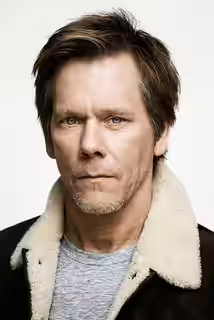
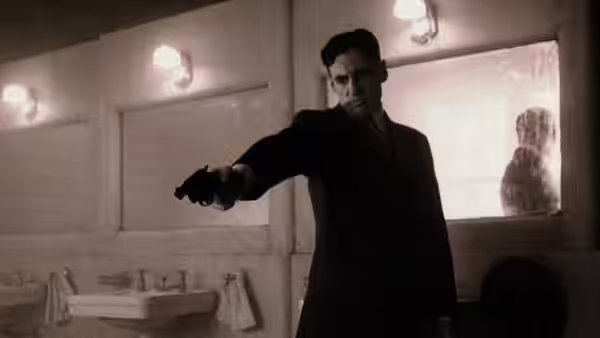
The Wilkinson Home for Boys is the film’s best stretch and its hardest to sit through. Zea builds it in tile and iron, long dormitories and longer corridors, and Michael Ballhaus lights it thin and grey so the boys look small and the guards, shot from a little below, do not. Kevin Bacon’s Nokes is the performance of the film: a quiet man with a soft voice and all the time in the world, who leans on a bunk the way other men lean on a bar. We were horrified, and the horror came from how little Levinson shows. A boy walked down a corridor at night, a door, the camera left in the hall. That is enough, and the film knows it is enough.
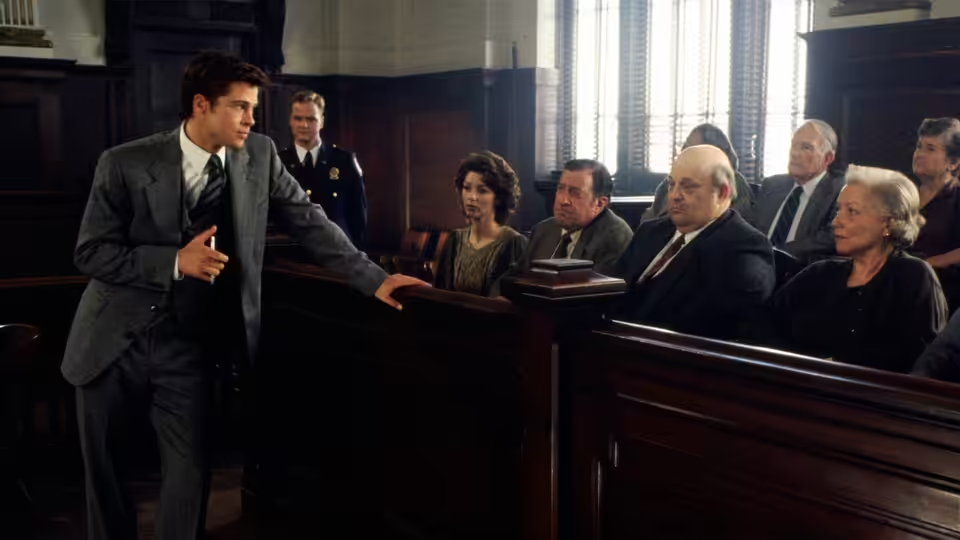
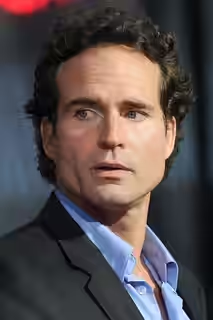
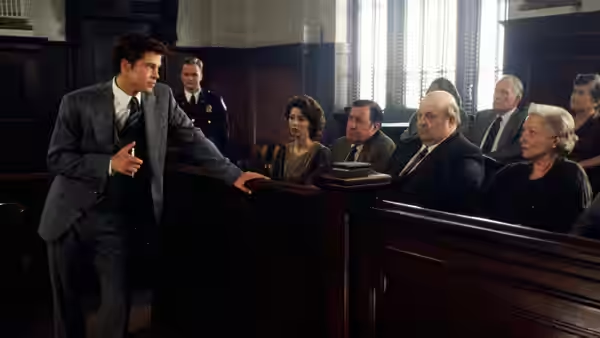
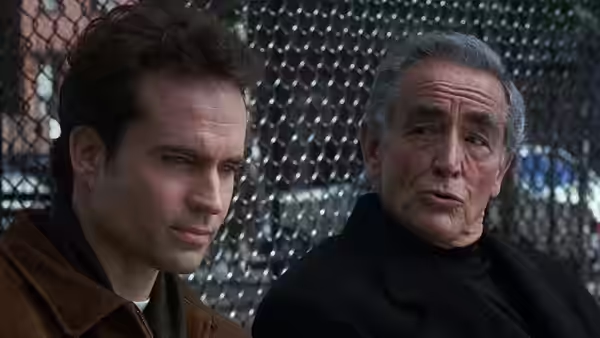
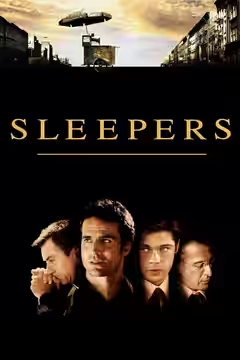
Then the film jumps forward and changes character. Shakes (Jason Patric) works on a newspaper, Michael (Brad Pitt) is a prosecutor, John (Ron Eldard) and Tommy (Billy Crudup) do the neighbourhood’s dirty work, and Carol (Minnie Driver) is the woman all four of them half-love. The second half takes a turn we will not describe. What we can say is that it leads to a trial, and that the trial depends on every person in Manhattan doing exactly what four men need them to do, at exactly the moment they need it done. Nobody in the film finds this remarkable.
The adults are the problem. The boys were particular, with their own cruelties and jokes; the men who replace them are handsome and solemn and could swap roles without anyone noticing. Pitt looks uncomfortable in both the suit and the part. Patric narrates in a voice of permanent regret, and Levinson’s screenplay lets the narration argue the case for revenge rather than letting a scene do it. De Niro, doing little and doing it exactly, has the one adult scene that lands, when Father Bobby is asked to choose between his conscience and the boys he raised, and he plays the choosing on his face for a long, silent minute.
Dustin Hoffman arrives as Danny Snyder, a defence lawyer with a drink problem, and he is a pleasure, shambling through the courtroom as if looking for his car. He is also a sign of what the film has become by then, a place for stars to do turns. John Williams writes a solemn, choral score that tells us this is tragedy; it suits the reformatory, and in the courtroom it is too much. Stu Linder cuts the first half tight and lets the second wander, so that by the two-hour mark we were checking the clock, and then annoyed at ourselves for it, because the opening had earned better.
Ballhaus shot Goodfellas (1990), and Levinson borrows that film’s neighbourhood, its priests and its wiseguys, without its doubt. Goodfellas knew its narrator was lying to himself. Sleepers believes every word Shakes says.
It carries an 18, and the Wilkinson hour is not for a casual evening; be ready for it. Watch for Bacon, for Renfro and the boys, and for De Niro’s minute of silence. The rest is a long, well-dressed epilogue that explains at length what the first hour had already shown.