Diane Keaton and Jack Nicholson make Something’s Gotta Give worth the time, though Nancy Meyers asks for too much of it. The comedy is sharper than the romantic complications.
Nancy Meyers’s Something’s Gotta Give is a good romantic comedy that would benefit from knowing when to stop. Diane Keaton and Jack Nicholson make it worth an evening, despite a story considerably less nimble than its stars. At 128 minutes, it asks a great deal of their ability to keep familiar romantic business interesting. They usually manage it, especially when the screenplay lets them be funny without insisting that every exchange advance the romance.
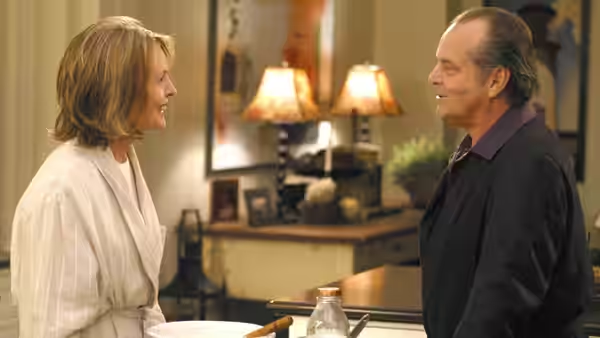
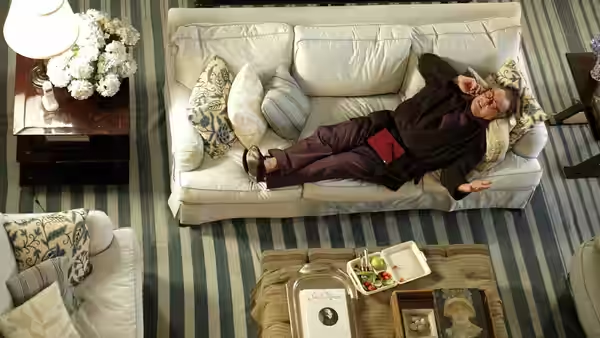
The starting point is bachelor Harry Sanborn, whose lifetime of moving from woman to woman is due an interruption. Jack Nicholson makes the part entertaining without requiring us to regard Harry’s habits as an achievement. His performance allows us to enjoy the man’s self-satisfaction while finding plenty wrong with it. Nancy Meyers gets useful comedy from that distinction, although Harry is more engaging when he creates friction than when the film asks us to invest in his romantic prospects.
Diane Keaton gives Erica Barry enough emotional weight that the romance matters even when its plotting becomes tiresome. We laughed most at the exchanges between the two leads, because their timing makes the reactions as enjoyable as the lines. She can be funny without making Erica’s feelings seem foolish, something the screenplay does not always manage as confidently. Her performance keeps us interested when the complications themselves have ceased to be much of a draw.
Michael Ballhaus’s cinematography is flattering and comfortable to watch, though it does little to make the emotional uncertainty feel urgent. Jon Hutman’s production design is similarly agreeable, almost to a fault: the film’s appearance can feel too settled for its romantic unease. Hans Zimmer’s music supplies warmth without adding much that the performances have not already provided. These are accomplished contributions, but the actors remain by some distance the most interesting things to attend to.
Joe Hutshing’s editing gives the comic partnership room to work, but the film needs firmer control of its length. As the romantic drama takes greater precedence, the pace slackens and the complications receive more attention than they deserve. Nancy Meyers seems reluctant to leave a feeling alone once it has registered. There is nothing wrong with allowing a romantic comedy to take its time; here, too many stretches offer insufficient reward for the attention they require.
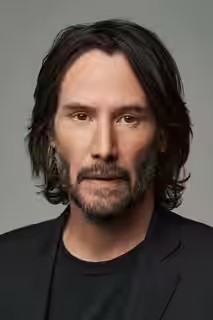
The supporting cast suffers from the concentration on the leads. Keanu Reeves as Julian Mercer, Frances McDormand as Zoe and Amanda Peet as Marin promise more than the writing gives them room to deliver. Their presence helps, but their characters do not receive the same care as the central pairing. With this much running time available, giving the people around Harry and Erica more substance would have been a reasonable use of it.
As romantic comedy, the film succeeds often enough to earn some patience: the pairing works, the laughs arrive, and the feelings are treated with respect. We would not ask for a less familiar premise, only a clearer sense of when the audience has understood enough. The performances justify the indulgence more often than the screenplay does. Choose it for Diane Keaton and Jack Nicholson, and allow for a longer evening than the material needs.