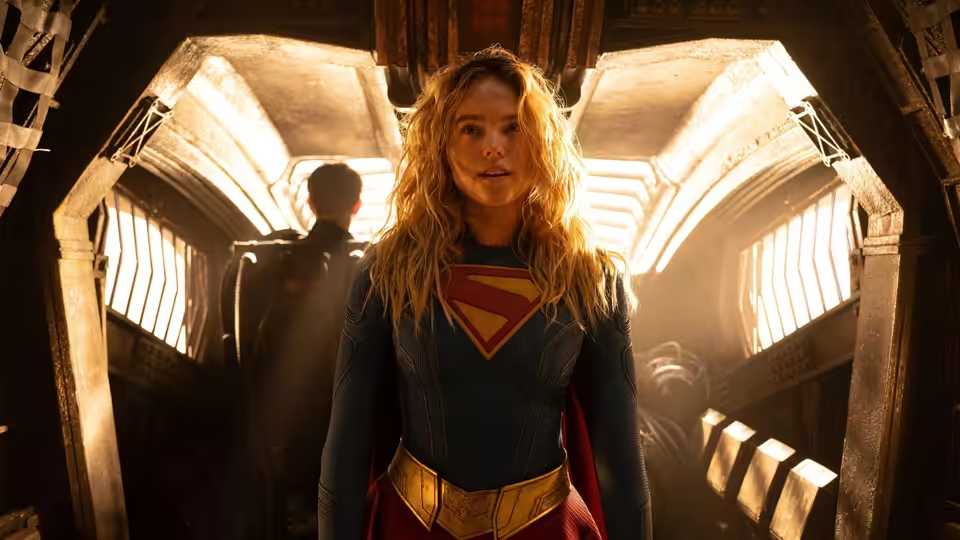
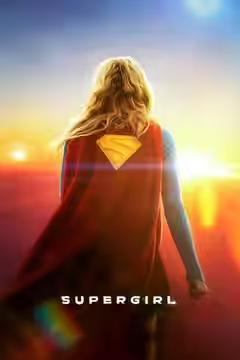
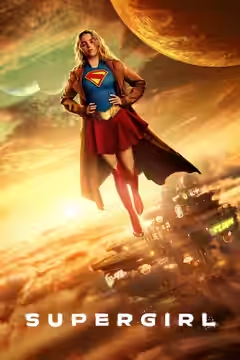
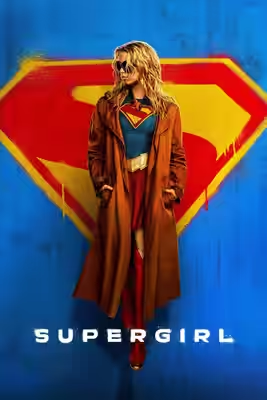
Milly Alcock is a sour, tired, believable Supergirl and the film around her cannot keep up. A simple revenge plot, a child, a dog and three editors, and the fights are still too dark to follow.
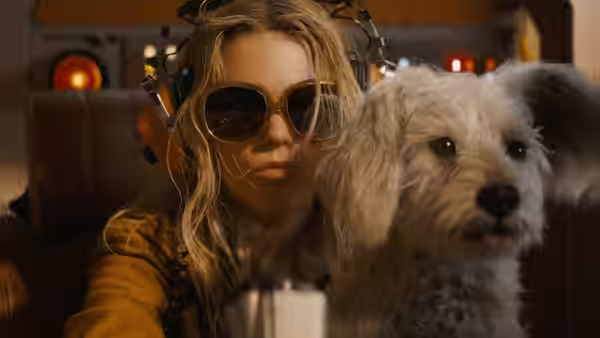
Craig Gillespie’s Supergirl keeps its plot small, and it is right to. Kara (Milly Alcock) is woken from a hangover by a girl called Ruthye (Eve Ridley) who wants a man named Krem (Matthias Schoenaerts) dead, and Krem happens to have a dog Kara wants back, so off they go. That is the whole of it. Ana Nogueira’s script has a good shape, a revenge story with a child in it, and then fills the shape with people saying the obvious thing in the flattest available way. The film is likeable in outline and dull in detail, and the detail is where we spent 108 minutes.
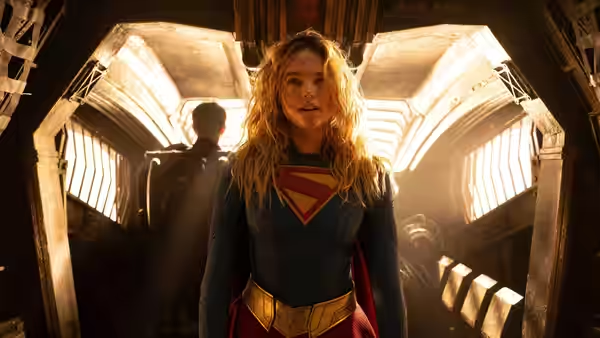
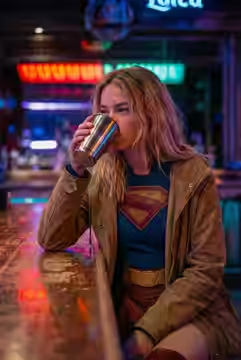
Alcock is the reason to see it, and most critics have said so, which for once is fair. She plays Kara as someone who has lost a world and dealt with it by getting drunk in other people’s bars, and she never asks to be liked. The slouch, the flat stare, the way she takes a punch as an inconvenience: it is a proper physical performance. When the film gives her a quiet scene with Ridley, who is watchful and does not play cute, the two of them are worth the ticket. It does not give them enough of those scenes.
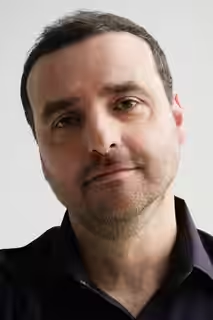
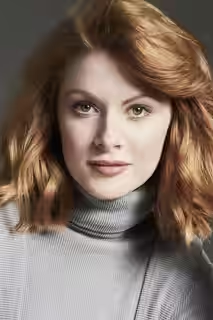
The flashbacks are the other thing that works. David Krumholtz and Emily Beecham play Kara’s parents, Zor-El and Alura In-Ze, in a handful of scenes on a world that is ending, and they got at us more than we expected. Krumholtz plays a father who knows what is coming and cannot say it, and the second of these scenes left us with a lump in the throat we had not budgeted for. Then the film cut back to a fight in the dark, and the feeling had nowhere to go.
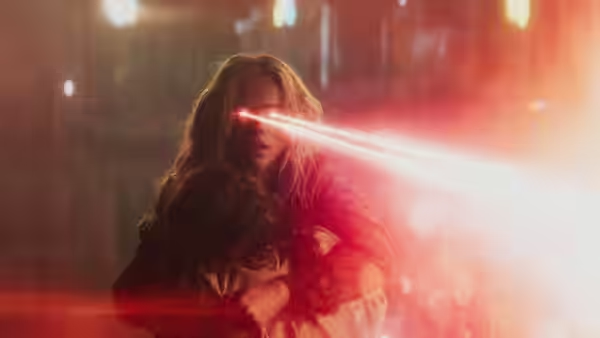
About the dark. Rob Hardy shoots the bars and back streets in browns and greys with faces half in shadow, and the idea is plain enough: a Supergirl film that looks like the morning after. The trouble is that the action happens in the same light and is cut by three editors, James Gunn, Fred Raskin and Tatiana S. Riegel, into pieces so short we often could not say who had hit whom or from which side. Neil Lamont’s sets, rust and scaffold and bad lighting, are more interesting when the camera holds still than the film ever lets them be in motion. Claudia Sarne’s score does more to hold the chases together than the cutting does.
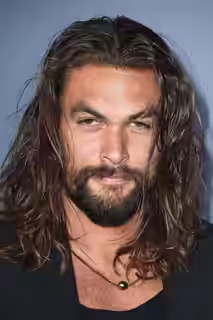
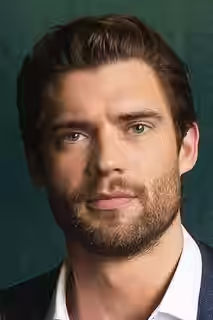
Schoenaerts plays Krem as a tired man rather than a monster, which is a sensible choice the script never rewards; he is given nothing to want beyond staying ahead of us. Jason Momoa’s Lobo arrives, shouts, and leaves, and the film seemed as unsure as we were what he was for. Anna B. Sheppard and Michael Mooney dress Kara down, in worn layers rather than a shining suit, and it suits Alcock better than anything in the dialogue does. David Corenswet’s Superman appears and is polite.
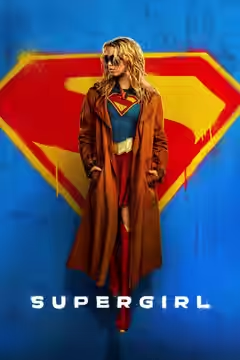
Gillespie made I, Tonya (2017) and Cruella (2021), two films that let awkward, angry women be funny about their own damage. Kara should have been his. But the wit is missing here; the tagline promises “Whatever” and the film keeps stopping to explain that it means it. Against the run of these films it is neither the worst nor a reason to stop making them. It does not waste our time so much as under-use it.
Go for Alcock, if you go. Sit near the front, because the fights are dark enough that the back row will see a brown rectangle with noises coming out of it. And if you find yourself, around the hour mark, wanting the film to stop and let its two women talk, you have found the better film the script kept walking past.