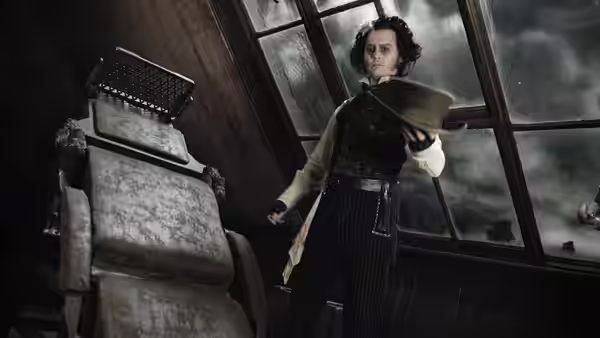
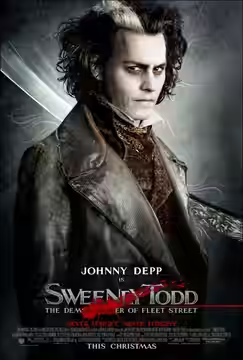
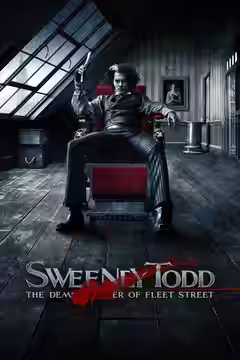
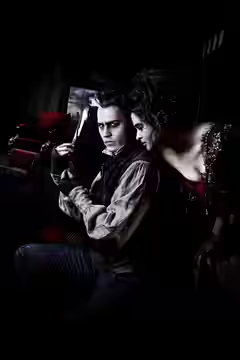
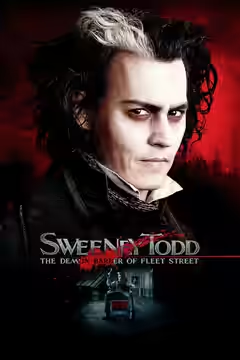
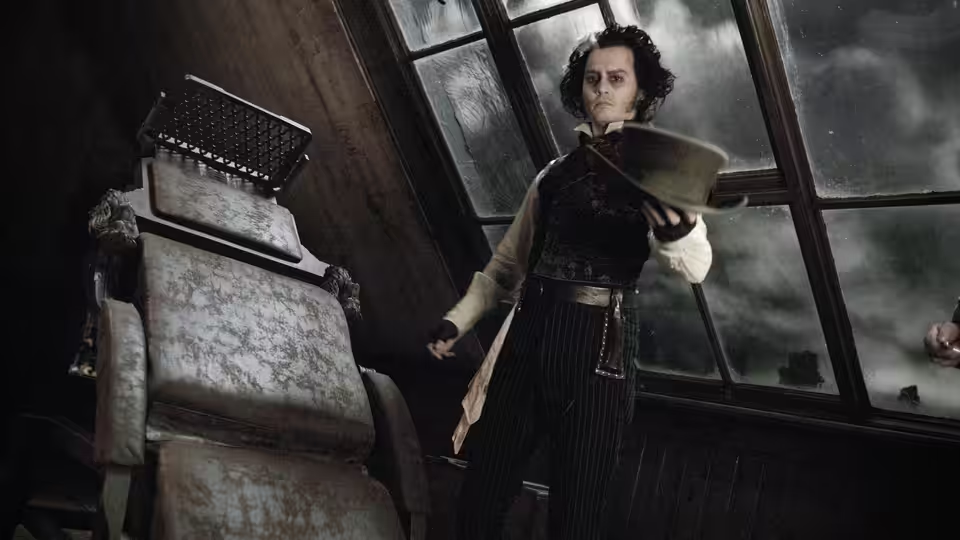
Sweeney Todd (Johnny Depp) holding a razor in his barber shop
Film review

Sweeney Todd: The Demon Barber of Fleet Street

2007 · Directed by Tim Burton · 1h 56m · MK 18+

In a sentenceFine songs, questionable pies, and a barber we would not trust with a fringe

In nineteenth-century London, Sweeney Todd (Johnny Depp) is a barber with revenge on his mind. On Fleet Street, Mrs. Lovett (Helena Bonham Carter) has pies to sell and sings about their shortcomings. A shaving contest brings Todd up against Pirelli (Sacha Baron Cohen), making a public challenge out of his skill with a razor. Poverty surrounds them, while Judge Turpin (Alan Rickman) represents the city’s authority. Songs accompany the daily business of barbering and baking, but Todd has little interest in settling into an ordinary working life.

Fi1m review

Tim Burton’s blood-soaked musical is funny, cruel and worth the discomfort. Johnny Depp and Helena Bonham Carter make persuasive company for each other, even when their voices cannot quite give Stephen Sondheim’s songs the force they deserve.

Tim Burton makes Sweeney Todd: The Demon Barber of Fleet Street into a musical for people who do not expect a song to improve anyone’s mood. Stephen Sondheim’s music accompanies cruelty, appetite and revenge, and the director lets those things remain ugly. We recommend it, with a reservation about the voices: the leads act their way through the songs more persuasively than they sing them. At 116 minutes, the film has little patience for reassurance.

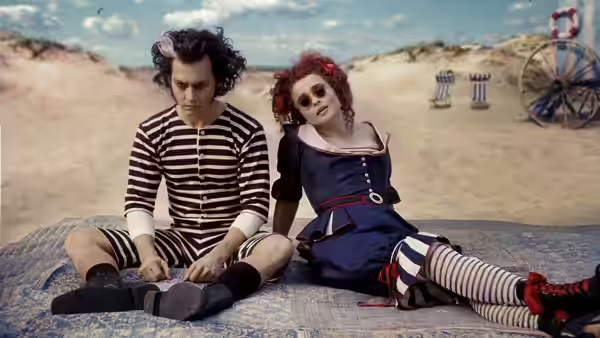
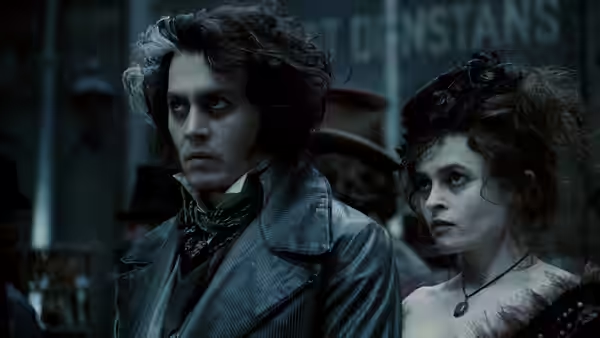
Johnny Depp gives Sweeney Todd a clenched, inward anger; even his singing sounds like something he would rather keep to himself. That suits a man consumed by revenge, although some phrases need more strength than he can supply. Helena Bonham Carter’s Mrs. Lovett is more alert to the practical uses of another person’s misery. She makes an engagingly matter-of-fact partner for him, and her attention to the words helps when the voice sounds thin.

In Worst Pies in London, Mrs. Lovett makes a remarkably poor case for eating anything she has cooked. We laughed at her brisk acceptance of this, because Helena Bonham Carter makes the complaint sound like a normal part of running a business. Stephen Sondheim’s words keep the disgust precise and the comedy conversational. The music gives her complaints enough momentum that we have barely finished laughing before the next one arrives.

Dariusz Wolski’s drained greys make the blood look indecently bright. Dante Ferretti’s production design crowds the city with grime and decay, giving the characters little relief from their surroundings. Colleen Atwood’s costumes belong to that same worn, inhospitable place. The sameness is effective, but it does become tiring: after a while, another dark corner tells us nothing new about London. The digital city also feels less solid than the people moving through it.

Chris Lebenzon’s editing keeps the musical passages moving as scenes, with disputes and decisions carrying on through the singing. That matters in a film where conversation so often becomes music: we should not feel that the story has stopped for a performance. John Logan’s screenplay keeps the revenge story clear, though a little more room for the people around the central pair would have helped. The pace is brisk enough for their suffering sometimes to pass before it has registered.

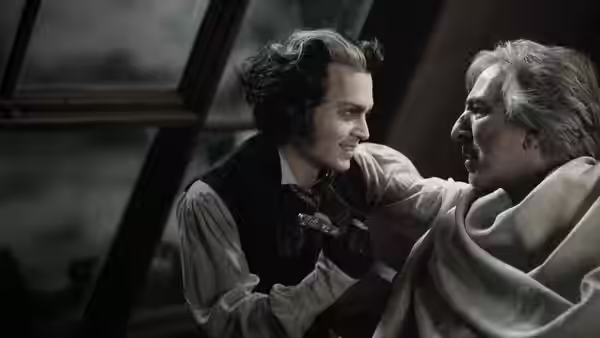
Alan Rickman gives Judge Turpin the assurance of a man who expects to be obeyed; there is no need for him to advertise menace. Sacha Baron Cohen’s Pirelli is amusingly vain, and the performance gives the film a welcome burst of swagger. The shaving contest is a useful reminder that the barber’s trade is also a public performance, with pride and skill to be measured in front of other people. Such moments help keep the gloom from becoming solemn.

For a Gothic horror musical, the lack of comfort is an asset. Tim Burton takes the songs seriously enough to allow them to be cruel, and the violence seriously enough not to tidy it into a harmless joke. We would not choose this for vocal splendour, and anyone hoping the music will soften the bloodshed has the wrong film. Choose it for the sour comedy and the pleasure of hearing beautifully written music sung by people behaving appallingly.

Critical consensus AI synthesised

81
Positive
14
Mixed
2
Negative
0

Most critics welcome Tim Burton’s adaptation as a forceful match between his Gothic style and Sondheim’s grim musical. Praise clusters around the muted London settings, the contrast between monochrome design and bright blood, and the intensity of Depp and Bonham Carter’s performances. The songs generally earn approval for carrying the story forward, while the mixture of black comedy, cruelty and sorrow strikes many reviewers as well judged. Several admire its resistance to sentimental comfort.

The spread runs from wholehearted enthusiasm to qualified approval, with no outright negative reviews. The chief disagreements concern the singing and how much feeling survives the visual treatment. The AV Club finds the leads’ voices inadequate for the score, despite enjoying the humour of “A Little Priest”. Time Out points to thin character psychology and a flat middle section. The Guardian finds the proceedings oddly tasteful and unscary, arguing that the digital London flattens the film.

RogerEbert.com
20 December 2007 · ★★★★/4 · Roger Ebert
100

Ebert praises the film as a dark, faithful adaptation that becomes the bloodiest musical in film history, a revenge tragedy with strong performances and a brooding atmosphere. He singles out the cast's merciless performances and Burton's evocation of 19th-century London poverty for praise.

Read the full review →
The New York Times
21 December 2007 · A.O. Scott
90*

Scott calls the film a dark and terrifying work, as much horror as musical, with a rigorously pessimistic view of human nature that makes it close to a masterpiece of extreme genius. He singles out its bracing refusal of sentimental consolation and willingness to push the story's dreadful implications to their blackest conclusions for praise.

Read the full review →
Evening Standard
10 April 2012
88*

Burton has made a perfect, just-about-perfect film with Sweeney Todd, a blood-soaked spectacular that hurtles along with momentum and fuses the personal and political into a blazing whole. The critic singles out the intense performances from Depp and Bonham Carter that make it impossible not to connect with the killer and his accomplice, along with Burton's treatment of the material.

Read the full review →
Slant Magazine
18 December 2008 · ★★★½/4 · Robert Keser
88

Burton draws the material into a black comedy and still blacker tragedy surging with jugular urgency that haunts the mind for days; Depp’s commanding performance and the atmospheric evocation help elevate revenge to tragedy. The film enlarges the work while displaying its dark convictions, though its graphic violence is not for the squeamish.

Read the full review →
Empire
29 December 2007 · Kim Newman
87*

This is a rich, demented experience that is somehow not a downer, with everyone getting what they deserve in a magnificent death. The critic singles out the daring adaptation (songs trimmed, sub-plots pruned), the stars' fair fists at singing and acting that put over Sondheim’s lyrics, and Burton’s arterial spray and gruesome touches.

Read the full review →
The Independent
27 January 2008
81*

Tim Burton's musical is rollicking good fun despite copious blood and guts, a strangely moral tale where the innocent prevail and the wicked are punished. The critic singles out the staging, which honours Sondheim's songs and ironies while resembling engravings in a penny dreadful, and the performances of Depp and Bonham Carter.

Read the full review →

Straight answers AI written, from our review

Is Sweeney Todd: The Demon Barber of Fleet Street worth watching?
Sweeney Todd: The Demon Barber of Fleet Street is worth watching for its sour comedy, cruel songs and Gothic horror; we score it 81 out of 100. Depp and Bonham Carter make persuasive partners, but their singing lacks the strength Sondheim’s music sometimes needs, and the relentless gloom can become tiring.
How long is Sweeney Todd: The Demon Barber of Fleet Street, and what is it rated?
Sweeney Todd: The Demon Barber of Fleet Street runs 1h 56m and is rated 18+ by the MK in Czechia. It is a drama and horror film.
Where can I watch Sweeney Todd: The Demon Barber of Fleet Street in Czechia?
Sweeney Todd: The Demon Barber of Fleet Street is available to rent from Amazon Prime Video from Kč 59.00. Availability is checked daily; the links above go straight to each service.
How violent or frightening is Sweeney Todd: The Demon Barber of Fleet Street, and is it suitable for children?
Sweeney Todd: The Demon Barber of Fleet Street carries a UK 18 certificate and is not suitable for children: the violence is bloody, and the songs offer little comfort. Bright blood against drained grey surroundings makes the cruelty harder to shrug off; we would steer squeamish viewers away, despite the humour.
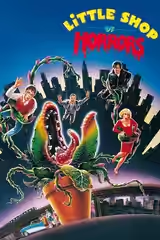
How does Sweeney Todd: The Demon Barber of Fleet Street compare to Little Shop of Horrors?
Sweeney Todd: The Demon Barber of Fleet Street is the crueller choice beside Little Shop of Horrors, and we favour its brisk storytelling over the latter’s slackness between songs. Both connect small businesses with alarming appetites, but Little Shop of Horrors offers a heartbreaking Ellen Greene; Burton’s leads are more persuasive as actors than singers.
What should I watch after Sweeney Todd: The Demon Barber of Fleet Street?
After Sweeney Todd: The Demon Barber of Fleet Street, try Little Shop of Horrors (1986, Fi1m 76): Another musical in which running a small business creates alarming appetites. Then Delicatessen (1991, Fi1m 83): For more sour comedy about food, neighbours and deeply questionable commercial practices; and Phantom of the Paradise (1974, Fi1m 82): A wounded musician pursues revenge through songs, grotesquerie and theatrical excess.

Cast

Awards

Academy Awards, 2008

Nominated
Best Actor
Nominated
Best Costume Design
Won
Best Production Design

If you liked this, try…

  1. Little Shop of Horrors (1986, Fi1m 76)Another musical in which running a small business creates alarming appetites.

  2. Delicatessen (1991, Fi1m 83)For more sour comedy about food, neighbours and deeply questionable commercial practices.

  3. The Lure (2015) · not on Fi1m yetA Polish musical that gives its predatory singers both appetite and longing.

  4. Phantom of the Paradise (1974, Fi1m 82)A wounded musician pursues revenge through songs, grotesquerie and theatrical excess.

  5. The Umbrellas of Cherbourg (1964) · not on Fi1m yetFor sung heartbreak with richer colours and a less murderous response to disappointment.