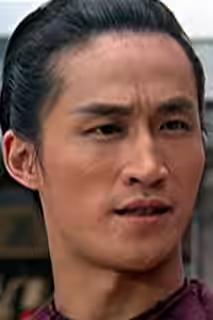
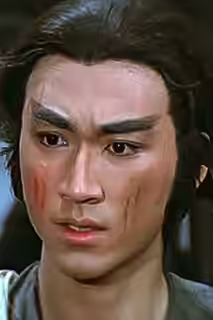
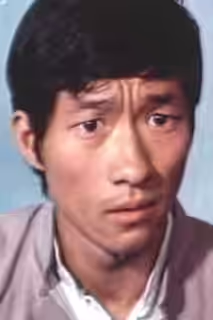
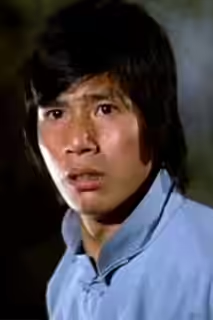
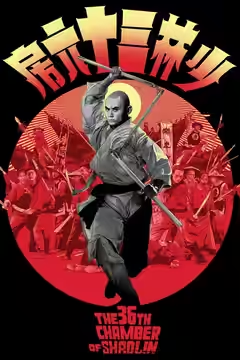
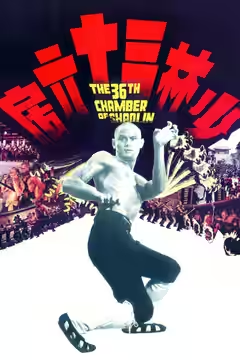
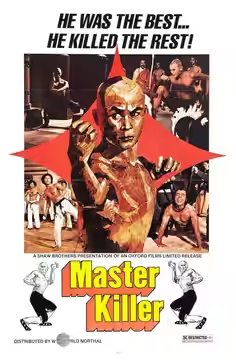
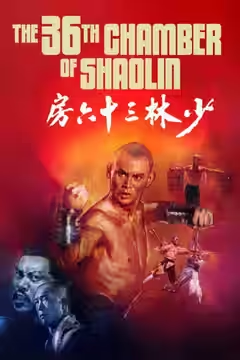
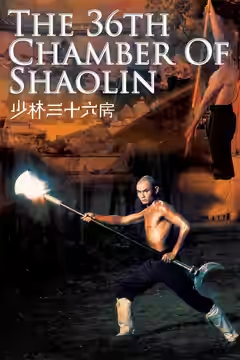
Lau Kar-leung’s Shaw Brothers film is a plain revenge story wrapped round an hour of training that nothing else in the genre has matched. Gordon Liu carries it with a patience that is its own kind of charisma; the villains barely register, and it does not matter.
The 36th Chamber of Shaolin is the film of someone who cares more about how a fighter is made than about what he does afterwards. Ni Kuang’s screenplay gives Liu Yu-de a reason to climb the mountain and, much later, a reason to come down again. Everything in between is lessons. It is the plainest story imaginable, and it contains an hour of training that nothing else in the genre has matched.
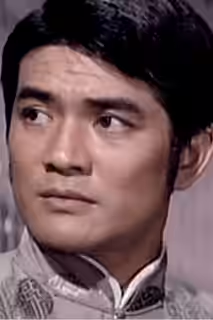
The Canton section is Shaw Brothers stock. General Tien Ta (Lo Lieh) has put down a rebellion; his officers Lord Tang San-yao (Wilson Tong Wai-Shing) and Lord Cheng (John Cheung Ng-Long) go about the town in matching menace and are hard to tell apart once they take their hats off. Teacher Ho (Frankie Wei Hung) runs a school and a quiet resistance from the same room, with Liu Yu-de (Gordon Liu) among his students. It is shot fast, scored loud and acted broad, and it does its job, which is to give a young man a grievance and get him out of town in under half an hour.
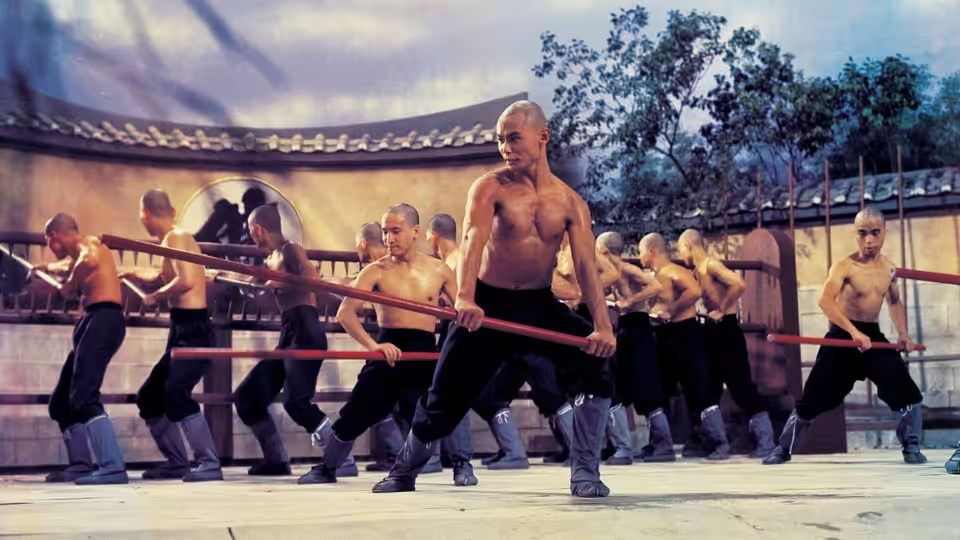
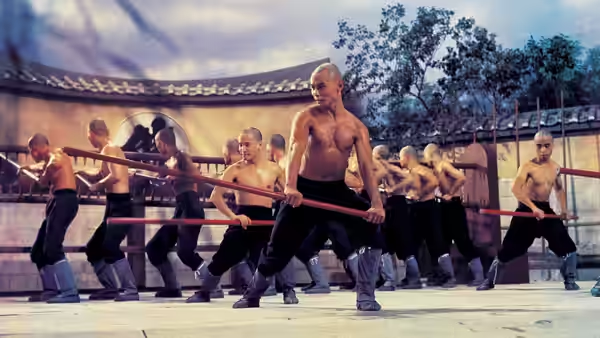
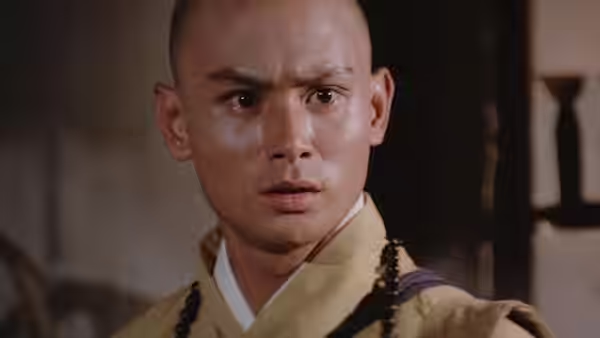
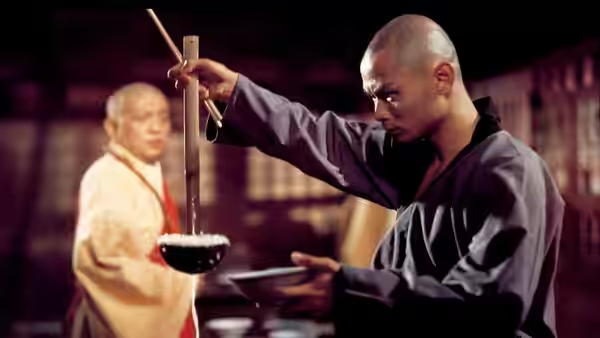
Then the temple, and the film changes gear. Liu is taken in, shaved and renamed San Ta, and the teaching, when it starts, is not fighting. The chambers are tests, some of the body and some of the mind, and each asks him to do one ordinary thing, walk, carry, strike, hold still, until he can do it without thinking about it. We winced at the cuts and bruises he collects on the way, and by the third chamber we were checking our own limbs, because Lau shows the damage each time and does not hurry past it.
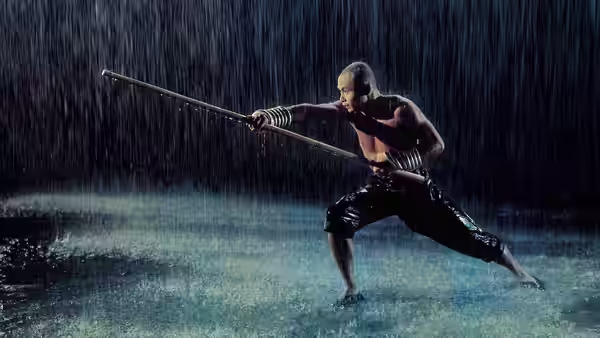
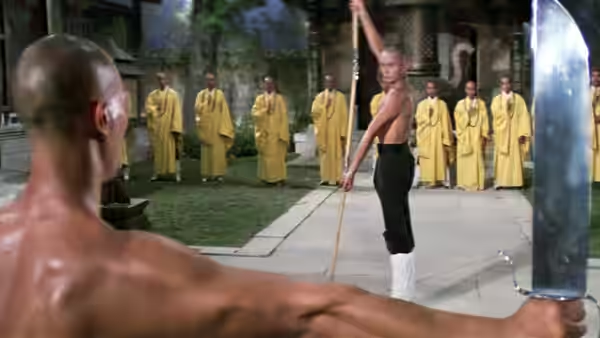
Arthur Wong Ngok-Tai frames all this wide, with Liu’s whole body in the picture from feet to shaved crown, so there is no doubt who is doing the work. Chiang Hsing-Lung and Lee Yim-Hoi hold the shots long enough to include the failure as well as the success: the slip, the fall, the walk back to the start. The sets are plainly sets, with painted skies and a courtyard swept for the camera, and it does not matter, because the film’s realism is in the sweat. Gordon Liu plays the learning honestly. He is funny when he fails and slightly smug when he does not, and he lets his face go slack with effort in a way handsome leading men are usually spared.
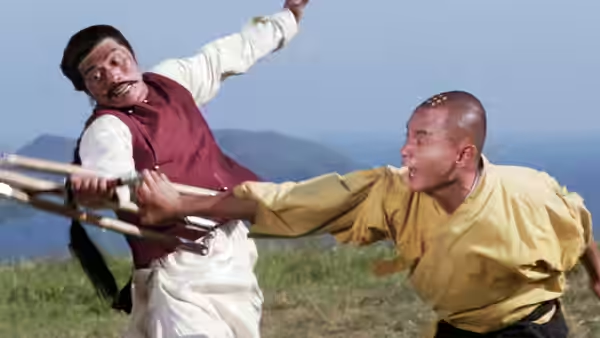
The things that do not work are the things around the training. Frankie Chan’s music announces every mood a beat before it arrives and repeats its cues until they stop meaning anything. The villains are cardboard, and Lo Lieh is given a moustache and a glare and nothing else to do. The two most interesting people on the mountain are the Abbot (Woo Wang-Daat), who watches Liu’s progress with something between pride and worry, and the Justice Officer (Lee Hoi-Sang), whose duel with Liu on the training ground is the best fight in the film, and it is not really a fight but an argument conducted with poles. What Liu takes back down the mountain we will not describe, except to say that the last stretch returns to Canton and the plot, and the film gets smaller as it goes.
Shaw Brothers turned out these films by the dozen and most of them are busy where this one is patient. It spends an hour on a man learning, without a single cut to the world outside the temple walls, and never seems to worry that we will get bored. The revenge is the price of admission and Lau pays it without much interest.
It carries an 18 certificate, which seems stern for a film whose violence is mostly a young man being taught to stand up properly. It runs 116 minutes and the middle hour survives a small screen without loss. Watch it for that hour, and be patient with the half hour before it; the film is asking you to be, and it earns the request.