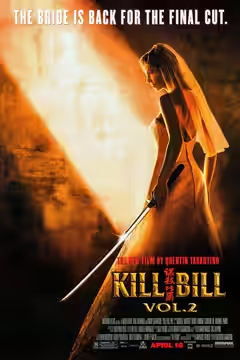
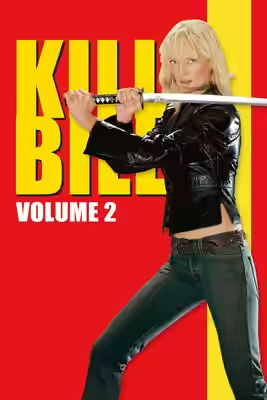
The second half of Tarantino’s revenge story slows down, talks more and fights less, and is the better for it. David Carradine’s Bill is worth the wait; the film around him is twenty minutes longer than it needs to be.
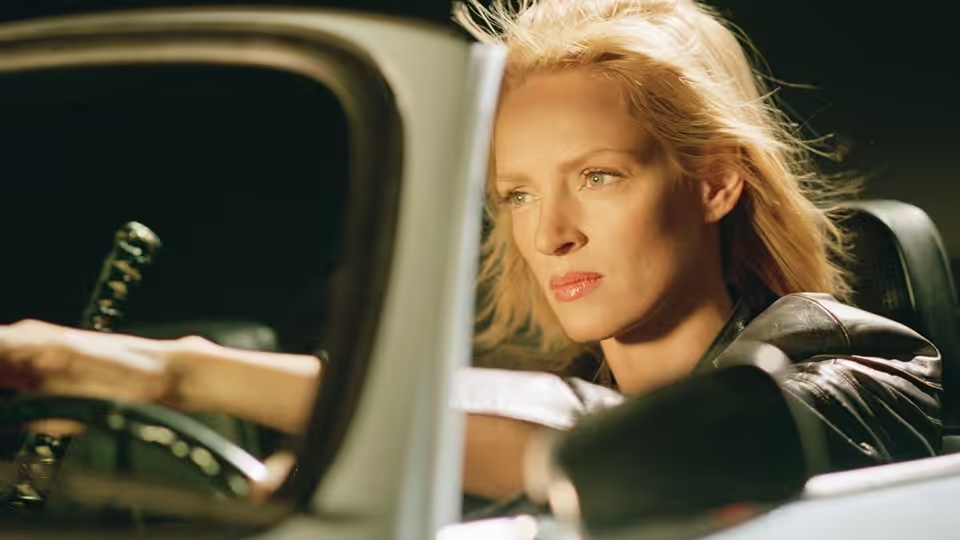
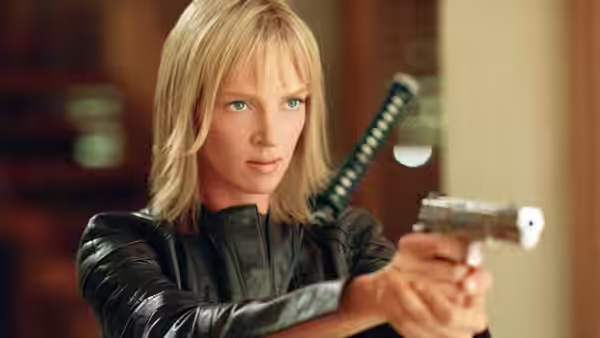
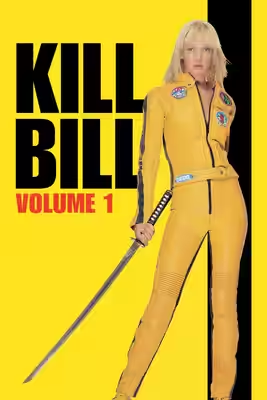
Kill Bill: Vol. 1 (2003) was a sword fight with a story attached. Vol. 2 is the story, with a sword fight attached, and it is the better half. The Bride (Uma Thurman) has two names left before she reaches Bill, and Tarantino spends 136 minutes getting her there by way of Texas, Mexico and a mountain in China. Most of it is people sitting down and talking. Some of it is too long. Nearly all of it is worth the evening.
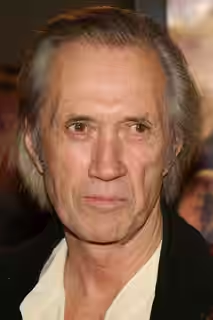
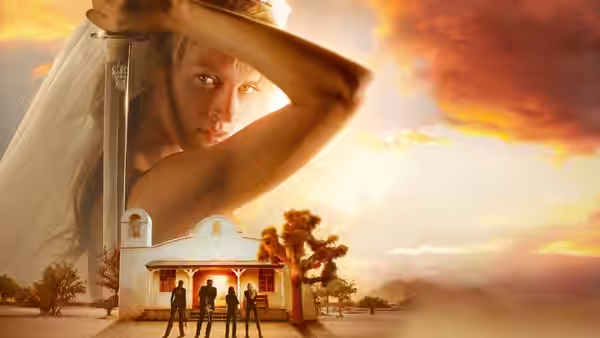
It opens in black and white at a wedding rehearsal in a wooden chapel, and Robert Richardson holds a single wide shot from the doorway while the wedding party fusses inside and something bad walks up behind them. We hear Bill before we see him, a flute played on a bench outside, and Carradine’s voice arrives ahead of his face, soft and reasonable and quite unbothered. It is the best entrance in either film. Michael Parks turns up afterwards as the sheriff, chewing over the scene in the tone of a man who has seen worse and would rather not say where.
Then Texas. Michael Madsen’s Budd lives in a trailer full of dead beer cans and a hat he cannot afford, and takes a dressing-down from the strip club owner who has cut his shifts without arguing back. David Wasco, Cao Juiping and Yohei Taneda dress the place so that everything in it looks like it was found rather than bought. What Budd does when the Bride arrives we will not describe. Richardson shoots the ten minutes that follow almost entirely in darkness, by the light of a torch and a match, and the sound design does the rest: breath, wood, the scrape of a fingernail. We stopped breathing for a while. It is the most frightening thing Tarantino has put on screen, and there is not a drop of blood in it.
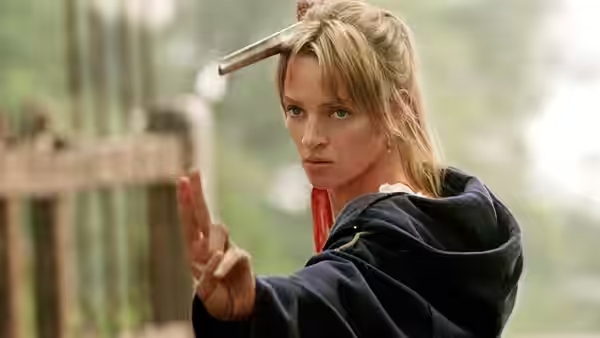
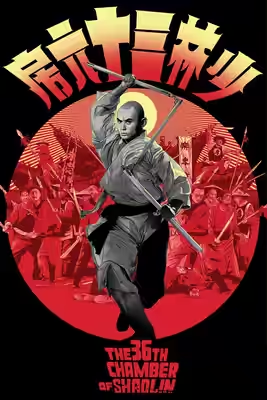
From that box the film cuts to a mountain and to Gordon Liu as Pai Mei, and the picture changes stock. The colours go hot and cheap, the zoom lens comes out, the master strokes his white beard and delivers his insults in a dubbed-sounding bark. Thurman carries water up steps and punches a plank of wood until her knuckles split. We laughed a great deal, and the joke is affectionate rather than superior; Liu plays the old fraud as if he means every word. It is the film’s happiest half hour and it earns the fight that comes after.
That fight is Daryl Hannah’s, in the trailer, and it is the one stretch that belongs to the first volume. Sally Menke cuts it tight and dirty, bodies against walls, a toilet, a television, no room to swing anything. Hannah plays Elle as pure spite with an eyepatch and gets the film’s nastiest line, which she delivers while reading from a notebook. How it ends we will leave alone.
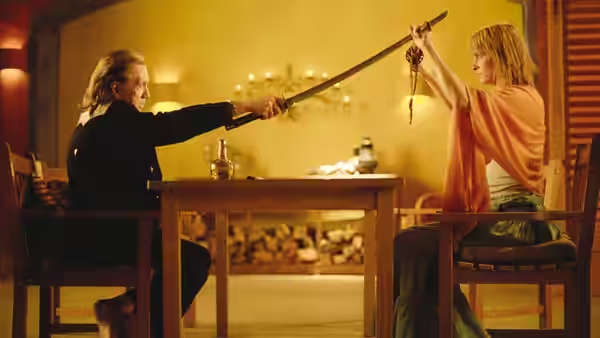
The last section is a conversation, and Carradine carries it. He has the courtesy of a man who has never had to raise his voice, and he makes a speech about comic books sound like a threat and a threat sound like a bedtime story. Thurman, who spent the first film mostly in motion, has to sit opposite him and answer, and she is good at it; her face does more here than her sword did. Robert Rodriguez and RZA supply the music, a spare guitar and trumpet, and for once Tarantino lets scenes go quiet.
It is baggy. The Mexico chapter, with Parks again under a wig as a brothel-keeper called Esteban Vihaio, is a pleasant detour that adds five minutes and nothing else. Chapter titles stop the film dead each time. The stretch after the Elle fight and before the final house sags, and we felt the length in our legs. Jackie Brown (1997) showed Tarantino could sit still for two hours; this shows he cannot quite decide how still.
See it after Vol. 1, the same night if you can bear four and a half hours of it, because the two films argue with each other and the argument is the point. It carries an 18 and it earns it in the dark rather than in the red.