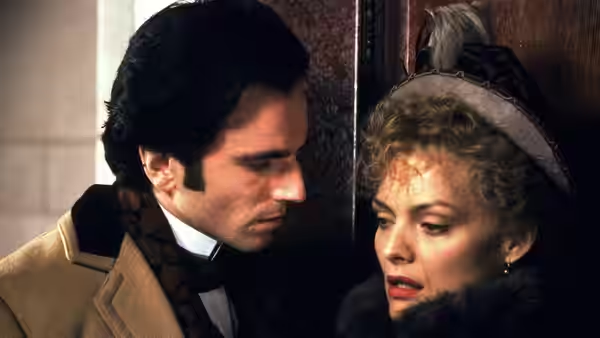
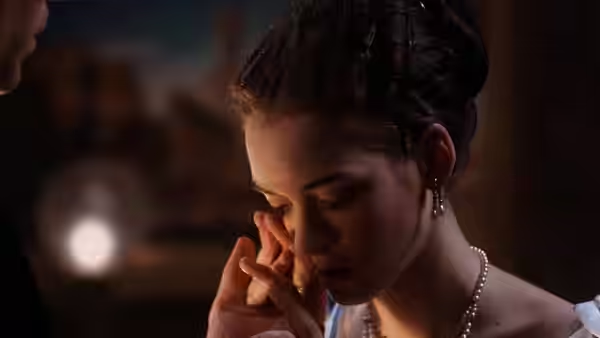
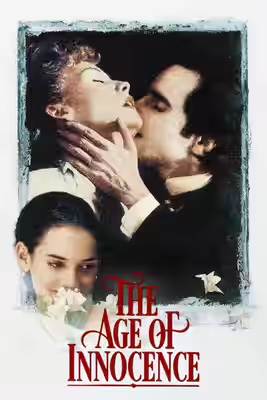
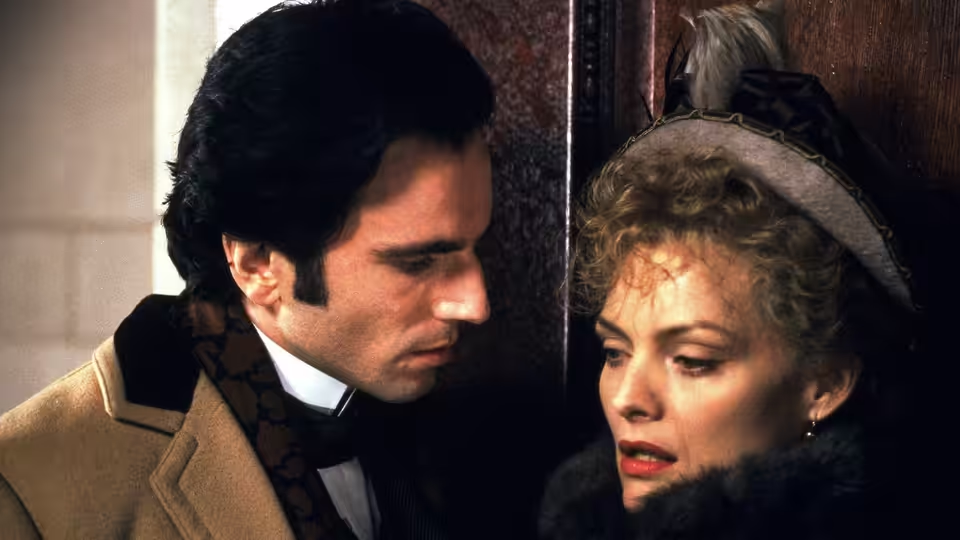
Newland Archer (Daniel Day-Lewis) and Ellen Olenska (Michelle Pfeiffer) in close conversation
Film review

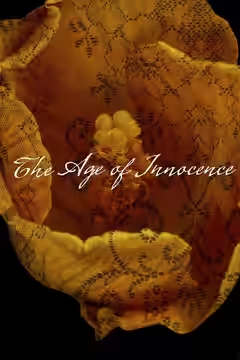
The Age of Innocence

1993 · Directed by Martin Scorsese · 2h 18m · NMHH 12

In a sentenceDaniel Day-Lewis and Michelle Pfeiffer make good manners look bad for your health

Newland Archer (Daniel Day-Lewis) and Ellen Olenska (Michelle Pfeiffer) are drawn to each other in 1870s New York high society, where custom governs how people behave and whom they may love. Their feelings bring them into conflict with a society that prizes propriety and polices departures from it. May Welland (Winona Ryder) also moves within this circle, whose rituals make private desire a matter of public concern. Martin Scorsese directs this adaptation of Edith Wharton’s novel, with a screenplay by Scorsese and Jay Cocks.

Plays from YouTube when you press play; nothing loads from them until then.

Fi1m review

Martin Scorsese makes a painfully persuasive romance out of social rules and suppressed desire. Daniel Day-Lewis, Michelle Pfeiffer and Winona Ryder give the finery human weight, although the film sometimes explains its manners more patiently than necessary.

Martin Scorsese’s The Age of Innocence is a moving, exacting romance, though its formal manners sometimes make the going slow. Scorsese and Jay Cocks adapt Edith Wharton’s novel with a proper regard for how much damage well-behaved people can do. In this high society, desire has to compete with a lifetime of instructions about how to behave. The film takes those instructions seriously enough for us to understand why disobedience is difficult, even when obedience looks miserable.

Daniel Day-Lewis plays Newland Archer with a restraint that makes his attraction to Michelle Pfeiffer’s Ellen Olenska painfully legible. Their chemistry depends on how much feeling escapes the effort to contain it; neither performance needs a grand declaration to establish the cost. We ached watching them measure what they could allow themselves to express. It was the checking of a gesture, the effort of remaining composed, that did it. Both actors make that restraint look exhausting.

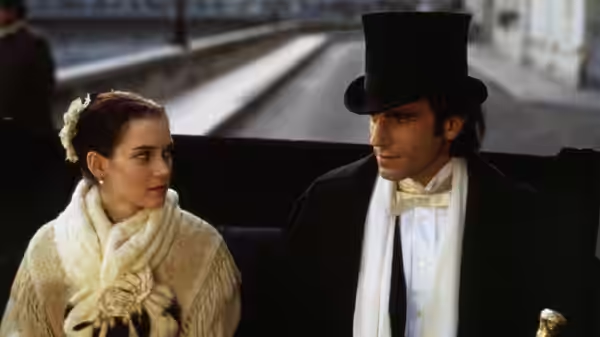
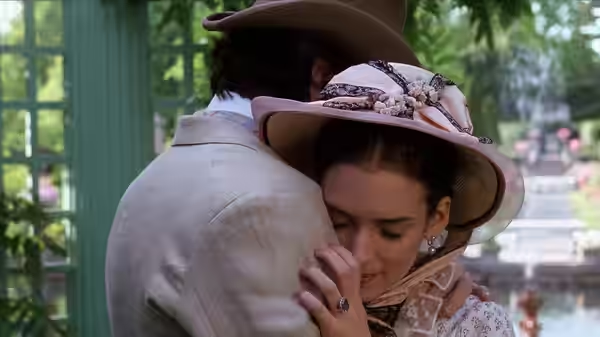
Winona Ryder’s May Welland is essential to this, and Ryder resists the temptation to make correct behaviour look merely vacant. Her composure makes us pay attention, rather than dismiss her as an obstacle to the more obviously troubled pair. The film is alert to the authority available to someone who knows precisely how a society expects people to behave. Ryder is especially good at keeping that authority quiet.

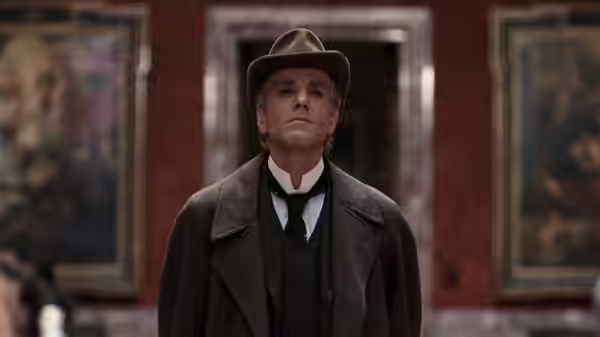
Michael Ballhaus’s cinematography encourages us to inspect the décor, which is useful in a film about people who inspect everything. Dante Ferretti’s production design supplies the period detail in such profusion that the surroundings can seem to demand good behaviour before anyone speaks. Gabriella Pescucci’s costumes add to that pressure: being properly dressed looks like work. We can enjoy the care of the workmanship and still find all this correctness oppressive. The clothes belong to people who expect to be looked at and judged.

Thelma Schoonmaker’s editing gives the gestures time to matter, keeping the acting readable amid so much visual information. The ironic narration is equally important, making the social rules intelligible without treating them as reasonable. It also gives Scorsese room to be funny about people who would not appreciate the joke. Elmer Bernstein’s score is more openly yearning than the characters can be, and that freedom is welcome. It helps the quieter performances reach us.

That help matters, because at 138 minutes the film occasionally spends longer teaching us the rules than we need. There are passages where the attention lavished on social ritual holds us at a distance from the people caught in it. The narration can compound this by explaining what the performances have already made clear. We would have welcomed a little less guidance, and fewer opportunities to admire the furnishings. The stiffness noted in some of the reviews is there, even if it seldom cancels the feeling.

As a costume romance, this is unusually interested in what it costs to keep behaving properly after proper behaviour has become painful. Scorsese does not treat the past as an excuse to give everyone modern instincts and inconvenient clothes. The performances make the attraction persuasive enough that we want relief for these people, even as the film teaches us why relief is hard to imagine. Watch it when there is time to notice a face before someone has quite brought it under control.
Critical consensus AI synthesised

84
Positive
16
Mixed
0
Negative
1
RogerEbert.com
17 September 1993 · ★★★★/4 · Roger Ebert
100

Ebert praises Scorsese's elegant, faithful adaptation of Wharton's novel as a brutal story of crushed passion and social repression, filmed with patience and visual grace. He singles out the performances, especially the final scene's poignant revelations about sacrifice and regret.

Read the full review →
The Times
17 March 2023 · ★★★★★ · Kevin Maher
100

The critic calls it Scorsese’s masterpiece and one of his finest films, a visually sumptuous adaptation pulsing with frustrated tension and unspoken sadness. It singles out the electrifying chemistry between the leads and the shattering closing scene for praise.

Read the full review →
Empire
1 January 2000 · Angie Errigo
90*

Scorsese delivers a rapturous, sensuous adaptation of Wharton's novel of forbidden love and high-society rituals in 1870s New York, with ravishing period detail and strong performances. The critic singles out the meticulous mise-en-scène, voice-over narration, and standout work from Day-Lewis, Pfeiffer, and especially Ryder for praise.

Read the full review →
Little White Lies
29 January 2017 · Dan Einav
90*

The critic calls the film a Scorsese work through and through despite its lack of violence or profanity, praising its exploration of brutality beneath manners and social ritual. It singles out the director's own description of the film as his most violent for its cold-blooded portrayal of repressed emotion in 1870s New York society.

Read the full review →
Slant Magazine
21 March 2018 · Chuck Bowen
90*

Scorsese's adaptation is an astonishing achievement that belongs in the canon of classic American cinema, rendering Wharton's world of innuendo, subtext, and repressed desire with obsessive visual flair and neurotic maximalism. It captures the exquisite agony of passion that must remain theoretical amid rigid social constraints.

Read the full review →
The Guardian
15 March 2023
90*

The critic hails Scorsese’s adaptation as a visually breathtaking and exquisitely refined tragedy of manners from 1870s New York high society. It singles out the powerfully matched performances of Daniel Day-Lewis and Michelle Pfeiffer as guilty lovers for particular praise.

Read the full review →

Straight answers AI written, from our review

Is The Age of Innocence worth watching?
The Age of Innocence is worth watching for anyone with patience for a slow, exacting romance about people who cannot say what they feel, and we scored it 86. Daniel Day-Lewis and Michelle Pfeiffer make restraint look exhausting, and Winona Ryder is quietly formidable. At 138 minutes it sometimes explains its manners longer than it needs to.
How long is The Age of Innocence, and what is it rated?
The Age of Innocence runs 2h 18m and is rated 12 by the NMHH in Hungary. It is a drama and romance film.
Where can I watch The Age of Innocence in Hungary?
The Age of Innocence is not on any streaming or rental service in Hungary at the moment. It is available in 26 other countries; change your country at the top of the page to see where. Availability is checked daily.
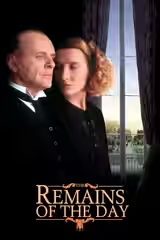
How does The Age of Innocence compare to The Remains of the Day?
The Age of Innocence and The Remains of the Day are both romances about lives narrowed by correct behaviour, and we recommend them beside each other. Scorsese's film is the richer to look at, with Michael Ballhaus's cinematography and Dante Ferretti's design pressing on the characters; James Ivory's is plainer and rests on polite conversation. Choose Scorsese for spectacle, Ivory for austerity.
Is The Age of Innocence based on a true story or a book?
The Age of Innocence is based on Edith Wharton's novel of the same name, not on a true story, adapted by Martin Scorsese and Jay Cocks. The film keeps the book's ironic narration, which makes the social rules of 1870s New York intelligible without approving of them. You do not need to have read Wharton; the film teaches you the rules as it goes, sometimes more patiently than necessary.
What should I watch after The Age of Innocence?
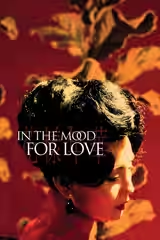
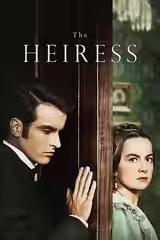
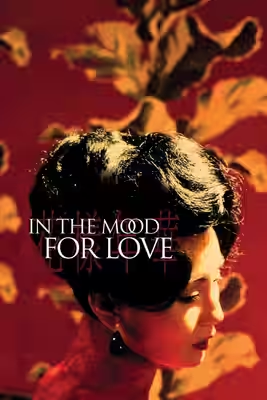
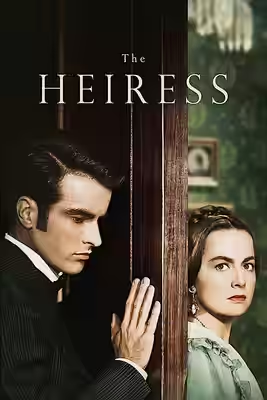
After The Age of Innocence, try The Remains of the Day (1993, Fi1m 88): Another life narrowed by correct behaviour, with feeling held painfully in check. Then In the Mood for Love (2000, Fi1m 91): Desire and restraint made visible through clothes, rooms and the distance between people; and The Heiress (1949, Fi1m 90): Family expectations and romantic hope meet in rooms where kindness is scarce.

Cast

Awards

Academy Awards, 1994

Nominated
Best Original Score
Nominated
Best Production Design
Nominated
Best Supporting Actress
Nominated
Best Writing, Adapted Screenplay
Won
Best Costume Design

BAFTA Film Awards, 1994

Won
Best Actress in a Supporting Role

David di Donatello for Best Foreign Actress, 1994

Nominated
David di Donatello for Best Foreign Actress

Directors Guild of America Award for Outstanding Directing – Feature Film, 1993

Nominated
Directors Guild of America Award for Outstanding Directing – Feature Film

Golden Globes, 1993

Nominated
Best Actress – Motion Picture Drama
Nominated
Best Director
Nominated
Best Motion Picture – Drama
Won
Best Supporting Actress – Motion Picture

National Board of Review Award for Best Director, 1993

Won
National Board of Review Award for Best Director

National Society of Film Critics Award for Best Cinematography, 1993

Nominated
National Society of Film Critics Award for Best Cinematography

If you liked this, try…

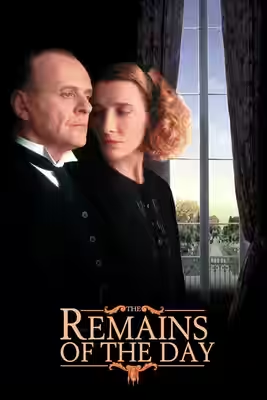
  1. The Remains of the Day (1993, Fi1m 88)Another life narrowed by correct behaviour, with feeling held painfully in check.

  2. In the Mood for Love (2000, Fi1m 91)Desire and restraint made visible through clothes, rooms and the distance between people.

  3. The Heiress (1949, Fi1m 90)Family expectations and romantic hope meet in rooms where kindness is scarce.

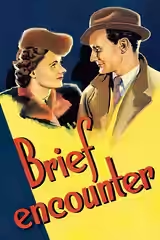
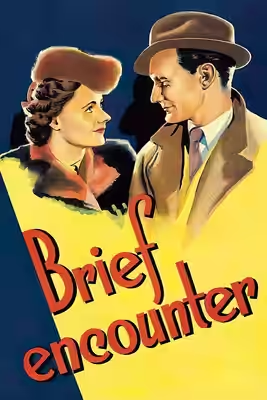
  4. Brief Encounter (1945, Fi1m 90)For another romance whose ordinary courtesies make the longing harder to bear.

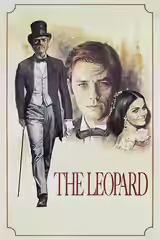
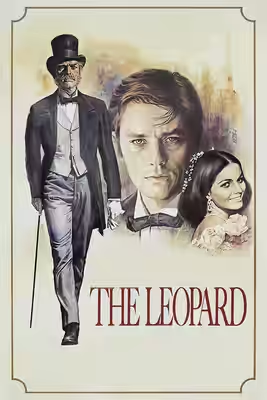
  5. The Leopard (1963, Fi1m 88)A changing social order observed through ceremony, fine clothes and watchful faces.

Free account

Know what to watch tonight

Two lists that know where things are streaming, collections you can share, your own score beside ours, and Discover that remembers what you have seen.

  • Want to see, sorted by what is streaming now
  • Seen, with your score out of ten
  • No adverts, ever