Larisa Shepitko’s film follows two partisans across the snow and into a collaborator’s interrogation room, and it is as severe and exact about conscience as anything we have seen. Gruelling, plainly shot, hard to shake; not for a tired evening.
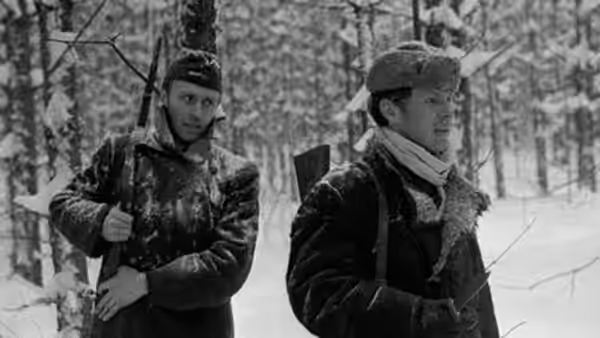
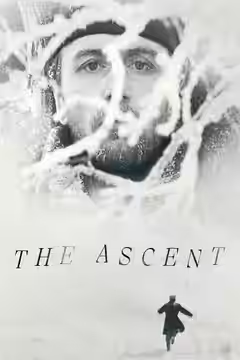
Larisa Shepitko’s film, from Vasil Bykaŭ’s novel, is a war film in which the war has almost finished happening. The Germans hold the villages, the partisans hold the forest, and the forest has run out of food. Two men are sent to find some. Sotnikov (Boris Plotnikov) is ill before they set off, coughing into his sleeve and wearing a thin cap in the worst of the cold. Rybak (Vladimir Gostyukhin) is fit and practical, knows the farms and knows how to talk to the people in them. What follows over 110 minutes is one exchange of fire, a hut, a cellar and an interrogation room, and Shepitko is interested in nothing but what the two men do in them.
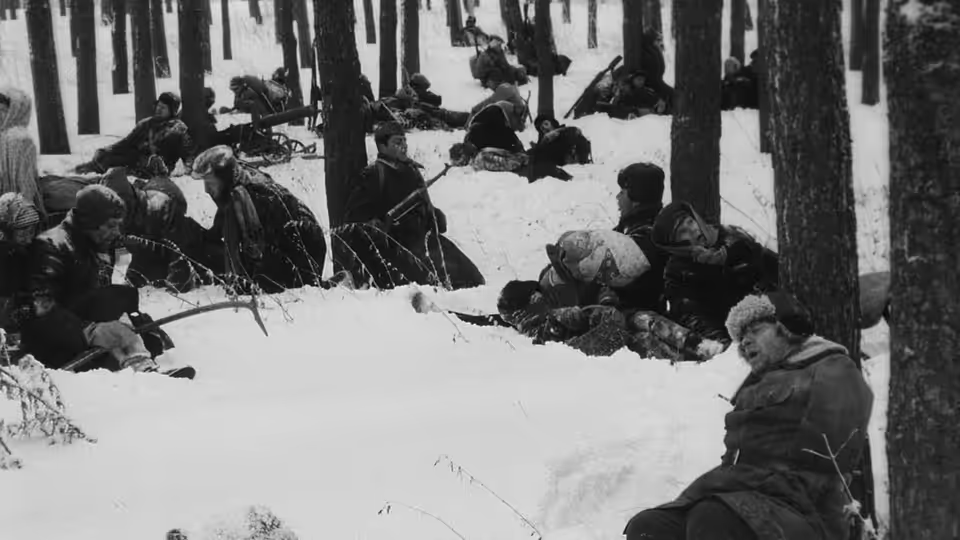
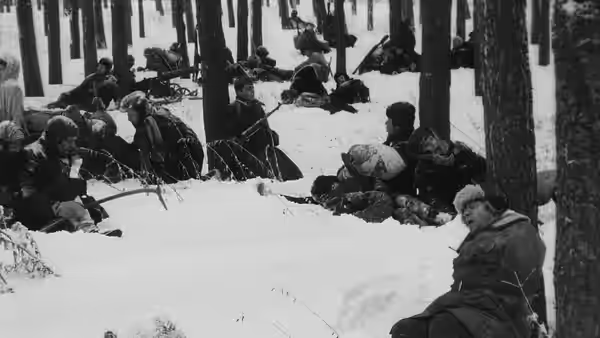
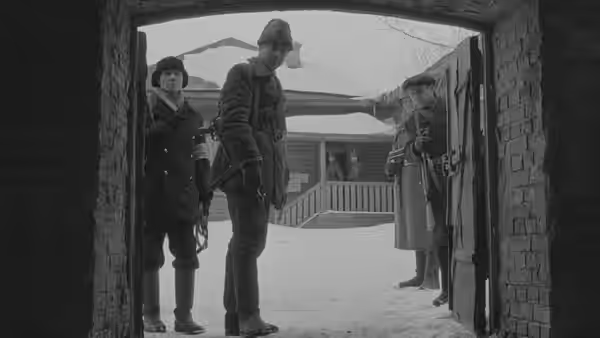
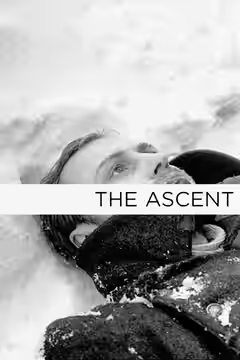
Vladimir Chukhnov shoots the snow in black and white as a white sheet with black marks on it, and the marks are the men. When they walk, the camera stays close at shoulder height, so we hear the breathing and see the fields only when they look up. When a German patrol appears it is three shapes at the far edge of the frame, and the rifle shots are small, dry and late. We were frightened by that sequence far beyond what three figures in a field ought to manage, and it is because Chukhnov never cuts to the enemy’s side. We know exactly as much as Sotnikov does, lying in the snow with a bullet in his leg.
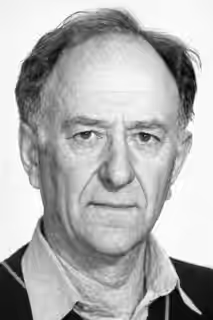
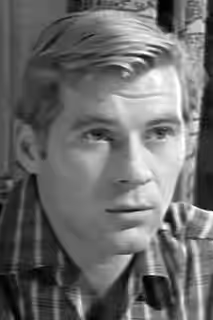
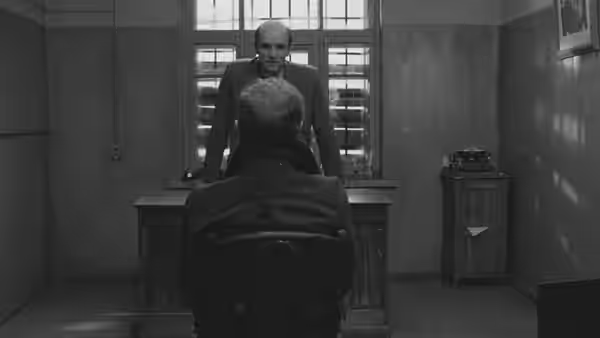
Plotnikov has a thin, feverish face and Shepitko holds on it for longer than most directors would dare. He says little; the cough does most of his talking in the first hour. Gostyukhin is the better soldier and the film lets him be, dragging his friend across country, finding the sheep, doing the deals, and he is likeable in a way that makes what comes later harder. Anatoly Solonitsyn, the actor Tarkovsky used in Andrei Rublev, plays Portnov, a local man who now asks questions for the Germans. He sits, he speaks quietly, he offers reason. It is the most alarming performance in the film because he never once raises his voice.
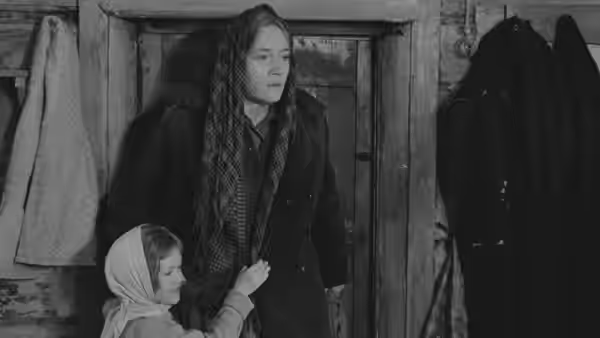
Yuri Raksha builds the interrogation room around a stove, so that the only warmth in the picture belongs to the man doing the questioning, and the cellar beneath it as bare planks and a single grille of light. Alina Budnikova puts everyone in padded coats and sheepskin until the prisoners are stripped of theirs, and the cold becomes visible on their shirts. Valeriya Belova cuts the cellar scenes slowly, from face to face, and lets the silences run: Avginya Demchikha (Lyudmila Polyakova), a mother whose children are elsewhere; Basya (Viktoriya Goldentul), a girl the police found hiding; the village elder Petr Sych (Sergei Yakovlev), who did what he could. Nobody makes a speech.
Alfred Schnittke’s score is the one element that does. For most of the film it is a low held tone under the snow, barely music, and it works. In the last act it swells into something choral and insists on the meaning of what we are seeing, and we felt pushed, once or twice, in a film that otherwise trusts us. Shepitko also lights Plotnikov in the closing stretch so that Sotnikov becomes a figure from an icon rather than a man with a fever, and the title tells you where she is going. It is a fair criticism and it does not much matter in the moment, because by then the film has us.
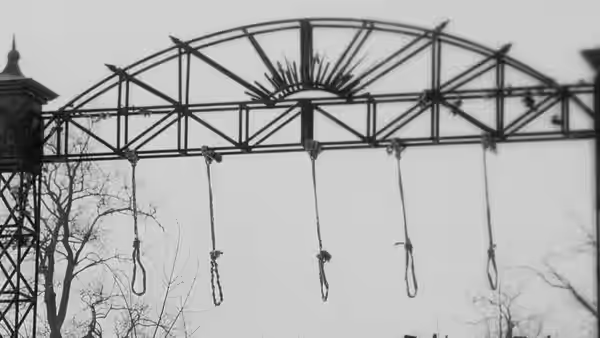
The second half takes a turn we will not describe. We can say that the last half hour is a procession, nearly wordless, taken at walking pace, and that we watched it without moving and did not speak for some time after the lights came up. It is not what happens that does it. It is that Shepitko refuses to look away or to hurry, and makes us keep pace with Rybak, who would give anything to be anywhere else.
Soviet war films of the period mostly honoured a victory. This one asks what it costs one person to stay who they are when nothing will be gained by it. It is not for a tired evening, and it is not company for a takeaway. Clear the night, turn the lights off, and do not plan anything for afterwards.