Dolly Parton is a pleasure and Charles Durning’s one number is worth the evening on its own, but Colin Higgins’s adaptation is so anxious not to offend that it turns a brothel into a boarding house. Mixed, and cheerfully so.
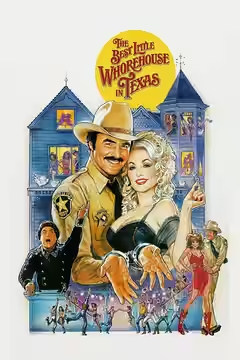
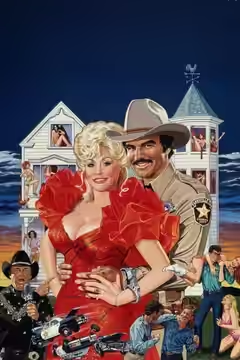
Colin Higgins’s film of the stage musical takes a brothel that has run outside a small Texas town for longer than anyone can remember and asks us to feel warmly about it. That is the whole pitch, and it is a fair one for a comedy. Dolly Parton plays Mona Stangley, who runs the Chicken Ranch as a brisk and cheerful business; Burt Reynolds is Sheriff Ed Earl Dodd, who leaves it alone and sleeps with her. Then a Houston television crusader called Melvin P. Thorpe (Dom DeLuise) turns his cameras on the place, and the town has to decide whether it is embarrassed. Peter Masterson, Larry L. King and Higgins wrote the script, and it is a good deal gentler than its title.
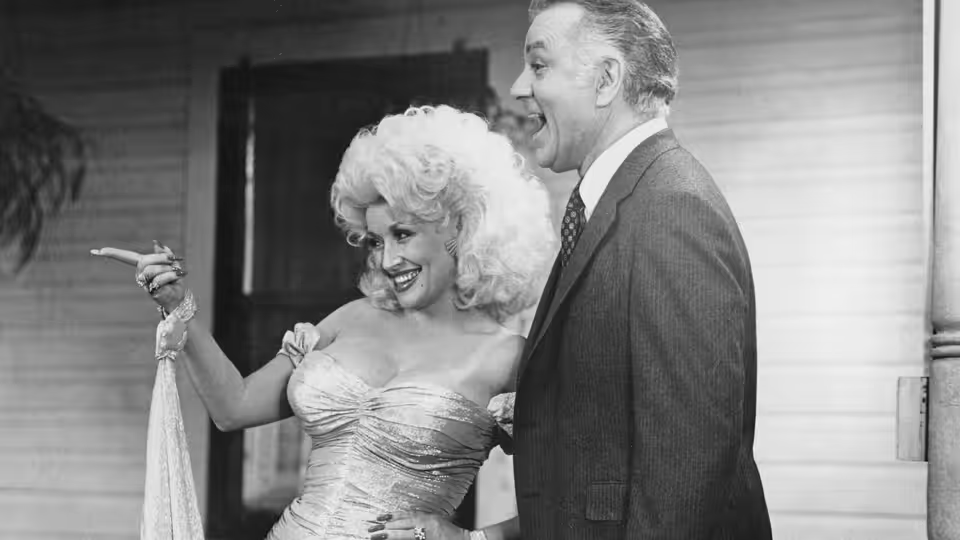
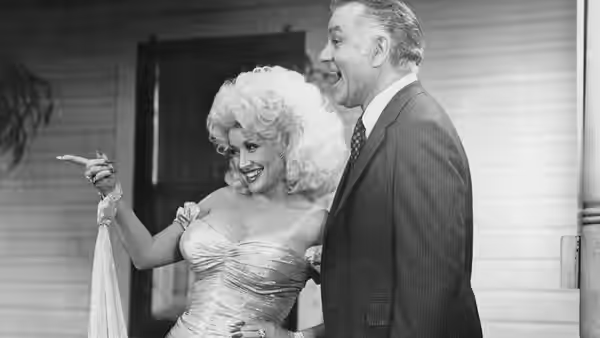
Parton is the reason it works when it works. The camera likes her, and so did we. Her first number, “A Lil’ Ole Bitty Pissant Country Place”, is sung as she lays down the house rules, and it is the film’s clearest statement of what it thinks a brothel is: a place with a curfew and a housekeeper. “Sneakin’ Around”, which she sings with Reynolds on the porch, is the one moment the romance has any warmth in it, and most of the warmth is hers. “I Will Always Love You” arrives late and lands, not because the film has earned it but because the song would land anywhere.
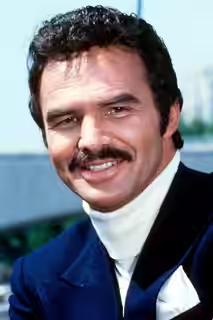
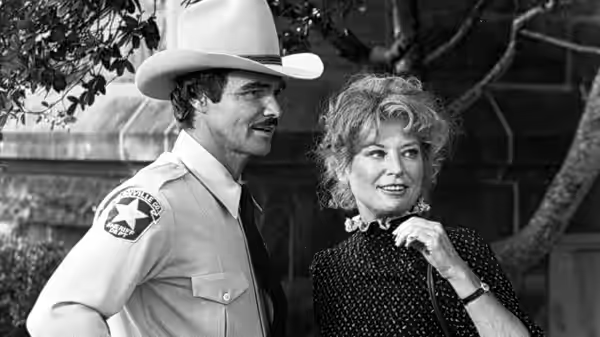
Reynolds is the soft spot in the middle. He is asked to sing and cannot do much of it, and he knows it, so he grins through the numbers as if hoping we will move on. As the sheriff he is fine: a lazy, decent man who has never had to choose between his town and his girlfriend. But the script gives him and Parton very few scenes together that are not either a song or a row, and the film keeps telling us they have been lovers for years without once showing the years. Lois Nettleton, as Dulcie Mae, the other woman in his life, gets a single scene and is better in it than the plot deserves.
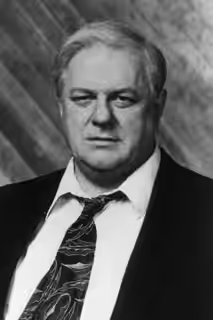
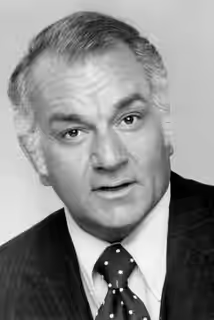
Charles Durning’s Governor comes on for about ten minutes and takes the film with him. “The Sidestep” is a song about a politician answering no questions, and Durning performs it as a soft-shoe with his eyebrows, shuffling away from the reporters while saying nothing at considerable length. We laughed properly for the first time, and then realised we had not laughed properly in the forty minutes before it. It is the only number in the film that keeps its performer in frame long enough to let him finish a thought, and the difference is instructive.
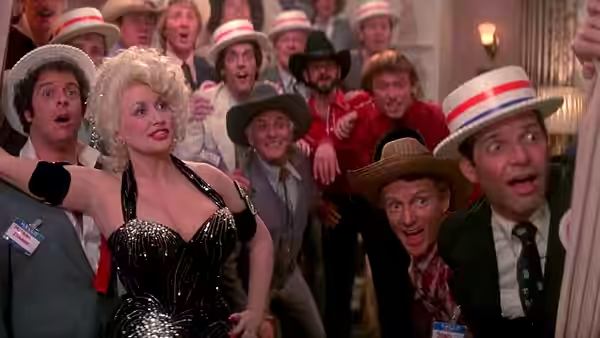
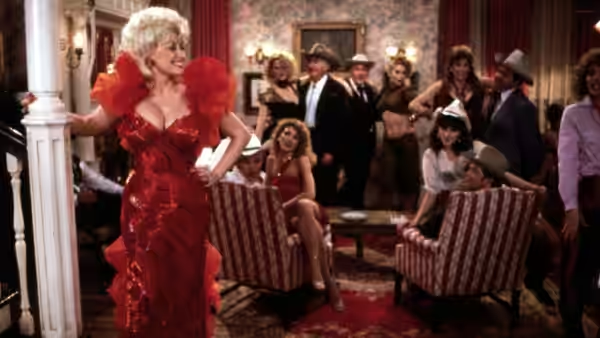
The film credits five editors, Pembroke J. Herring, Nicholas Eliopoulos, Walter Hannemann, David Bretherton and Jack Hofstra, and it cuts like a film that has been through five pairs of hands. The dance numbers at the Ranch, and the one with the visiting football team, are chopped into pieces of a few seconds, so a dancer begins a move in one shot and ends it in another and nobody is ever seen doing anything difficult. William A. Fraker lights the Ranch in amber lamplight and lace, warm to the point of syrup, and Thorpe’s television studio in hard white, which is the right idea done without any subtlety. Patrick Williams’s score fills every gap between the songs with fiddle, so there is no silence anywhere in the 114 minutes.
It is a film about a brothel with nothing in it you could not show a maiden aunt. Nobody is seen paying. Nobody leaves unhappy. The girls are cheerful and well fed and nothing bad has ever happened to any of them, and Mona seems to be running a well-behaved lodging house that happens to have a great many beds. We do not ask a musical comedy to be a documentary, but a comedy about hypocrisy ought to know what is being hidden. Higgins made 9 to 5 with Parton two years before this, and that film knew exactly who it was angry with; this one cannot decide whether Thorpe is a villain or a clown, and DeLuise, in his wig and cape, plays him as a clown, which lets the town off the hook. The 15 certificate is for the language.
Watch it for Parton and for Durning’s ten minutes, and take the rest as the pleasant thing it is. It runs 114 minutes and feels no longer, which is not a small virtue in a musical, and it will not upset anybody at all, which is the trouble with it.