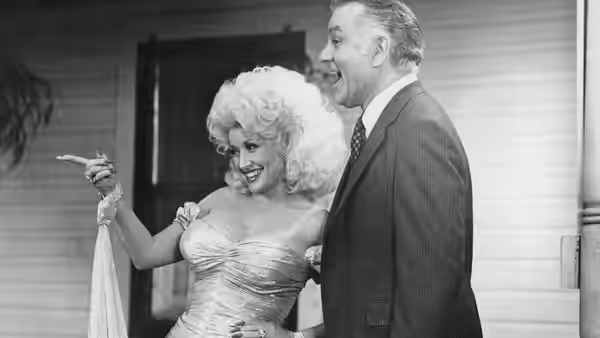
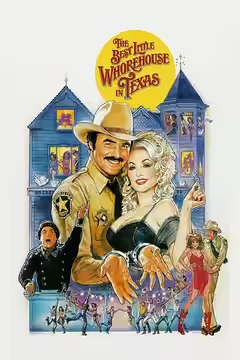
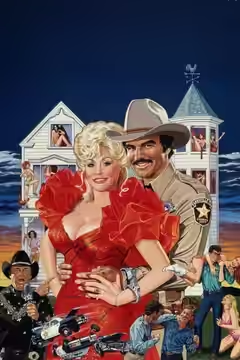
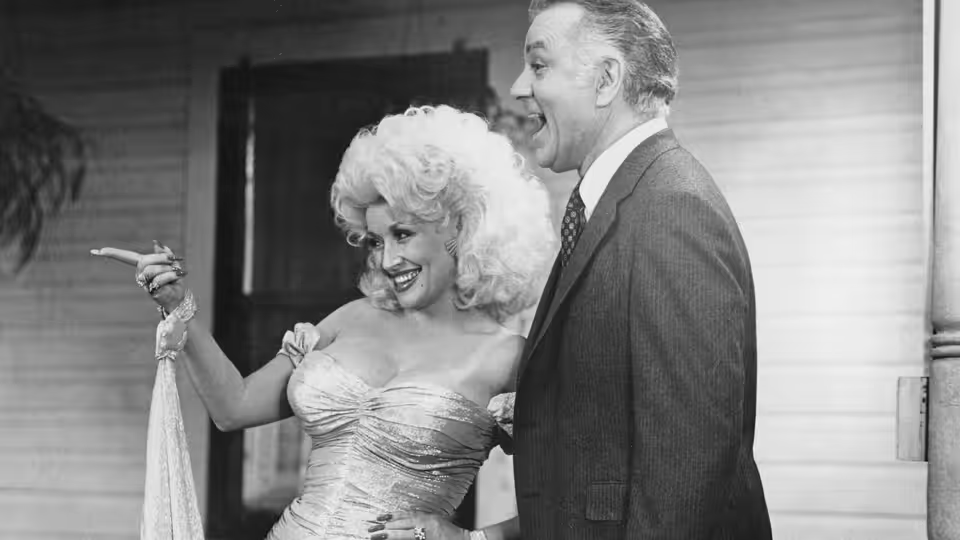
Mona Stangley (Dolly Parton) pointing as a man in a suit stands beside her on a porch
Film review

The Best Little Whorehouse in Texas

1982 · Directed by Colin Higgins · 1h 54m

In a sentenceA brothel musical so wholesome the girls might as well be running a bed and breakfast

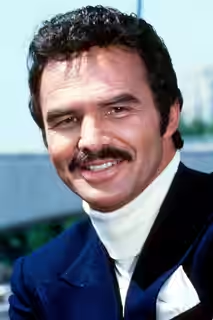
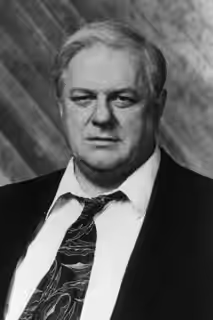
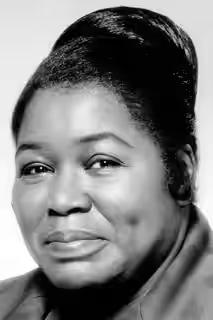
Gilbert, Texas. A few miles outside town, the Chicken Ranch has taken in gentlemen callers for as long as anyone can remember, and Mona Stangley (Dolly Parton) runs it as a strict house, with rules for the girls and rules for the men. Sheriff Ed Earl Dodd (Burt Reynolds) looks the other way, drops in most nights, and has been sleeping with Mona for years. Jewel (Theresa Merritt) keeps house; Deputy Fred (Jim Nabors) keeps out of the way. Then Melvin P. Thorpe (Dom DeLuise), a Houston television crusader in a blond wig and a cape, decides the Ranch will make good television. He turns up with cameras, Ed Earl loses his temper in front of them, and a town’s open secret becomes a story the Governor of Texas (Charles Durning) may have to answer for.

Plays from YouTube when you press play; nothing loads from them until then.

Fi1m review

Dolly Parton is a pleasure and Charles Durning’s one number is worth the evening on its own, but Colin Higgins’s adaptation is so anxious not to offend that it turns a brothel into a boarding house. Mixed, and cheerfully so.

Colin Higgins’s film of the stage musical takes a brothel that has run outside a small Texas town for longer than anyone can remember and asks us to feel warmly about it. That is the whole pitch, and it is a fair one for a comedy. Dolly Parton plays Mona Stangley, who runs the Chicken Ranch as a brisk and cheerful business; Burt Reynolds is Sheriff Ed Earl Dodd, who leaves it alone and sleeps with her. Then a Houston television crusader called Melvin P. Thorpe (Dom DeLuise) turns his cameras on the place, and the town has to decide whether it is embarrassed. Peter Masterson, Larry L. King and Higgins wrote the script, and it is a good deal gentler than its title.

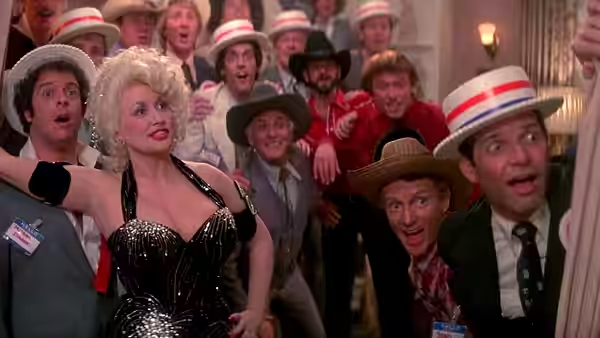
Parton is the reason it works when it works. The camera likes her, and so did we. Her first number, “A Lil’ Ole Bitty Pissant Country Place”, is sung as she lays down the house rules, and it is the film’s clearest statement of what it thinks a brothel is: a place with a curfew and a housekeeper. “Sneakin’ Around”, which she sings with Reynolds on the porch, is the one moment the romance has any warmth in it, and most of the warmth is hers. “I Will Always Love You” arrives late and lands, not because the film has earned it but because the song would land anywhere.

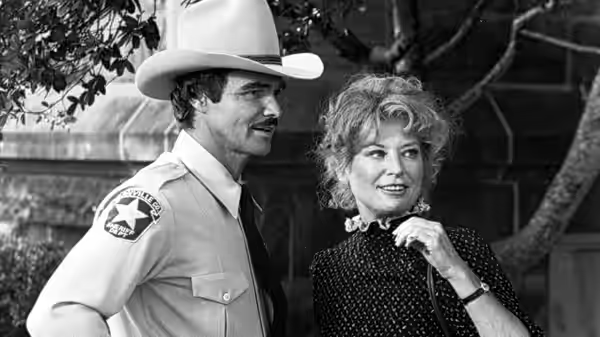
Reynolds is the soft spot in the middle. He is asked to sing and cannot do much of it, and he knows it, so he grins through the numbers as if hoping we will move on. As the sheriff he is fine: a lazy, decent man who has never had to choose between his town and his girlfriend. But the script gives him and Parton very few scenes together that are not either a song or a row, and the film keeps telling us they have been lovers for years without once showing the years. Lois Nettleton, as Dulcie Mae, the other woman in his life, gets a single scene and is better in it than the plot deserves.

Charles Durning’s Governor comes on for about ten minutes and takes the film with him. “The Sidestep” is a song about a politician answering no questions, and Durning performs it as a soft-shoe with his eyebrows, shuffling away from the reporters while saying nothing at considerable length. We laughed properly for the first time, and then realised we had not laughed properly in the forty minutes before it. It is the only number in the film that keeps its performer in frame long enough to let him finish a thought, and the difference is instructive.

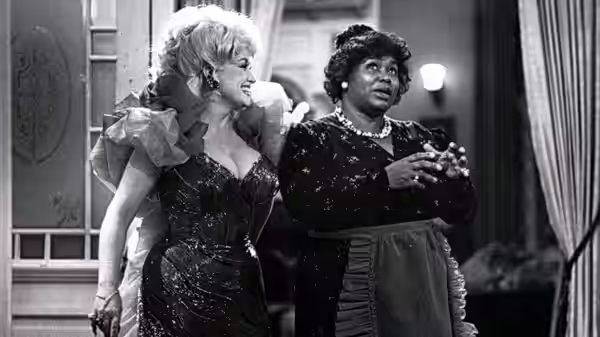
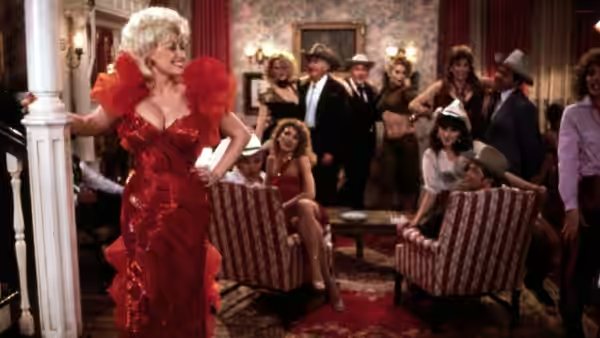
The film credits five editors, Pembroke J. Herring, Nicholas Eliopoulos, Walter Hannemann, David Bretherton and Jack Hofstra, and it cuts like a film that has been through five pairs of hands. The dance numbers at the Ranch, and the one with the visiting football team, are chopped into pieces of a few seconds, so a dancer begins a move in one shot and ends it in another and nobody is ever seen doing anything difficult. William A. Fraker lights the Ranch in amber lamplight and lace, warm to the point of syrup, and Thorpe’s television studio in hard white, which is the right idea done without any subtlety. Patrick Williams’s score fills every gap between the songs with fiddle, so there is no silence anywhere in the 114 minutes.

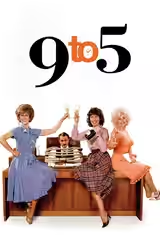
It is a film about a brothel with nothing in it you could not show a maiden aunt. Nobody is seen paying. Nobody leaves unhappy. The girls are cheerful and well fed and nothing bad has ever happened to any of them, and Mona seems to be running a well-behaved lodging house that happens to have a great many beds. We do not ask a musical comedy to be a documentary, but a comedy about hypocrisy ought to know what is being hidden. Higgins made 9 to 5 with Parton two years before this, and that film knew exactly who it was angry with; this one cannot decide whether Thorpe is a villain or a clown, and DeLuise, in his wig and cape, plays him as a clown, which lets the town off the hook. The 15 certificate is for the language.

Watch it for Parton and for Durning’s ten minutes, and take the rest as the pleasant thing it is. It runs 114 minutes and feels no longer, which is not a small virtue in a musical, and it will not upset anybody at all, which is the trouble with it.

Critical consensus AI synthesised

52
Positive
1
Mixed
2
Negative
2

With only 5 reviews in so far, the picture is unsettled: one is warm, two are lukewarm and two are cool, and one verdict is not available to us. Most critics enjoy Dolly Parton’s charm whatever they make of the rest, and Charles Durning’s Sidestep number is the one sequence praised from nearly every side. The reservations fall on the material rather than the cast: the film is called lightweight and coy, and Time Out complains that it steps around the awkward subject at its own centre. Variety is the lone enthusiast, finding it good-natured and diverting. Parton and Reynolds as a pairing divide opinion.

Variety
31 December 1981 · Variety Staff
78*

The review finds the adaptation rollicking, good-natured, and diverting, with enough heart to avoid feeling synthetic. It especially praises Dolly Parton’s warmth and charm alongside Burt Reynolds’s star presence.

Read the full review →
RogerEbert.com
64*

The page could not be accessed, so the critic’s verdict is unavailable. No praised or criticized element can be confirmed from the content provided.

Read the full review →
Radio Times
★★★ · Alan Jones
60

Jones finds the film lightweight, with Parton and Reynolds failing to ignite the right sparks. He praises the opening number and Charles Durning’s “The Side Step.”

Read the full review →
The New Yorker
1 August 1982 · Pauline Kael
30*

Kael finds the film disappointing and overly coy, despite Dolly Parton’s considerable charm. She singles out Charles Durning’s “Sidestep” number as the one sequence with satisfying musical-comedy rhythm.

Read the full review →
Time Out
· AM
30*

The available metadata suggests a critical verdict, saying the musical avoids sensitive issues. It singles out that avoidance as a complaint, though the full review is unavailable.

Read the full review →

Straight answers AI written, from our review

Is The Best Little Whorehouse in Texas worth watching?
The Best Little Whorehouse in Texas is worth watching for Dolly Parton and for Charles Durning's ten minutes as the Governor, and we scored it 55. Parton is a pleasure and Durning's "The Sidestep" is the one number that lets a performer finish a thought. The rest is a brothel comedy so anxious not to offend that it plays like a boarding house, and the dance numbers are cut to pieces.
How long is The Best Little Whorehouse in Texas, and what is it rated?
The Best Little Whorehouse in Texas runs 1h 54m. It is a comedy film.
Where can I watch The Best Little Whorehouse in Texas in Israel?
The Best Little Whorehouse in Texas is available to rent from Apple TV from ₪16.90. Availability is checked daily; the links above go straight to each service.
How violent or frightening is The Best Little Whorehouse in Texas, and is it suitable for children?
The Best Little Whorehouse in Texas is not violent or frightening at all, and it carries a UK 15 certificate for its language rather than for anything shown. Despite the title, nobody is seen paying and nothing bad happens to any of the girls; it is a musical comedy that would not upset a maiden aunt. The subject makes it a poor choice for young children, but teenagers will find nothing to trouble them.
How does The Best Little Whorehouse in Texas compare to Nashville?
The Best Little Whorehouse in Texas is the lighter and much weaker of the two, a cheerful musical that turns a brothel into a lodging house, where Nashville takes country music, small-town politics and a television circus seriously and makes them sad. Robert Altman's film is the one to give a full evening; Colin Higgins's is for anyone who wants Dolly Parton singing and nothing to think about.
What should I watch after The Best Little Whorehouse in Texas?
After The Best Little Whorehouse in Texas, try Nashville (1975, Fi1m 89): Country music, small-town politics and a television circus, taken seriously and made sad. Then Coal Miner's Daughter (1980, Fi1m 81): Sissy Spacek as Loretta Lynn; the country-music picture done with grit rather than lace.

Cast

Awards

Academy Awards, 1983

Nominated
Best Supporting Actor

If you liked this, try…

  1. 9 to 5 (1980) · not on Fi1m yetHiggins and Parton again, this time with a target and the nerve to hit it.

  2. Nashville (1975, Fi1m 89)Country music, small-town politics and a television circus, taken seriously and made sad.

  3. Irma la Douce (1963) · not on Fi1m yetBilly Wilder’s Paris brothel comedy, franker about the trade and funnier about the police.

  4. The Umbrellas of Cherbourg (1964) · not on Fi1m yetA musical that lets its lovers sing to each other and mean it.

  5. Coal Miner's Daughter (1980, Fi1m 81)Sissy Spacek as Loretta Lynn; the country-music picture done with grit rather than lace.