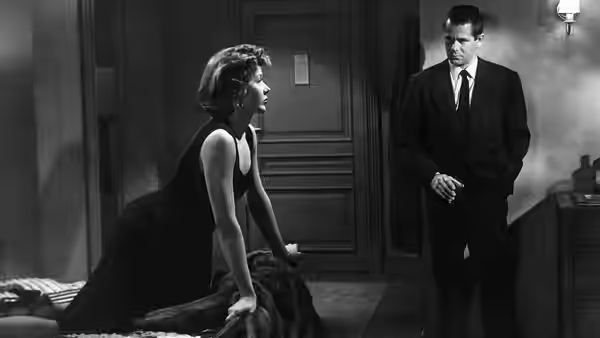
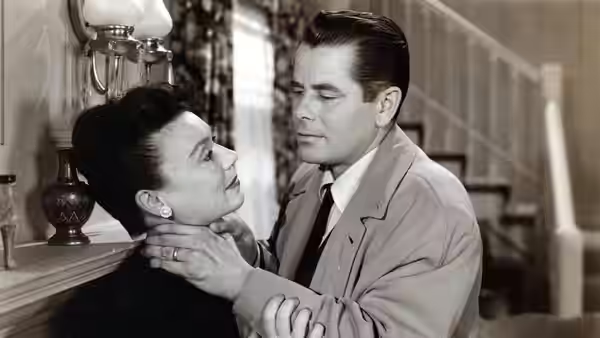
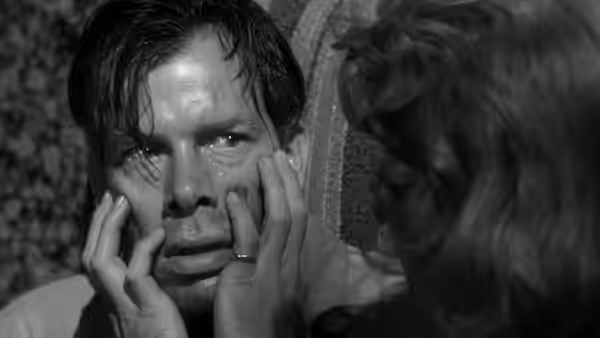
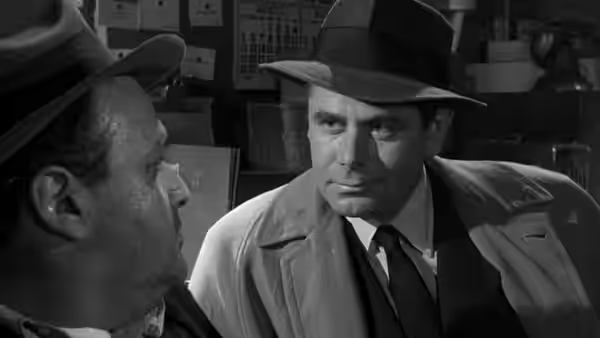
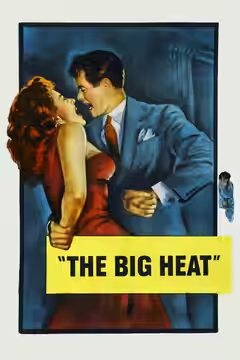
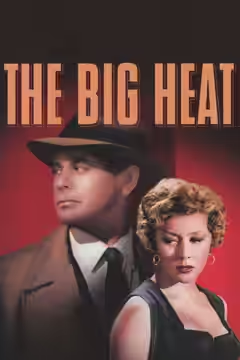
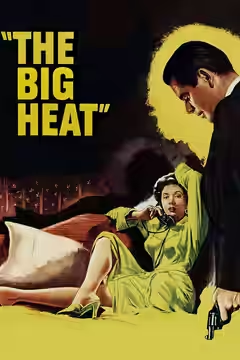
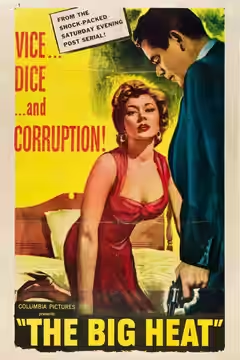
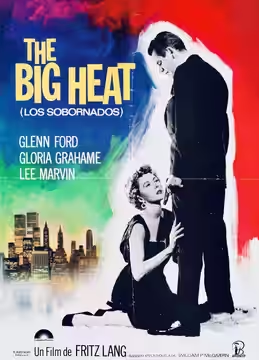
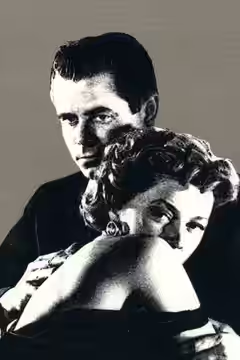
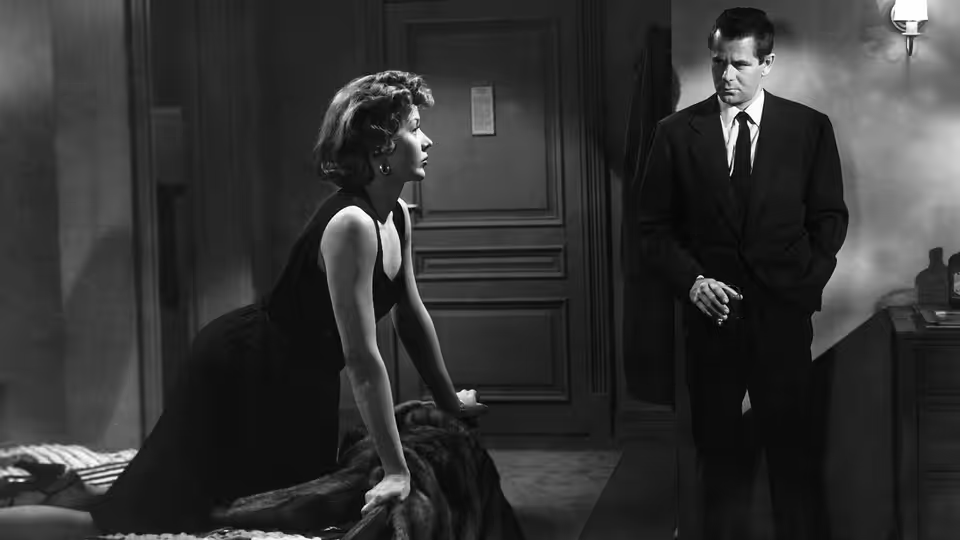
Dave Bannion stands beside a woman seated on a bed in a bedroom
Film review

The Big Heat

1953 · Directed by Fritz Lang · 1h 29m · KAVI K-16

In a sentenceLee Marvin makes us grateful for the considerable safety feature of a cinema screen

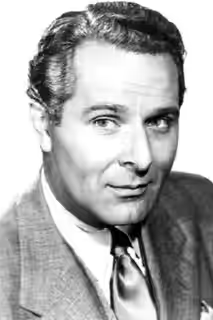
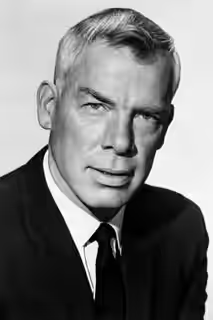
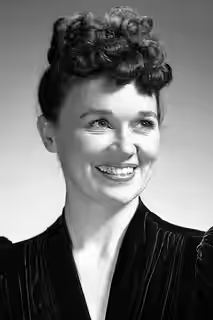
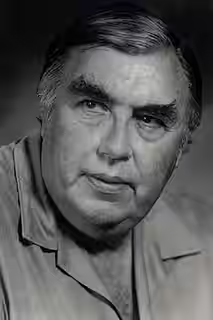
Det. Sgt. Dave Bannion (Glenn Ford) is the central character in this crime thriller directed by Fritz Lang. Gloria Grahame plays Debby Marsh, Jocelyn Brando plays Katie Bannion, and Lee Marvin plays Vince Stone. Alexander Scourby appears as Mike Lagana, with Jeanette Nolan as Bertha Duncan. The police characters include Lt. Ted Wilks (Willis Bouchey), Det. Gus Burke (Robert Burton) and Police Commissioner Higgins (Howard Wendell). Sydney Boehm writes the screenplay for the 89-minute film, which carries a 15 certificate.

Fi1m review

Fritz Lang’s crime thriller is taut, nasty and worth the discomfort, with Gloria Grahame and Lee Marvin giving it force. Some convenient plotting shows through, but the violence still has the power to disturb.

The Big Heat is a tough, absorbing crime thriller with a few convenient turns in its plotting. Fritz Lang directs it with enough control to keep those weaknesses from taking over, and enough severity to make its violence unpleasant. We recommend it for the performances as much as the suspense. At 89 minutes, it has little patience for anything that might make this company easier to bear.

Glenn Ford’s Det. Sgt. Dave Bannion gives it a firm centre. A hard cop is not automatically an interesting one, and the performance avoids making determination feel like a substitute for everything else. There is weight behind the manner, enough to make the character credible without making him especially easy company. Sydney Boehm’s screenplay benefits from that conviction: even when the plotting feels familiar, the man at its centre commands attention.

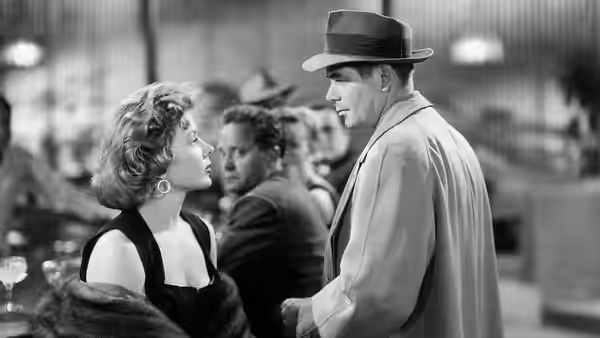
Gloria Grahame’s Debby Marsh is the performance we would send someone to see. She makes the character seem capable of surprising us, so that we keep watching for what she might think or feel next. That uncertainty is precious in a thriller with some conventional turns. Fritz Lang’s direction can seem emotionally remote, and her presence keeps that remoteness from becoming a serious obstacle to caring about the people on screen.

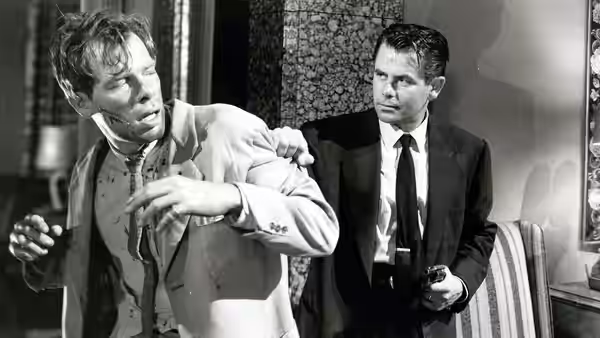
We were frightened by Lee Marvin’s Vince Stone. The coldness of the performance does it: cruelty appears to require scarcely any effort, and there is no reassuring theatrical flourish to make it easier to enjoy. It is an effective performance in a film whose violence can still unsettle. Fritz Lang gives the threat enough room to register, rather than treating brutality as a quick way of hurrying us towards the next piece of business.

Charles Lang’s cinematography makes strong use of shadow, giving the images a darkness that suits this company. It works because the lighting reinforces the unease without distracting attention from the actors. Charles Nelson’s editing keeps the pressure steady; the film moves briskly without making the performances feel hurried. That control matters more to the suspense than any single violent moment. We have time to watch the actors make one another uncomfortable.

Henry Vars and Arthur Morton’s music supports the suspense, though it leaves less of an impression than the faces. The more noticeable weakness is in Sydney Boehm’s screenplay, which occasionally asks us to accept a convenient turn because the thriller needs one. The acting is persuasive enough to make those moments stand out. A little more plausibility would have helped in those passages; brisk pacing cannot hide every contrivance.

Crime thrillers can lose force once their methods become familiar. This one remains uncomfortable because the actors make cruel behaviour so convincing, and because the direction gives us little relief from watching it. Fritz Lang’s detachment may put some viewers off, and we would understand that response. Watch it for Gloria Grahame and Lee Marvin; a comfortable evening is available elsewhere.
Critical consensus AI synthesised

80
Positive
6
Mixed
2
Negative
0

Most critics respond warmly to The Big Heat, with praise concentrated on Lang’s taut direction, sustained suspense and strong performances. Glenn Ford and Gloria Grahame receive repeated attention, while the film’s violence remains central to accounts of its impact. The reviews also value its unsentimental approach: precise, shadow-rich images and a believable screenplay help make the thriller forceful without softening its characters.

Reservations concern conventional plotting, emotional distance and how well the shocks endure. Some critics still find the violence disturbing; others consider it comparatively tame by modern standards. The Los Angeles Times admires Lee Marvin’s threatening performance but finds dated contrivances and a weak ending. The available verdicts range from qualified approval to strong enthusiasm, with no outright negative assessment recorded. Two entries lack accessible critical judgements, however, so their lower scores offer no clear explanation of the dissent.

The Guardian
24 November 2017 · ★★★★★ · Peter Bradshaw
100

Bradshaw calls the film a taut, violent classic that retains its shocking power. He singles out Gloria Grahame’s performance and the film’s most shocking moment.

Read the full review →
Slant Magazine
3 July 2025 · ★★★★½ · Chuck Bowen
90

Bowen praises the film as a hard-boiled American classic whose unsentimental approach gives its ending a moment of genuine human communion. He singles out Lang’s precise, shadow-rich visual style and praises the Criterion 4K restoration and supplements.

Read the full review →
Sight and Sound
24 November 2017 · Lindsay Anderson
85*

Anderson finds the film an extremely good, satisfying thriller, despite a few conventional elements and Lang’s detached viewpoint. He praises its taut direction and singles out the performances of Glenn Ford and Gloria Grahame.

Read the full review →
Variety
1 January 1953 · Variety Staff
85*

The review is strongly positive, praising the film’s believable screenplay and forceful direction. It singles out Lang’s taut suspense and the strong performances, especially Glenn Ford and Gloria Grahame.

Read the full review →
Radio Times
★★★★ · Tony Sloman
80

Sloman finds that this classic noir still packs a punch, despite seeming tame by today’s standards. He praises Glenn Ford’s performance and singles out the restored film’s once-censored coffee scene.

Read the full review →
Los Angeles Times
7 February 1991 · MARK CHALON SMITH
70*

The critic considers the film a classic of noir despite dated plot contrivances and a weak ending. He especially praises Lee Marvin’s steely, creepy performance as the murderous thug.

Read the full review →

Straight answers AI written, from our review

Is The Big Heat worth watching?
The Big Heat is well worth watching for its taut suspense and unsettling performances, and we score it 86 out of 100. We recommend it especially for Gloria Grahame and Lee Marvin, though some convenient plotting and Fritz Lang’s emotional distance may frustrate viewers who want more warmth in their crime thrillers.
How long is The Big Heat, and what is it rated?
The Big Heat runs 1h 29m and is rated K-16 by the KAVI in Finland. It is a crime and thriller film.
Where can I watch The Big Heat in Finland?
The Big Heat is not on any streaming or rental service in Finland at the moment. It is available in 10 other countries; change your country at the top of the page to see where. Availability is checked daily.
How violent or frightening is The Big Heat, and is it suitable for children?
The Big Heat carries a UK 15 certificate and contains disturbing violence, making it unsuitable for children under 15. We find Lee Marvin’s cold, effortless cruelty frightening, and the direction gives that threat time to register. Older teenagers who enjoy tough crime thrillers may find it absorbing, but we would caution squeamish viewers.
How does The Big Heat compare to The Killers?
The Big Heat is the brisker choice beside The Killers, and we favour it for viewers who want sustained pressure without a laborious flashback structure. Both offer bleak crime stories with compelling performances: Gloria Grahame and Lee Marvin give The Big Heat its disturbing force, while Burt Lancaster and Ava Gardner hold our attention in The Killers.
What should I watch after The Big Heat?
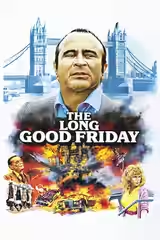
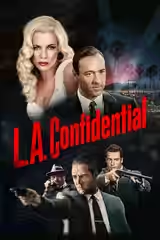
After The Big Heat, try The Killers (1946, Fi1m 84): A similarly unforgiving crime story, with people worth watching making disastrous choices. Then The Long Good Friday (1980, Fi1m 88): Another forceful leading performance amid violence, power and increasingly unhelpful associates; and L.A. Confidential (1997, Fi1m 88): Police corruption and bruising performances, with more room for tangled loyalties.

Cast

If you liked this, try…

  1. The Killers (1946, Fi1m 84)A similarly unforgiving crime story, with people worth watching making disastrous choices.

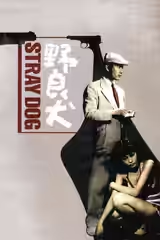
  2. Stray Dog (1949) · not on Fi1m yetPolice work becomes a source of unease in another tightly controlled thriller.

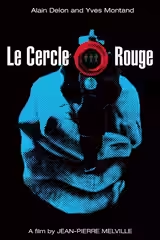
  3. Le Cercle Rouge (1970) · not on Fi1m yetFor the patient suspense and criminals whose composure offers little reassurance.

  4. The Long Good Friday (1980, Fi1m 88)Another forceful leading performance amid violence, power and increasingly unhelpful associates.

  5. L.A. Confidential (1997, Fi1m 88)Police corruption and bruising performances, with more room for tangled loyalties.