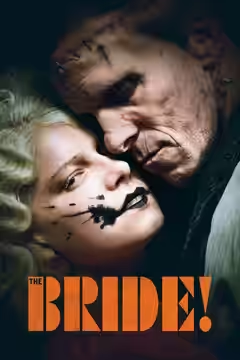
Maggie Gyllenhaal’s Frankenstein riff has a fearless lead performance from Jessie Buckley and no settled idea what to do with her. It is loud, handsome, thrilling in bursts, and rarely the same film for ten minutes together.
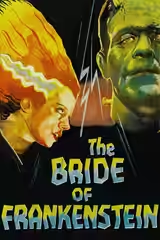
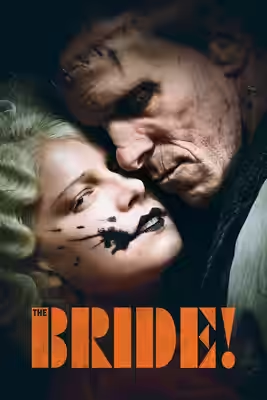
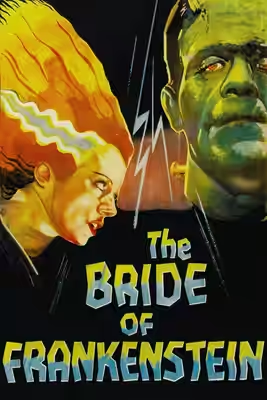
Maggie Gyllenhaal’s second film as director takes the one figure in the Frankenstein story who never got a say and gives her the whole picture. In James Whale’s Bride of Frankenstein (1935) the woman built to be a companion gets a few minutes, a hiss and a scream before the roof comes down. Gyllenhaal, who also wrote this, starts from that scream and asks what happens if the woman gets up, looks at the man she has been made for, and says no. It is a good idea. Whether it is a good film depends on which twenty minutes you happen to be watching.
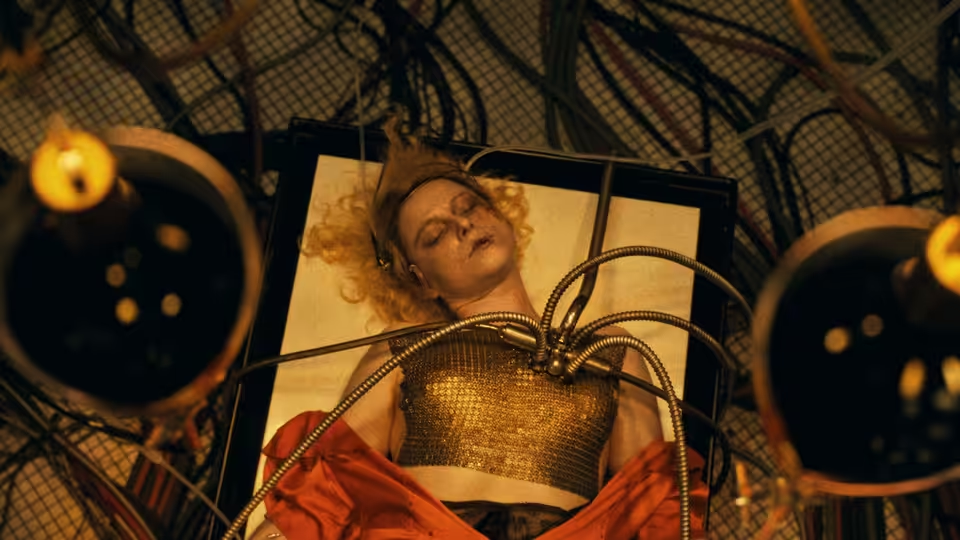
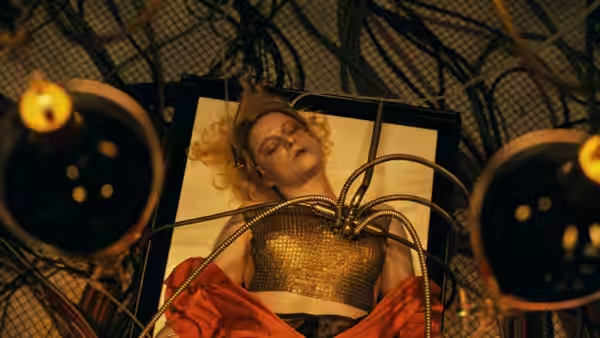
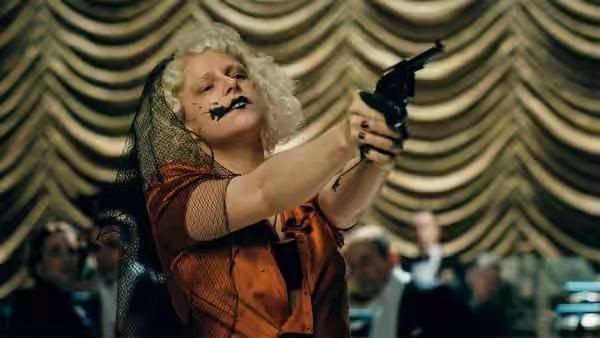
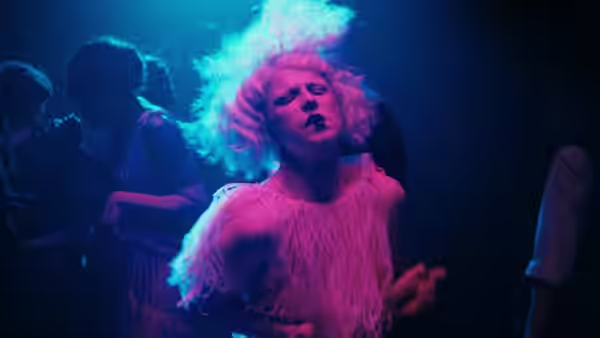
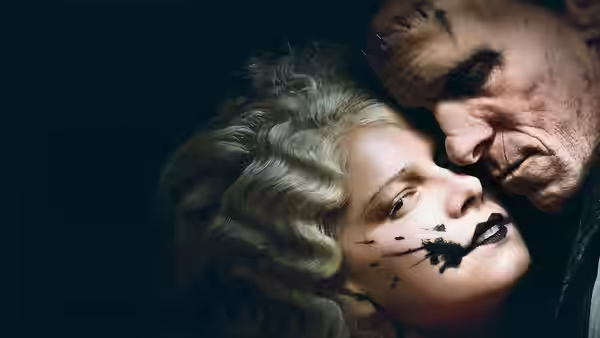
Jessie Buckley plays Ida, the Bride and Mary Shelley, and she plays all three as if she has been let out. When the Bride first gets to her feet she tests the floor before she trusts it, and Buckley finds a physical comedy in that, a woman learning a body from the outside in. Later she bites, she shouts, she dances, and for long stretches the film is simply her, with Christian Bale’s Frank a pace behind, sad-eyed and patient. Bale gives the monster a gentleness that keeps threatening to become the film’s real subject and never quite gets the chance. Together they are the reason to see it.
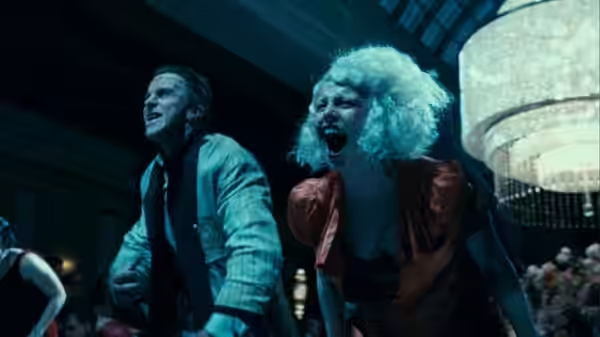
It is an expensive, good-looking object. Lawrence Sher, who shot Joker (2019), lights the laboratory in a low amber that turns the metal to bronze, and gives the chases a hard flat daylight in which nobody can hide. Karen Murphy’s production design is generous with brass, tile and rooms too large for the people in them, and Sandy Powell puts Buckley in clothes that begin as a shroud and get louder as she does. Hildur Guðnadóttir’s score is the engine, low brass and drums, mixed high and often better than the scene beneath it. When all these people pull the same way, as they do in the dance sequences, the film is properly alive.
We should own what we felt. The first dance number, Buckley moving as if the body were a dress she had not yet decided to buy, made us laugh out loud, and then it kept going and we stopped laughing and found we were moved, because the film had let her be a person for a few minutes without explaining what she stood for. That is the film at its best. It happens perhaps three times in 127 minutes.
The rest of the time the script is arguing with itself. Gyllenhaal has written a horror film, a road film, a musical, a love story and a lecture on how women have been muzzled on screen, and she has not chosen between them. The lecture wins more often than it should. Characters stop to say what the film means, and since we could already see what it meant, the effect is of being handed the programme notes halfway through the performance. Dylan Tichenor, who cut There Will Be Blood (2007), is asked here to hold scenes past the point where they have made their case, and the middle hour lumbers.
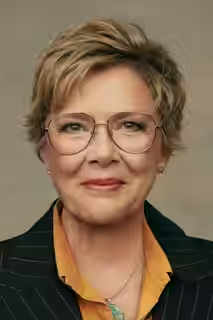
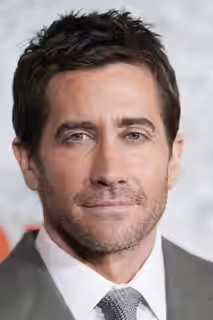
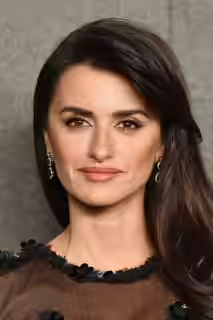
The supporting cast is starrier than the film knows what to do with. Peter Sarsgaard’s Jake Wiles has the air of a man delivering bad news he has not finished reading. Annette Bening’s Dr. Euphronious is brisk and funny in her scenes. Penélope Cruz, Jake Gyllenhaal, John Magaro and Jeannie Berlin each arrive with a look that promises a subplot, and most of the subplots are left where they were found. Berlin, as Greta, does more with a glance than the script manages with a speech.
The Lost Daughter (2021), Gyllenhaal’s debut, was small, exact and disciplined about what it would not show. This is the opposite in every respect, and the ambition is to her credit. But Whale made his bride unforgettable in about three minutes; Gyllenhaal has two hours and leaves us less sure who hers is. The reviews so far are split down the middle, some calling it a riot and some a wreck, and both sides are describing the same film accurately.
See it in a cinema if you see it at all; the noise and the colour are the point, and at home the mess will look like a mess and the dance numbers like a good music video. Bring patience for the speeches. It runs 127 minutes and carries a 15.