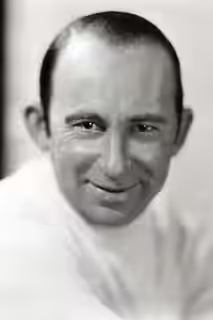
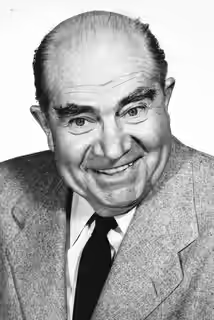
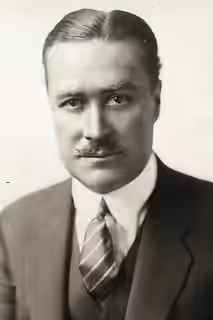
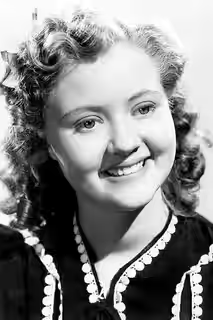
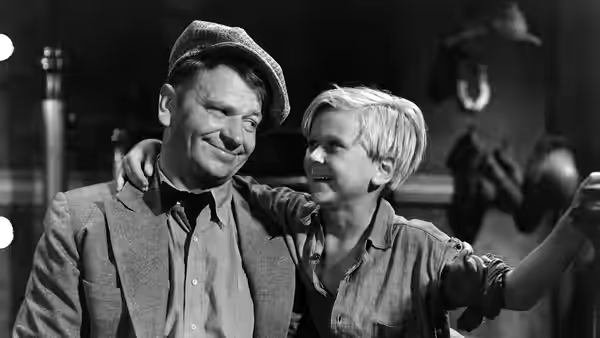
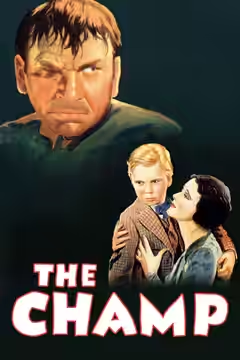
King Vidor’s father-and-son picture is thin as a story and stiff as an early talkie, and none of that matters once Jackie Cooper looks up at Wallace Beery. Bring a handkerchief and forgive the mugging.
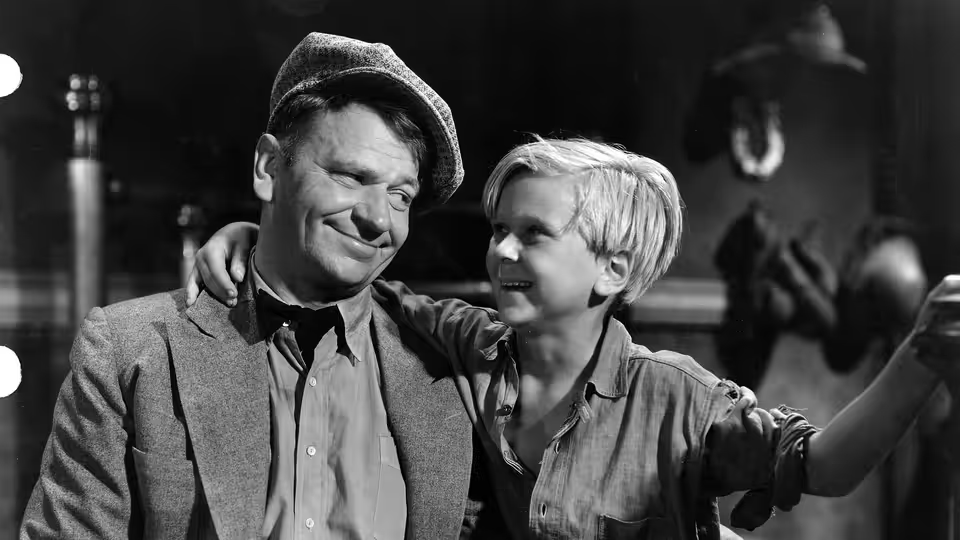
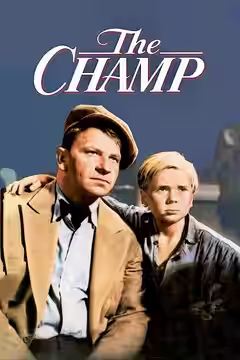
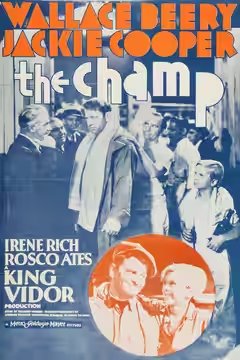
Andy Purcell used to be heavyweight champion of the world. When we meet him he is in Tijuana, waking up on a bar floor, and the person getting him home is his son Dink, who is still a small boy and has plainly been doing this for years. That is the film. Frances Marion’s story adds a racehorse won at dice, a mother who turns up rich and wants the boy back, and one more fight, and King Vidor tells it in 86 minutes without pretending any of it is new. It is a small, sentimental picture built on two faces, and for long stretches the two faces are enough.
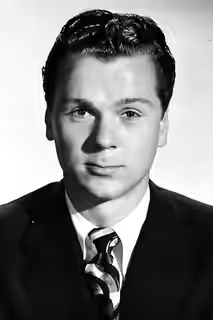
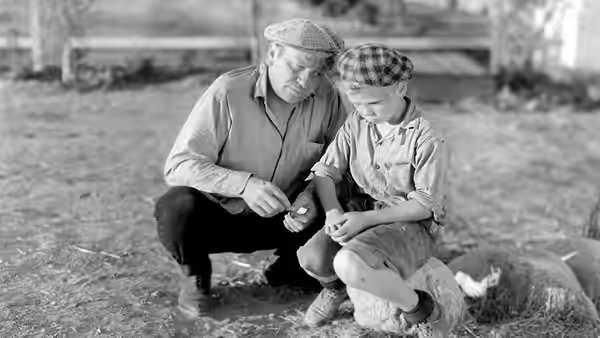
Jackie Cooper’s is the one that matters. Child actors of the period were taught to perform; Cooper mostly declines to. He takes Beery’s shoes off and puts a blanket over him with the bored competence of a night nurse. He lies to the other boys about his father’s training. When he cries, he does it while trying to stop, which is how children actually cry, and Vidor holds on him and does not cut away to help. We did not expect to be undone by a boy in a flat cap talking about a horse, and we were.
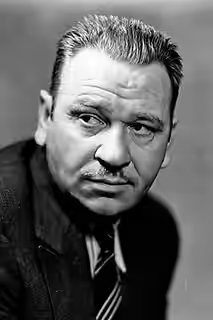
Wallace Beery is a bigger and louder proposition. His Champ is all appetite: for drink, for dice, for the sound of his own promises. When he is sober and wheedling for forgiveness he is close to unbearable, and Beery knows it; the wheedling is the point, because Dink forgives him every time. He mugs too much in the bar scenes, rolling his eyes and playing to the crowd. But in the scene where he cannot say sorry and simply stands there, the mugging stops, and what is left is a man who has understood, for about four seconds, what he is doing to his son. Then he goes to get a drink.
Gordon Avil’s camera stays largely where it is put, as cameras did in 1931, and Vidor uses that. Scenes play in long takes with the two of them in one frame, so we watch Dink watching Champ. The Tijuana streets are dust, awnings and wooden bars, and the racetrack is the only bright place in the picture. Hugh Wynn’s cutting is plain until the fight, where he keeps returning to Cooper in the corner and lets the boy’s face tell us how the rounds are going. There is almost no music. The soundtrack is voices, footsteps and the hiss of early recording, and the quiet does more than a score would have.
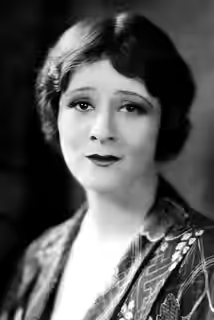
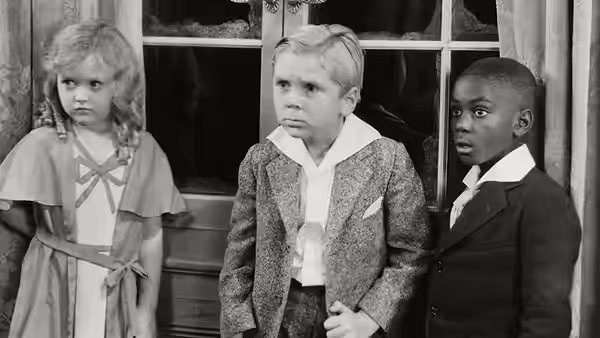
The film goes to sleep whenever it leaves the bar. Irene Rich plays Linda, Dink’s mother, as pure understanding, and Hale Hamilton plays her husband Tony as pure decency, and they are both right and both dull. The rich half of the story has no friction because nobody in it wants anything unreasonable. Roscoe Ates’s Sponge has a stutter that is meant to be funny and is wheeled out four times too many. Jesse Scott’s Jonah, Dink’s friend, is written as the comic stereotype of the period, and it is ugly to sit through now. And the plot loops: promise, relapse, promise, relapse, with each turn a little less surprising than the last.
Then comes the last stretch, which we will not describe. We knew what was coming; anyone who has seen a film from this decade will know within twenty minutes. It made no difference. Vidor puts the camera on Cooper, lets it run longer than is comfortable, and we sat on the sofa feeling got at and slightly ashamed of how completely it worked. The film is not subtle. It does not need to be, because the boy is real.
Vidor had made The Crowd three years earlier, a film about a whole city. This is about one room and two people, and it is the lesser work by any measure except the one that counts on a wet evening. Watch it with someone who will not mind seeing you cry. If Beery’s grandstanding grates, wait; the film knows he is too much, and so, eventually, does he.