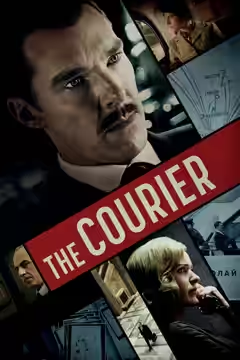
Benedict Cumberbatch and Merab Ninidze give this workmanlike espionage drama a friendship worth caring about. The plotting is less persuasive, and the film too often explains the danger without making us feel it.
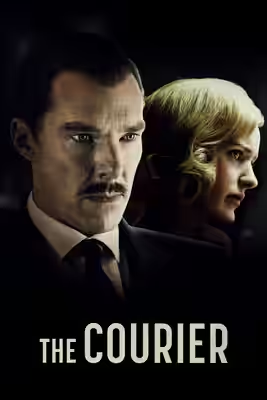
Dominic Cooke’s The Courier is a decent espionage drama, worth considering for its leading pair rather than its ability to keep us guessing. The appeal of a businessman becoming a spy is easy to understand: somebody accustomed to ordinary professional dealings must cope with consequences that cannot be settled by being agreeable. That gives the film a useful source of unease. Too often, though, it settles for the familiar business of a respectable man looking worried while the danger is explained.
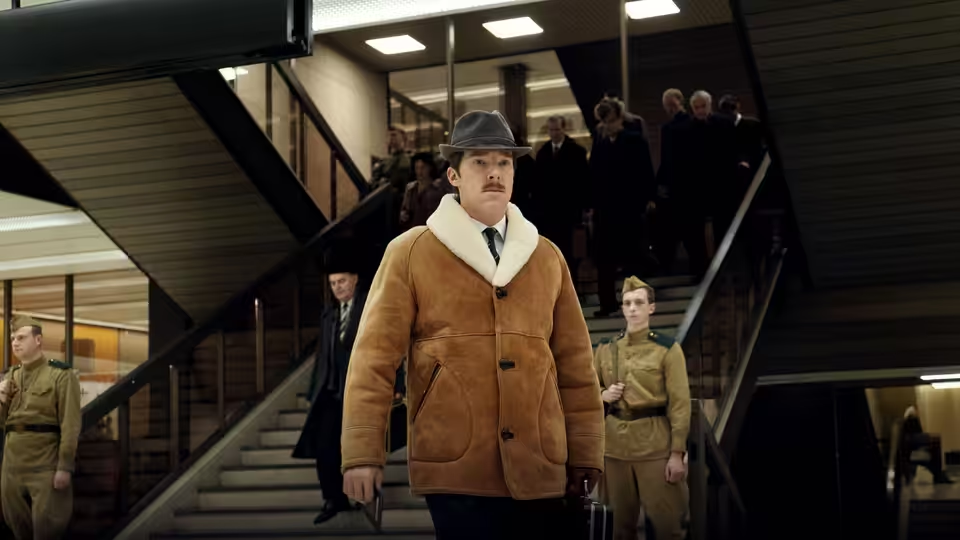
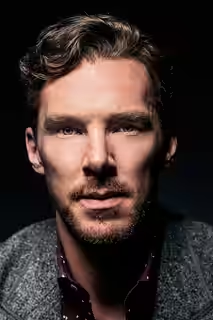
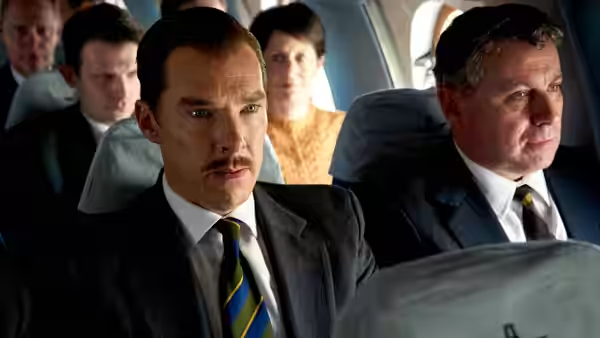
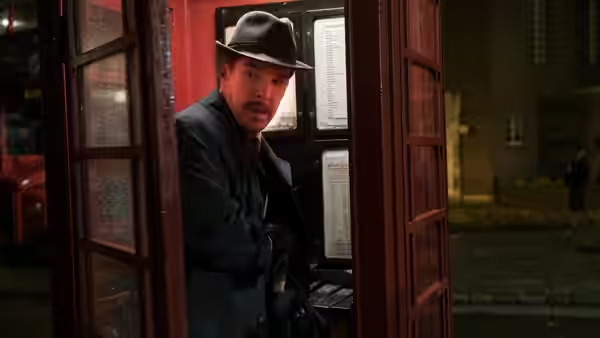
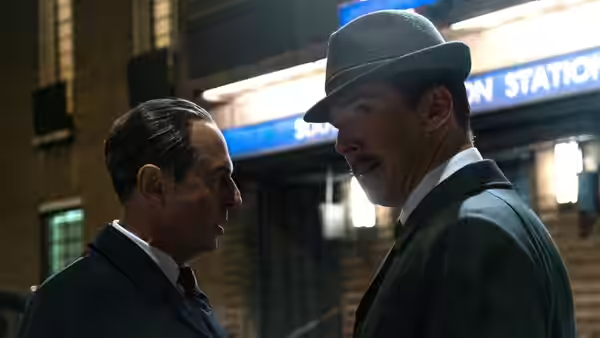
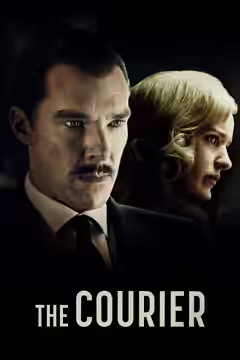
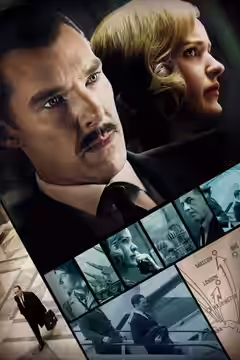
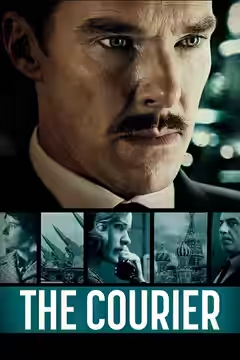
Benedict Cumberbatch gives Greville Wynne enough self-interest to prevent his decency becoming a foregone conclusion. His fear is convincing because he allows the character to seem unequal to the work, with no suggestion of a natural operative waiting to emerge. There is something touching about his attempts to maintain professional composure when he is plainly frightened. The performance also supplies welcome awkwardness to a film otherwise inclined to take itself rather solemnly.
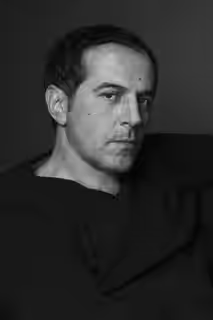
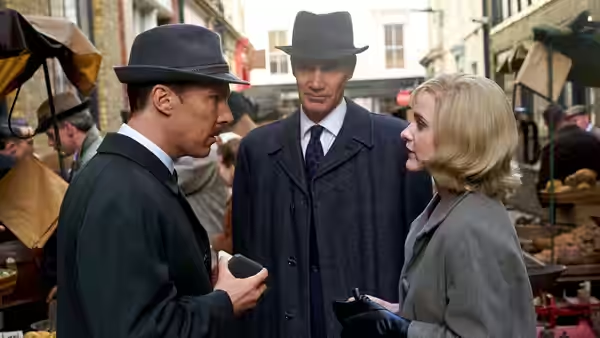
Merab Ninidze makes Oleg Penkovsky the person we most want the film to spend time with. He can let concern show in a glance without making it look like a request for our sympathy, and his exchanges with Benedict Cumberbatch have an ease the plotting seldom matches. We were moved by the way his face registers the growing trust between these men. Their friendship makes us care about what they risk, although the screenplay could have allowed the relationship more room to develop.
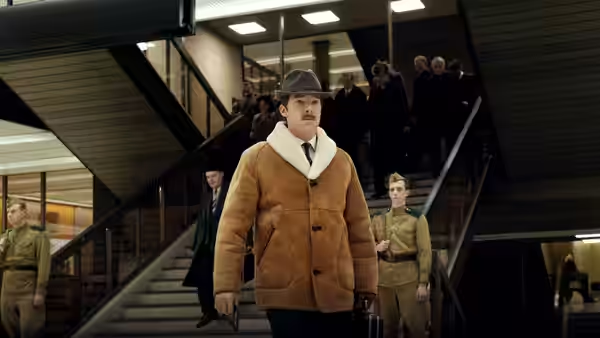
Sean Bobbitt’s cinematography gives the drama a composed, contained look, and that restraint suits the men’s efforts to keep themselves under control. Suzie Davies’s production design keeps the surroundings unobtrusive, although the sparsely occupied settings sometimes make the danger feel remote. Abel Korzeniowski’s music supplies some of the tension missing from the conversations, without making their information more surprising. The polished presentation is pleasing to watch, but it does not always help us share the characters’ apprehension.
Gareth C. Scales and Tariq Anwar keep the exchanges brisk, so the film does not linger over every explanation. Yet Tom O’Connor’s screenplay gives too many of those exchanges the same purpose: establishing that the work is dangerous and that Greville Wynne is out of his depth. After a while, we know how we are meant to feel before a scene has had time to persuade us. The more forceful passages expose how routine much of the material between them has been.
The strain on the marriage ought to make the secrecy more difficult to excuse, and Jessie Buckley gives Sheila Wynne a seriousness the film needs. But the domestic material is too readily reduced to another pressure on Greville Wynne. Oleg Penkovsky, too, receives less attention than the friendship has led us to expect. The film’s increasing concentration on one man’s experience narrows a story that becomes most interesting whenever it allows two people to matter equally.
The standards of a traditional spy thriller are not unreasonable: we need to understand the risk and care about the people taking it. This manages the latter more consistently, largely through the actors, and its 112 minutes leave room for relationships that the writing only partly develops. There is enough here for an evening when a serious, well-acted espionage story sounds appealing and surprise is not the main requirement. Choose it for the two leads, and do not expect the intrigue to keep pace with them.