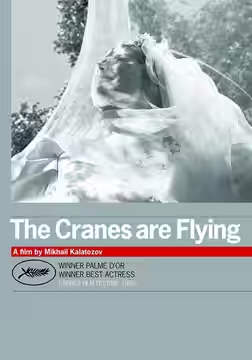
The Cranes Are Flying is a moving war romance, carried by Tatyana Samoylova and Sergey Urusevsky’s expressive photography. The symbolism sometimes presses too hard, but the attention to Veronika’s unhappiness makes the excess worth accepting.
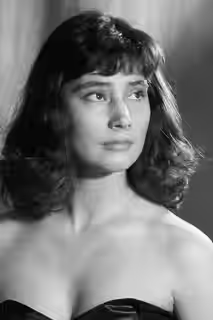
Mikhail Kalatozov’s The Cranes Are Flying is a moving war romance, with a tendency to underline emotions that are already clear. Its great advantage is Tatyana Samoylova, whose Veronika makes that excess forgivable more often than it ought to be. The film asks us to care about one woman’s search for happiness without treating that concern as small beside war. We recommend it for the seriousness with which it takes her unhappiness, and for the restless photography that keeps us close to it.
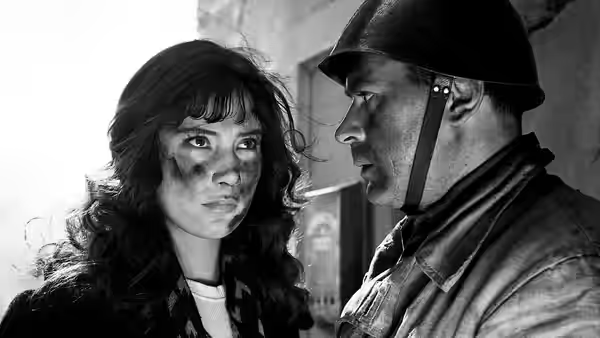
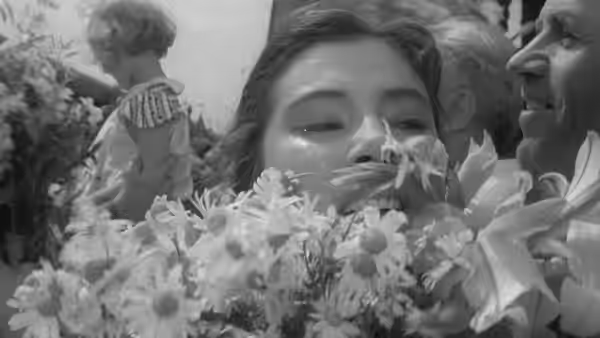
The performance gives us someone to worry about before we begin admiring how the film is made. We were moved by the strain in Veronika’s face, by the sense that feeling has become something she must work to contain. There is sensitivity here without the suggestion that unhappiness makes a person simple or easy to understand. That matters in a romance this emphatic: we need someone to believe in when the filmmaking begins insisting on what we should feel.
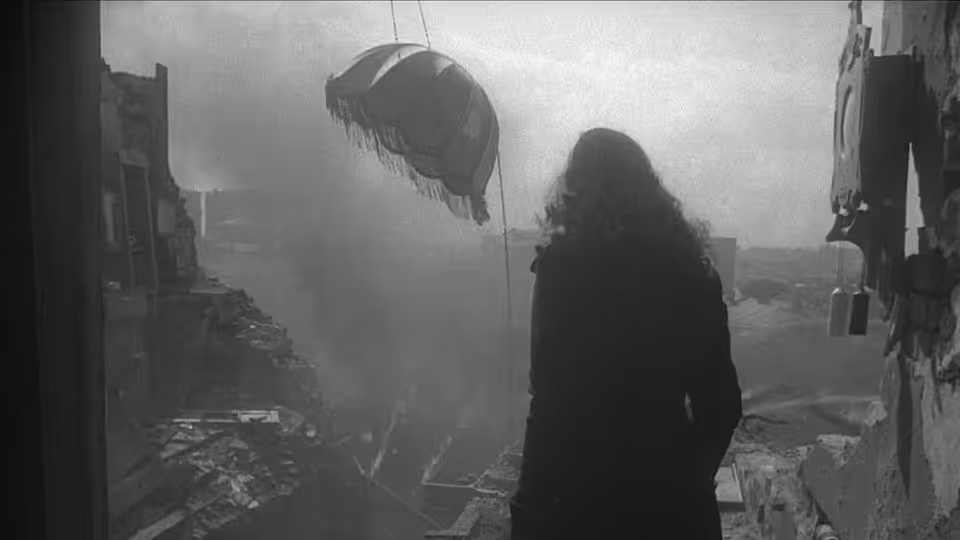
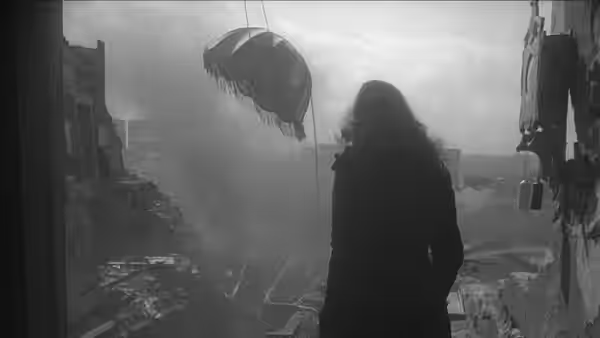
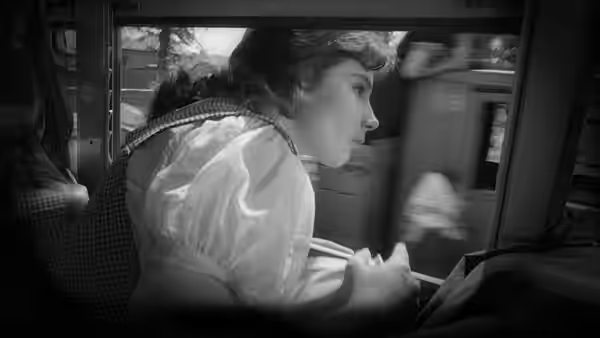
Sergey Urusevsky’s cinematography takes its lead from that distress. The camera’s movement makes Veronika’s troubled experience harder to observe calmly; the images seem affected by what she is enduring. We are conscious of how much the camera is doing, yet rarely feel it has wandered away from her. The approach can be florid, but making wartime distress look orderly would be the less convincing choice.
Mariya Timofeyeva’s editing gives this restless photography enough shape for us to remain involved in Veronika’s unhappiness. Across its 97 minutes, the film feels concentrated, though we sometimes wanted an emotion to settle before it was pressed again. We would welcome a little less insistence, particularly when the symbolism becomes conspicuous. There are moments when trusting the performance would have been enough.
Mieczysław Weinberg’s music is effective, although we would put it behind the photography in explaining why the film moves us. Much the same applies to Yevgeni Svidetelev’s production design: the surroundings make less of an impression than the people. Neither contribution distracts us from the performance, which counts for something in a film with so much expressive energy. Our attention keeps returning to Veronika, even when there is plenty of filmmaking asking to be noticed.
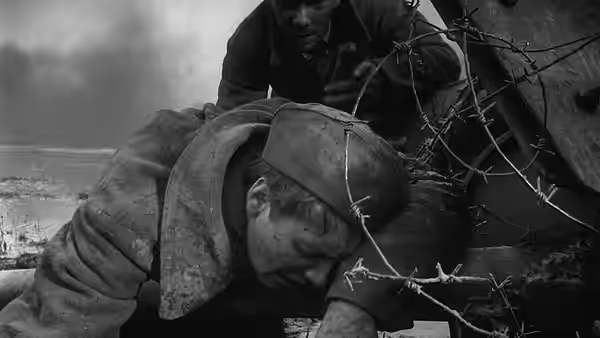
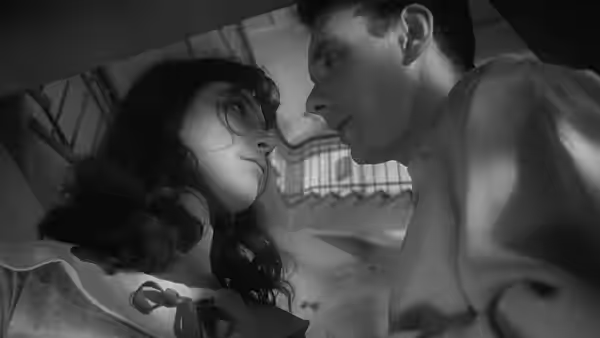
A war romance needs to make its private suffering matter, and this one gives that task proper attention. We do not need Veronika to represent everyone before her distress counts. The romantic intensity can make the symbols seem heavier than they need to be, but it also gives the film an emotional directness that we would not wish to lose. Tatyana Samoylova makes us care about the difficulty of living through war without requiring us to admire unhappiness itself.
The caveat is for those who prefer their romances dry-eyed. This one makes little provision for that preference, and its occasional overstatement is part of the bargain. Give it an evening without interruptions.