Film review

The Creator

2023 · Directed by Gareth Edwards · 2h 14m · 12A

In a sentenceA sad man carries a robot child across rice paddies while a giant cross drops bombs on the extras

Science FictionActionAdventure

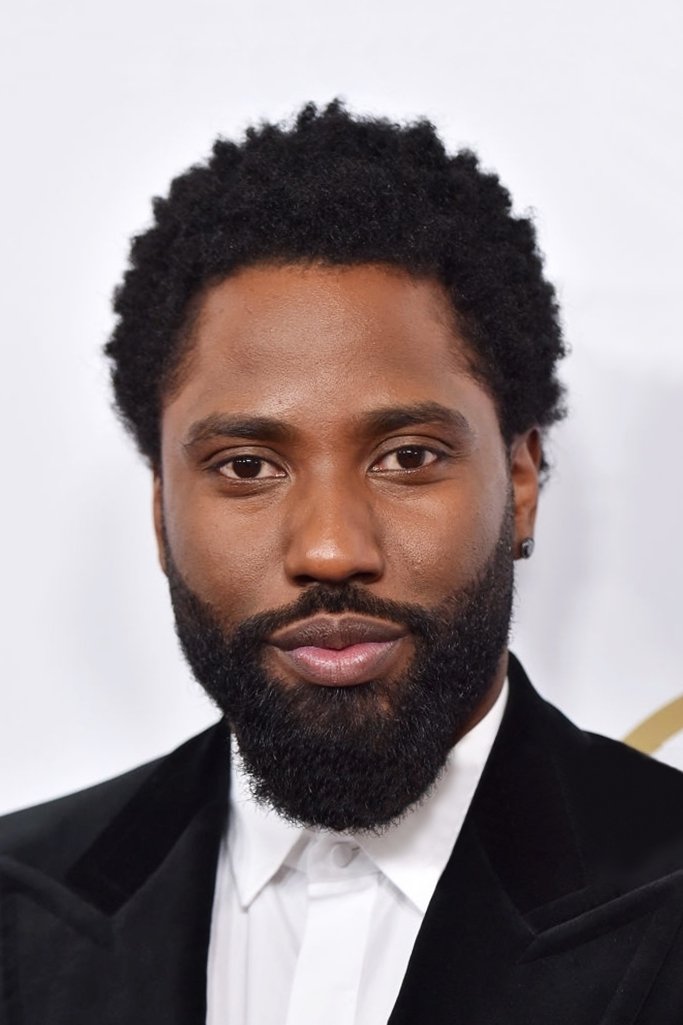
Humans and their machines are at war. Joshua (John David Washington) is an American soldier working undercover in a region the film calls New Asia, where robots and people live side by side, and he is married to Maya (Gemma Chan). A raid goes wrong and separates them. Colonel Howell (Allison Janney) later brings him back for one job: find and destroy a new weapon built by the AI’s architect. The weapon turns out to be a child (Madeleine Yuna Voyles). Joshua takes her on the run, hunted by his own side and helped, warily, by hers. Ken Watanabe plays Harun, a leader of the machines. Gareth Edwards directs and co-writes with Chris Weitz.

Plays from YouTube when you press play; nothing loads from them until then.

Fi1m review

Gareth Edwards builds a future that looks worn, lived in and real, then walks a story through it that we have seen many times before. The images are worth the ticket; the script gives them less to carry than they deserve.

Gareth Edwards has spent his career putting ordinary people in the foreground and something enormous in the sky behind them. Monsters (2010) did it with two travellers and a cordoned-off Mexico; Godzilla (2014) did it with a lizard the size of a weather system. The Creator does it with an American war against artificial intelligence, fought in the rice fields and temple towns of a place the film calls New Asia, and it is the biggest thing he has built from nothing. The world is remarkable. The story he has walked through it is one we have seen many times, and by the end the pictures are doing nearly all the work.

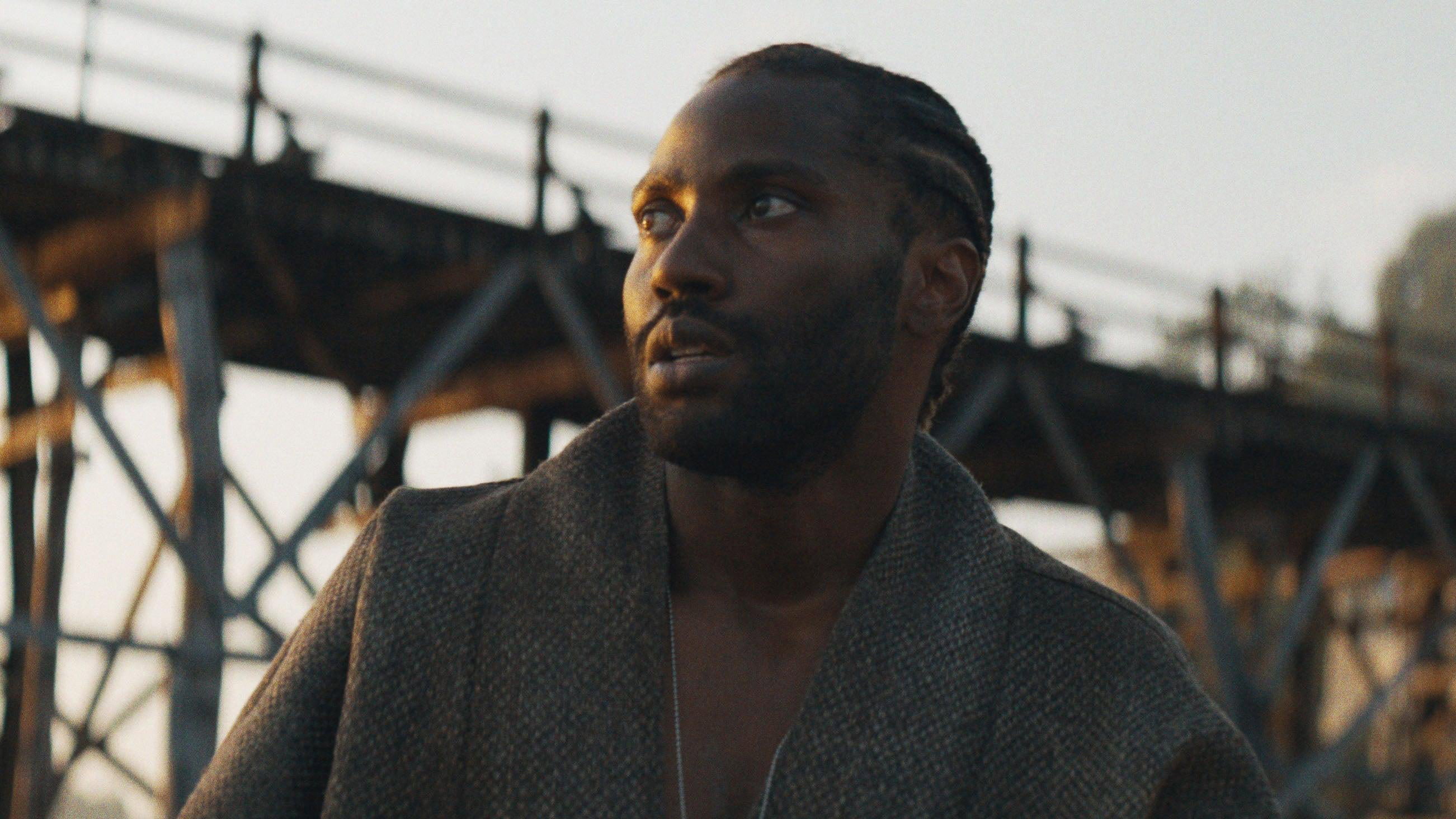
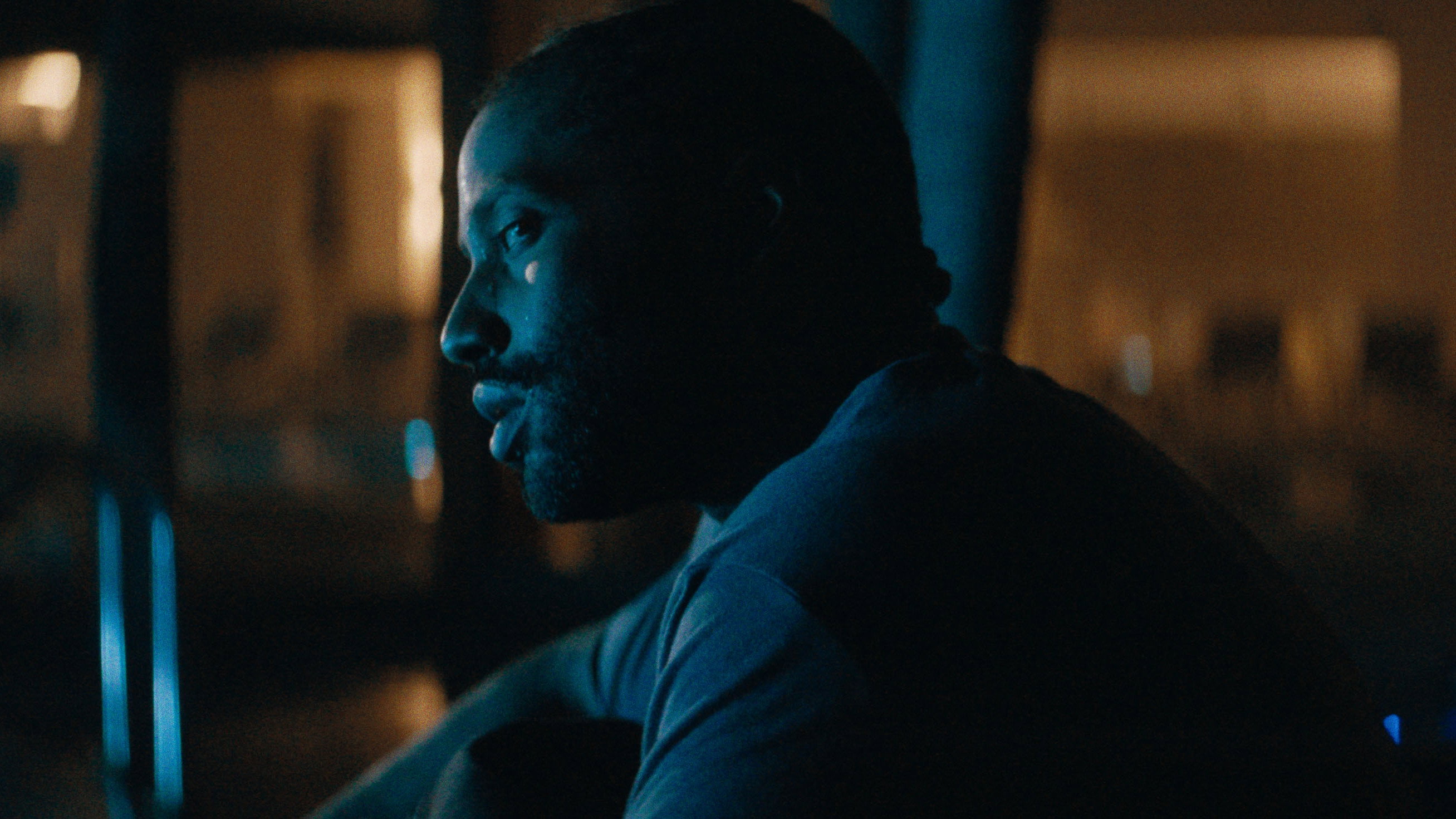
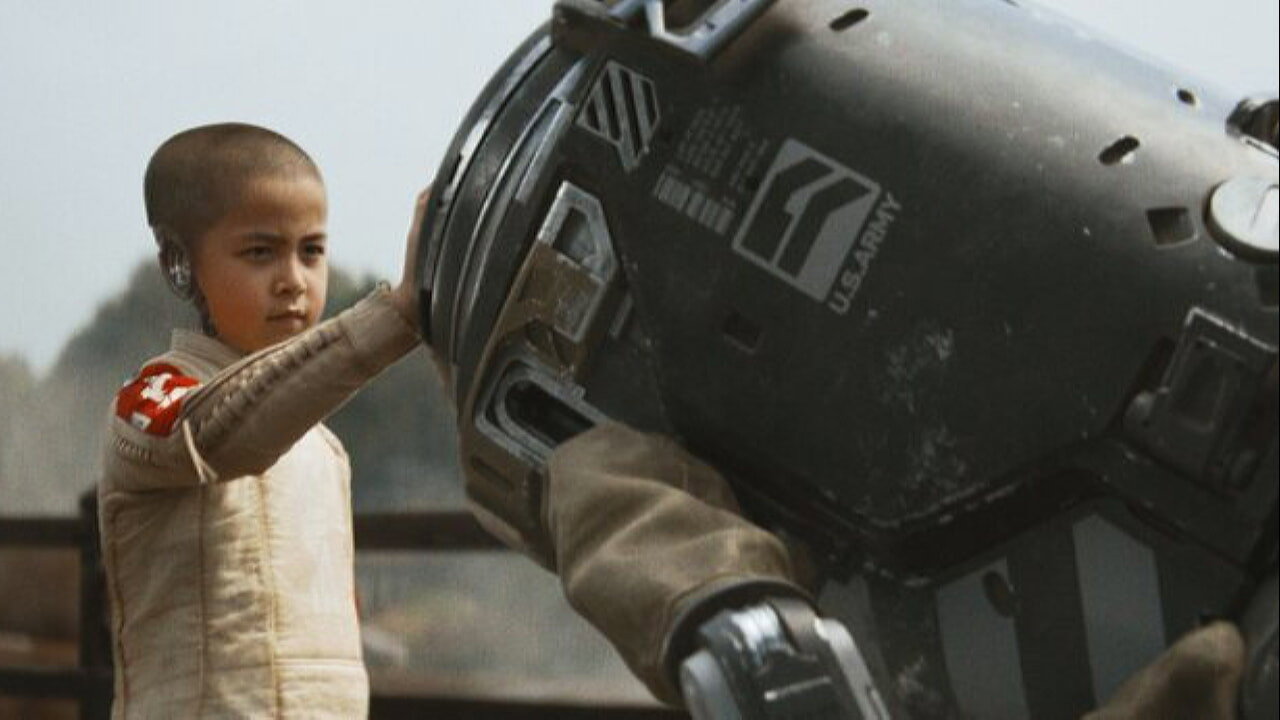
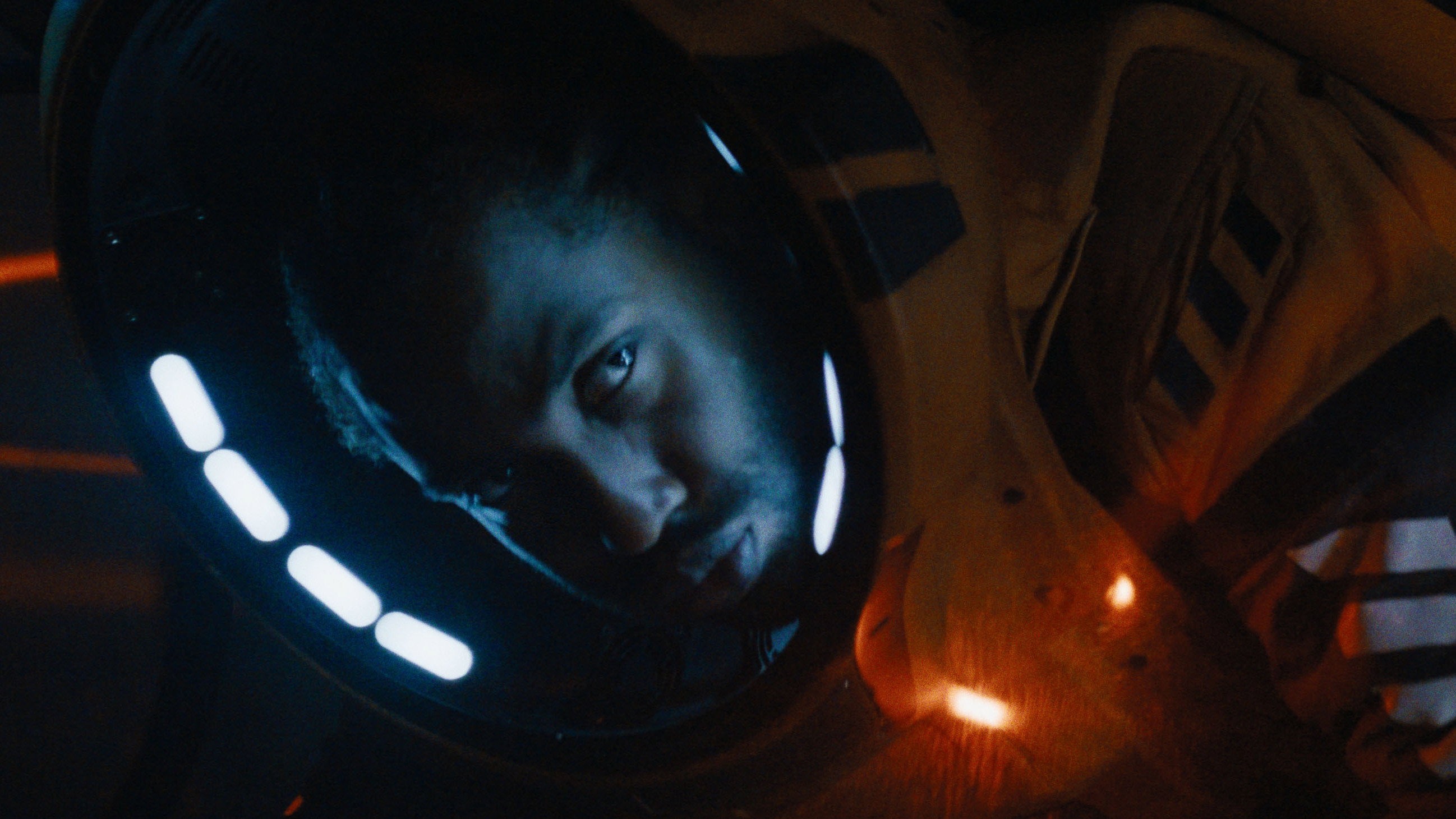
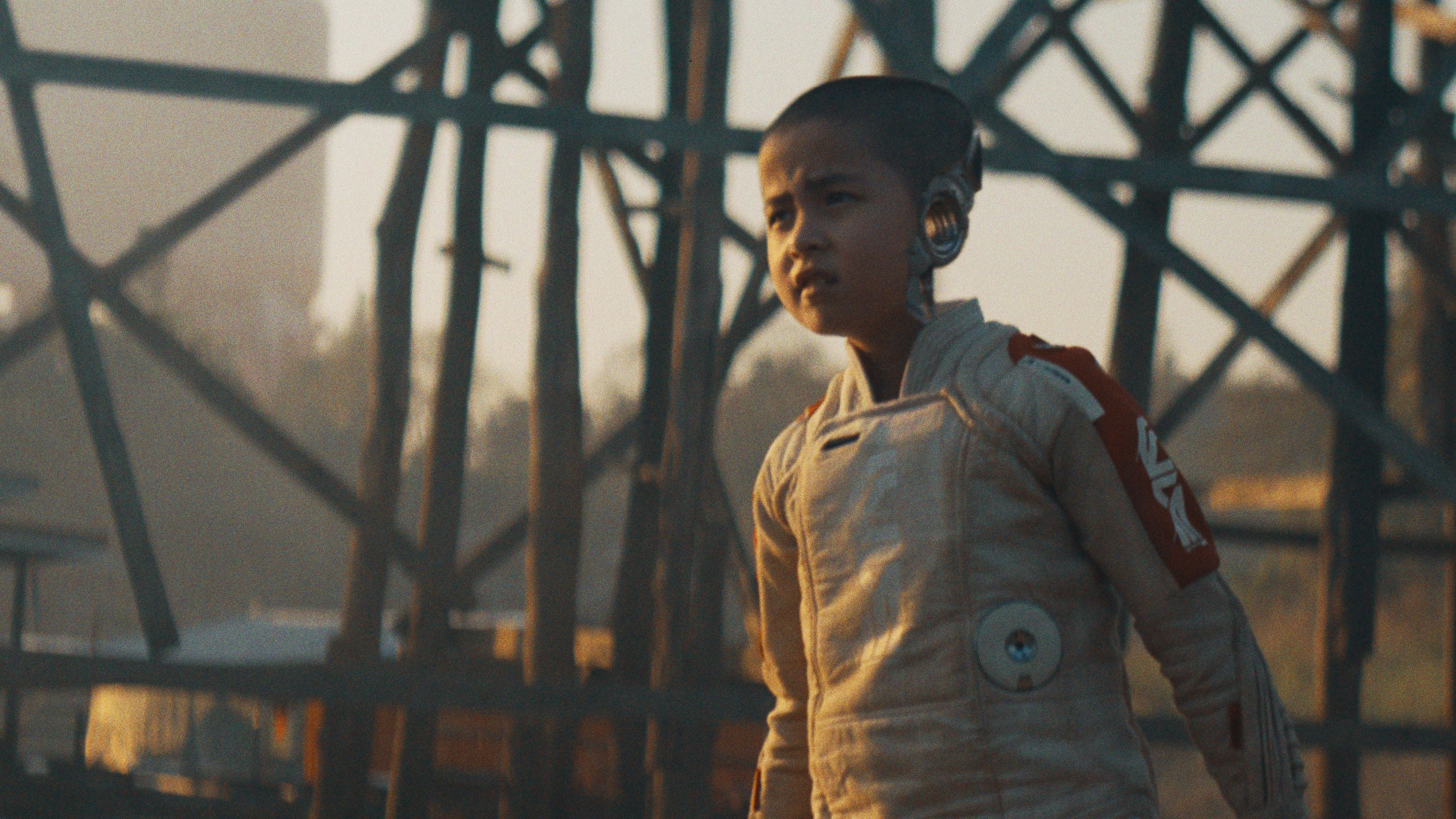
Start with what James Clyne has designed, because it is the reason to see the film. The American weapon hangs in orbit and moves across the sky as a cross of blue light, so that every scene of village life has a slow crucifix crawling above it. The robots come in two kinds: workers with turbines for heads, and simulants with human faces and a neat hole drilled straight through the back of the skull, which the film keeps showing us in profile and which never stopped being unsettling. Monks in saffron have circuitry where their ears should be. Greig Fraser and Oren Soffer shoot all of it in what look like real paddies and real beaches, with haze in the air and grain on the image, and the effects sit inside the frame rather than on top of it.

Three editors are credited, Joe Walker, Scott Morris and Hank Corwin, and the film moves like a thing cut by three people. The first hour is brisk and fragmented, with Joshua’s memories of Maya slipping into the present a few frames at a time, and it works; it gives a stock character a grief we can see. The second half stops for a speech, starts again, stops for another. Hans Zimmer and Jo Goldsmith-Eteson score the war with low drones and a distant choir, and they are at their best in the raid on the village, where the music drops almost to nothing and the screaming is left to do it.

John David Washington plays Joshua as a man who has closed every door he owns, which is honest and also a problem, because the film asks us to watch him open them and he gives us little to watch. Madeleine Yuna Voyles, as Alphie, is the real lead: solemn, curious, a child who has just learned what a lie is. Ken Watanabe gives Harun a tiredness that suggests he has been fighting this war for longer than the humans have. Allison Janney’s Colonel Howell has a single expression and a short fuse, and the soldiers around her have been written as if the script wanted us to cheer their deaths. Gemma Chan is mostly in flashback, and Sturgill Simpson does a warm ten minutes as Drew.

Here is what got to us. In the village a farming robot is ordered to carry a bomb into a building, and it goes, and it counts down out loud, and it is polite about it. Robots put their hands up and are shot anyway. We were horrified, and we were meant to be, and it is the film’s one clear argument: these things ask for nothing and we kill them regardless. Then the last forty minutes arrive, an assault on a very large machine with a great many corridors, and we found ourselves admiring the light on the metal and checking how long was left.

The trouble is the script, by Edwards and Chris Weitz. The soldier and the powerful child are borrowed from Lone Wolf and Cub and Children of Men; the Americans dropping fire on villages are borrowed from every Vietnam film; the robots are good because the film has decided they are good, and nobody on screen makes the case against them well enough to be worth answering. New Asia is a place where things happen to people, and the people are mostly extras. The reviews so far split almost down the middle, and we understand both halves.

Edwards is a filmmaker who is best when he is hiding something, and here he has nothing to hide. See it on the biggest screen you can find, for Clyne’s world, for Fraser and Soffer’s light, and for Voyles, and keep your expectations at the level of the pictures rather than the plot. It runs 134 minutes and carries a 12A.

Critical consensus AI synthesised

65
Positive
11
Mixed
6
Negative
1

The reviews agree on one thing and split on nearly everything else. Almost every critic praises the look of the film: the world-building, the design of the robots and the New Asia setting, the scale Edwards gets from his effects, and the action. Where they part is the story. The warmer reviews find a heartfelt film with something to say about otherness and American violence, and a few call it Edwards’ best work. The cooler ones, and there are many, find a patchwork of familiar science fiction, with several naming the reluctant-guardian-and-powerful-child plot as borrowed goods. John David Washington’s lead performance divides them too; The Wrap singles out him and Madeleine Yuna Voyles for praise, while others call him disconnected. Sight and Sound raises the sharpest objection, that New Asia is a backdrop for Western destruction, and Digital Spy notes some Orientalism. The Times dismisses it as a Star Wars pastiche. The spread is wide.

Vulture
29 September 2023
85*

A shockingly good, tenderhearted sci-fi film that uses its AI premise as a symbol for otherness to interrogate American imperialism and violence, while delivering the director's most effective emotional core to date.

Read the full review →
The AV Club
26 September 2023 · B+ · Justin Lowe
83

Edwards delivers a thrilling, thoughtful, and immersive sci-fi epic that reframes AI conflict with an expansive perspective, notable for its resourcefulness, striking visual style, resonant themes, and compelling character dynamics.

Read the full review →
Little White Lies
27 September 2023 · 2/4/4 · Leila Latif
80

The critic praises the film's visually ambitious storytelling and inventive action sequences in a heartfelt sci-fi spectacle about war between humans and AI. They highlight the stunning world-building as a standout element.

Read the full review →
Time Out
22 September 2023 · ★★★★ · Lou Thomas
80

The review lauds it as Edwards' best film, a lavish action-packed sci-fi with spectacular visuals and chaos that thrills. They single out the gorgeous visual aesthetic and impressive action sequences for praise.

Read the full review →
Slant Magazine
26 September 2023 · Jake Cole
75*

Edwards balances arresting images with grounded emotional stakes in a humanist spin on dystopian tropes, emphasizing empathy, connections between characters, and a plea for peace over brutality in its treatment of AI and humanity.

Read the full review →
Radio Times
26 September 2023 · ★★★ · Dave Golder
60

The critic notes spectacular visuals and energetic action sequences but criticizes the generic storytelling and lack of originality or depth in its robot revolution narrative. They single out the cartoonish US military characters and under-explored central relationship as complaints.

Read the full review →

Cast

Stills

Awards

Academy Awards, 2024

Nominated
Best Sound
Nominated
Best Visual Effects

If you liked this, try…

Monsters poster

Monsters

2010 · Edwards’s first film: two people, one border, and the creatures kept mostly out of frame.

District 9 poster

District 9

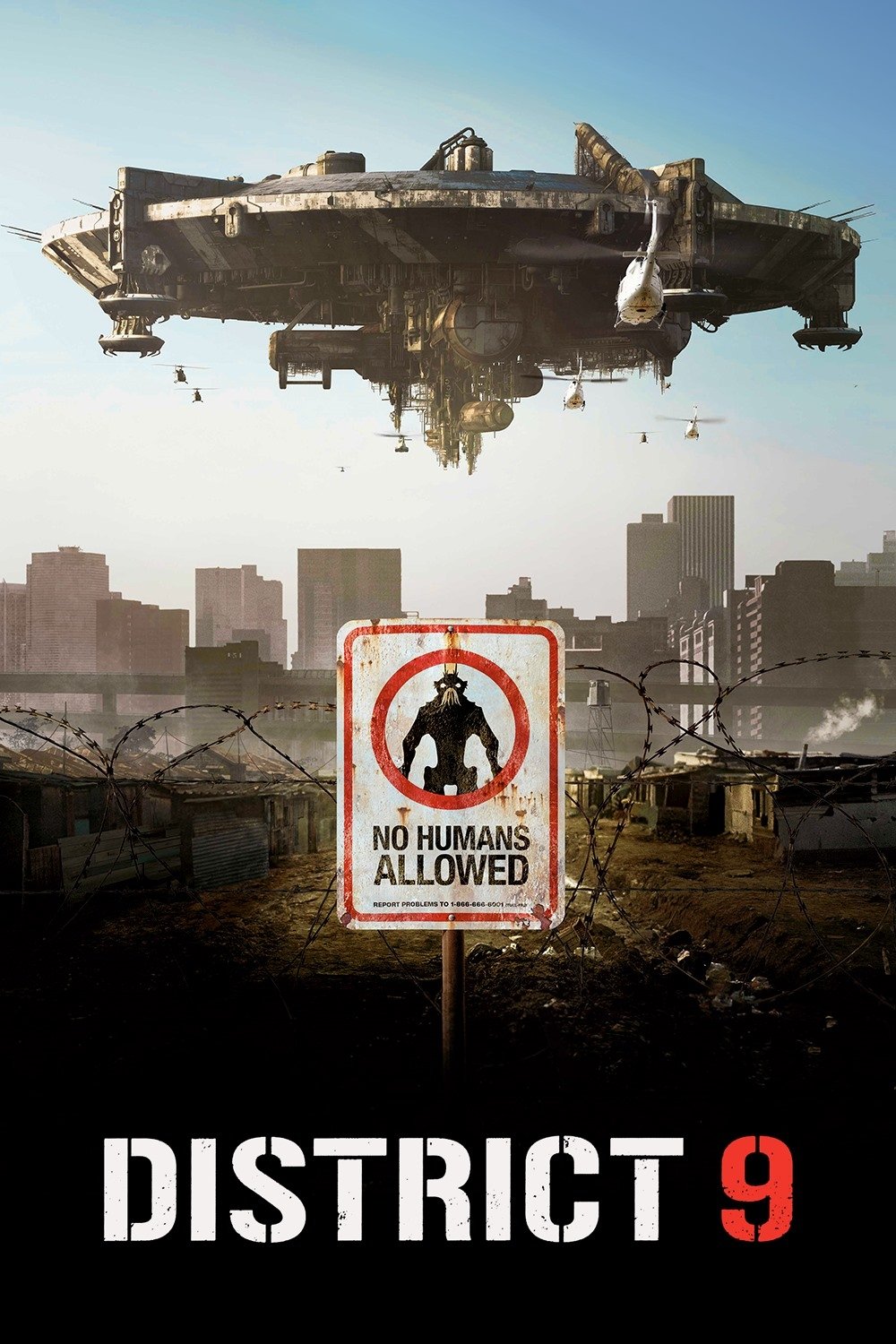
2009 · Aliens as an underclass in Johannesburg, shot like news footage and far angrier than this.

Children of Men poster

Children of Men

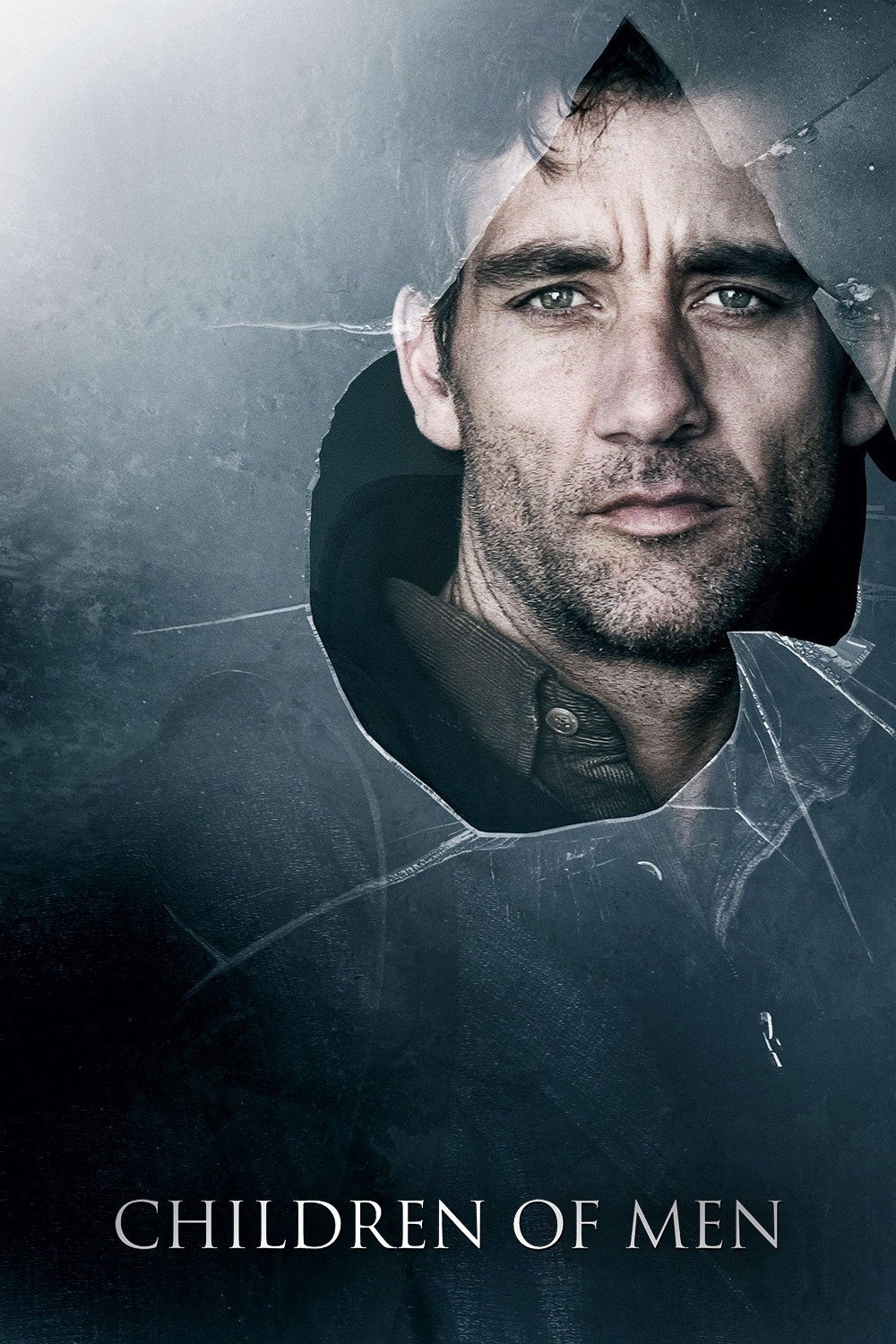
2006 · A reluctant man escorts a miraculous child through a collapsing Britain; the template done properly.

Ghost in the Shell poster

Ghost in the Shell

1995 · Japanese animation asking what a machine with a face owes to the people who built it.

After Yang poster

After Yang

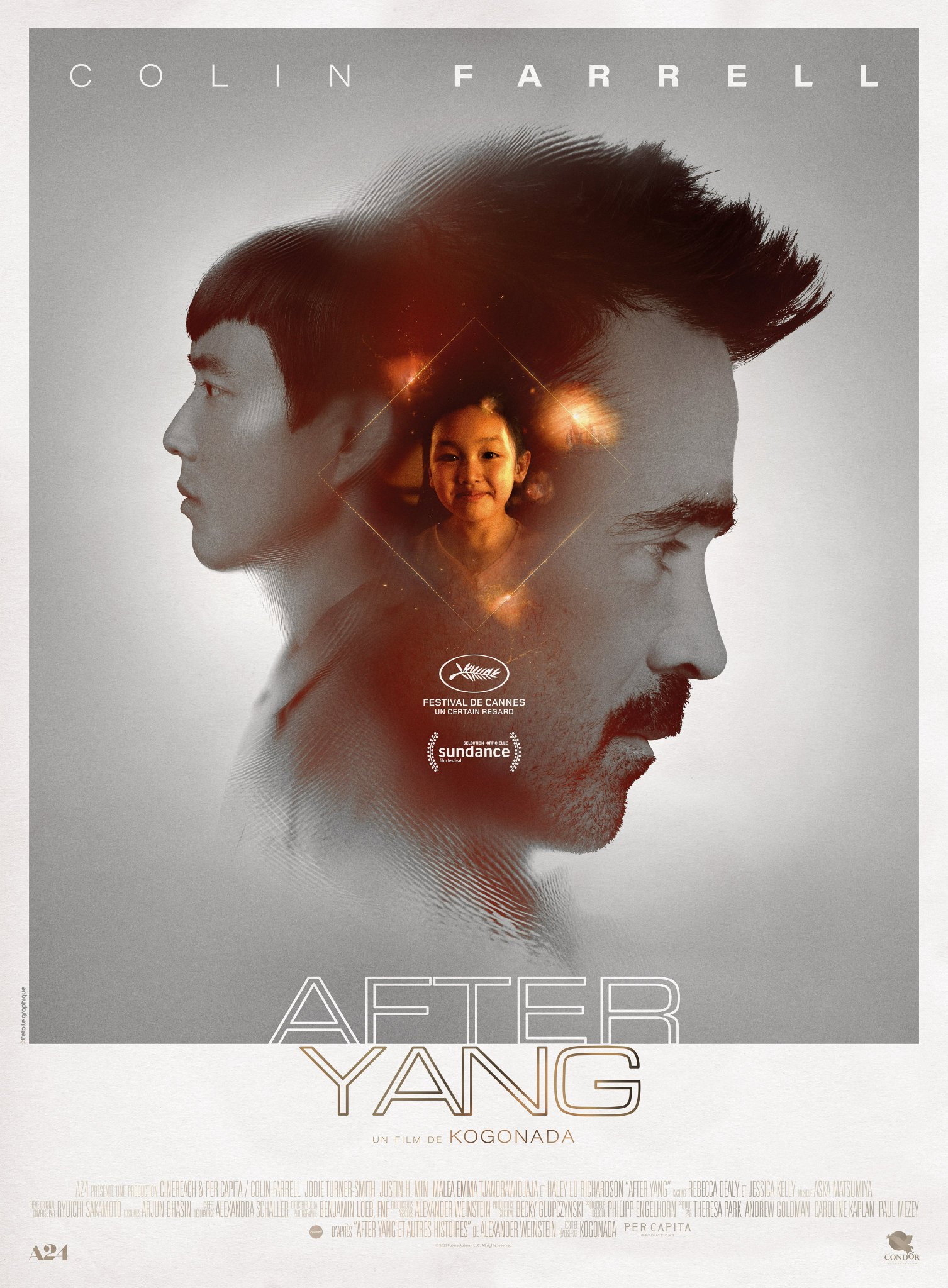
2021 · A family mourns a broken android; the quiet, domestic version of the same question.