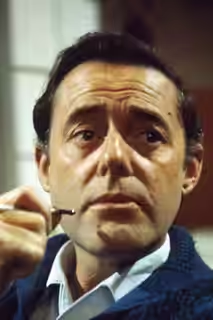
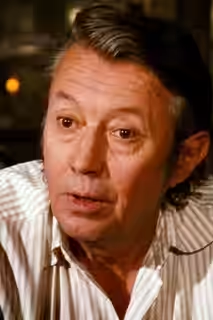
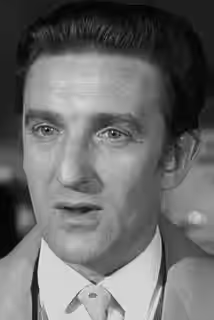
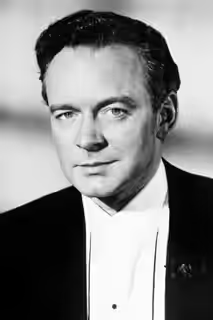
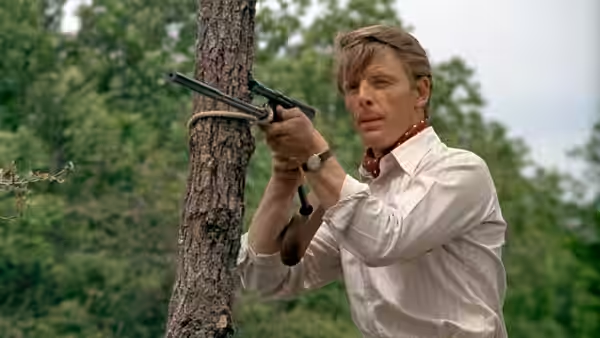
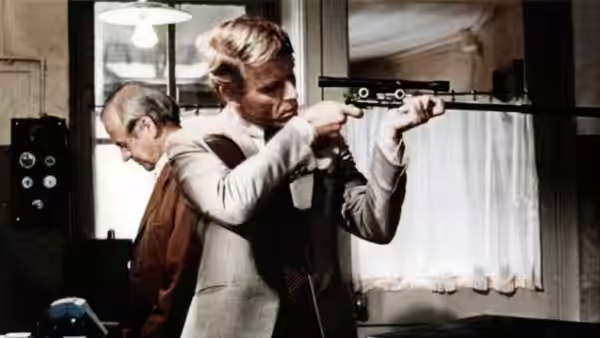
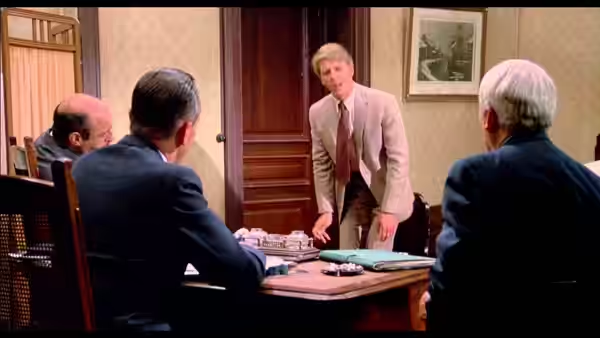
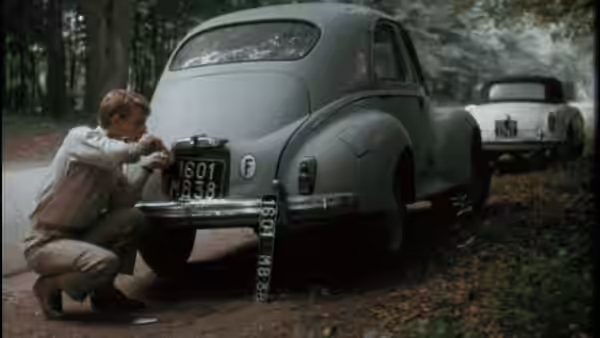
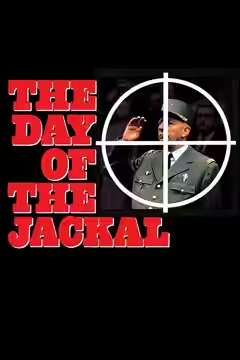
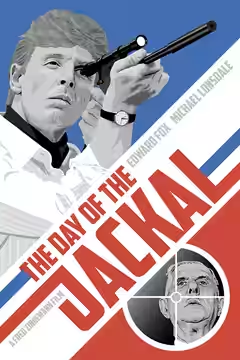
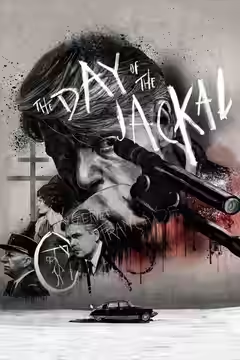
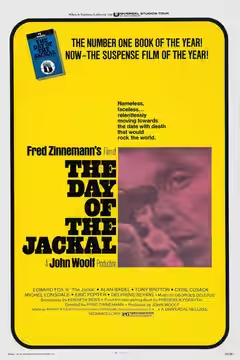
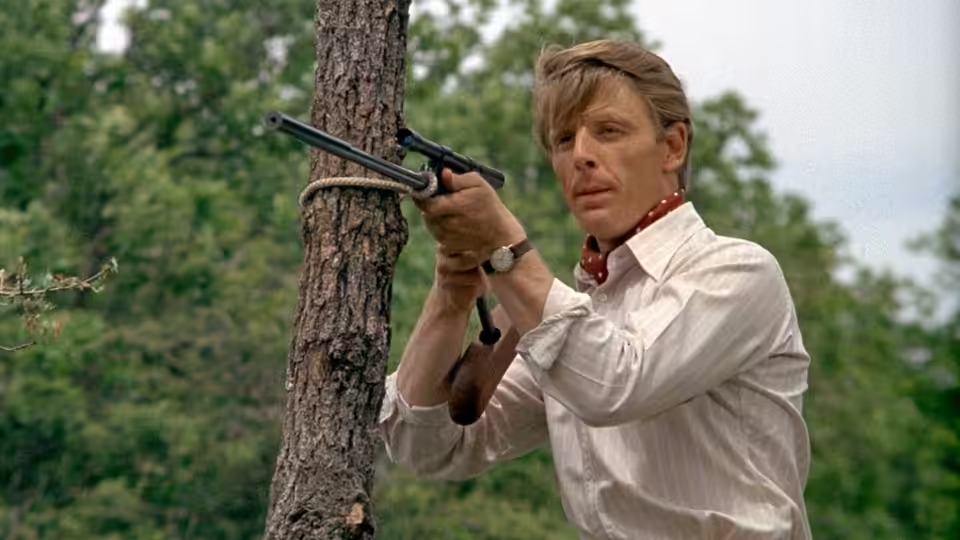
The Jackal (Edward Fox) holds a rifle beside a tree in the woods
Film review

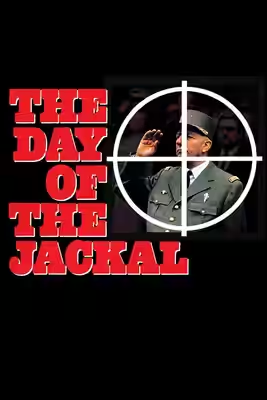
The Day of the Jackal

1973 · Directed by Fred Zinnemann · 2h 23m

In a sentenceWe became rather too interested in whether an assassin had organised his work properly

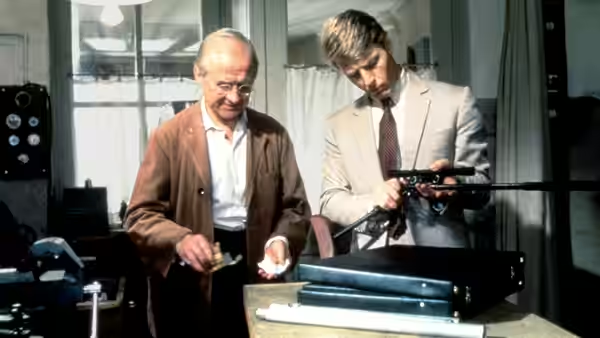
In France, The Jackal (Edward Fox) prepares to assassinate de Gaulle, keeping his identity concealed as his planning takes him across Europe. The preparations call for the expertise of a Gunsmith (Cyril Cusack). On the other side, Deputy Commissioner Claude Lebel (Michael Lonsdale) works within the French security effort trying to find and stop the assassin. The Jackal needs to complete the job without being identified. Lebel has a bureaucracy to contend with, as well as a man whose movements and identity are deliberately difficult to trace.

Fi1m review

Fred Zinnemann’s patient assassination thriller makes the work absorbing. Edward Fox is chillingly persuasive, and the procedural detail sustains the long pursuit, though the politics receive disappointingly little attention.

Fred Zinnemann’s The Day of the Jackal is a gripping procedural thriller that trusts us to take an interest in how people do their jobs. One of those jobs happens to be assassination. Kenneth Ross, adapting Frederick Forsyth’s novel, gives the practical demands of the attempt and the opposing investigation room to develop, although the politics receive less attention than they deserve. The patient approach earns its 143 minutes.

Edward Fox makes The Jackal unsettling through his lack of visible excitement. He treats the preparations as work requiring concentration, with little suggestion that political anger is driving him. We caught ourselves wanting those preparations to go smoothly, and felt uneasy about it. The performance encourages that response by making his competence easy to follow while giving us little emotional distraction. His reserve keeps our attention on whatever he needs to accomplish next.

The opposing investigation has its own pace, slowed by the French security bureaucracy. Michael Lonsdale gives Deputy Commissioner Claude Lebel a patient, unshowy presence that suits this work. He makes persistence watchable without asking us to applaud it. The contrast with the assassin’s independence generates pressure, so that the pursuit can tighten without either man becoming frantic. Each side has a task to get through, and the film makes us attend to both.

Jean Tournier’s cinematography gives the movement across Europe a matter-of-fact clarity that makes the concealment credible. The locations remain places where work has to be done, without the fuss that might announce a grand adventure. Ralph Kemplen’s editing is equally important: the alternation between preparation and pursuit lets us measure one side’s progress against the other’s. We need time to understand what has been accomplished before the next difficulty matters. The patient cutting supplies that time.

Georges Delerue’s music is effective in its restraint, leaving the procedural rhythm undisturbed. It allows the business on screen to hold our attention without continually insisting that something alarming is about to happen. As a thriller, the film puts considerable faith in our willingness to watch people prepare, wait and reconsider. The reward is a clear sense of mounting difficulty, in which a practical problem can demand our whole attention. There is little need to hurry the action once we understand what might go wrong.

The limitation is the treatment of politics. Kenneth Ross keeps the practical questions so prominent that the reasons for the assassination plot receive too little scrutiny; de Gaulle becomes chiefly the man around whom the job must be arranged. The supporting figures can feel similarly restricted to whatever assistance or obstruction they supply. This keeps the pursuit easy to follow, but it narrows the human interest, particularly beside the attention lavished on the assassin’s competence.

If the attraction of a thriller is seeing a difficult task carried out under pressure, this is an easy recommendation. It does ask for an evening’s concentration, and anyone looking for a close account of political extremism should look elsewhere. Nor does it offer much reassurance about our interest in the people doing the work. Give it your attention, but be prepared to question whose progress you are hoping to see.
Critical consensus AI synthesised

69
Positive
5
Mixed
1
Negative
1

Most critics regard The Day of the Jackal as a successful procedural thriller, with praise centred on Fred Zinnemann’s patient direction and Edward Fox’s controlled performance as the assassin. The reviews repeatedly note the attention to planning, investigation and practical detail, which gives the pursuit its steady momentum. Fox’s coldness is a particular strength for several critics, while the methodical pacing and documentary-like approach draw much of the admiration.

The spread is wide, however, ranging from strong enthusiasm to doubts about whether the premise can sustain suspense. Historical foreknowledge is a recurring concern, though several critics find the film absorbing despite it. Some describe its appeal as more intellectual than emotional. Time Out offers the clearest dissent, questioning its documentary conviction and political depth while acknowledging some tension in the contrast between the assassin’s adaptability and the security services’ bureaucracy.

Radio Times
★★★★★ · David Parkinson
100

A magnificent script and masterly central performance from Edward Fox underpin this compelling adaptation, but it is Zinnemann's matchless direction that elevates it into an object lesson in suspense. The superb pacing methodically builds detail across Europe with atmospheric precision and an outstanding supporting cast.

Read the full review →
Empire
1 January 2000 · Ian Nathan
90*

The film is an outstanding procedural thriller built with Swiss-watch precision around the cold planning of Edward Fox’s charismatic assassin and the diligent investigation opposing him. Zinnemann roots the audience for the Jackal while exposing the moral ambiguities and the documentary-like realism of its execution.

Read the full review →
Slant Magazine
1 October 2018 · Jake Cole
70*

The critic calls it a foundational text for modern thrillers whose precise, process-driven style prefigures films by Michael Mann and David Fincher. Edward Fox’s dead-eyed, emotionless portrayal of the assassin is singled out as influential, replacing political rage with nihilism.

Read the full review →
The New York Times
17 May 1973 · Vincent Canby
70*

Zinnemann's thoroughly competent film version is cool, sober and geographically stunning, playing the material straight where Hitchcock might have made it funny. The suspense depends on wondering how the assassin will fail, given historical foreknowledge.

Read the full review →
Variety
31 December 1972 · Variety Staff
70*

The film is a patient, studied and quasi-documentary translation of the novel that appeals more to the intellect than the senses. It succeeds in maintaining interest and suspense despite foreknowledge of the outcome, with strong work from Edward Fox as the meticulous assassin.

Read the full review →
The New Yorker
26 May 1973 · Penelope Gilliatt
50*

The review pairs the film with another release in a Current Cinema column. It covers Zinnemann's adaptation starring Edward Fox as the assassin.

Read the full review →

Straight answers AI written, from our review

Is The Day of the Jackal worth watching?
The Day of the Jackal is worth watching for anyone who enjoys seeing a difficult job carried out under pressure, and we scored it 84. Edward Fox's unexcited assassin and Michael Lonsdale's patient policeman keep a 143-minute pursuit absorbing. It asks for an evening's concentration and gives the politics behind the plot less attention than they deserve.
How long is The Day of the Jackal, and what is it rated?
The Day of the Jackal runs 2h 23m. It is an action and thriller film.
Where can I watch The Day of the Jackal in Brazil?
The Day of the Jackal is not on any streaming or rental service in Brazil at the moment. It is available in 23 other countries; change your country at the top of the page to see where. Availability is checked daily.
How violent or frightening is The Day of the Jackal, and is it suitable for children?
The Day of the Jackal carries a UK 15 certificate, so it is not for children, and its unsettling quality comes from watching an assassin prepare with calm competence rather than from graphic violence. Nothing in it is designed to frighten; the tension builds slowly through procedure. Older teenagers who can sit through a patient thriller should manage it comfortably.
How does The Day of the Jackal compare to High and Low?
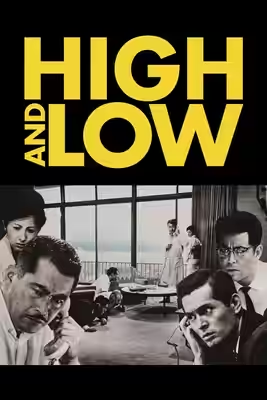
The Day of the Jackal and High and Low are both procedural thrillers that make painstaking investigation gripping, but Kurosawa's film keeps its social divisions in view while Zinnemann's largely sets the politics aside. We recommend both; High and Low is the richer in human interest, The Day of the Jackal the more single-minded in following a job. Choose Kurosawa for moral weight, Zinnemann for pure pursuit.
Is The Day of the Jackal based on a true story or a book?
The Day of the Jackal is adapted from Frederick Forsyth's novel, with a screenplay by Kenneth Ross. The plot to assassinate de Gaulle is invented, so this is not a true story, though the procedural detail is what makes it convincing. You need not have read the book; the film explains the work as it goes.
What should I watch after The Day of the Jackal?
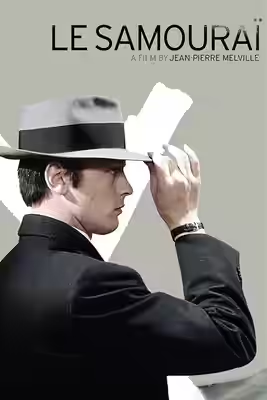
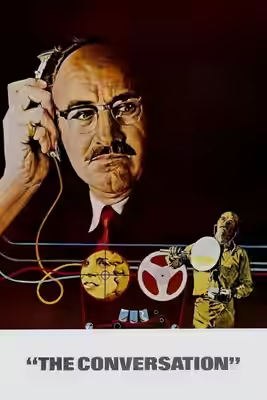
After The Day of the Jackal, try Le Samouraï (1967, Fi1m 88): A reserved assassin’s routines become absorbing under equally patient, less talkative direction. Then High and Low (1963, Fi1m 90): A painstaking police investigation makes procedural detail gripping and social divisions impossible to ignore; and The Conversation (1974, Fi1m 92): Another meticulous professional finds technical skill insufficient when questions of conscience intrude.

Cast

Awards

Academy Awards, 1974

Nominated
Best Film Editing

If you liked this, try…

  1. Le Samouraï (1967, Fi1m 88)A reserved assassin’s routines become absorbing under equally patient, less talkative direction.

  2. High and Low (1963, Fi1m 90)A painstaking police investigation makes procedural detail gripping and social divisions impossible to ignore.

  3. The Conversation (1974, Fi1m 92)Another meticulous professional finds technical skill insufficient when questions of conscience intrude.

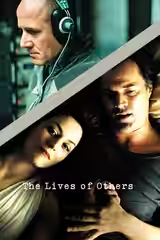
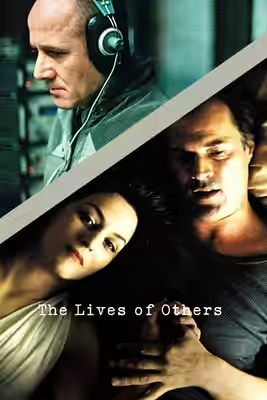
  4. The Lives of Others (2006, Fi1m 84)Patient surveillance work receives the political scrutiny and human attention missing here.

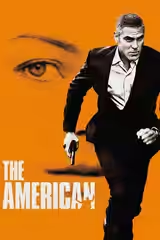
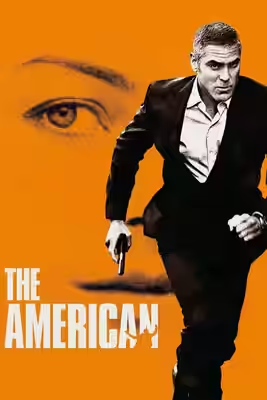
  5. The American (2010) · not reviewed yetAnother reserved professional, with the practicalities of weapons doing much of the talking.

Free account

Know what to watch tonight

Two lists that know where things are streaming, collections you can share, your own score beside ours, and Discover that remembers what you have seen.

  • Want to see, sorted by what is streaming now
  • Seen, with your score out of ten
  • No adverts, ever