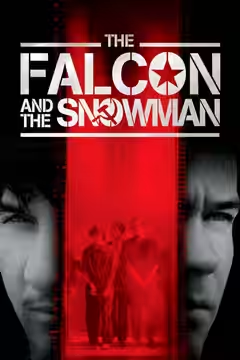
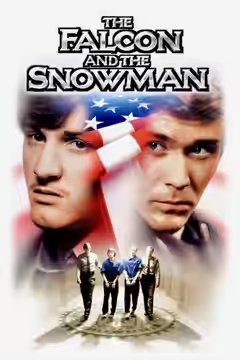
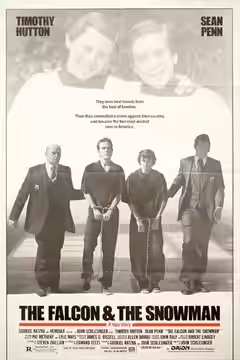
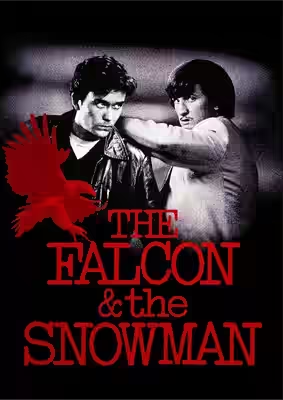
The Falcon and the Snowman holds our attention through Timothy Hutton, but leaves too much of its betrayal unexplained. John Schlesinger supplies tension without making the central relationship convincing enough to sustain it.
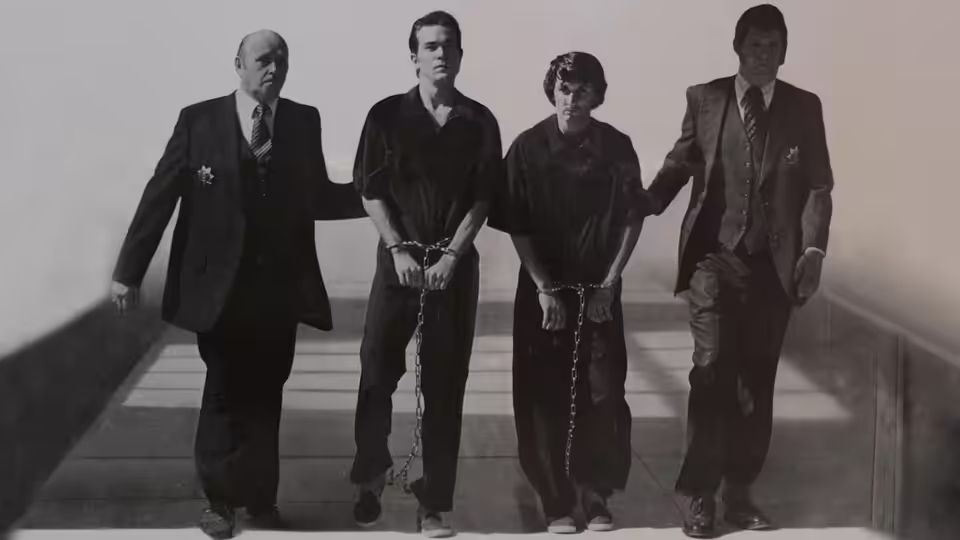
Timothy Hutton keeps The Falcon and the Snowman watchable, but the film never makes its central betrayal convincing enough. John Schlesinger approaches espionage by asking what sort of people commit it, which gives the thriller a promising starting point. The difficulty is that Christopher Boyce and Daulton Lee remain hard to understand in ways that frustrate rather than intrigue. At 132 minutes, the film gives us ample time to wonder why they are doing this, without providing a persuasive account of why they need each other.
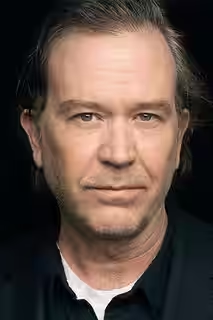
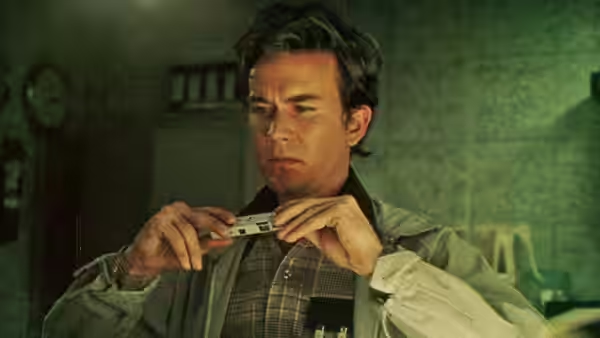
Timothy Hutton supplies the strongest reason to stay with it. We were absorbed by his early scenes, because he gives Christopher Boyce enough intelligence and restlessness to make his decisions worth examining. Steven Zaillian’s screenplay leaves too much of that work to the actor, but the performance keeps suggesting that there is a person here whose behaviour might become intelligible. We keep watching for an explanation that the writing never quite provides.
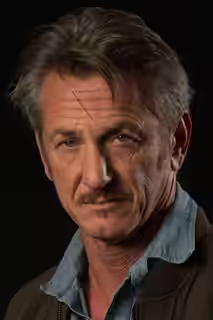
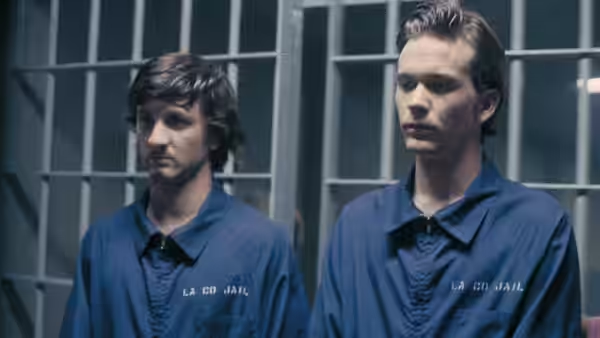
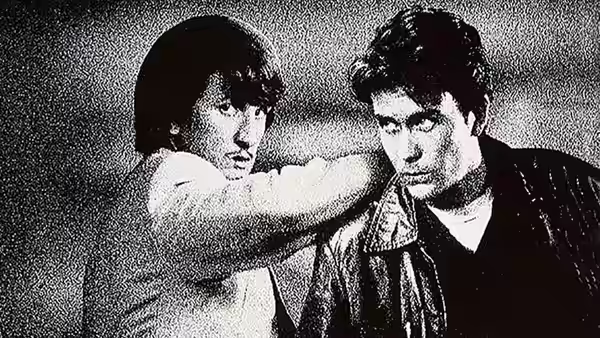
Sean Penn’s Daulton Lee is less persuasive. There is force in the performance, but it keeps drawing attention to how much acting is being done. He gives the film an unsettled presence without making the connection to Christopher Boyce much easier to grasp. The two parts need to feel as though they belong in the same relationship, and too often we are left considering the performances separately.
Allen Daviau’s cinematography helps the espionage hold our attention even when the motives remain obscure. John Schlesinger can make the prospect of danger absorbing on an immediate level, and those passages offer some relief from the uncertain characterisation. James D. Bissell’s production design gives the actors surroundings we accept without being asked to admire them. The visual assurance helps us take the story seriously, although it also encourages expectations of the writing that the film struggles to meet.
Richard Marden’s editing cannot quite settle the film into a satisfying rhythm. There are stretches that grip, followed by passages in which we begin reconsidering questions the screenplay should already have answered. The music by Lyle Mays and Pat Metheny does useful work sustaining the unease. It helps the film retain some tension when the sequence of events starts to feel dramatically untidy.
Steven Zaillian gives the politics weight, but the emphasis can feel like an instruction to take the subject seriously before the drama has earned that response. An espionage thriller can leave the wider political machinery obscure and still satisfy us if we understand the immediate attraction of a dangerous choice. Here, too much remains unclear at the level of the two men. We needed the political material to tell us more about Christopher Boyce.
A true story does not need to make its participants likeable, and we do not require these men to offer a defence of themselves. We do need enough understanding to find their company rewarding for this long. Admirers of Timothy Hutton have a reason to be curious; for a satisfying evening of espionage, we would look elsewhere.