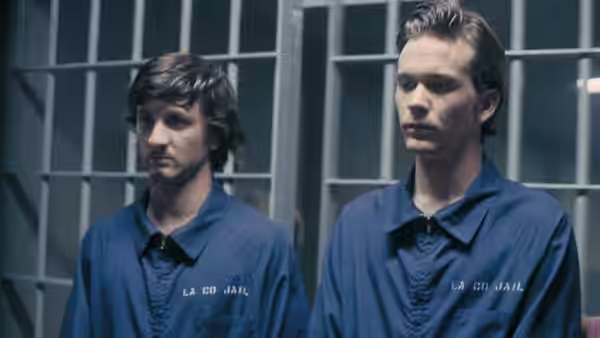
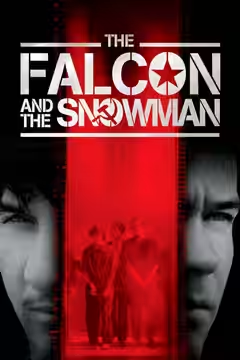
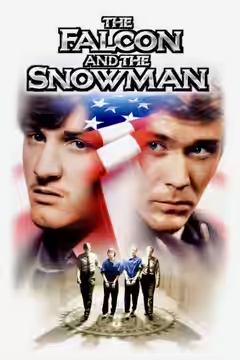
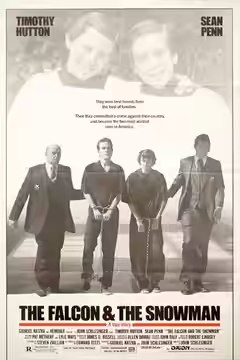
Two handcuffed young men walk between suited escorts along a walkway
Film review

The Falcon and the Snowman

1985 · Directed by John Schlesinger · 2h 12m

In a sentenceTwo spies, plenty of acting, and nobody quite explaining themselves

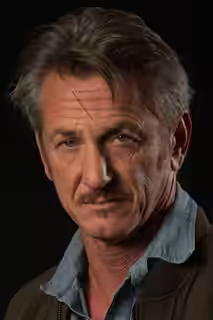
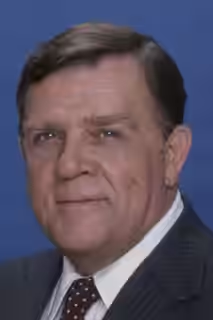
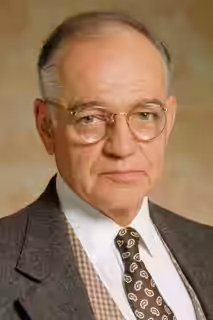
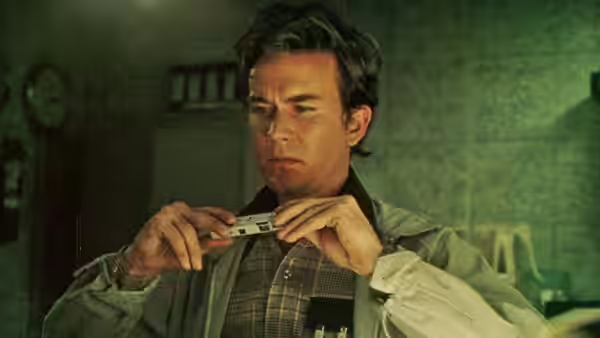
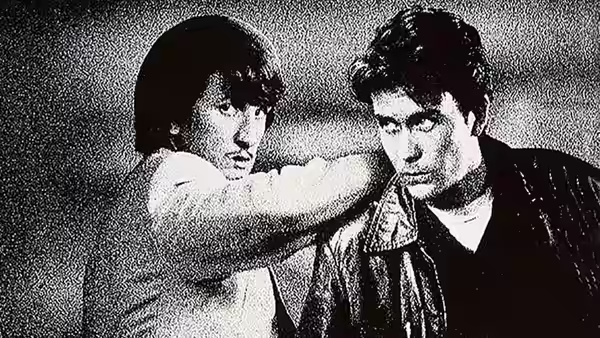
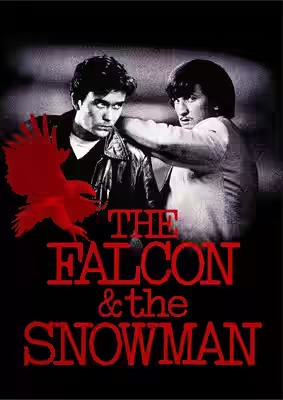
Christopher Boyce (Timothy Hutton) and Daulton Lee (Sean Penn) become involved in espionage. Boyce betrays his country, and the reasons for his decision are bound up with the story of the two men’s relationship. Their story also involves Mr. Charlie Boyce (Pat Hingle), Mrs. Boyce (Joyce Van Patten), Dr. Lee (Richard Dysart) and Mrs. Lee (Priscilla Pointer). This dramatisation of a true story follows the spies while considering the personal motives and political questions surrounding their crime.

Fi1m review

The Falcon and the Snowman holds our attention through Timothy Hutton, but leaves too much of its betrayal unexplained. John Schlesinger supplies tension without making the central relationship convincing enough to sustain it.

Timothy Hutton keeps The Falcon and the Snowman watchable, but the film never makes its central betrayal convincing enough. John Schlesinger approaches espionage by asking what sort of people commit it, which gives the thriller a promising starting point. The difficulty is that Christopher Boyce and Daulton Lee remain hard to understand in ways that frustrate rather than intrigue. At 132 minutes, the film gives us ample time to wonder why they are doing this, without providing a persuasive account of why they need each other.

Timothy Hutton supplies the strongest reason to stay with it. We were absorbed by his early scenes, because he gives Christopher Boyce enough intelligence and restlessness to make his decisions worth examining. Steven Zaillian’s screenplay leaves too much of that work to the actor, but the performance keeps suggesting that there is a person here whose behaviour might become intelligible. We keep watching for an explanation that the writing never quite provides.

Sean Penn’s Daulton Lee is less persuasive. There is force in the performance, but it keeps drawing attention to how much acting is being done. He gives the film an unsettled presence without making the connection to Christopher Boyce much easier to grasp. The two parts need to feel as though they belong in the same relationship, and too often we are left considering the performances separately.

Allen Daviau’s cinematography helps the espionage hold our attention even when the motives remain obscure. John Schlesinger can make the prospect of danger absorbing on an immediate level, and those passages offer some relief from the uncertain characterisation. James D. Bissell’s production design gives the actors surroundings we accept without being asked to admire them. The visual assurance helps us take the story seriously, although it also encourages expectations of the writing that the film struggles to meet.

Richard Marden’s editing cannot quite settle the film into a satisfying rhythm. There are stretches that grip, followed by passages in which we begin reconsidering questions the screenplay should already have answered. The music by Lyle Mays and Pat Metheny does useful work sustaining the unease. It helps the film retain some tension when the sequence of events starts to feel dramatically untidy.

Steven Zaillian gives the politics weight, but the emphasis can feel like an instruction to take the subject seriously before the drama has earned that response. An espionage thriller can leave the wider political machinery obscure and still satisfy us if we understand the immediate attraction of a dangerous choice. Here, too much remains unclear at the level of the two men. We needed the political material to tell us more about Christopher Boyce.

A true story does not need to make its participants likeable, and we do not require these men to offer a defence of themselves. We do need enough understanding to find their company rewarding for this long. Admirers of Timothy Hutton have a reason to be curious; for a satisfying evening of espionage, we would look elsewhere.

Critical consensus AI synthesised

49
Positive
0
Mixed
4
Negative
2

The reviews lean mixed to negative, with praise concentrated on the performances and the thriller’s grip rather than its account of political betrayal. Radio Times finds it gripping and admires Schlesinger’s visual flair, despite heavy-handed political themes. Variety regards the motives as difficult to fathom but finds Timothy Hutton and Sean Penn compelling enough to sustain interest. Two of the six reviews have no accessible verdict, limiting what can be said about agreement across the full group.

The sharpest divide concerns whether the acting compensates for the unclear motives and uneven storytelling. The New Yorker praises Hutton’s early slyness and energy but strongly dislikes Penn’s performance, finding the central relationship unconvincing. The Los Angeles Times is similarly negative, faulting the confused storytelling and lack of anyone to care about. The available assessments range from qualified approval to firm rejection; none offers an unreserved recommendation.

The New York Times
25 January 1985 · Janet Maslin
64*

The page is inaccessible, so the critic’s verdict and any specific praise or complaint cannot be established. The available page text does not provide enough information to summarize the review’s assessment.

Read the full review →
Time Out
· CPea
64*

The page is identified as a film review, but its verdict is unavailable. The accessible metadata gives a synopsis, with no praise or complaint from the critic to report.

Read the full review →
Radio Times
★★★ · Adrian Turner
60

Turner finds the spy thriller undeniably gripping, though its treatment of political themes can feel heavy-handed. He singles out Schlesinger’s visual flair for praise.

Read the full review →
Variety
31 December 1984 · Variety Staff
55*

The review finds the true story’s motives difficult to fathom, though the film remains compelling through its performances. It particularly praises Timothy Hutton and Sean Penn, calling them superb in their roles.

Read the full review →
Los Angeles Times
25 January 1985 · Sheila Benson
25*

Benson finds the film sour, confusing, and unable to explain why Boyce betrays his country. She criticizes its unsmooth storytelling and says its characters leave viewers with no one to care about.

Read the full review →
The New Yorker
3 February 1985 · Pauline Kael
25*

Kael finds the film dramatically muddled and detached, arguing that it fails to make the spies’ motives or relationship compelling. She praises Timothy Hutton’s sly, energetic performance early on, while sharply criticizing Sean Penn’s portrayal of Lee.

Read the full review →

Straight answers AI written, from our review

Is The Falcon and the Snowman worth watching?
The Falcon and the Snowman is watchable for Timothy Hutton, but we find it too unconvincing as a character-led espionage thriller to recommend broadly; we score it 54/100. Hutton’s intelligence and restlessness sustain interest, and there are tense passages, but the two spies’ motives and their dependence on each other remain frustratingly unclear.
How long is The Falcon and the Snowman, and what is it rated?
The Falcon and the Snowman runs 2h 12m. It is a thriller and drama film.
Where can I watch The Falcon and the Snowman in Iceland?
The Falcon and the Snowman is not on any streaming or rental service in Iceland at the moment. It is available in 47 other countries; change your country at the top of the page to see where. Availability is checked daily.
How violent or frightening is The Falcon and the Snowman, and is it suitable for children?
The Falcon and the Snowman carries a US R certificate, so we would not treat it as suitable viewing for children. That rating signals adult material, while the espionage story sustains tension through danger and unease; we cannot give a more specific warning about violence or frightening content from the information available.
How does The Falcon and the Snowman compare to The Conversation?
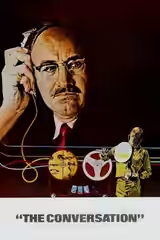
The Falcon and the Snowman is the less satisfying character-led thriller beside The Conversation, which we recommend for its gripping suspense and more persuasive attention to loneliness. Both connect secretive activity with personal troubles, but Coppola makes repeated listening compelling, while Schlesinger leaves the relationship between his two spies insufficiently explained.
Is The Falcon and the Snowman based on a true story or a book?
The Falcon and the Snowman dramatises the true story of Christopher Boyce and Daulton Lee and is based on Robert Lindsey’s novel. We cannot assess its fidelity to the book from the material supplied; our reservation concerns the film itself, which leaves the men’s motives and relationship too unclear.
What should I watch after The Falcon and the Snowman?
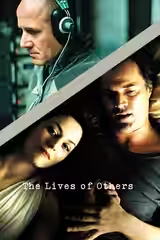
After The Falcon and the Snowman, try The Conversation (1974, Fi1m 92): Surveillance becomes a private obsession, with patient attention to the man listening. Then The Lives of Others (2006, Fi1m 84): Political surveillance acquires the personal consequences that make the spying matter.

Cast

If you liked this, try…

  1. The Spy Who Came in from the Cold (1965) · not reviewed yetA colder, clearer look at what espionage does to loyalty.

  2. The Conversation (1974, Fi1m 92)Surveillance becomes a private obsession, with patient attention to the man listening.

  3. The Lives of Others (2006, Fi1m 84)Political surveillance acquires the personal consequences that make the spying matter.

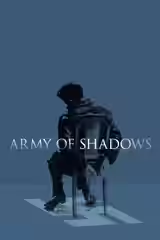
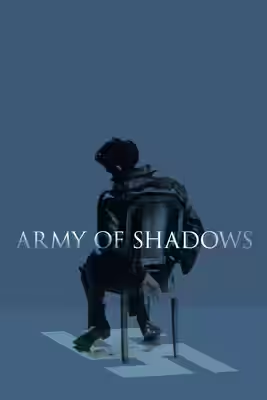
  4. Army of Shadows (1969) · not reviewed yetSecrecy makes every friendship dangerous in this patient French resistance drama.

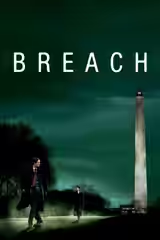
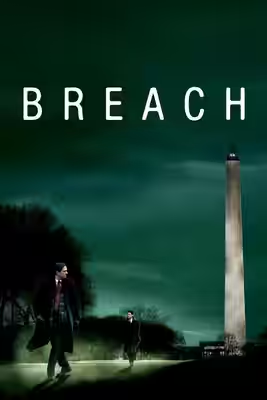
  5. Breach (2007) · not reviewed yetAnother betrayal story, more firmly interested in the practical business of mistrust.

Free account

Know what to watch tonight

Two lists that know where things are streaming, collections you can share, your own score beside ours, and Discover that remembers what you have seen.

  • Want to see, sorted by what is streaming now
  • Seen, with your score out of ten
  • No adverts, ever
The Falcon and the Snowman (1985) review: Good acting cannot explain t (Iceland) | Fi1m