Vittorio De Sica makes an affecting drama about people who mistake social standing for safety. The images and performances hold us, though the writing is less convincing about why these people cannot act.
The Garden of the Finzi-Continis is a good, troubling drama whose people are slow to understand how little their position will protect them. Vittorio De Sica takes their attachment to a comfortable life seriously, allowing us to understand their reluctance to acknowledge danger. That sympathy matters: we are not being invited to congratulate ourselves on knowing better. Yet the film sometimes leaves us waiting for an understanding of these people that its careful attention has led us to expect.
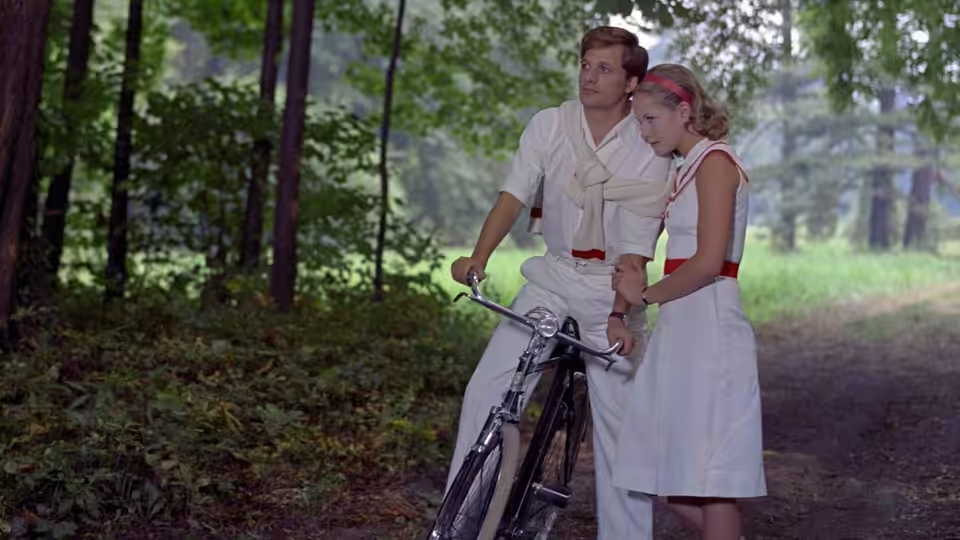
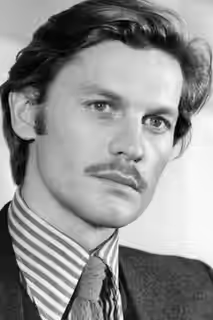
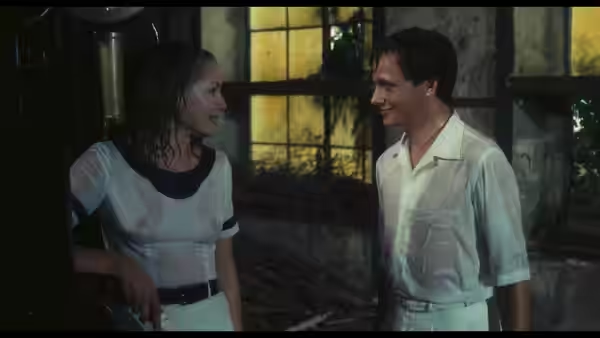
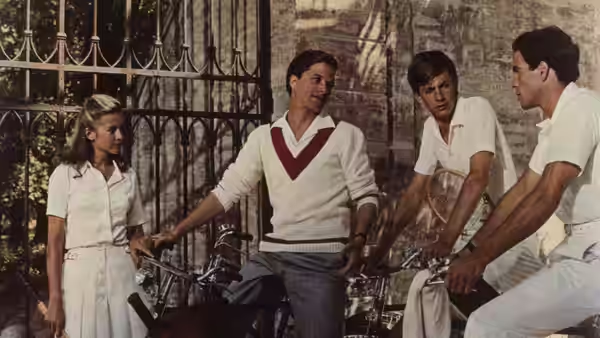
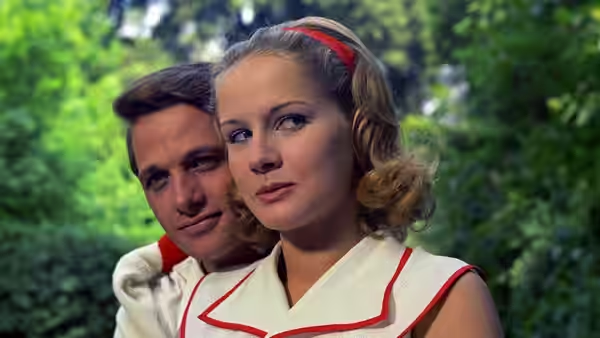
Dominique Sanda’s Micól gives the film much of its fascination. Her composure does not make her easy to read, and the distance she maintains can be attractive and frustrating within the same scene. Lino Capolicchio’s Giorgio gives us a more immediate point of entry, while Helmut Berger’s Alberto belongs convincingly to this protected company. The performances suit the restraint of the telling, although their remoteness sometimes makes it difficult to distinguish what the characters conceal from what the screenplay has left unwritten.
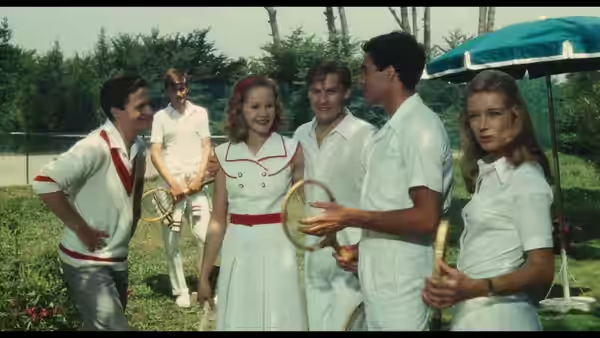
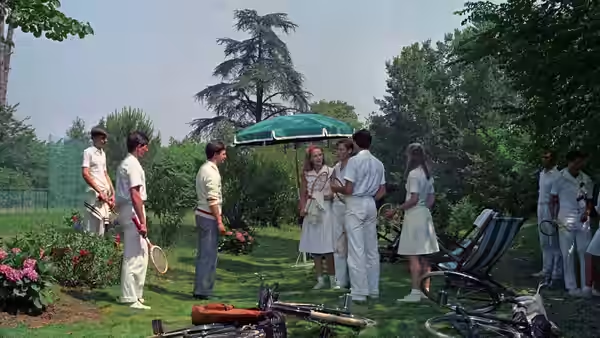
Ennio Guarnieri’s cinematography gives us something firmer to follow. The change from warm images to harder ones is the film’s most persuasive account of what is happening to these lives. We were moved by that loss of visual comfort: the growing harshness makes their exposure to persecution felt without requiring an explanatory speech. The photography earns a response that the more guarded performances sometimes struggle to invite.
Giancarlo Bartolini Salimbeni’s production and costume design make the characters’ attachment to their circumstances credible. The comfort is persuasive enough that we understand why its occupants might confuse being well provided for with being secure. Manuel De Sica’s music contributes to the sadness without making the people easier to understand. We found the changing appearance of their world more affecting than the musical encouragement to feel for them.
The screenplay by Vittorio Bonicelli and Ugo Pirro, from Giorgio Bassani’s novel, is certain about the failure of privilege but less curious about the people who rely on it. Showing characters unable to respond adequately to persecution is reasonable; leaving that inability so sparsely examined is frustrating. Some of the symbolism also presses a point we have already understood, making the writing seem less patient than the direction. We wanted another revealing exchange, another small inconsistency in someone’s behaviour, rather than further confirmation that money offers no guarantee of safety.
Adriana Novelli’s editing keeps the measured pace from becoming a trial, and the film remains absorbing despite those omissions. At 95 minutes, it does not ask length to do the work of seriousness. Historical dramas often struggle to make private concerns feel important beside public danger, and Vittorio De Sica handles that difficulty well by taking his characters’ confusion seriously. We remain interested in them even when we wish the screenplay would enquire a little further.
There is a worthwhile evening here for anyone willing to spend time with people who do not fully understand themselves. The beauty helps draw us towards them, and we do not think the film is wrong to let that attraction work. Watch it for the performances and photography, accepting that some questions about the people will remain unanswered.