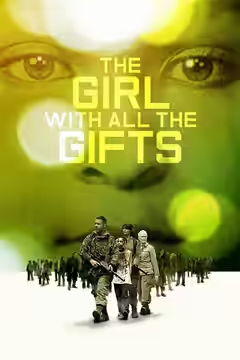
Colm McCarthy’s zombie film finds a new angle on an exhausted genre: tell it from the monster’s side, and give the monster a conscience. Sennia Nanua and Glenn Close make it worth your evening; the long middle on the road does not.
Colm McCarthy’s film, written by Mike Carey from his own novel, takes the most worn-out setup in horror and turns it round, so that we are looking out from inside the monster. Melanie (Sennia Nanua) is one of a classroom of infected children who still think, talk and say thank you. The adults cannot agree whether she is a girl or a weapon, and the film’s plain, good idea is that she is both. It holds that idea steady for most of its 111 minutes; where it wobbles is in the middle, when everyone is walking.
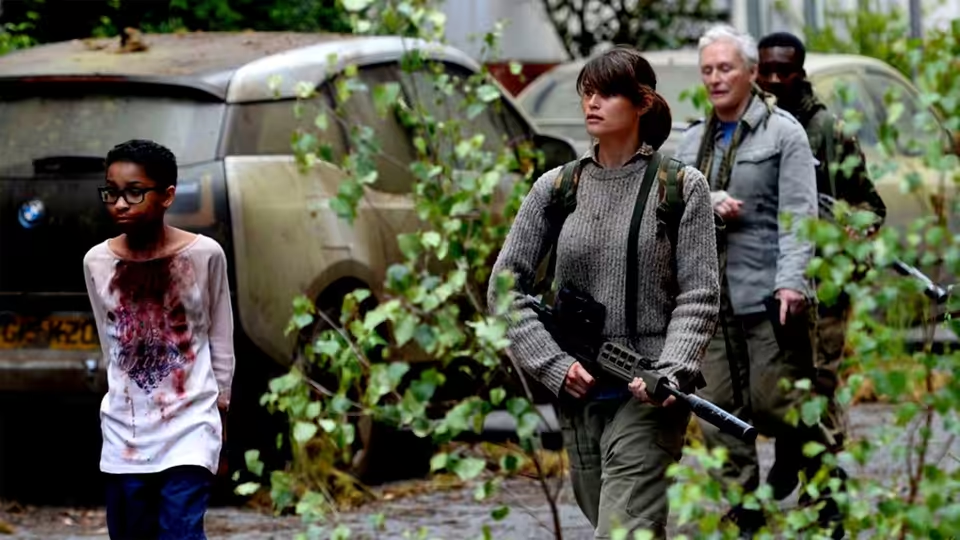
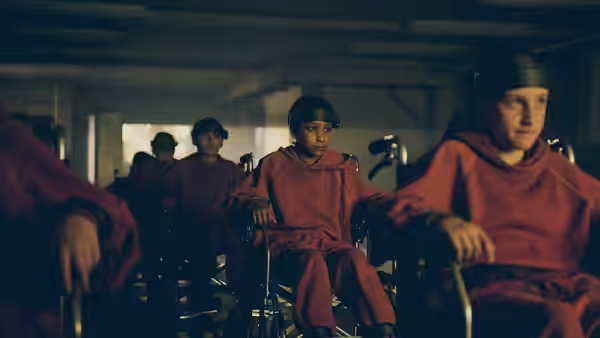
The first half hour is the best of it. Kristian Milsted’s base is bare concrete, strip lights and cell doors, and Simon Dennis lights it so that every face comes out slightly grey. Each morning two soldiers strap Melanie into a wheelchair at gunpoint, and she thanks them. In the classroom Helen Justineau (Gemma Arterton) reads the children Greek myths, and Melanie’s face when the story reaches Pandora tells you what the film is about: a child in love with a tale about a girl who opens the box. Then Sergeant Eddie Parks (Paddy Considine) walks in, bares his forearm, holds it near the front row, and the children’s jaws begin to snap.
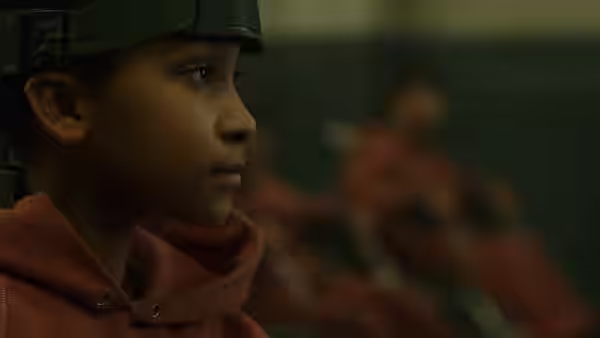
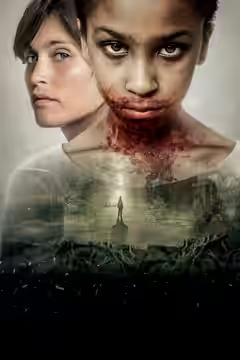
We were horrified by that, and then ashamed of being horrified at a child, which is exactly what McCarthy wants. Nanua is why it works. She plays Melanie’s politeness as real rather than as a mask; she wants to be good and does not understand why the soldiers fear her, and when the hunger comes her eyes go flat and her whole body changes. Afterwards she apologises. It is a performance without a false note from a newcomer, and the film puts its whole weight on her and she carries it.
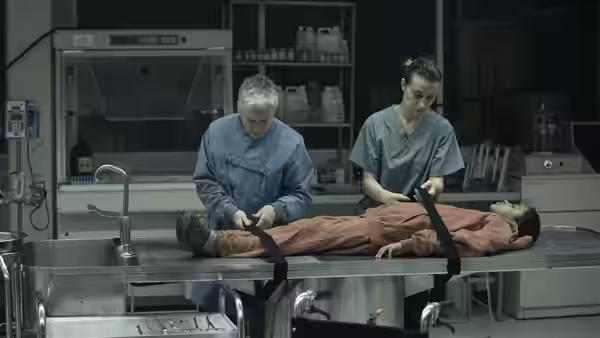
Glenn Close plays Dr Caroline Caldwell as a scientist who has done the sum and found it simple: one child’s brain against a vaccine for whoever is left. She never raises her voice and never says sorry, and Close gives her a dry, tired intelligence that makes her the most reasonable person on screen and the most frightening. When the fence comes down, Matthew Cannings cuts the escape fast and close, so that we are as lost as the soldiers, and the film ends up with a teacher, a sergeant, a scientist, a young soldier (Fisayo Akinade’s Kieran Gallagher) and a muzzled girl in one vehicle, heading for London.
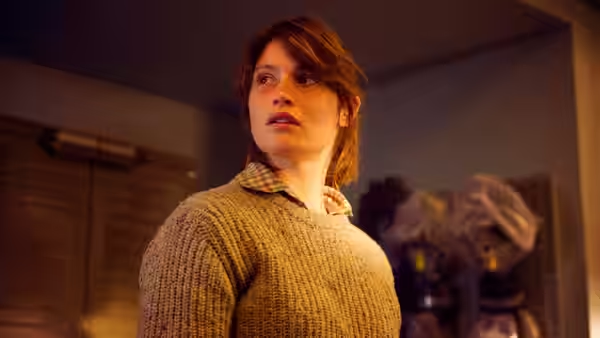
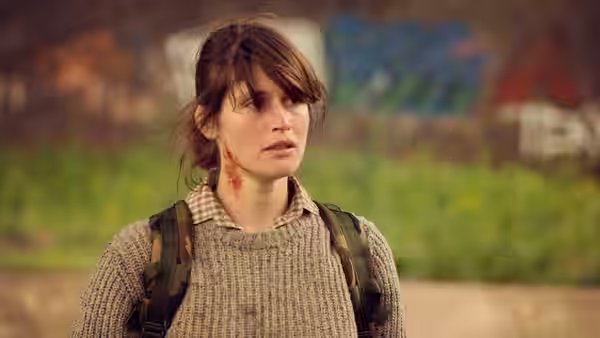
That is where it slows. The road section is a familiar one: a dead town, a hospital, a stop for supplies, an argument about whether to shoot the girl. Carey’s script gives Parks a thaw we can see coming from his first scene, and Considine does it well but cannot make it surprise us. Arterton’s Justineau is kind and that is nearly all she is given; the film needs her to be Melanie’s conscience and never asks what else she might want. Around the hour mark we drifted, and the film took a while to notice.
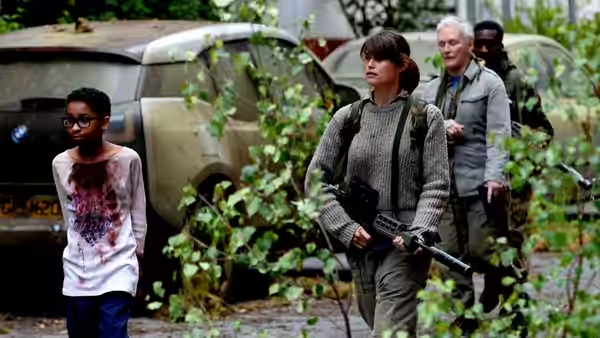
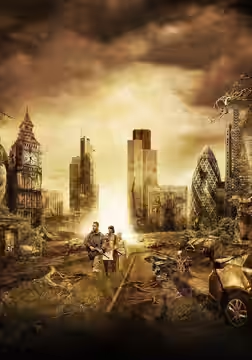
What pulls us back is the world. McCarthy’s hungries do not shamble; they stand where they stopped, in doorways and on the pavement, twitching, until a noise or a smell wakes them, and the scene in which the party tiptoes through a crowd of them is the film’s best scare. Dennis shoots the city in flat grey daylight with grass through the tarmac, and Milsted has built something in the middle of London that we will leave you to find. Cristóbal Tapia de Veer’s score is treated voices, breaths and chirrups, as if the infection itself were humming; some critics have found it repetitive, and we found it the thing that kept the walking from being dull.
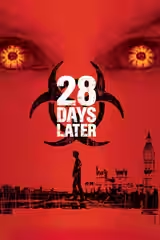
28 Days Later (2002) emptied London and made the infected run. McCarthy’s dead stand still in the streets, and that turns out to be worse. Carey’s smartest decision is to let three adults answer the question of what Melanie is for in three different ways, and to make none of them wholly wrong. The last stretch takes a turn we will not describe, and it is where the idea finally pays off.
See it for Nanua and Close, and for that first half hour, which is as good a stretch of British horror as we have seen in some time. Watch it at home with the lights off; the base loses nothing on a small screen, and a street full of standing dead is better when you can hear yourself breathe. It carries a 15, and earns it in the classroom before anyone has died.