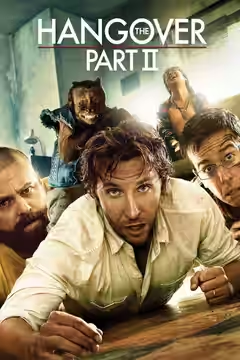
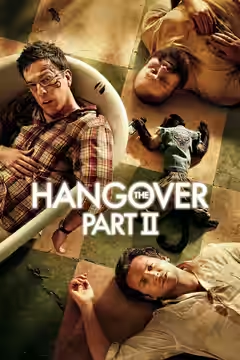
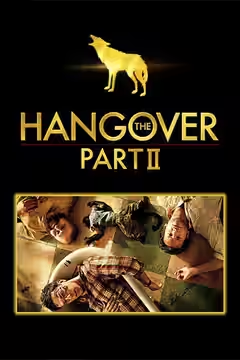
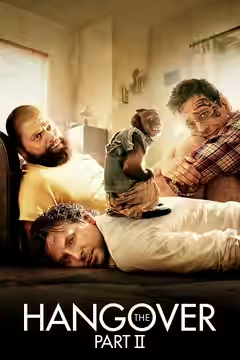
Todd Phillips has remade his own film scene for scene, swapped Las Vegas for Bangkok and turned the malice up. Galifianakis and a well-shot city keep it watchable; nothing in it surprised us, and a fair amount of it made us wince.
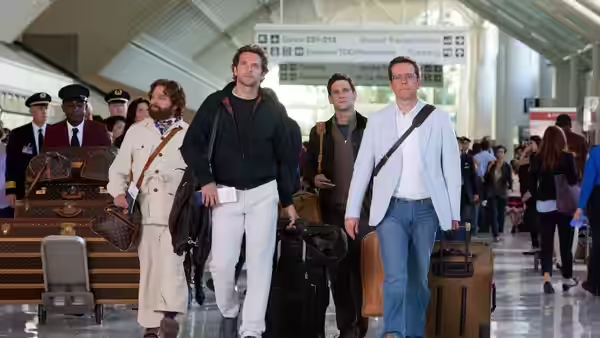
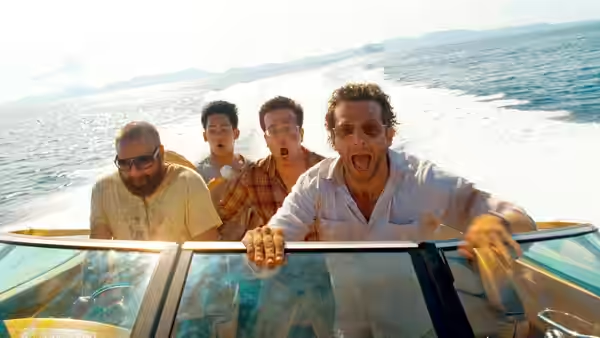
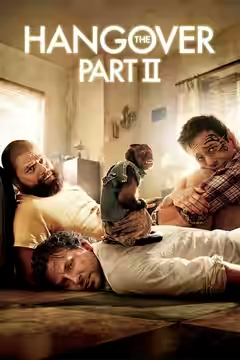
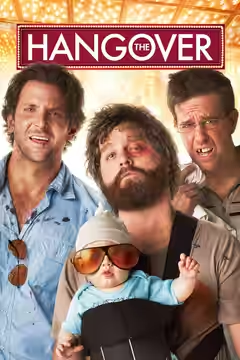
Todd Phillips’s The Hangover was a mystery in the shape of a comedy. Three men wake up, a fourth is missing, and the laughs come from working out what they did. The Hangover Part II is the same mystery again, in Bangkok. Stu Price (Ed Helms) is getting married in Thailand, Alan Garner (Zach Galifianakis) has been invited against everyone’s better judgement, and the bride’s sixteen-year-old brother Teddy (Mason Lee) vanishes after one beer on the beach. Phillips, Scot Armstrong and Craig Mazin have written it beat for beat: the wake-up, the animal in the hotel, the missing body part, the photographs at the end. It is the first film done again.
Galifianakis is the reason it is watchable. He plays Alan as a large child who has picked up some dangerous words, and the film’s best stretches are the camera simply left on him: the way he unpacks at the resort, the way he introduces himself at the bonfire, the way he treats Teddy as a rival for Phil’s attention. There is a real meanness under it this time, and Galifianakis lets it show without asking to be liked for it. We laughed twice in 102 minutes, and both times it was him.
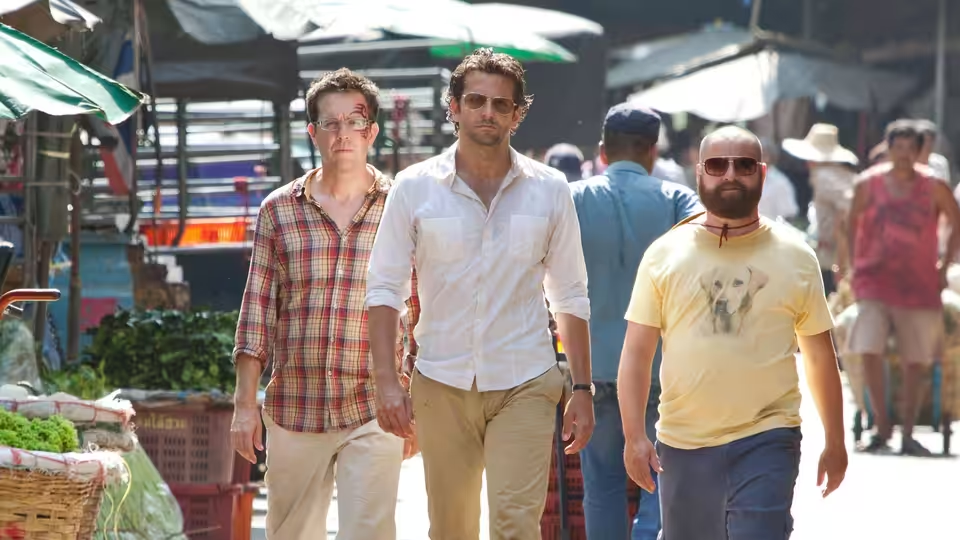
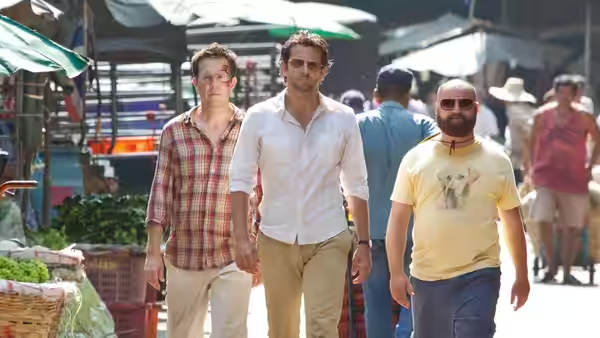
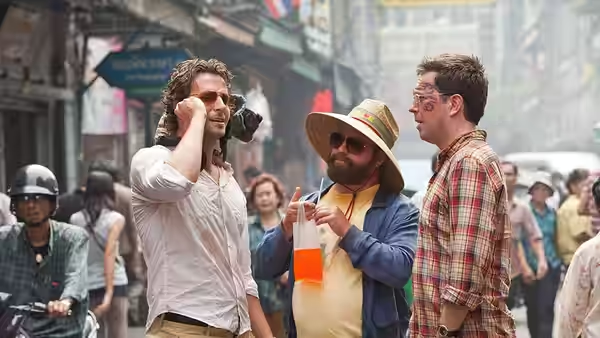
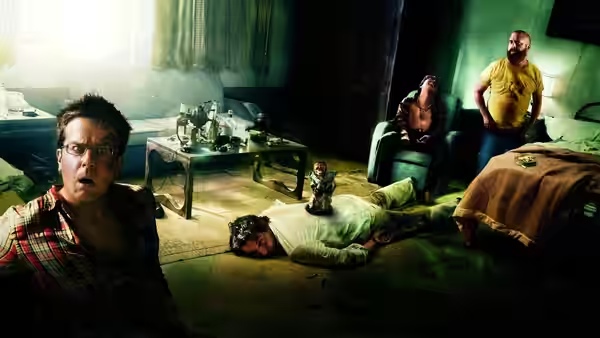
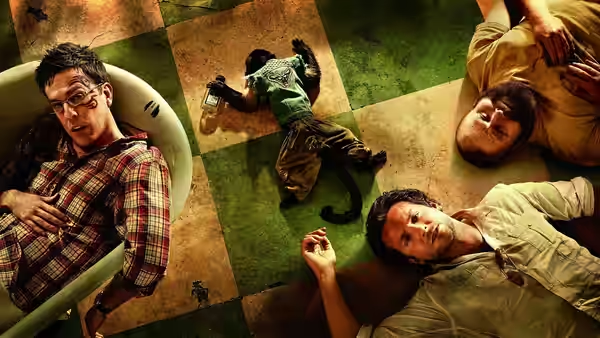
The city is the other thing the film has. Lawrence Sher shoots Bangkok at night in sodium orange and neon, with the camera down at street level among the tuk-tuks and the food carts, and the hotel room the men wake in is a real achievement of squalor by Bill Brzeski: brown water, a dead ceiling fan, a monkey on the wardrobe. Christophe Beck scores it with low, thudding menace rather than comedy cues, which is the right call. Louise Mingenbach keeps the three of them in the same crumpled cotton throughout, so that by the last act they look like they smell.
The trouble is that the structure was the joke. In 2009 we did not know there would be a tiger in the bathroom, or a baby in the cupboard, or where Doug (Justin Bartha) had gone, and the pleasure was in the drip of clues. Here we know what kind of thing has happened before the lights are off, and the script confirms it item by item. Debra Neil-Fisher and Michael L. Sale cut the wake-up at the same rhythm as the first film’s, and we found ourselves saying the next reveal a beat before it arrived. By the halfway point we had stopped waiting to be surprised and started keeping a tally.
It is also a nastier film, and the nastiness buys nothing. The first film’s humiliations were things the men did to themselves. This one hands most of them out to the city and its people, and a run of gags about Bangkok’s sex trade lands with a sourness we had not expected and did not enjoy. We laughed at one of them, then felt grubby about it, and the film did not seem to notice the difference. Ken Jeong’s Mr. Chow, a shock in small doses last time, is given a full part and becomes a shout. Paul Giamatti arrives as a gangster called Kingsley and gets one good scene of bored menace before the plot moves on without him. Bradley Cooper does what he did before, ably. Helms is left to carry the film’s few moments of feeling, and does, and the script hurries him off them.
Phillips used to be better at this. Old School and the first Hangover had a looseness that let performers wander off the page. Here every scene has a job and does it. Jon Lucas and Scott Moore, who wrote the first film, are credited for the characters and nothing more, and the difference shows: the new script knows what these men are and has them do the same thing again.
If you loved the first film and want to see it with the colours changed, this will fill an evening, and there are worse ways to spend 102 minutes. The 15 certificate is stretched thin. Most critics landed close to where we have, and we understand the ones who went lower; we laughed a couple of times more than they did, and we are not proud of when.