Francis Lawrence makes The Hunger Games: Catching Fire a forceful adventure about political control, with Jennifer Lawrence giving the danger a human cost. The familiar preliminaries run long, but the performances make this a sequel worth staying with.
The Hunger Games: Catching Fire makes its political threats matter as much as its combat. Francis Lawrence makes the struggle over Katniss Everdeen’s public image feel dangerous, and gives Jennifer Lawrence space to show what that attention costs her. We recommend it, with a reservation about how long it spends preparing familiar ground. At 146 minutes, some of the preliminaries could go without making either the politics or the relationships harder to follow.
Jennifer Lawrence is the reason we care about those relationships. Her Katniss is angry, vulnerable and sometimes difficult to read, and the performance lets those qualities remain tangled together. We felt protective of her when the film made her private feelings part of the public entertainment; her anger plainly offered her no escape. The early District 12 passages are particularly effective because Lawrence makes the pressure on Katniss felt before the action has to demonstrate it.
Simon Beaufoy and Michael Arndt’s screenplay makes the love triangle useful by placing it inside a story about social control. Peeta Mellark, played by Josh Hutcherson, and Gale Hawthorne, played by Liam Hemsworth, belong to a private life that cannot stay private. There are stretches when the emotional complications feel rehearsed for our benefit, and the return to familiar business slows the film. Even then, Katniss’s difficulty in separating what she feels from what she must present gives the romance a reason to occupy so much space.
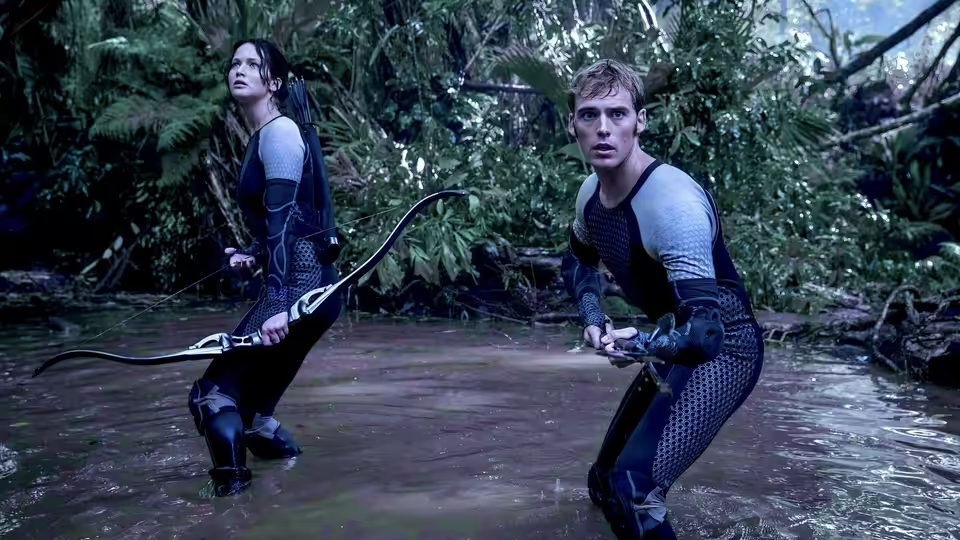
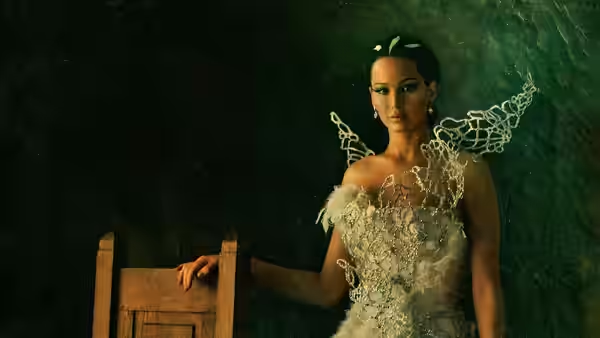
The physical world helps. Philip Messina’s production design gives District 12 a solidity that the broader science fiction needs, while Trish Summerville’s elaborate costumes make extravagant display part of the exercise of power. Jo Willems gives the tropical arena enough visual clarity for the action to have weight: we can follow the danger instead of merely registering commotion. The clothes and the combat belong in the same film because both show how thoroughly this society has organised itself around spectacle.
Francis Lawrence is less successful at making the build-up feel fresh. Alan Edward Bell’s editing keeps the action legible, but the passages leading towards it repeat tensions that the performances have already established. James Newton Howard’s music supplies plenty of urgency, although its emphatic support for the melodrama can feel unnecessary when Jennifer Lawrence is already doing the work. None of this sinks the film, though it does mean the route back to the games feels longer than it needs to.
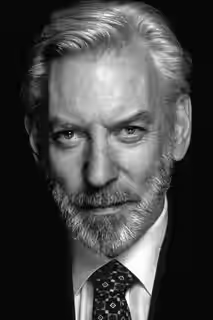
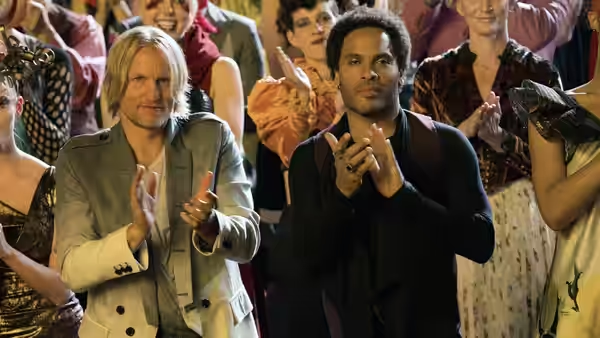
The supporting cast helps the political scenes hold our attention. Philip Seymour Hoffman, as Plutarch Heavensbee, brings a watchful intelligence to material that could otherwise feel occupied with arranging the next stretch of plot. Donald Sutherland’s President Coriolanus Snow gives the authority above Katniss a recognisable human presence, keeping the threat personal. These are valuable performances in an adventure that wants us to think about who arranges the violence and who benefits from watching it.
For a science-fiction adventure, it is unusually interested in how people behave when they know they are being watched. That gives Jennifer Lawrence more to do than look convincing in danger, and she makes the wider political story matter without turning Katniss into a walking explanation of it. Give it an evening, with a little patience for the repeated preliminaries.