Louis Leterrier’s reboot is at its best when Edward Norton is a frightened man running downhill and at its weakest when he is a green rendering of one. The Rio chase is worth the evening; the finale is two textures fighting in the dark.
Five years after Ang Lee’s Hulk (2003), the character has been started again, and this time nobody is going to be asked to feel sorry for him for long. Louis Leterrier, the French director of the Transporter films, gets the origin out of the way in a wordless montage over the opening titles and picks up Bruce Banner as a fugitive with a heart-rate monitor on his wrist. Zak Penn’s screenplay treats the rest as a chase. That is a sensible decision, and for about an hour it is also a good film.
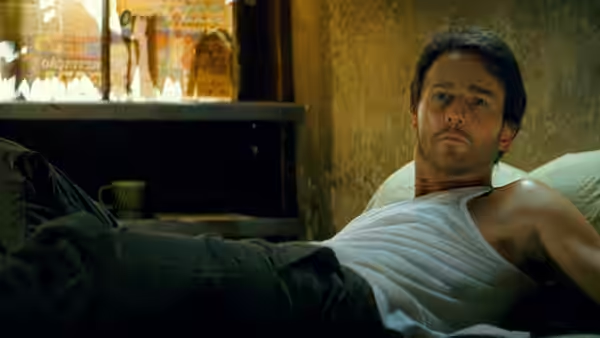
The hour is Rio. Peter Menzies shoots the favela in hard daylight, alleys so steep they are practically ladders, washing lines, tin roofs, and when Blonsky’s team comes over the rooftops after Banner the camera goes with them, handheld and close. Vincent Tabaillon, John Wright and Rick Shaine cut it fast but never so fast that we lose the geography, which is rarer than it should be. We were leaning forward, properly caught up in one thin man in a sweat-stained shirt trying to get down a hill before his own pulse betrays him. When the change finally comes, inside the bottling plant, Leterrier keeps it in shadow and shows us the soldiers’ faces instead. It is the best-judged sequence in the film.
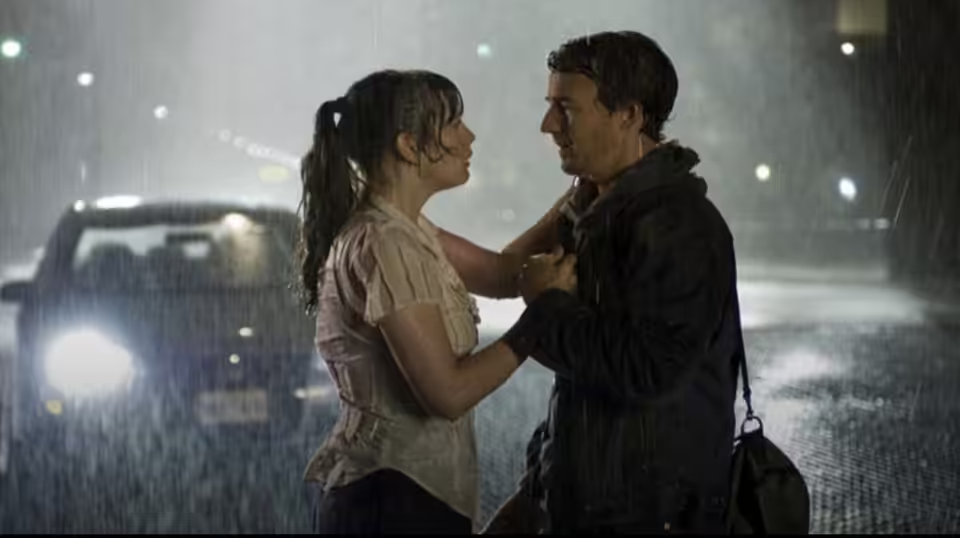
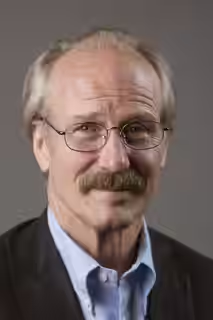
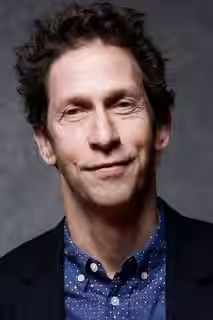
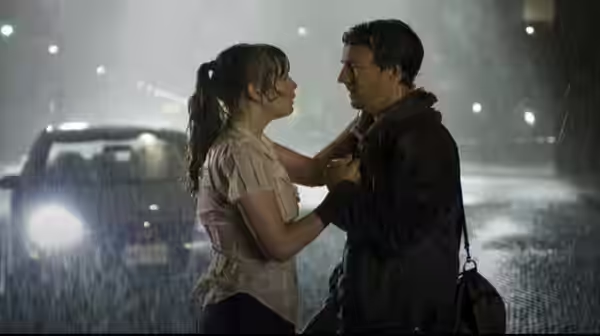
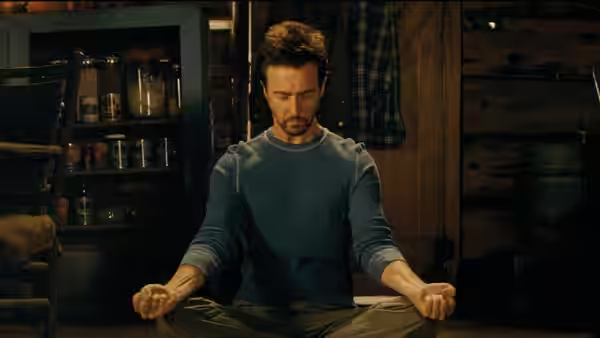
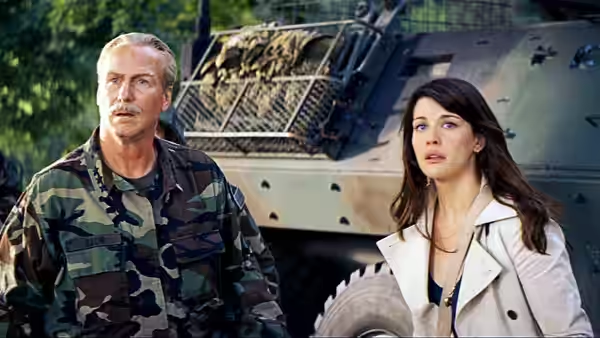
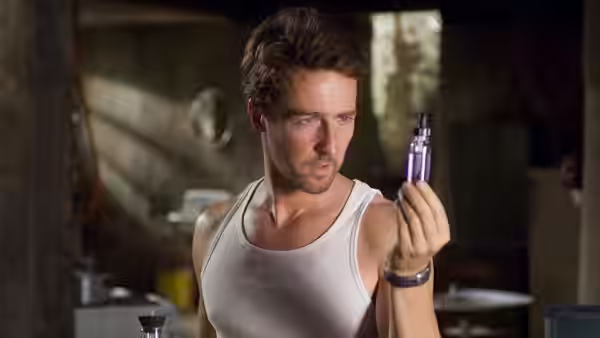
Edward Norton plays Banner as a man permanently embarrassed by his own body. He takes his pulse, breathes through his nose, walks away from a fight he could win; he is a scientist who has been turned into a liability and knows it. It is a quiet, intelligent performance, and its trouble is that the film’s whole design is to interrupt it. Tim Roth’s Emil Blonsky is better served. He is a career soldier past forty who has watched his knees go and would trade anything to feel strong again, and Roth lets you see the envy arrive on his face the first time he sees what Banner becomes. William Hurt does the moustache, the cigar and the certainty; his General Ross regards Banner as government property rather than a man, and Hurt plays it without a wink, which is right. Liv Tyler’s Betty is given a soft voice and a good deal of rain to stand in, and not much else.
Craig Armstrong’s score is mostly brass and urgency, but he finds room for the lonely piano theme from the 1970s television series, and it is the one moment the film admits to a feeling other than adrenaline. Lou Ferrigno, who was the Hulk in that series, turns up as a security guard. Paul Soles plays a pizzeria owner called Stanley with more warmth than the scene needs. These are small courtesies to the audience that grew up with the character, and they are handled with more care than the plot.
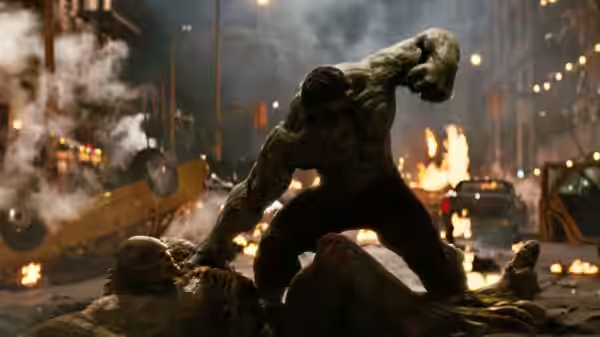
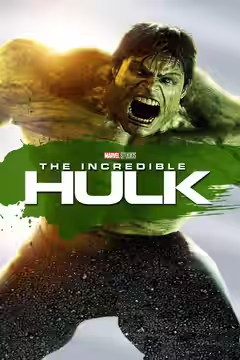
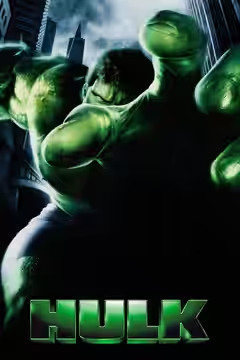
The Hulk himself is the problem. He is a rendering, and he looks like one: skin the colour of a rubber plant, muscle that swells and slides with no weight behind it, and a face that lands somewhere between Norton and a scowling gorilla. Kirk M. Petruccelli’s sets, a bottling plant, a university quad, a rain-soaked lab, are solid, real places, and every time the creature stands in one of them the film stops being a chase and turns into a cutscene. The daylight battle on the campus lawn survives this, just, because there are soldiers and armoured vehicles to give him scale. The finale does not. It puts two computer-generated things in a street at night and has them throw each other through walls for what felt like twenty minutes. We were bored, and then we were cross about being bored by something this loud.
Against its own kind it sits in the middle. Lee’s film wanted to be a tragedy and was met with laughter; this one wants to be a Bourne film and manages it for an hour, then remembers what it is and lets the monster take over. Iron Man, released a few weeks before it, had a lead who was allowed to enjoy himself. Norton is never allowed anything of the kind, and the film is thinner for it.
It runs 114 minutes and carries a 12A. Watch the Rio hour with attention and the rest with a drink, and if the person next to you asks why a fugitive thriller has turned into a cartoon, tell them it was always going to.