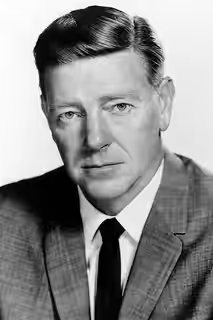
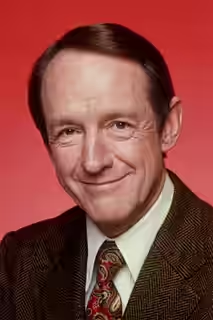
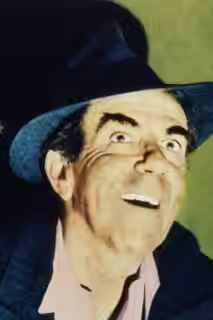
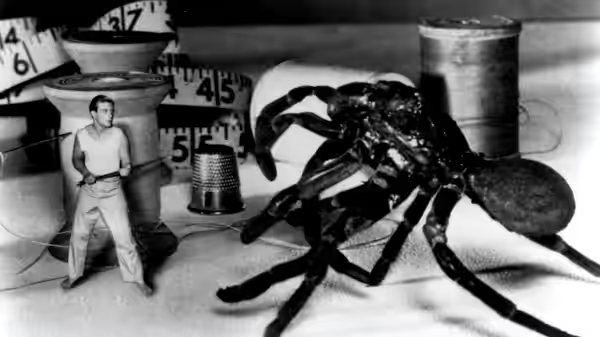
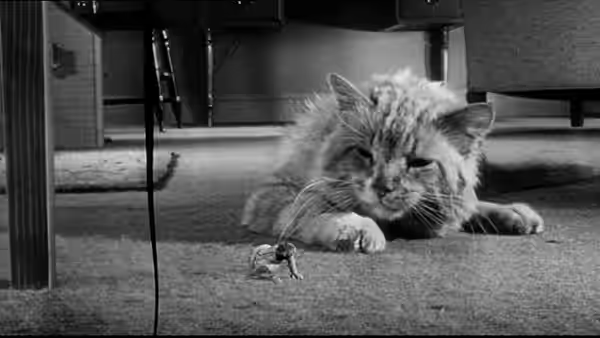
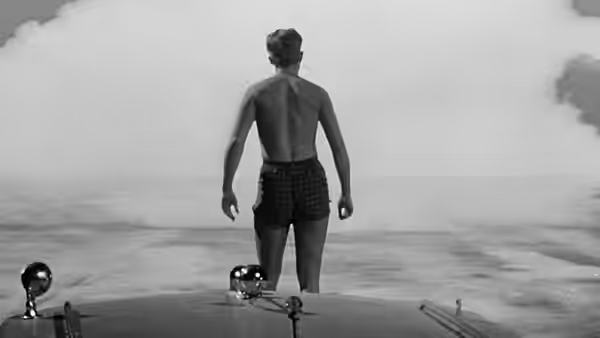
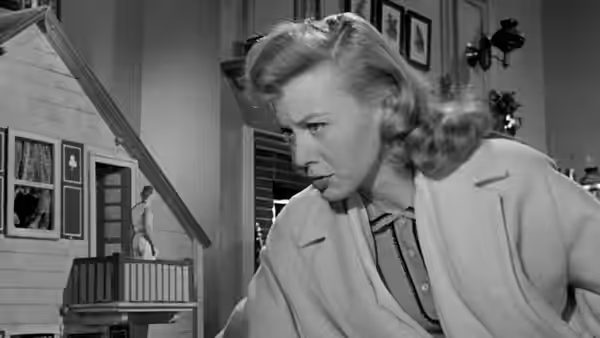
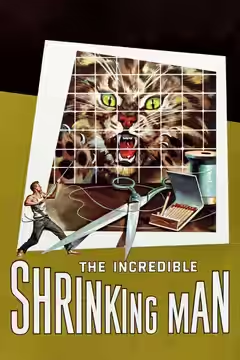
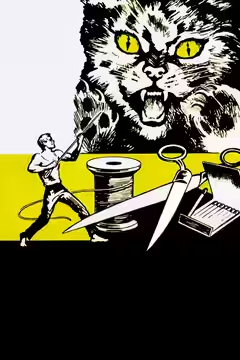
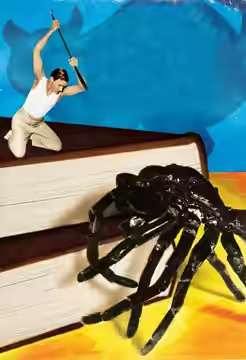
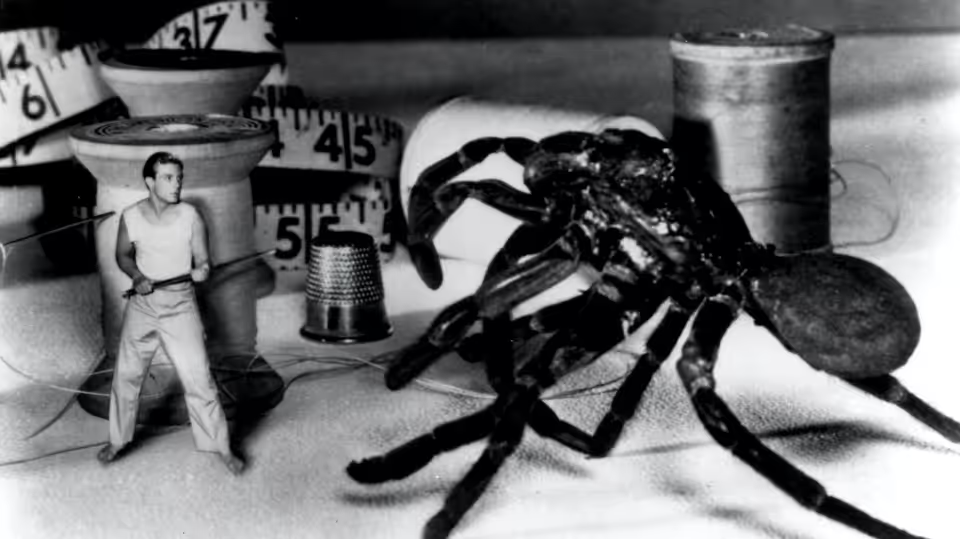
Scott Carey (Grant Williams) faces a giant spider among oversized sewing supplies
Film review

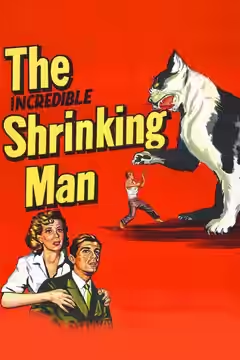
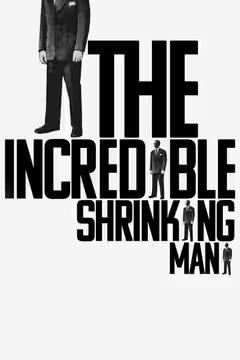
The Incredible Shrinking Man

1957 · Directed by Jack Arnold · 1h 21m · MPA NR

In a sentenceAn ordinary home becomes frightening enough to make a cinema feel like the sensible option

Scott Carey (Grant Williams) is shrinking, and familiar domestic surroundings become harder to live in. Louise Carey (Randy Stuart) and Charlie Carey (Paul Langton) remain part of the life he is trying to hold on to as his changing size threatens to make him insignificant. Scott wants to keep his place among other people, but his body increasingly puts ordinary surroundings beyond his control. Rooms that ought to offer safety become threatening when seen from his height. His predicament turns the everyday business of occupying a home into a struggle with scale.

Plays from YouTube when you press play; nothing loads from them until then.

Fi1m review

Jack Arnold makes a shrinking man’s predicament frightening and unexpectedly moving, with Grant Williams giving the effects a human purpose. It deserves more room for its awkward questions about masculinity, but we recommend it warmly.

The Incredible Shrinking Man is an unusually affecting science-fiction film, with enough faith in its simple premise to make familiar surroundings frightening. Jack Arnold keeps our attention on Scott Carey, played by Grant Williams, as diminishing size threatens his sense of being somebody. The effects matter because we have to believe in the change before we can take his fears seriously. Across 81 minutes, the film makes that belief surprisingly easy, though the emotional consequences deserve a little more room.

Grant Williams gives Scott enough sensitivity to stop his predicament becoming merely an interesting technical problem. His fear of becoming insignificant is recognisable even when the physical circumstances are not, and the performance makes that fear worth staying with. We are allowed to care about a man who could easily have become an exhibit. That matters in a film whose most immediately striking achievement is making his body look different. Without this sensitivity, we could spend the whole film thinking about how the effects were done.

Ellis W. Carter’s cinematography makes the altered viewpoint clear without making the camera itself a distraction. Familiar domestic space becomes threatening because we are asked to consider it from Scott’s height, and Jack Arnold trusts that change to supply the unease. Practical and optical effects make that change of scale convincing enough that we spend little time mentally correcting the image. We felt an unwelcome shiver at the sight of a home becoming somewhere its occupant could no longer feel safe. Nothing needs to look particularly sinister for the effect to work.

The screenplay, credited to Richard Matheson and Richard Alan Simmons, leaves some of its most uncomfortable possibilities underexplored. A man becoming smaller raises awkward questions about authority, dependence and what he thinks makes him a man. We wanted the film to spend longer with those questions, particularly where other people are concerned. It understands Scott’s dread of irrelevance more fully than it examines the assumptions behind it.

Albrecht Joseph’s editing keeps this compact film from wearing out its central idea, without hurrying us past the unease. The music is credited to Hans J. Salter, Earl E. Lawrence, Irving Gertz and Herman Stein, and it supports the suspense without becoming the reason to remember it. We found the altered viewpoint more unsettling than the musical prompting. The running time is an advantage here: the film has room to develop its predicament without requiring an entire evening’s commitment.

Science fiction often asks us to accept a great deal of explanation before it lets us feel anything. This is a useful corrective for anyone who finds the genre’s machinery more tiring than exciting. Give Grant Williams a few minutes before deciding that the title has told you everything.

Critical consensus AI synthesised

82
Positive
6
Mixed
1
Negative
0

Most critics respond warmly to The Incredible Shrinking Man, with praise clustering around its effects, Grant Williams’s performance and Jack Arnold’s direction. The reviews credit the optical and practical effects with making the shrinking convincing, while Arnold’s framing turns familiar domestic spaces into threats. Williams’s sensitive performance gives the fantasy a human centre, and several critics find lasting force in the story’s simplicity, scares and fear of becoming insignificant.

The differences are chiefly between enthusiasm and more qualified enjoyment, rather than approval and rejection. Empire finds the paranoia dated and the mood downbeat, though it still praises the film’s handling of perspective. Slant Magazine admires its ambition but argues that its psychosexual implications remain underexplored. The supplied scores range from mixed to strongly positive, with no negative verdicts, although the inaccessible New York Times review leaves its reasons for reservation unverified.

Radio Times
★★★★★ · Alan Jones
100

Jones calls the film a must-see classic that retains its irony, shock and power. He praises Grant Williams’s sensitive portrayal of a man pushed into a freak’s world.

Read the full review →
Slant Magazine
5 January 2022 · ★★★★½ · Chuck Bowen
90

Bowen sees the film as a startlingly personal and ambitious fantasy that gives its hero’s fears of irrelevance existential force. He praises the ingenious effects and Arnold’s direct visual style, while noting the film cannot fully explore the story’s psychosexual implications.

Read the full review →
Time Out
· GA
90*

The review calls it one of the finest films in science fiction. It singles out the story’s simplicity as a strength.

Read the full review →
Empire
27 April 2006 · Ian Nathan
70*

Nathan finds the film very enjoyable despite its dated paranoia and downbeat mood. He praises how Arnold’s camera adopts the shrinking protagonist’s perspective, transforming familiar domestic spaces into threats.

Read the full review →
Variety
31 December 1956 · Variety Staff
70*

The review is positive, highlighting the film’s uncompromising ending and effective scares. It particularly praises the optical effects that make the shrinking visually convincing.

Read the full review →
The New York Times
11 April 2003
64*

The page could not be read, so its verdict is unavailable. No specific praise or complaint can be verified from the accessible material.

Read the full review →

Straight answers AI written, from our review

Is The Incredible Shrinking Man worth watching?
The Incredible Shrinking Man is warmly recommended for its unsettling science fiction and Grant Williams’s sensitive performance, and we score it 86 out of 100. Its convincing changes of scale make an ordinary home frightening, though we wish it spent longer exploring Scott’s dependence on others and his threatened sense of masculinity.
How long is The Incredible Shrinking Man, and what is it rated?
The Incredible Shrinking Man runs 1h 21m and is rated NR by the MPA in the US. It is a science fiction and adventure film.
Where can I watch The Incredible Shrinking Man in the US?
The Incredible Shrinking Man is available to rent from Apple TV and Amazon Prime Video from $3.99. Availability is checked daily; the links above go straight to each service.
How violent or frightening is The Incredible Shrinking Man, and is it suitable for children?
The Incredible Shrinking Man has a UK U certificate, but its shrinking premise and threatening domestic surroundings can still unsettle children. We find the loss of safety in an ordinary home frightening; the certificate suggests broad suitability, but younger viewers sensitive to a character’s vulnerability may need reassurance.
How does The Incredible Shrinking Man compare to The Fly?
The Incredible Shrinking Man and The Fly both make bodily transformation frightening by giving us someone to care about, and we recommend both. We favour the former for unease built from familiar surroundings becoming threatening; The Fly is the better fit for those who want graphic bodily horror grounded in a tender relationship.
Is The Incredible Shrinking Man based on a true story or a book?
The Incredible Shrinking Man is adapted from a novel by Richard Matheson, rather than based on a true story. No knowledge of the book is needed: we find the film makes its premise easy to accept through convincing effects and Grant Williams’s performance, keeping Scott’s fear of insignificance understandable throughout.
What should I watch after The Incredible Shrinking Man?
After The Incredible Shrinking Man, try The Fly (1986, Fi1m 88): Another bodily transformation made frightening by the person forced to endure it. Then The Red Turtle (2016, Fi1m 84): A quieter fantasy about physical vulnerability and learning to inhabit unfamiliar surroundings.

Cast

Awards

Hugo Awards, 1958

Won
Best Dramatic Presentation

If you liked this, try…

  1. The Fly (1986, Fi1m 88)Another bodily transformation made frightening by the person forced to endure it.

  2. Seconds (1966) · not on Fi1m yetFor more speculative unease about identity, dissatisfaction and inhabiting the wrong body.

  3. The Host (2006) · not on Fi1m yetA creature feature that keeps an endangered family’s troubles firmly in view.

  4. Fantastic Voyage (1966) · not on Fi1m yetFor the pleasures of practical effects and ordinary matter becoming dangerous terrain.

  5. The Red Turtle (2016, Fi1m 84)A quieter fantasy about physical vulnerability and learning to inhabit unfamiliar surroundings.

The Incredible Shrinking Man (1957) review: A moving study of human fe (the US) | Fi1m