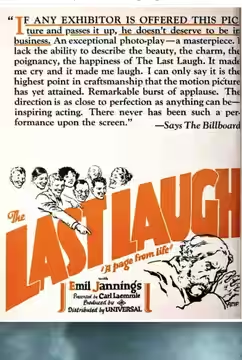
F. W. Murnau’s drama makes a hotel doorman’s humiliation painfully immediate. We recommend it for Emil Jannings’s performance and Karl Freund’s cinematography, with a caveat about how insistently it underlines the hurt.
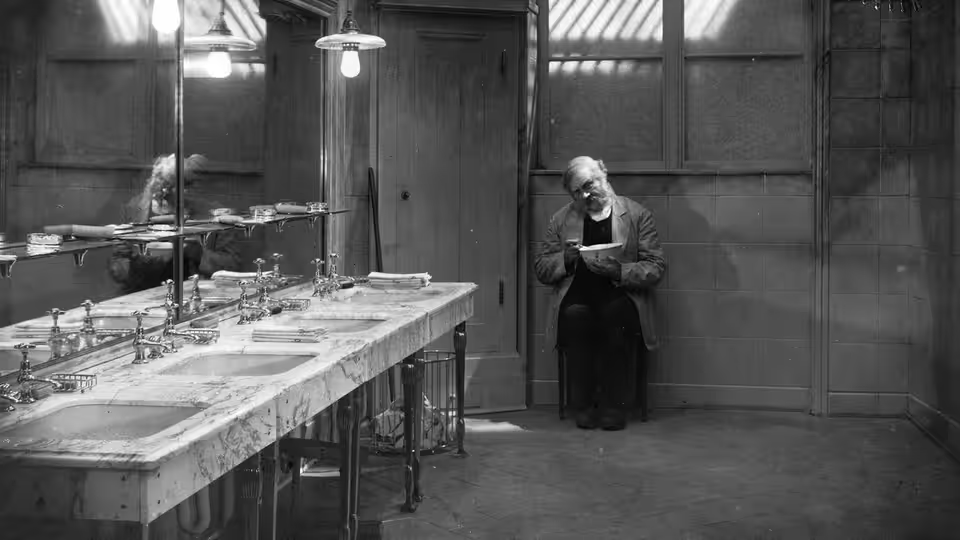
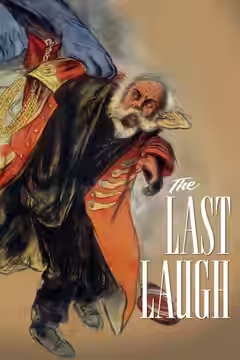
F. W. Murnau’s The Last Laugh is an affecting drama about the respect a working man can lose when he is no longer useful. We recommend it, despite a tendency to keep pressing after the humiliation has registered. Carl Mayer’s screenplay gives the hotel doorman a pride that is easy to recognise and sometimes uncomfortable to watch. The film takes that pride seriously enough to show why losing his standing would hurt. It does not ask us to dismiss him as a vain old fool.
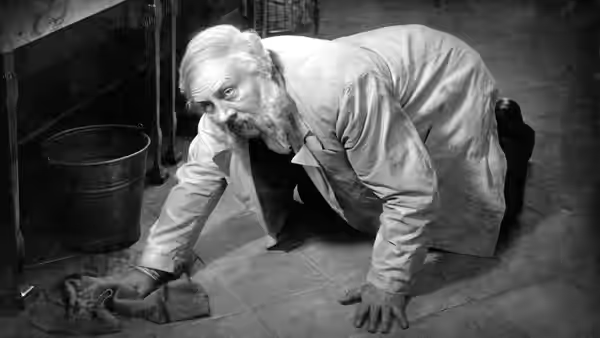
Emil Jannings makes the doorman’s self-importance substantial enough to test our sympathy. He wants his position acknowledged, and the performance allows that desire to become irritating without making him someone we can simply disregard. We were more upset than we expected by his humiliation, because the film makes the very pride we have been judging so harshly seem painfully vulnerable. There is something ungenerous in our first impulse to blame him for caring so much. The performance gives that impulse time to become uncomfortable.
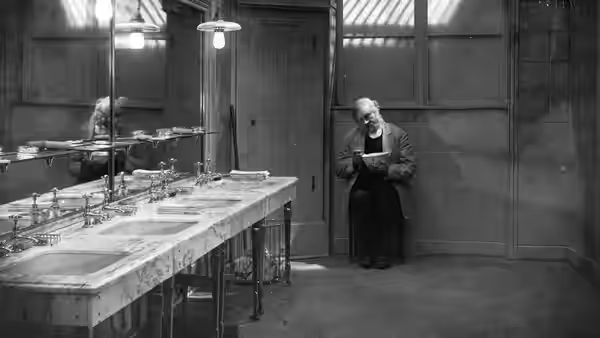
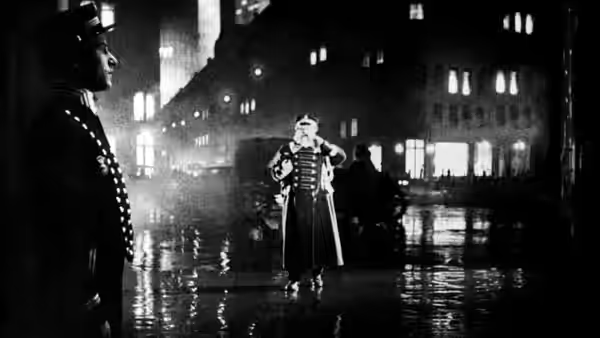
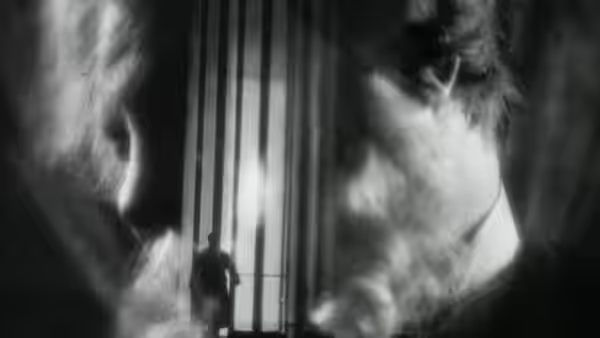
Karl Freund’s cinematography earns the attention it gets. The drunken-dream sequence lets the camera follow the doorman’s altered perception, making his inner life visible without requiring a verbal explanation. That inventiveness also makes the humiliation elsewhere harder to keep at a comfortable distance. The camera’s freedom would mean little if it kept distracting us from the man, but the technique remains concerned with how he experiences what happens to him.
Edgar G. Ulmer’s production design helps us read the hotel as a workplace organised by rank. A doorman can be conspicuous there without possessing much power, and the setting makes that distinction useful to the drama. Hans Unterkircher’s hotel manager has the authority the central character would like others to see in him. The domestic characters, including Maly Delschaft’s niece and Max Hiller’s bridegroom, extend the consequences of his need for respect beyond his employment.
Elfi Böttrich’s editing gives the performance time to register, although that patience has limits. Some passages continue to emphasise an injury after its significance is clear, and we begin to feel the film directing our sympathy too firmly. Giuseppe Becce’s music supplies further emotional emphasis that seems less necessary when the actor and camera have already made the distress plain. The film is persuasive enough to have trusted us a little more.
The supporting characters are not always granted the same room for complication as the doorman. Too often, their function is to make his predicament unmistakable, which gives the drama a certain predictability even while the photography remains inventive. Judged as social melodrama, its insistence is a familiar weakness, but its treatment of vanity is more interesting. The central man is allowed to remain difficult and foolish while the film asks us to care about his treatment.
The U certificate is no promise of an easy evening. We recommend giving the film an uninterrupted 90 minutes, partly for the camera, but chiefly because divided attention makes it too easy to dismiss the doorman as ridiculous. Allow him to be difficult company; his need to be treated with respect deserves more than a quick look at the clever photography.