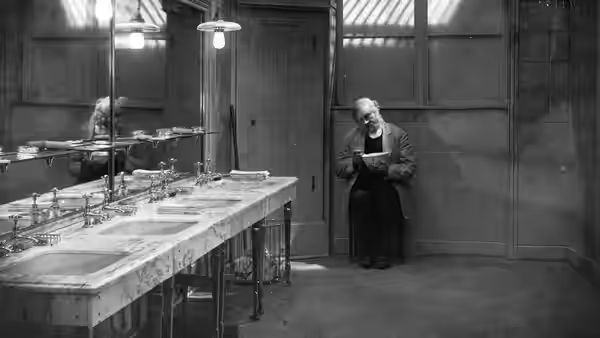
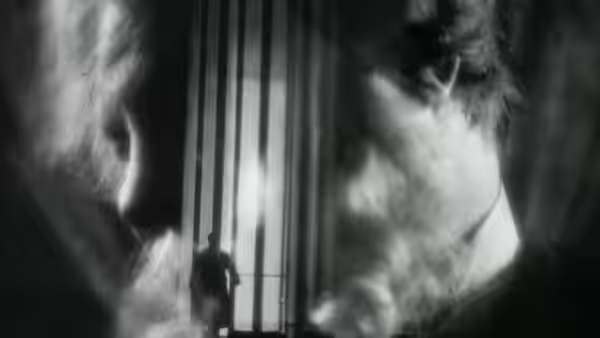
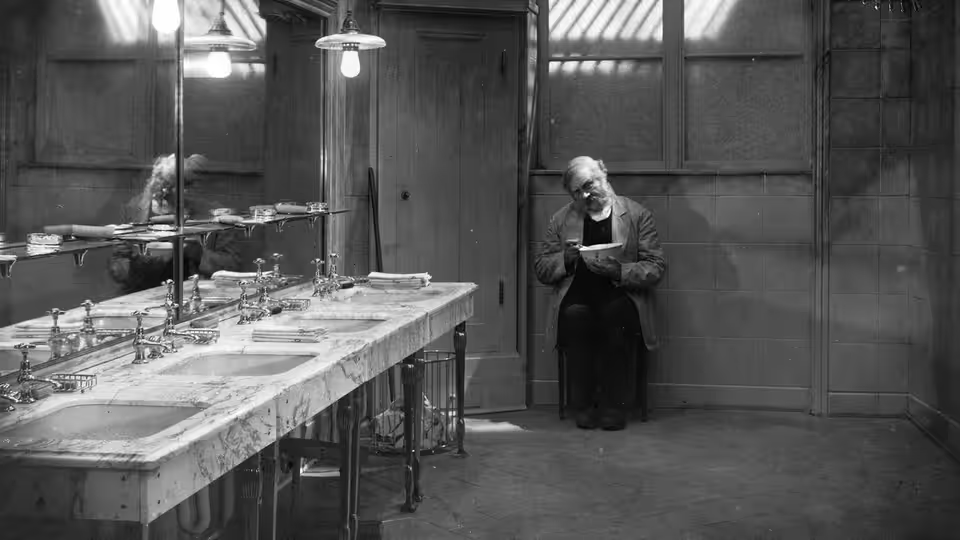
Hotel doorman Emil Jannings stands alone in a washroom, holding a paper
Film review

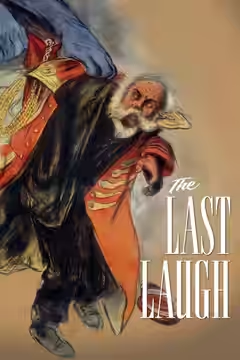
The Last Laugh

1924 · Directed by F. W. Murnau · 1h 30m

In a sentenceA hotel with plenty of room for luggage and remarkably little for an ageing employee

At a hotel, an ageing doorman (Emil Jannings) wants to preserve the status his job gives him. The hotel manager (Hans Unterkircher) has authority over his working life; his niece (Maly Delschaft) and her bridegroom (Max Hiller) belong to the family circle in which his standing also matters. Pride makes the doorman cling to the respect he believes he has earned. Age threatens his usefulness to his employer, and with it the position on which he depends. The distinction between being valued as a person and being valued as an employee begins to trouble his life beyond the hotel.

Fi1m review

F. W. Murnau’s drama makes a hotel doorman’s humiliation painfully immediate. We recommend it for Emil Jannings’s performance and Karl Freund’s cinematography, with a caveat about how insistently it underlines the hurt.

F. W. Murnau’s The Last Laugh is an affecting drama about the respect a working man can lose when he is no longer useful. We recommend it, despite a tendency to keep pressing after the humiliation has registered. Carl Mayer’s screenplay gives the hotel doorman a pride that is easy to recognise and sometimes uncomfortable to watch. The film takes that pride seriously enough to show why losing his standing would hurt. It does not ask us to dismiss him as a vain old fool.

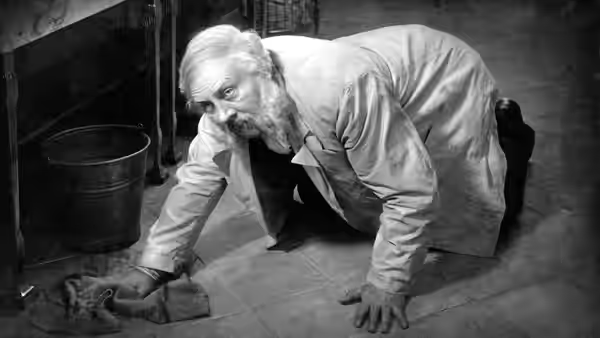
Emil Jannings makes the doorman’s self-importance substantial enough to test our sympathy. He wants his position acknowledged, and the performance allows that desire to become irritating without making him someone we can simply disregard. We were more upset than we expected by his humiliation, because the film makes the very pride we have been judging so harshly seem painfully vulnerable. There is something ungenerous in our first impulse to blame him for caring so much. The performance gives that impulse time to become uncomfortable.

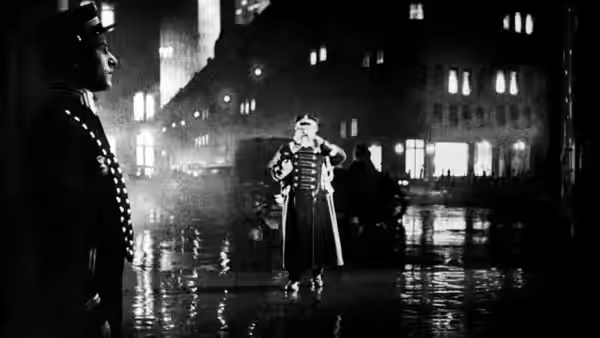
Karl Freund’s cinematography earns the attention it gets. The drunken-dream sequence lets the camera follow the doorman’s altered perception, making his inner life visible without requiring a verbal explanation. That inventiveness also makes the humiliation elsewhere harder to keep at a comfortable distance. The camera’s freedom would mean little if it kept distracting us from the man, but the technique remains concerned with how he experiences what happens to him.

Edgar G. Ulmer’s production design helps us read the hotel as a workplace organised by rank. A doorman can be conspicuous there without possessing much power, and the setting makes that distinction useful to the drama. Hans Unterkircher’s hotel manager has the authority the central character would like others to see in him. The domestic characters, including Maly Delschaft’s niece and Max Hiller’s bridegroom, extend the consequences of his need for respect beyond his employment.

Elfi Böttrich’s editing gives the performance time to register, although that patience has limits. Some passages continue to emphasise an injury after its significance is clear, and we begin to feel the film directing our sympathy too firmly. Giuseppe Becce’s music supplies further emotional emphasis that seems less necessary when the actor and camera have already made the distress plain. The film is persuasive enough to have trusted us a little more.

The supporting characters are not always granted the same room for complication as the doorman. Too often, their function is to make his predicament unmistakable, which gives the drama a certain predictability even while the photography remains inventive. Judged as social melodrama, its insistence is a familiar weakness, but its treatment of vanity is more interesting. The central man is allowed to remain difficult and foolish while the film asks us to care about his treatment.

The U certificate is no promise of an easy evening. We recommend giving the film an uninterrupted 90 minutes, partly for the camera, but chiefly because divided attention makes it too easy to dismiss the doorman as ridiculous. Allow him to be difficult company; his need to be treated with respect deserves more than a quick look at the clever photography.
Critical consensus AI synthesised

78
Positive
6
Mixed
2
Negative
0

Most critics respond warmly to The Last Laugh, with praise clustering around Murnau’s direction and Karl Freund’s inventive cinematography. The reviews repeatedly value the way images convey humiliation and inner distress, making the doorman’s experience vivid without relying on verbal explanation. Several also find substantial social criticism in its treatment of inequality, authority and individual dignity. Across the favourable responses, technical invention serves a recognisable concern for people whose standing in society is precarious.

The spread runs from wholehearted admiration to qualified respect, with six positive assessments, two mixed and none negative. Reservations centre on whether the storytelling sustains the achievement of the camerawork, particularly towards the close. Empire finds the ending unconvincing but still considers the film impressive. Eye for Film is more doubtful about how well it holds up, admiring Freund’s cinematography while finding the ending tacked on.

Slant Magazine
23 September 2008 · ★★★★/4 · Andrew Schenker
100

Schenker argues that the film is best understood as a horror story about a modern world that discards the old and infirm. He praises the camera work for making the doorman’s humiliation and inner states vivid.

Read the full review →
The New Yorker
17 April 2013 · Richard Brody
90*

Brody presents the film as a powerful, prescient work about inequality and social authority. He especially praises its vivid warning about society’s treatment of individual dignity.

Read the full review →
Time Out
15 March 2012
90*

The review calls Murnau’s film a masterpiece and an example of pure cinema. It singles out the absence of intertitles as a defining strength.

Read the full review →
RogerEbert.com
75*

The page could not be accessed, so its verdict and specific praise or criticism cannot be verified. The available page information identifies it as a Great Movies review of the 1924 film.

Read the full review →
The New York Times
1 February 1925 · Mordaunt Hall
75*

The review gives Murnau’s German film a clearly positive verdict. It singles out the direction as particularly adroit and imaginative.

Read the full review →
Los Angeles Times
10 March 1994 · MARK CHALON SMITH
70*

The critic finds the film visually striking and its story a meaningful blend of vanity, tragedy, and irony. He particularly praises Murnau’s direction and Karl Freund’s inventive camera work.

Read the full review →

Straight answers AI written, from our review

Is The Last Laugh worth watching?
The Last Laugh is worth watching for Emil Jannings’s painfully vulnerable performance and Karl Freund’s inventive cinematography; we score it 84. We recommend it to anyone drawn to character-led social drama, with the caveat that its repeated emphasis on the doorman’s humiliation sometimes presses our sympathy harder than necessary.
How long is The Last Laugh, and what is it rated?
The Last Laugh runs 1h 30m. It is a drama film.
Where can I watch The Last Laugh in Thailand?
The Last Laugh is not on any streaming or rental service in Thailand at the moment. It is available in 3 other countries; change your country at the top of the page to see where. Availability is checked daily.
How does The Last Laugh compare to Umberto D.?
The Last Laugh is the stronger choice for inventive camerawork, while Umberto D. offers an absorbing struggle to keep a home, carried by Carlo Battisti’s proud, awkward presence. We recommend both for their attention to an older man’s dignity, though neither entirely trusts its central performance: the former repeatedly underlines his humiliation, while the latter’s music sometimes supplies feeling the acting has already earned.
What should I watch after The Last Laugh?
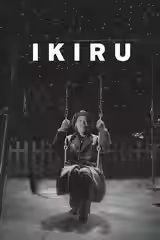
After The Last Laugh, try Umberto D. (1952, Fi1m 91): Another proud older man whose need for dignity makes sympathy feel inadequate. Then Ikiru (1952, Fi1m 92): A working man’s place in the world, examined with patience and unsparing feeling.

Cast

If you liked this, try…

  1. Umberto D. (1952, Fi1m 91)Another proud older man whose need for dignity makes sympathy feel inadequate.

  2. Ikiru (1952, Fi1m 92)A working man’s place in the world, examined with patience and unsparing feeling.

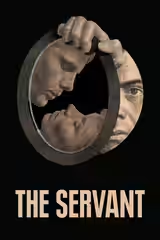
  3. The Servant (1963) · not on Fi1m yetFor more corrosive scrutiny of the authority employers assume their position guarantees.

  4. Rosetta (1999) · not on Fi1m yetEmployment becomes a daily emergency, with a camera unwilling to look away.

  5. The Lunchbox (2013) · not on Fi1m yetA quieter account of working lives, loneliness and the need to be noticed.

The Last Laugh (1924) review: A doorman’s shame still cuts deep (Thailand) | Fi1m